Showing posts with label Michelle Boulous Walker. Show all posts

Friday, 21 July 2023

Drawing Rooms/Slow Philosophy/Arte Povera : Cyanotypes/Collages/Photography/Installations

Slow Philosophy. 2017
Reading against the institution
Michelle Boulous Walker

Saturnian Form : Lead and Library Dates
Russell Moreton

Emilio Prini
The filter and welcome to the angel, 1967
Environment with participants, doves, artificial green grass, socks, ultra-violet light.
Dimensions variable,
Installation, Studio Bentivoglio, Bologna.

Artist-run exhibition space

Emilio Prini well illustrates the spirit of Arte Povera: the artist is not the creator of artefacts, nor even of a documented 'happening'. In the transferral of energy and subjectivity into matter or an event, the work exists in the instant it comes into being and is simultaneously received.

To document his work in photographs and present these as a record of it contradicts the very basis of Prini's art.
Arte Povera, Themes and Movements
Carolyn Christov-Bakargiev

Intermedia Chart
Dick Higgins
Molvena, Italy. 1993


Wednesday, 1 June 2022

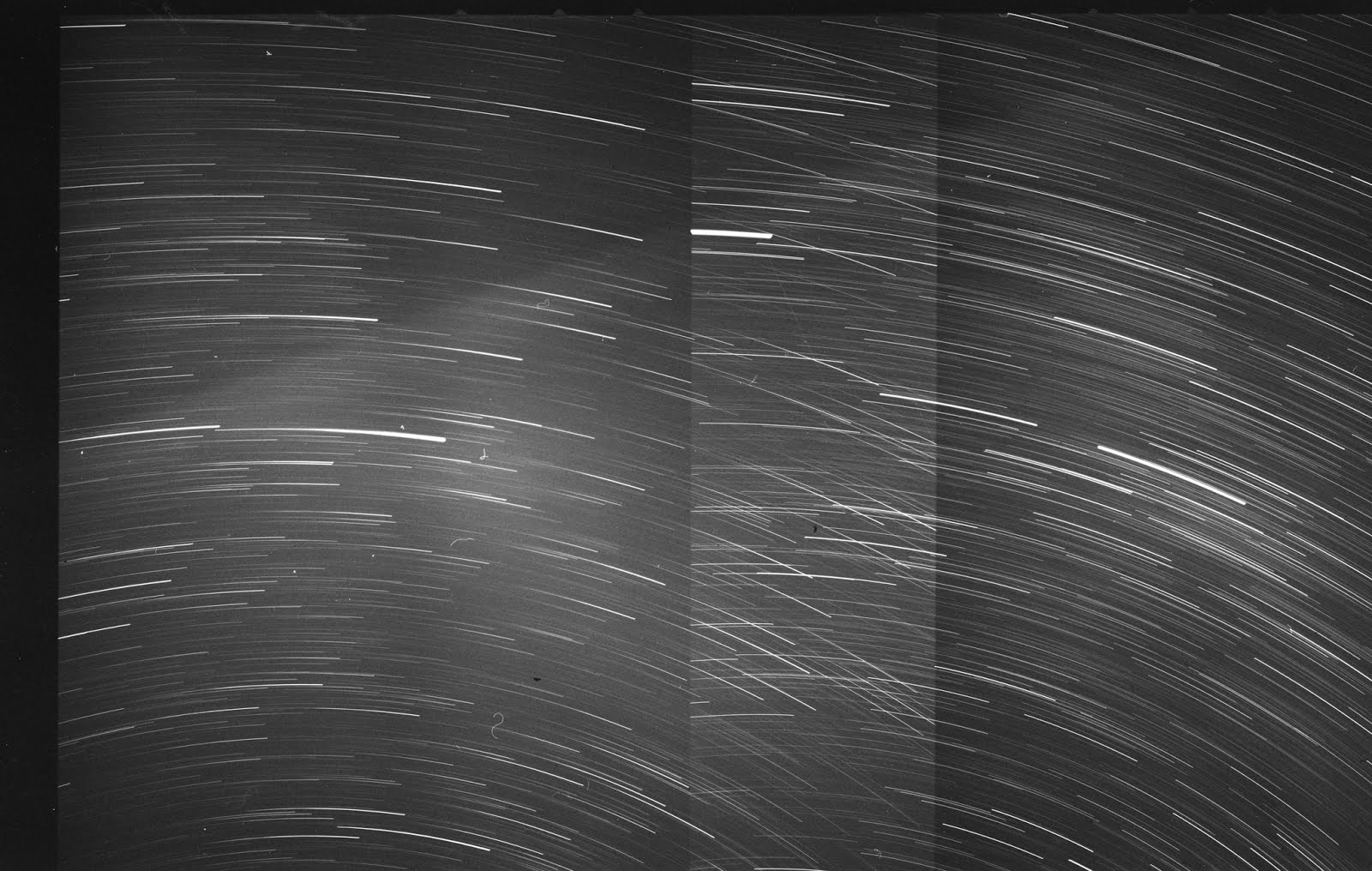
Observatories/Astronomical Images/Libraries : Slow reading/seeing as a thing, not as a resource

Astronomical Images/Observatories/Libraries 

To read slowly, deeply, looking cautiously before and aft, with reservations, with doors left open, with delicate eyes and fingers. 
Friedrich Nietzsche

To read is to be attentive to the trace of the other, and this attention takes time. Additionally, and perhaps paradoxically, it calls for an emptying of the self to prepare for the other, abandon that allows the other to gleam.
Slow Philosophy : Why Slow Reading Today? Boulous Walker. 2017

https://www.bloomsburycollections.com/book/slow-philosophy-reading-against-the-institution/preface-why-slow-reading-today


Celestial Sphere : Stars and Dust Particles

Entanglements of matter and meaning.

Karen Barad, Meeting The Universe Halfway, 2007.

Hawking understood black holes because he could stare at them. Black holes mean oblivion. Mean death. And Hawking has been staring at death all his adult life. Hawking could see.
Martin Amis, Night Train, 1997.

For Baudrilland the actual photographs are beside the point. 
It is what precedes them that counts in his eyes- the mental event of taking a picture.
Sylvere Lotringer, The Piracy of Art, 2008.

The Library : A Meditation on the Human Condition (Giacometti, artist-philosopher)

Books can step up to us- into us- in many ways.
Voices from Chernobyl by Svetlana Alexievich was for me that rare precipitate force which calls another book into being.

Mario Petrucci, Heavy Water, a poem for Chernobyl.