Showing posts with label interior design. Show all posts

Friday, 18 July 2025

Spatial Bodies/Visual Art Practices : Material Assemblages/Drawing : Cultivation Fields/Thinking Diffractively

Matter(s) of Inquiry : Abject(ion) Gathering Affective Energy.

Affective Formulation : Processual/Durational Material Flows/Mattering Matter(s).

Transitional Compositions and Events/Anti-Objects. 


‘We are composed of matter and live in the midst of matter. Our objective should not be to renounce matter, but to search for a form of matter other than objects. 

What that form is called-Architecture, Gardens, Technology- is not important.’
Kengo Kuma.


On Anti-Object : An extended essay that is not so much history or theory as a volume of self-assessment that gives an opportunity for the author to contextualise his own body of work through considered self-reflection.

‘A monument is a form that preserves time through the compression of space, a form in which visual perception is the parameter. A monument is a compression of time and space’ (Kuma,2008:92) Anti Object.

‘My purpose in writing this book is to criticise architecture that is self-centred and coercive.’ Kengo Kuma.

‘Like McTiernan or the theorist Paul Virilio, Kuma sees new digital and information technologies as leading us to an aesthetics of disappearance, rather than image or form.(Steele,2008:3)

‘My ultimate aim is to erase architecture’(Kuma,2008:3)
How then, can architecture be made to disappear?


Friday, 21 July 2023

Drawing Rooms/Slow Philosophy/Arte Povera : Cyanotypes/Collages/Photography/Installations

Slow Philosophy. 2017
Reading against the institution
Michelle Boulous Walker

Saturnian Form : Lead and Library Dates
Russell Moreton

Emilio Prini
The filter and welcome to the angel, 1967
Environment with participants, doves, artificial green grass, socks, ultra-violet light.
Dimensions variable,
Installation, Studio Bentivoglio, Bologna.

Artist-run exhibition space

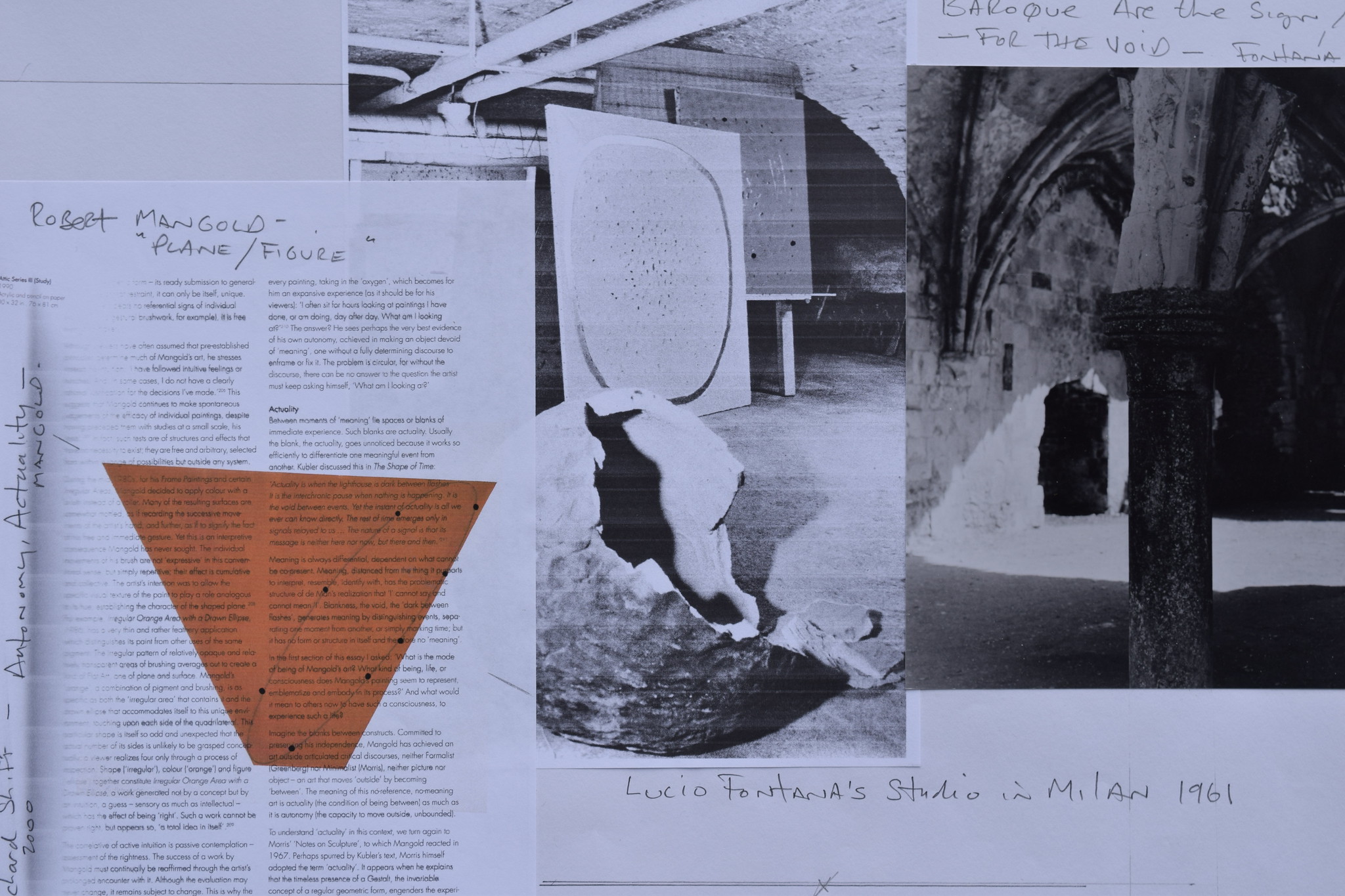
Emilio Prini well illustrates the spirit of Arte Povera: the artist is not the creator of artefacts, nor even of a documented 'happening'. In the transferral of energy and subjectivity into matter or an event, the work exists in the instant it comes into being and is simultaneously received.

To document his work in photographs and present these as a record of it contradicts the very basis of Prini's art.
Arte Povera, Themes and Movements
Carolyn Christov-Bakargiev

Intermedia Chart
Dick Higgins
Molvena, Italy. 1993


Tuesday, 4 April 2023

Open Studio/Cyanotypes and Collages : Harleston Revisited/Norfolk and Norwich 2018

Civilizing Rituals
Inside Public Art Museums
Carol Duncan

Julian Stair
Quietus reviewed
Archaeology of an exhibition

Spirituality in Contemporary Art
The Idea of the Numinous
Jungu Yoon

The Aesthetics of Silence
Susan Sontag

A Field Guide To Getting Lost
Rebecca Solnit

Essays On The Blurring Of Art And Life
Allan Kaprow

Ways of Curating
Hans Ulrich Obrist

The Fitzwilliam Museum, Cambridge

On Show : Contemporary ceramics in the Goodison gift in the context of a historic museum collection.

A rare opportunity to hear different perspectives on how the art of display can animate objects and deepen insight into historical collections.


The study day will draw on two current displays exclusive to the Fitzwilliam Museum: the Goodison gift of contemporary ceramics and the exhibition Things of Beauty Growing: British Studio Pottery. Speakers include four internationally-acclaimed UK ceramicists whose work features in both displays: Julian Stair, Carol McNicoll, Philip Eglin and Jennifer Lee. The study day concludes with a conversation between Amanda and Sir Nicholas Goodison, followed by the opportunity to share reflections on the subject.


Art has the power to affect our thinking, changing not only the way we view and interact with the world but also how we create it. In Art and Mind, Ernst van Alphen probes this idea of art as a commanding force with the capacity to shape our intellect and intervene in our lives. Rather than interpreting art as merely a reflection of our social experience or a product of history, van Alphen here argues that art is a historical agent, or a cultural creator, that propels thought and experience forward.
Art in mind : How contemporary images shape thought
Ernst van Alphen

Walking and Mapping
Artists as Cartographers
Karen O'Rourke

A Bigger Splash
Painting after Performance
Catherine Wood 


Tuesday, 1 February 2022

Locality/Social Complexity and the Everyday : Works on Paper


Cyanotype is a photographic printing process that produces a cyan-blue print. Engineers used the process well into the 20th century as a simple and low-cost process to produce copies of drawings, referred to as blueprints. The process uses two chemicals: ammonium iron(III) citrate and potassium ferricyanide.

The English scientist and astronomer Sir John Herschel discovered the procedure in 1842.[1] Though the process was developed by Herschel, he considered it as mainly a means of reproducing notes and diagrams, as in blueprints.[2] It was Anna Atkins who brought this to photography. She created a limited series of cyanotype books that documented ferns and other plant life from her extensive seaweed collection.[3] Atkins placed specimens directly onto coated paper, allowing the action of light to create a silhouette effect. By using this photogram process, Anna Atkins is regarded as the first female photographer.[4]

From Wikipedia, the free encyclopedia

Mesh/Material/Light, Cyanotype Process

Locality/Social Complexity- Works on Paper

DSC_6026 Hortus Conclusus


https://www.flickr.com/photos/russellmoreton/42235368954/in/dateposted-public/


Thursday, 19 August 2021

Reading Rooms : Waverley Project


Interior Design presented as a sociological spatial practice.

Design as an interactive structure, an interlocutory interior in the making of space and spatial relations.

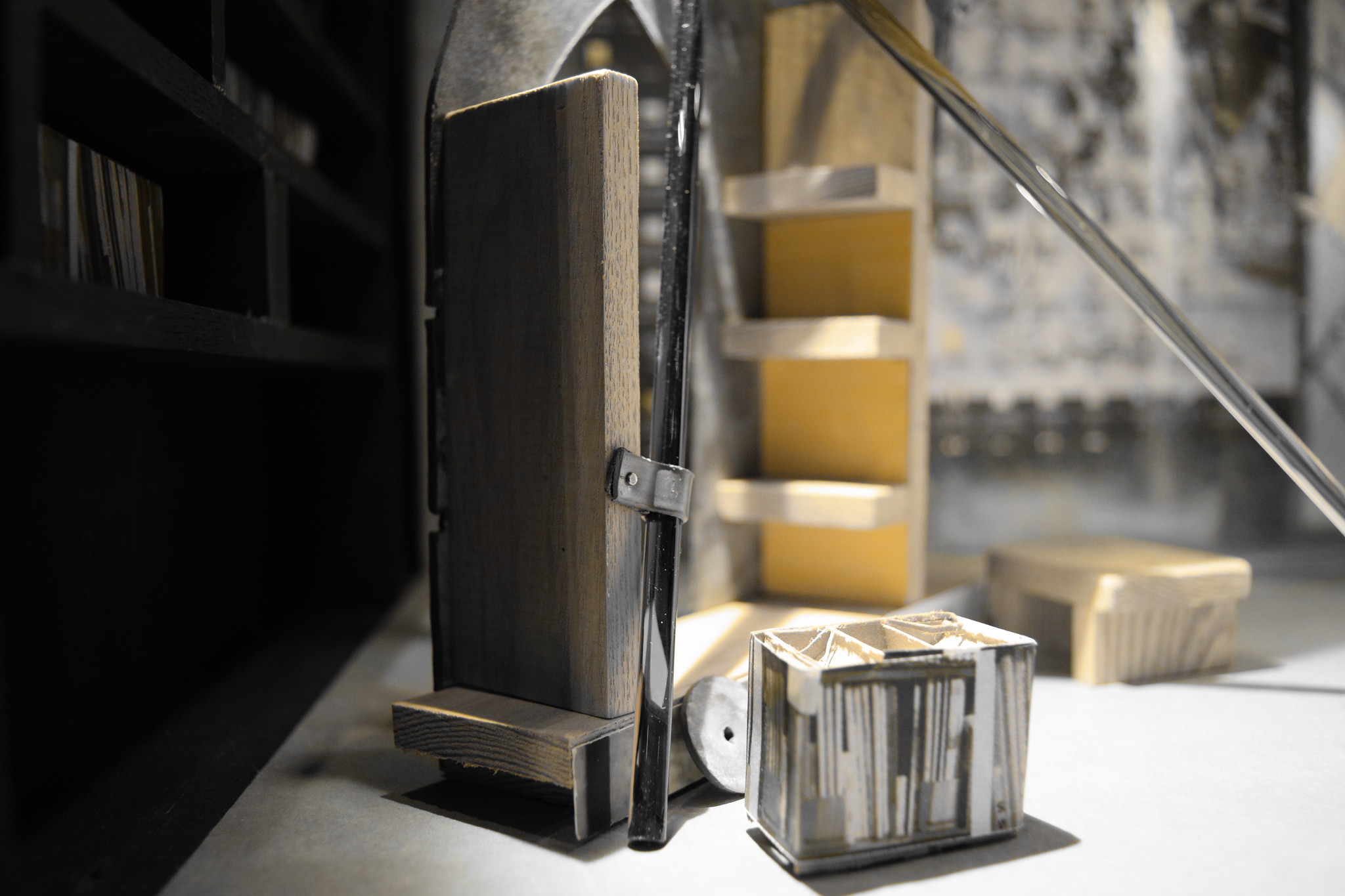
The Scriptorium brings together a varied and discursive set of ideas and objects, texts and interior architectures. The performativity of the research is presented through specifically designed apparatuses and staged in a niche like space. The gaps or relations between things become more interesting than the designed elements.


https://www.flickr.com/photos/russellmoreton/26625231676/in/dateposted-public/