Showing posts with label Giacometti. Show all posts

Friday, 24 November 2023

Sculptor's Drawings/Sculpting in Time.

Outpost 231123

Using the line as a graphic means to probe/navigate elementary structures and  three-dimensional frameworks.

Giacometti : Realities of Perception.

Drawings on the difficulty of the 'Figure In Space' and its representations.


The Creative Imagination.

Gaston Bachelard.


Rendering visible the essential enduring dimension of reality through energies of matter and confusion, being and becoming. 


The Radical Nude.

Transfiguration and Masking.

Egon Schiele.


Schiele's fears of death, sexuality and disease, and his ambivalence about beauty and ugliness, both his own and that of the world he was part of, all of these conflicts play out across the surface of the skin and are transformed in Schiele's radical nudes.


What mattered for both Schiele and Nietzsche was not the fact of suffering, but how it could be transformed.


The pots/surfaces of Hans Coper endure the suffering of the artist.


Confronting The Naked Human Body.


Female Nude. 1910

Everything is living-dead.

An artistic corpus of a dangerous sexuality.

This female nude embodies the sinister complicity between sex and death.


Sneering Woman. 1910

An embodiment of Nietzsche's imperious and domineering free spirit, who with a not altogether innocent readiness to deceive and to dissemble, enjoys the cunning and multiplicity of its masks.

Uneven washes of white paint applied to the surface of Gerti's skin, which give her a sickly appearance. Her sneer, 'masks' signifies her own criticism and protects her from others, as she transforms herself into something greater than negation.


Alberto Giacometti.

Drawings and Watercolours.

The Bruno Giacometti Bequest.

Kunshaus Zurich. 2014


I realised that my vision changed daily, either I saw a volume or I saw the figure as a blob, or I saw a detail or I saw the whole. Given that models only posed for a very limited period, they left even before I had begun to capture anything at all.


Giacometti was asked to put his drawings with notes into chronological order. After making several attempts the artist declared that it was impossible to give the sort of chronology that was intended, because all of these copies take their place today as if on the same plane, without any chronological order.


Drawings and their nearness, a nowness/revelation of spatial proximities.


Drawing into the deeper ecology between things/matters of concern.


Drawings that struggle at the unknowing flux of things.


Drawing, Gathering Situatedness, nesting into the process of mark-making between the indeterminacies of self and others across the domain of a surface on paper. 


The differing execution of the figures, some in heavier outline, others in a lighter stroke alludes to the appearance of the figures in space and their proximity and distance in the relationship to himself.


Views of the artist's studio executed sometimes in fleeting strokes and at other times in dense linear structures. They testify to the creative dialogues battling for artistic insight and understanding. 


Drawings characterized by a fine network or net-like structure, containing intricate connective lines of matter and the layering of visual tissue/flesh.


Drawing into the corporeality of the architectural body.

Organism-Person-Environment

Arakawa, Gins.


Reticular Drawings.

Interconnected, Interrelated, Reciprocally Connected.


Reticulate, cancellate, cancellated, clathrate, having a lattice like structure, pierced with holes or windows. 


Working/Making from within and with visual material.

Sculptor's Drawings/Sculpting in Time.

Martin Collis/Tarkovsky. 


Drawing Nomadologies between points, paths and territories, producing forms derived from the movement/relay across surfaces and things. 

Deleuze, Guattari.


Drawings on the phenomenal qualities of things and the  relations with space between things, becoming into time through movements of spatial/temporal matter.


Giacometti, drawing out perceptions from swirling and reticular strokes and breaths.


Wednesday, 1 June 2022

Observatories/Astronomical Images/Libraries : Slow reading/seeing as a thing, not as a resource

Astronomical Images/Observatories/Libraries 

To read slowly, deeply, looking cautiously before and aft, with reservations, with doors left open, with delicate eyes and fingers. 
Friedrich Nietzsche

To read is to be attentive to the trace of the other, and this attention takes time. Additionally, and perhaps paradoxically, it calls for an emptying of the self to prepare for the other, abandon that allows the other to gleam.
Slow Philosophy : Why Slow Reading Today? Boulous Walker. 2017

https://www.bloomsburycollections.com/book/slow-philosophy-reading-against-the-institution/preface-why-slow-reading-today


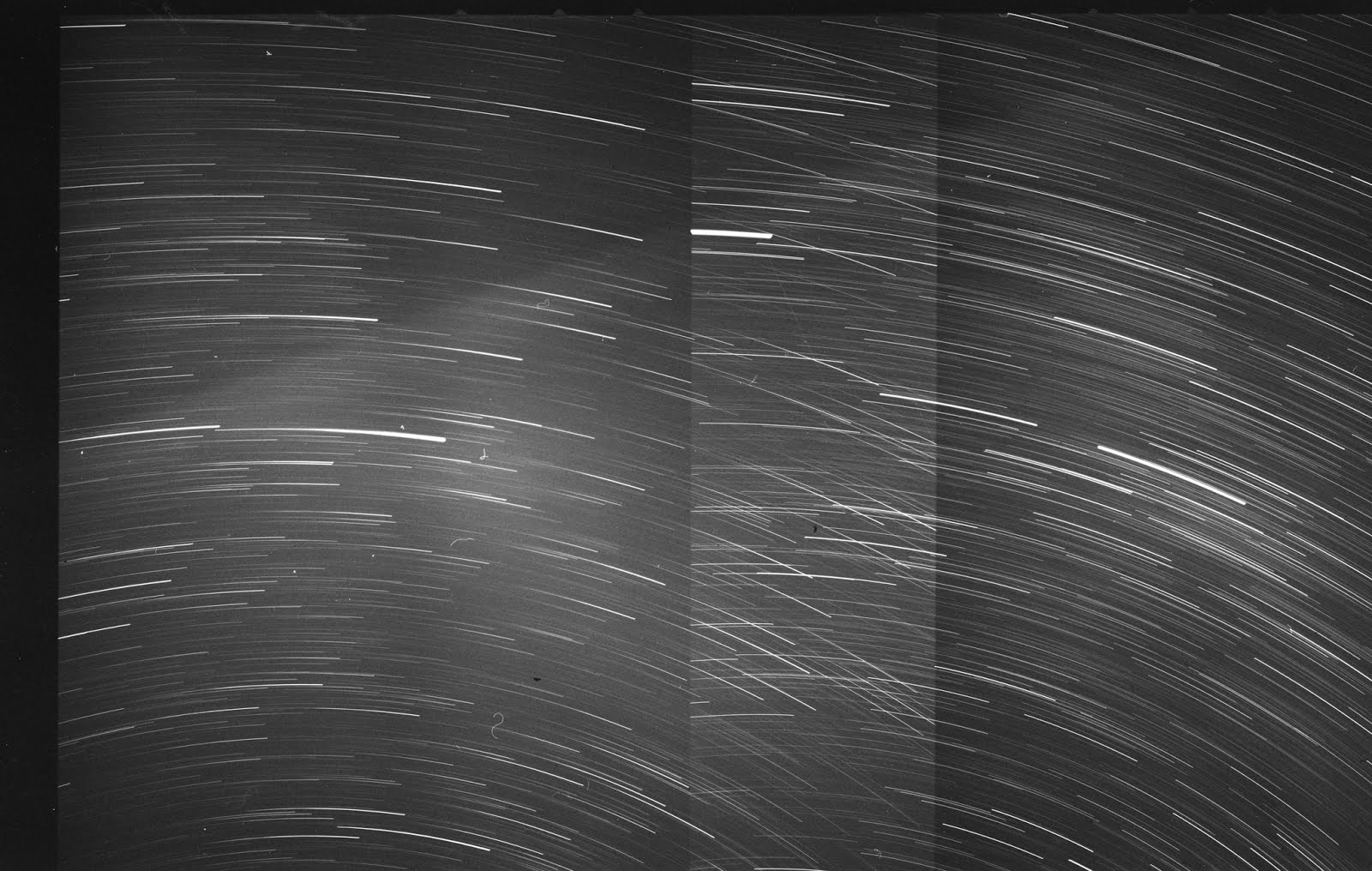
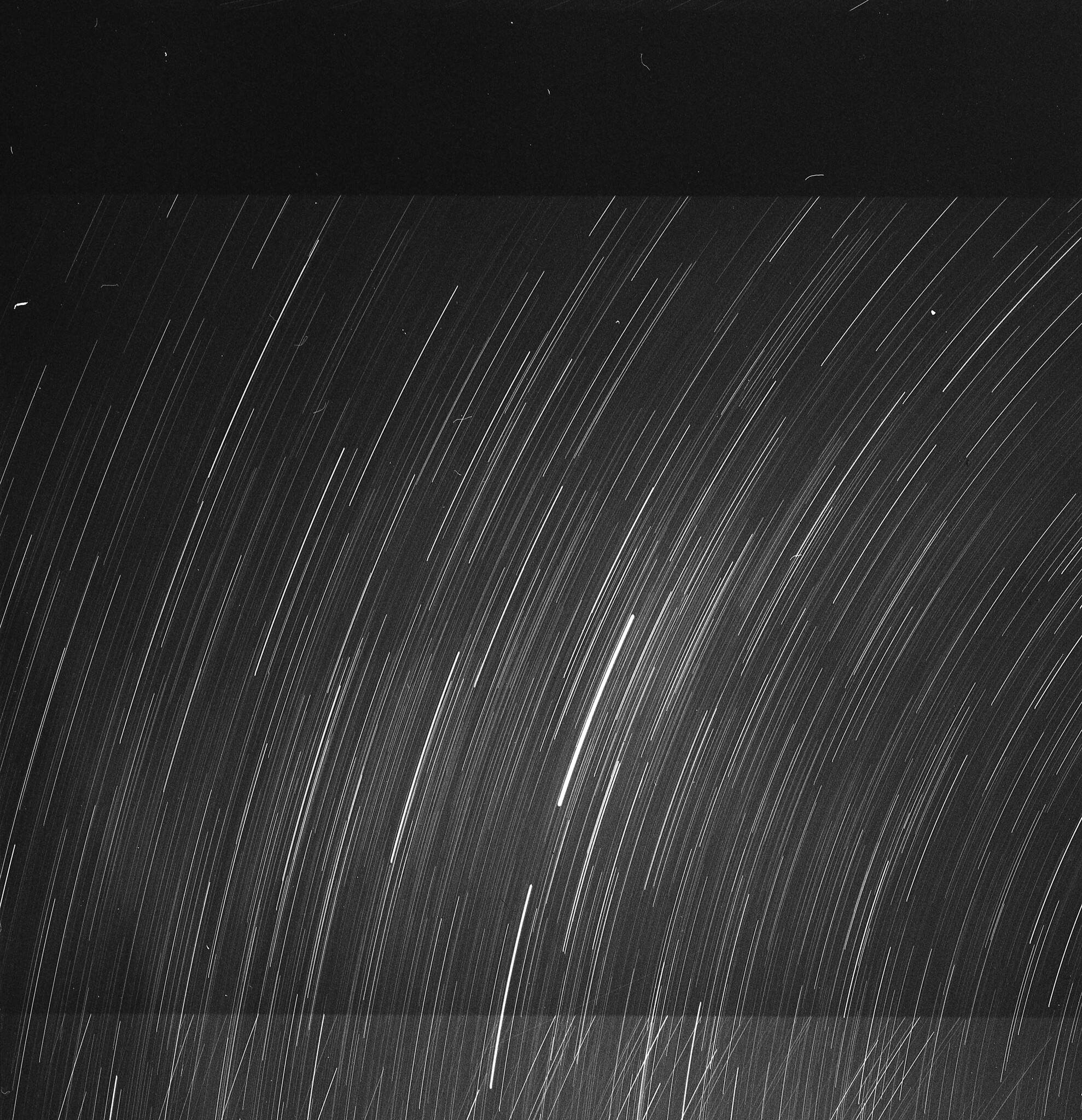
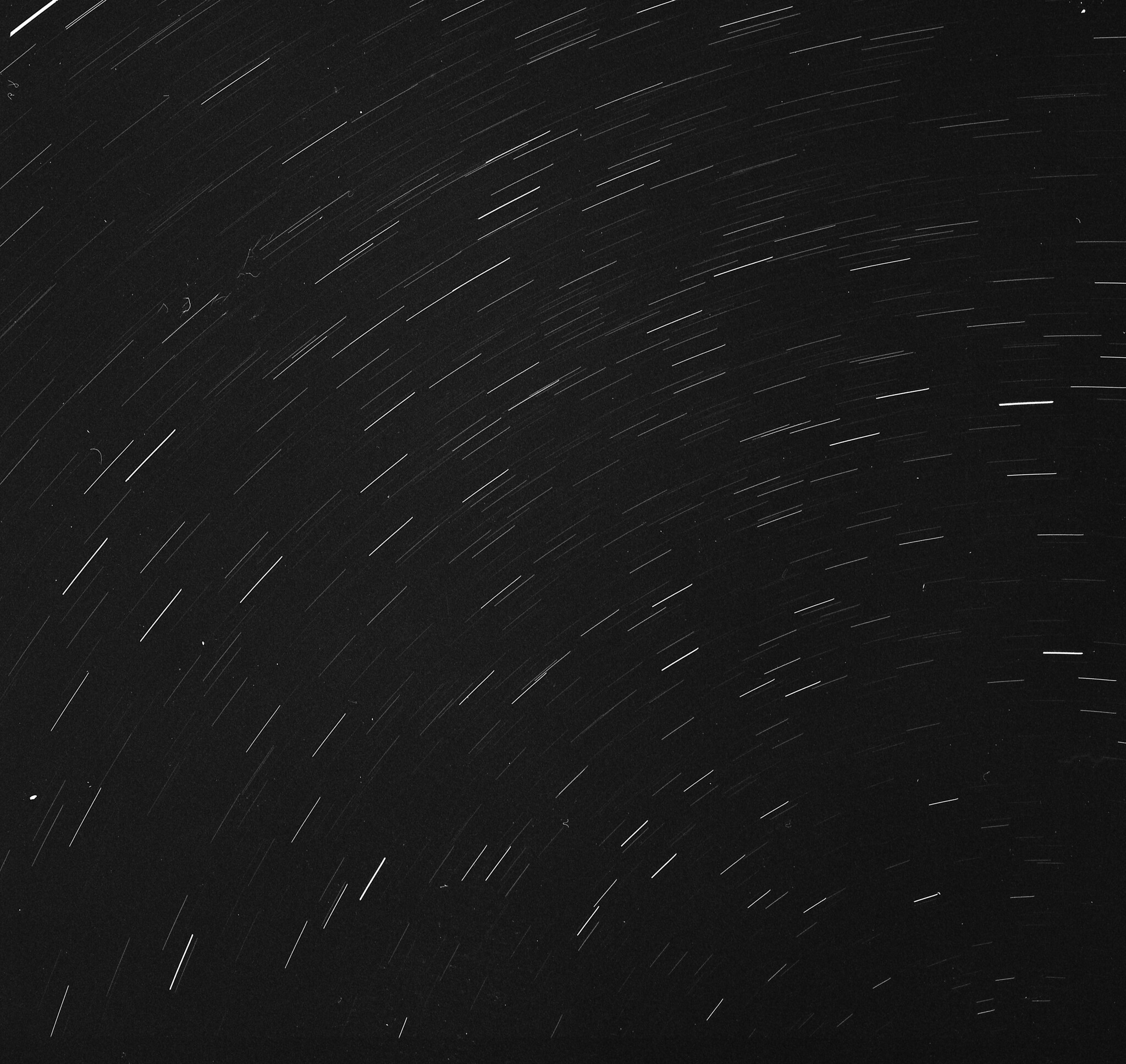
Celestial Sphere : Stars and Dust Particles

Entanglements of matter and meaning.

Karen Barad, Meeting The Universe Halfway, 2007.

Hawking understood black holes because he could stare at them. Black holes mean oblivion. Mean death. And Hawking has been staring at death all his adult life. Hawking could see.
Martin Amis, Night Train, 1997.

For Baudrilland the actual photographs are beside the point. 
It is what precedes them that counts in his eyes- the mental event of taking a picture.
Sylvere Lotringer, The Piracy of Art, 2008.

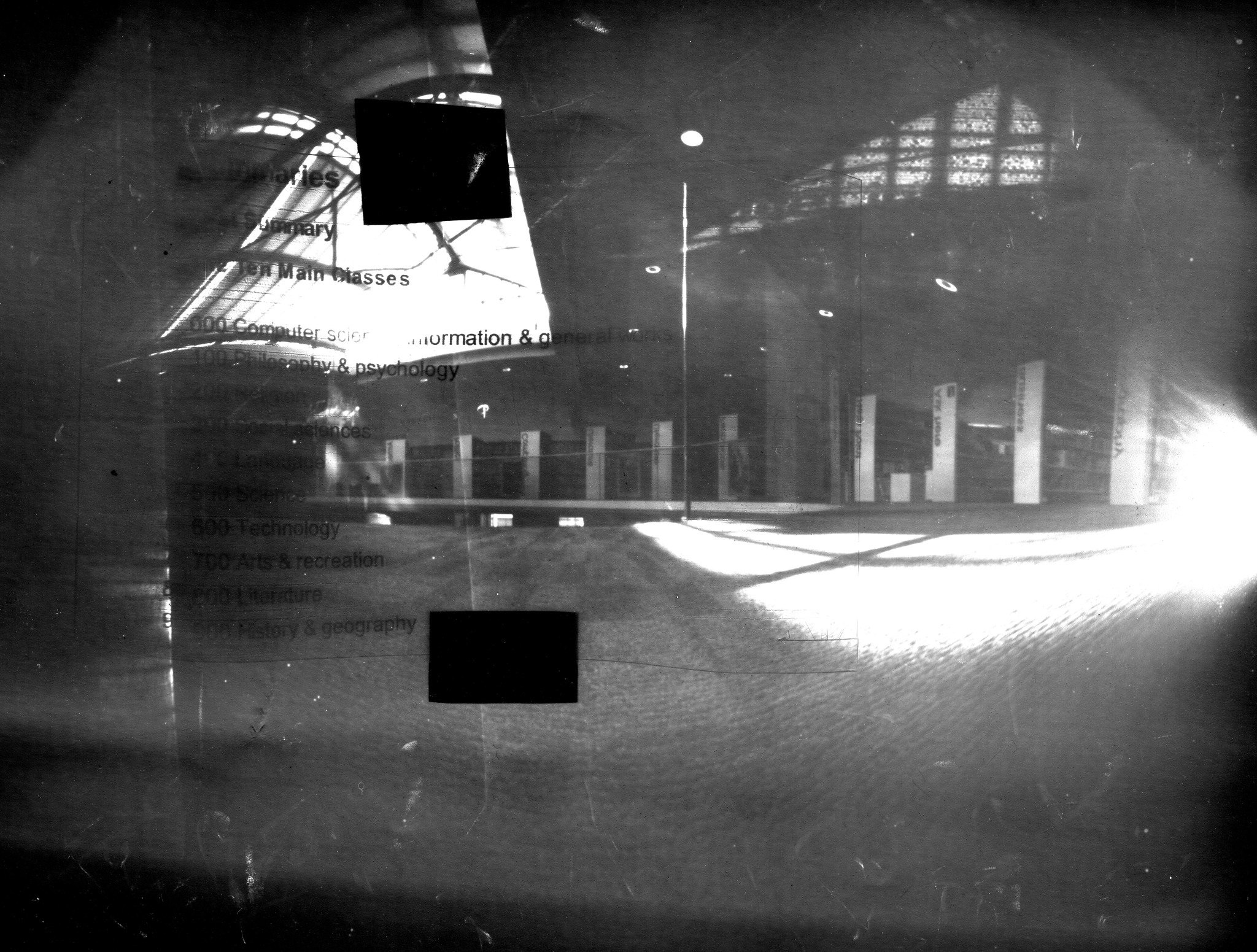
The Library : A Meditation on the Human Condition (Giacometti, artist-philosopher)

Books can step up to us- into us- in many ways.
Voices from Chernobyl by Svetlana Alexievich was for me that rare precipitate force which calls another book into being.

Mario Petrucci, Heavy Water, a poem for Chernobyl.


Thursday, 30 September 2021

Library and Observatory/Abstract Fields of Inquiry : A Meditation on the Human Condition (Giacometti, artist-philosopher)

process,celestial sphere,observation,Karen Barad,zenith,analogue,trails,film,astronomy,night skies,dust particles,voids,Night Train,#russell moreton,#spatial practice,time cavity,The Seeing,naked eye universe,Martin Amis,


Books can step up to us- into us- in many ways.
Voices from Chernobyl by Svetlana Alexievich was for me that rare precipitate force which calls another book into being.

Mario Petrucci, Heavy Water, a poem for Chernobyl.


Norman Lockyer Observatory, Seaton.


Celestial Sphere : Stars and Dust Particles. 


https://www.flickr.com/photos/russellmoreton/25942954484/in/dateposted-public/


Astronomical archive

Hawking understood black holes because he could stare at them. Black holes mean oblivion. Mean death. And Hawking has been staring at death all his adult life. Hawking could see.
Martin Amis, Night Train, 1997.

For Baudrilland the actual photographs are beside the point. It is what precedes them that counts in his eyes- the mental event of taking a picture.
Sylvere Lotringer, The Piracy of Art, 2008.


Entanglements of matter and meaning.

Karen Barad, Meeting The Universe Halfway, 2007.

Meeting the Universe Halfway is an ambitious book with far-reaching implications for numerous fields in the natural sciences, social sciences, and humanities. In this volume, Karen Barad, theoretical physicist and feminist theorist, elaborates her theory of agential realism. Offering an account of the world as a whole rather than as composed of separate natural and social realms, agential realism is at once a new epistemology, ontology, and ethics. The starting point for Barad's analysis is the philosophical framework of quantum physicist Niels Bohr. Barad extends and partially revises Bohr's philosophical views in light of current scholarship in physics, science studies, and the philosophy of science as well as feminist, poststructuralist, and other critical social theories. In the process, she significantly reworks understandings of space, time, matter, causality, agency, subjectivity, and objectivity. In an agential realist account, the world is made of entanglements of "social" and "natural" agencies, where the distinction between the two emerges out of specific intra-actions. Intra-activity is an inexhaustible dynamism that configures and reconfigures relations of space-time-matter. In explaining intra-activity, Barad reveals questions about how nature and culture interact and change over time to be fundamentally misguided. And she reframes understanding of the nature of scientific and political practices and their "interrelationship." Thus she pays particular attention to the responsible practice of science, and she emphasizes changes in the understanding of political practices, critically reworking Judith Butler's influential theory of performativity. Finally, Barad uses agential realism to produce a new interpretation of quantum physics, demonstrating that agential realism is more than a means of reflecting on science; it can be used to actually do science.