Showing posts with label Lars Spuybroek. Show all posts

Monday, 18 May 2026

Overspilling with Viscous Light~The Excess of Changefulness~Openings


Forward to The Sympathy of Things, Lars Spuybroek.

We see the excess of changfulness, at once immanent to and over spilling the structural integrity of the form.

Brian Massumi.


Overspilling Forms~Sympathy~Abject(ion)

Light forming compositions, architectures of processual excess.

An untimely beauty that will not stand still in its place.

Interiors, intimate sociological thresholds.

Spatial Bodies : Capacitors Of Light and Dark.


Visual Minor Keys : Gestures of sympathies/colour thoughts in a relational field.

https://www.flickr.com/photos/russellmoreton/


Sunday, 17 May 2026

Slow Materials~Silent Transformations/Philosophy : Spaces beyond objects/The Movement~Sympathy of Ideas and Feelings.


Outpost 220921 

Loose Assemblages : The Movement of Ideas and Feelings.

The Sympathy of Things.
Lars Spuybroek.

‘If there is one thing we can learn from John Ruskin, it is that each age must find its own way to beauty’ writes Lars Spuybroek in The Sympathy of Things, his ground-breaking work which proposes a radical new aesthetics for the digital era. Spuybroek argues that we must ‘undo’ the twentieth century and learn to understand the aesthetic insights of the nineteenth-century art critic John Ruskin, from which he distils pointers for the contemporary age. Linking philosophy, design, and the digital, with art history, architecture, and craft, Spuybroek explores the romantic notion of ‘sympathy’, a core concept in Ruskin’s aesthetics, re-evaluating it as the driving force of the twenty-first century aesthetic experience. For Ruskin, beauty always comprises variation, imperfection and fragility, three concepts that wholly disappeared from our mindsets during the twentieth century, but which Spuybroek argues to be central to contemporary aesthetics and design. Revised throughout, and a new foreword by philosopher Brian Massumi, this is a new edition of a seminal work which has drawn praise from fields as diverse as digital architecture and speculative realism, and will continue to be influential as it wrests Ruskin’s ideas out of the Victorian era and reconstructs them for the modern age.

 Xenotheka


Bento's Sketchbook : John Berger

Existence appertains to the nature of substance.

A substance cannot be produced from anything else: it will therefore be its own cause, that is its essence necessarily involves existence, or, existence appertains to its nature.
Ethics, Part 1, Proposition VII, Proof


Conscious minds arise from establishing a relationship between organism and an object-to-be-known. 
The Feeling of What Happens, Body, Emotion and the Making of Consciousness
Antonio Damasio. 1999.

Architectural Body
Organism-Person-Environment
Arakawa and Gins.

The Silent Transformations.
François Jullien.

To grow up is to grow old. With time, great love can turn into indifference. And even the most earnest revolution can imperceptibly become its own system of privilege and corruption&;just as global warming has slowly modified the climate by degrees. These are examples of the kind of quiet, unseen changes that François Jullien examines in The Silent Transformations, in which he compares Western and Eastern&;specifically Chinese&;ways of thinking about time and processes of change.

Jullien argues that our failure to notice the effects of cumulative changes over time is due to Western thought&;s foundations in classical Greek philosophies of being, which encourage thinking in terms of determined forms and neglect the indeterminable nature of the transition taking place. In contrast, Chinese thought, having a greater sense of the fluidity of life, offers a more flexible way of understanding everyday transformations and provides insightful perspectives from which to consider our relation to history and nature. In particular, a Chinese approach, argues Jullien, allows us to discover that there may be occasions when it is more efficacious to yield to situations than to confront them head-on.

In The Silent Transformations, Jullien resituates Western philosophy by examining it in the light of traditions of thought that have developed from fundamentally different concepts and contexts. Jullien here opens a space for a new way of thinking, and this refreshing book will stimulate the interest of scholars in both Western and Eastern philosophy.

Xenotheka

Drawing is a  form of probing. And the first generic impulse to draw derives from the human need to search, to plot points, to place things and to place oneself.

The Human Body through drawing and philosophy
Berger/Spinoza 141


Matters of a discursive consciousness are explicit and explainable, and the line between discursive and practical consciousness is fluctuating and permeable, both drawing on the other in the act of agency/making social.

The defining point of agency is namely its potential to transform the given.


Generative energies, entanglements, sensorial diversions from an open studio window overlooking Anglia Square

Improvisations/choreographed with the music/ambient noise are exploratory encounters  between flesh and sound

A hut of ones own (within and bounded by others), crafted and organized around simple processes and interactions within a fallow site given over to creative ecology of energies and enterprise

Vibrant yet curiously passive form of  urbanism

Affectivity as a mimesis of lively transfers between things, humans and non-humans

Human subjectivity : Mimetic Encounters/Explorations

Art works by gathering up forms and materials for affective experimentations in subjectivity

Corporeal unconscious animated by sensitivities/sympathies, a putative affinity (haptic) between certain things including bodies and organs which makes them liable not only to be similarly affected by the same influence, but more especially to affect or influence one another. 

Intentionality/Sympathy/Sentiment/Difference
Inducing a particular set of ethical/political/social responses in actor/social audience 

Mimesis : Paradox or Encounter. Jane Bennett

Calling a sympathy/subjectivity between coloured cloth/wallpaper/display cabinet and human flesh
Francesca Woodman

Mimesis and suggestion in the social, enacted through layers of mediation surrounding humans, objects and non-humans.


Camouflage. Neil Leach

Mimesis
Sensuous Correspondence
Sympathetic Magic
Mimicry
Becoming 

Friday, 1 May 2026

Processual Makings of The Everyday : Between Silences on The Sympathy Of Things

Clay~Ceramic~Theoretical~Things~Ties

Clay Based Practices : Ecologies~Things Emerging in Relation.


Archaeologies of making material sensitive.


A processual object that both poses an agencement~question and carries its gathering.

Sites of building over lived lives.


This item is a sculptural ceramic artwork by artist Russell Moreton, specifically developed from his interest in architectural spaces and material construction.     Artist: Russell Moreton, a visual fine artist based in Harleston, Norfolk. Material: Slab-built clay and ceramic bodies. Theme: Explores themes of 'Making', interior spaces, and metaphysical immersive nature. Style: Involves intense textures and architectural, almost meditative forms.


Sociological Bindings~Matter(s) of Concern

Felt Abstractions~Inspirational Radicalism.

Urban Gothic : An Excess Of Changefulness.


Of the creation of concepts, explored through the plane of immanence in which it can be born and the 'conceptual personae' which can activate it.


On Other Forms Of Thought.

What Is Philosophy?

Deleuze and Guattari.

Can perhaps only be posed late in life with the arrival of old age and the time for speaking concretely.

It is a question posed in a moment of quiet restlessness at midnight when there is no longer anything to ask.

Their book is a profound and careful interrogation of what it might mean to be a 'friend of wisdom'. But it is also a devastating attack on the sterility of what has become. When the only events are exhibitions and the only concepts are products which can be sold.

Philosophy they insist is not contemplation, reflection or communication, but the creation of concepts.


Essays : Critical and Clinical.

Deleuze is concerned with the delirium, the process of life that lies behind this invention as well as the loss that occurs. The silence that follows when this delirium becomes a clinical state. 


Material~Felt Abstractions : Delirium and Dissolution.

Spatial Bodies : Between Silences on The Sympathy Of Things.

A Growing Thicket of Thing~Ties

White Odyssey~Archaeologies of making material sensitive.


https://www.flickr.com/photos/russellmoreton/


Thursday, 17 July 2025

Shadow Theatre/Sculpting In Time : Visceral Compositions~Gatherings

A Resultant Complication of  Agencement.

Shadow Theatre for a  Performative Interior.

Enfolded Structures : On a sympathy of correspondence.


Sensing Places : Towards an Alchemy of Thinking.

This site based exploratory apparatus, part self assembly, and part crafted brings together components, materials and filtered light. Built around the involvement of making in the landscape, this event based intervention creates a fictional space articulated through the alchemy of built spaces that merge the poetic with the tectonic.


Photographic Documents : Domain-Court-Cell : Research Collages

Spatialities and Interior Spaces~Apparatuses for Diffractive Thinking.

Science~Inside The Church : Spatial Documentation~Defractive Readings.


VISITORS : Collage/Waverley Project/Exploratory Practice 2015.

Cyanotype Process


Modern/Primitive

Collage/Fragment from Dom Hans van der Laan

Cell/Court/Domain


Visitors

Godfrey Reggio 


Research collage with photographic document, MA Interiors, UCA Farnham.


Monday, 27 January 2025

The Centrality of the Human Body to Architecture : Quotidian Aesthetics/Interventions

Outpost 270125


https://www.flickr.com/photos/russellmoreton/

In-Transit


The Complex Process of Knowledge Production.

The Narrative of Theoretical 'Unravelling'.

What Is An Artist?

Irit Rogoff. 2006


Robert Morris

Catalogue Entries.


Columns, 1961

Passageway, 1961

Box For Standing, 1961

Portals, 1961

Box With The Sound Of Its Own Making, 1961

Early Minimalism

Measurement, 1963

Imprints And Body Casts, 1963-64

Site, 1964

Leads, 1971

Felts, 1967-83

Dirt, 1968

Continuous Project Altered Daily, 1969

Observatory, 1971-77

Rubbings, 1972


INFRA-THIN

Sensations between objective knowledge, difference and truth.

Post-structuralism, A very Short Introduction.

Catherine Belsey.


The Architecture of Emergence.

The Evolution Of Form In Nature And Civilisation.

Michael Weinstock.


The Architecture Of Continuity.

Lars Spuybroek.


The Body.

The Lived Body.

The Flesh of Things

Donn Welton


Written On The Body.

The World and Other Stories.

Jennette Winterson.


Painting for Bacon was a visceral event a sensation, driven by emergent behaviours and phenomena.


Ceramic spatial inceptions with circulating totems. 

Slab built, Stoneware. 2025


Tentative/Theoretical/Speculative Landing Sites.

Between Organism-Person-Environment and its Spatial/Architectural Body.


Preface.

Stefan Fichtel


Well-made animated information graphics are based on clear decisions about what matters and what should be left out.


Human Body/Indexical Trace on dot-matrix paper.


The Centrality of The Human Body to Architecture.


Undone/Assemblages of Concern.

Collage as the third aesthetic.

Ranciere argues for collage as 'third' aesthetic: it can combine two relations and play on the line of indiscernability, between forces of sense's legibility, and the force of non-sense's strangeness.

The Dark Monarch.

Magic and Modernity in British Art. 2010


The Bricoleur/sweeping the floor/movements in matter/spatial layering, thought in motion.


Embodying Emotion Sensing Space:

Introducing emotional geographies.

Joyce Davidson, Christine Milligan. 2004


Studio Floor Material.


The Artist's Reality

Philosophies of Art

Mark Rothko.


Culture, Creativity and Environment.

New Environmentalist Criticism.

Fiona Becket, Terry Gifford.


Ecology Without Nature.

Towards a Theory of Ecological Criticism.

Timothy Morton.


Visual Ecology

Transparency : Expressing the Unseen.


Transparency-the ability to see into and understand the inner workings of a landscape-is an absolutely essential ingredient to sustainability. In a world where more and more of the technology controlling our lives is not only beyond our individual control but is also invisible and incomprehensible to the average person, the landscape sreves not only as the foundation for our only genuine 'tangible' reality, but as the only mechanism by which we can really know where we are-and how and why as well. It can be argued that as humans we have a right to know where we are, how we are connected, and how we are doing.

Gray World, Green Heart.

Robert L. Thayer, Jr. 


Julia Kristeva

Black Sun.

Depression and Melancholia.


Susan Sontag

Under the Sign of Saturn


After Hiroshima

elin o'Hara slavick


On Pictures and the words that fail them.

On An Image Of A Bottle

James Elkins


A Field Guide to Melancholy

Melancholy and The Landscape

Locating Sadness, memory and reflection in the landscape.

Jacky Bowring


Who Comes after the Subject?


The essays collected in this volume present the current research of nineteen contemporary French philosophers on one of the great motifs of modern philosophy: the critique or the deconstruction of subjectivity.

Eduardo Cadava, Peter Connor, Jean-Luc Nancy.


The Enchantment Of Modern Life.

Attachments, Crossings, and Ethics.

Jane Bennett


Ordinary Lives.

Studies in the Everyday.

Ben Highmore.


Everyday/Quotidian Aesthetics.

Ranciere is perhaps the contemporary writer most alive to the productive and necessary confusion between aesthetics as a general field describing the realm of sensate perception, and the more limited meaning relevant to the field of art that has taken shape in the West in the last two hundred or so years. And it is this confusion (a confusion that infuses both the general and the limited economy of aesthetics) that we can find the materials to help us build a quotidian aesthetics.


The Politics of Aesthetics.

The Distribution of the Sensible

Jacques Ranciere.


Emergent behaviours/phenomena to generate buildings.

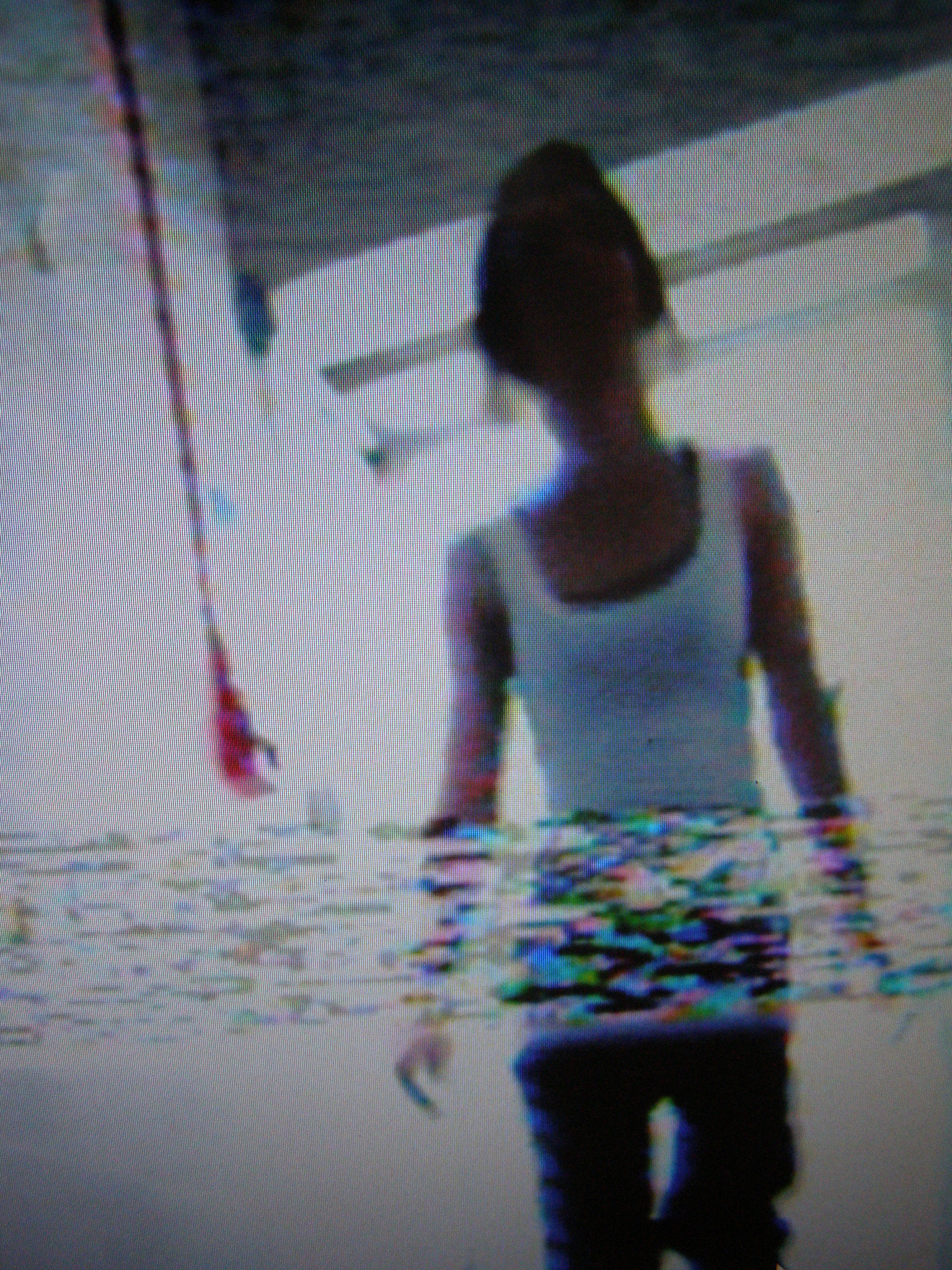
Screen-shot CCTV.

Fire exit intervention WSA. 2008


The Centrality of the Human Body to Architecture.

Framing/Temporal Containment/Instances and Immediacies : Human Bodies/Spatial Bodies.


Thursday, 10 June 2021

Gathering Energies/Planetary Movements/Reveries on Reverie : Blue Drawing 9549


Presentation Slide,  The Architecture of Continuity : Lars Spuybroek, essays and conversations. Rotterdam 2008. The Poetics of Memory "The Cinema of Robert Lepage : Alexsander Dundjerovic. London 2003. Spatiality : Robert T. Tally Jr. London 2013. The Poetics of Reverie "Childhood, Language, and the Cosmos" : Gaston Bachelard (trans Daniel Russell). Boston 1971.


Reveries on Reverie/Reveries toward Childhood

Childhood sees the World illus­trated,  the World  with  its original colors,  its true colors.  The great once-upon-a-time (autrefois) which we relive by dreaming in our memories of childhood is precisely the world of the first time.

For those of us who can only work on written documents, on documents which are produced by a will to 'edit,' a certain indecision cannot be obliterated in the conclusions which terminate our inquiries. In point of fact, who writes? The animus or the anima?

These seasons find  the means to  be singular while remaining universal.  They  circle in  the sky  of Childhood  and  mark  each childhood  with  indelible signs.  Thus our great memories lodge within the zodiac of memory, of a cosmic memory which does not need the precisions of the social memory in order to be psycholog­ically  faithful.  It is the very  memory  of our belonging  to  the world,  to  a world  commanded  by  the dominating  sun.
Gaston Bachelard