Showing posts with label flickr. Show all posts

Saturday, 20 June 2026

Colour Sympathies~Modes of Existence


Visual Art Landing Site : A site of situated awareness.

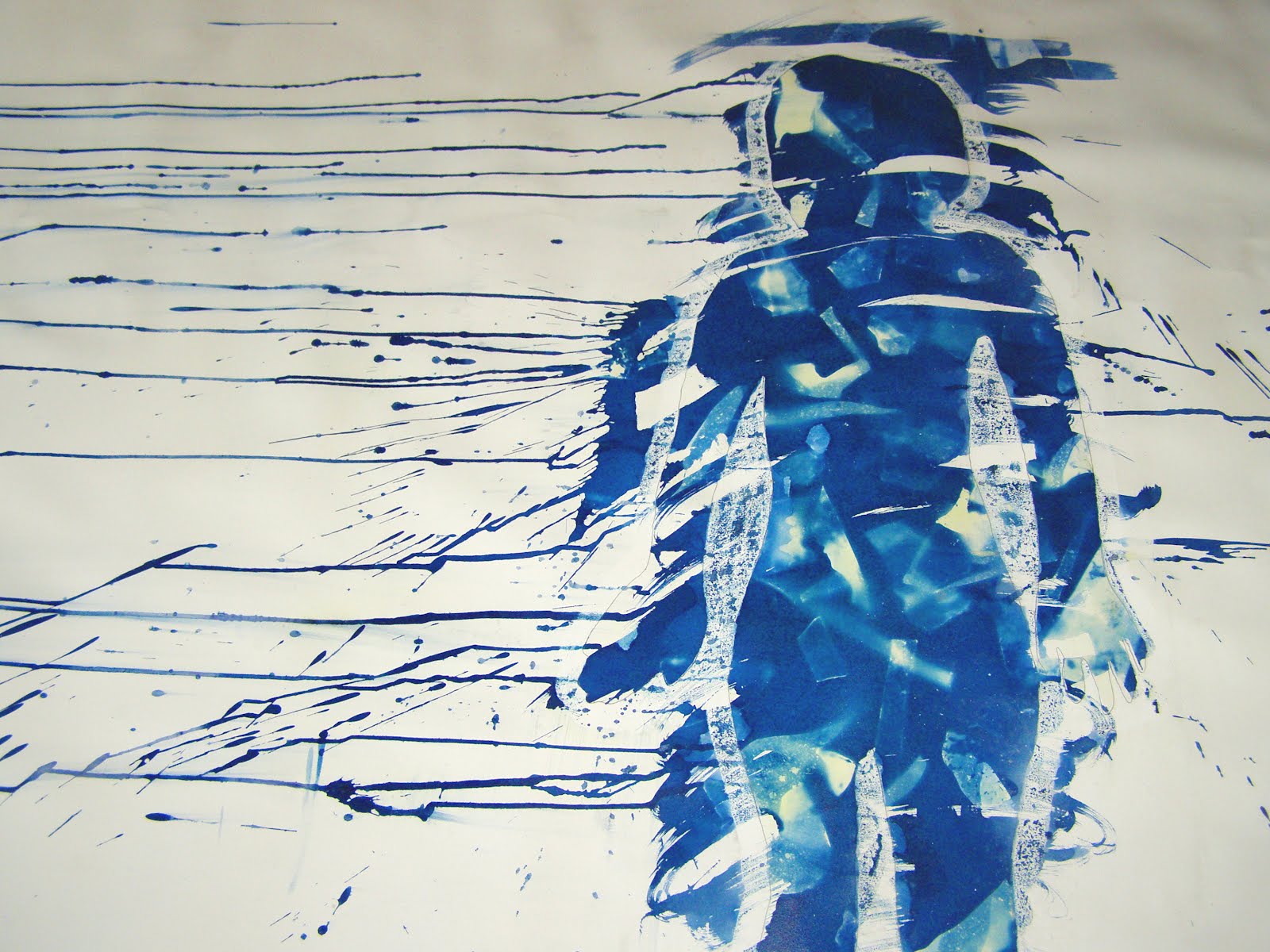
Landing Site : Glass/Filtered Lightworks : Cleaving Collage.

Colour Sympathies~Modes of Existence.

Atmosphere~Landscape : Entanglements of Affect/Aesthetics.


The Poetics of Space. Gaston Bachelard.

The classic look at how we experience intimate places. 


The Eroded Steps. Giuseppe Penone.

Dean Clough Contour Lines.

Land Drawings, Installations, Excavations. Kate Whiteford.

Remote Sensing. Colin Renfrew.

https://www.flickr.com/photos/russellmoreton/


Sunday, 14 June 2026

Spatial Bodies : Visual Art Materialisms~Processual Workings


Drawing iterations into the ritual body~site~time

Body Assemblage/Diffracted Material #1-3 : Composition~Dissolution

https://www.flickr.com/photos/russellmoreton/

https://russellmoreton.tumblr.com

Artist's Statement. 2012

UK based visual fine artist working in alternative photographic processes, installation and drawing. Interested in using "Spatial Practices" to inquire into architectural space through fine art and performative interventions. Practicing craftsman in architectural glass and ceramics.

Russell Moreton, Winchester. 


Friday, 12 June 2026

Making Processual Paths Of Volatility : Ceramics/Sinopis Red/Palette from Antiquity.

Outpost 171225

Early palette from Antiquity:

White, yellow ochre, sinopis red (earth red), black (bluish).

Michael Grimshaw, Winchester School of Art. 2007


Intricate Local Behaviours : Conversations/Correspondences between unrelated entities.

Lines. (Making/Thinking/Matter/Material)

Tim Ingold


What Is Art ?

Joseph Beuys.


I find it interesting that you say that this stool or box speaks to you, whereas this floor, as you said, doesn't. A similar thing happens to me, and I ask myself: What is this due to, the fact that it doesn't speak to me, or only a little? It makes me think that these ready-made things, this precision, actually compels me to behave in a particular way, not just these things here, but also a certain window, or a specific type of architecture that is very fixed very straight, that derives from something very thought out; this compels me to live or behave in a similar way,

Volker Harlan.


Beuys: Yes, right, exactly; in other words, this lives (points to the box) while the other (points to the floor) is dead. The first doesn't force itself on you, the other continually forces itself on you.

Thinking Processual.

Resistance/Viability : Mapping/Living

Meaning that it is not so much a matter of crossing boundaries, but rather a matter of open-endedness. A place where boundaries have become diluted and single figures are already coupled or heterogeneous figures (in the case of Bacon, man-animal).


Kovar/Deleuze.

The Architecture of Abjection.

The Logic of Sensation.


Working From Simple Things/Gestures/Materials.

https://www.flickr.com/photos/russellmoreton/


Theoretical Movements in Clay+Ceramics.

The Circular/Elliptical Matter/Mattering of Things.

Gathering/Pouring/Manifolds : Forms of Thinking. 


Events.

Arte Povera.


The Way, without demarcation, rather a way of viability by which the continuum of life is renewed.


The Philosophy of Living.

Francois Jullien.


The Quiet Mind :  Silently without resistance

(Sound of barking) Do you listen to that dog? Wait, wait. Silently? Listen to it completely silently, which means without any resistance, without any irritation, just listen to it. When you listen quietly there is no resistance, there is no irritation, you do not identify yourself with the dog and the barking of it, your mind is quiet.

Meditation

The meaning of that word is to measure, basically (for oneself).

https://www.krishnamurti.org/transcript/in-meditation-there-is-no-direction/#:~:text=One%20must%20be%20wholly%20and,is%20vain,%20full%20of%20confidence


Human Bodies/Spatial Bodies.

Kounellis/Opera, interventions, unscripted by workmen, bodies on trolleys. 

Penone, wooden frame, human body, empty frame installed in a stream.

Beuys, accumulator, clay balls, wires, simple sturdy wooden table.


Objects become relational in conjunction with the ways in which the environment proposes its own constitutive limits.


The Enabling Constraint. 

Erin Manning.


Visual Art Practice. 2024


Whether abject(ion) issues forth from a human body, a space or any other entity, it sets the whole world in motion and instigates a chain of exchanges.


In 'becoming' for Deleuze and Guattari we form a multiplicitous assemblage where individual elements are blurred, and together begin to act as a kind of whole. But a whole that is not fixed, as the assemblage also has a side facing a BwO which is continually dismantling the organism.


Through abject(ion) the smells, textures and physical forms of our body space and this excrement leaking out, become fused together. We become part of the space: the space becomes a part of us.


Abject(ion) re-configure the body and space physically through the transference of matter.


Architecture Without Organs (BwO)


The BwO is in fact produced as a whole, but a whole alongside the parts. A whole that does not unify or totalize them. But that is added to them like a new, really distinct part.

Deleuze and Guattari.


BwO plays a role in the notion of an open subjectivity. Kovar asks, are or how are abject(ion) and BwO related, and how might this relation be played out in architecture?


The BwO for Deleuze and Guattari is a concept that uses the virtual dimensions of the body as a set of potentialities that may be activated through becoming, importantly it is a body, understood as process that is continually constructing and deconstructing connections. 


To speak of process and the continual construction and deconstruction of connections is to implicate numerous entities between which these connections are made and therefore speak of heterogeneity.


Open Subjectivities.

Unmaking The Human Body/Subject.

Blurring the boundaries between interior and exterior.


Translucent assemblages are all that are left from the transparency/clarity of the morning that will soon dissipate.


Reliquaries of Light and Darkness.

Bodies, spatial and human in transitional movements. 

The Sacred and The Medical Body.


The Hospital Room.

The Killing of a Sacred Deer.

Cronos.


Clay/Working/Learning/Making.

Working in Clay and Fire /Mapping Resistance and Viability.


City of Orion, ceramic objects in the landscape.

Raveningham Sculpture Trail. 2024


Ceramic works investigating the relationship of water to the human body and the architectural body of interior spaces.

Water at The Hungate, Norwich. 2023


Exhibitions with Anglian Potters.

Ferini Gallery, Lowestoft. 5

Undercroft, Norwich. 4

All Saints, Cambridge. 2

2019-2024.


Revisited Contemporary Ceramics

Things of Beauty Growing.

The Fitzwilliam Museum. 2018


Anglian Potters. 2018


Teaching Sessions, throwing/handbuilding.

Brockwood Park School. 2012-2015


Speculative Clay Workshop/Walking in the Landscape.

Teaching Academy, Brockwood Park School. 2011


Raku Firings.

St Ninian's Cave.

Scotland. 2013


Bodyscapes, raw clay installations.

Chapel Arts Studios, Andover. 2010

The Yard, Winchester. 2009 


Contemporary Craft Ceramics. 2004-2006 

Life Drawing/Sculpture, figurative/abstractions in clay. 1996-2002


Dexterity Crafts.

Potter throwing domestic pottery.

Walton on the Hill. 1985


Ceramics, architecturally influenced vessels in slab and thrown processes.

Epsom College of Art and Design. 1981-1984


Industrial Pottery experience.

Grayshott Pottery. 1979-1981


Studio Pottery experience. 

The Hop Kiln Pottery. 1978


A Level Ceramics.

Farnham Sixth Form. 1976-1978


Thursday, 21 May 2026

Reliquaries for experience : Wayfaring/Lines and Interior Spaces : Materials of movement and attention.

Reliquaries.

https://www.curatorspace.com/artists/russellmoreton

https://www.flickr.com/photos/russellmoreton/


2024

Ceramic

170mmL x 240mmH x 60mmW

Wayfaring/Lines and Interior Spaces : Materials of movement and attention.

Processual clay+ceramic constructions that articulate through processes of mark making and intermediaries, surfaces spatial bodies and interiors all entangled in a complex scaffolding of its own making.


"Makers work in a world that does not stand still, Iteration allows for continual correction (material conversation) in response to an ongoing perceptual monitoring of the task as it unfolds, mixing the potential for blending or combining matter that already exists into new combinations" Tim Ingold, 2010.


The Quiet Mind : Silently without resistance. Books/Reliquaries : Working of matters and the exteriority of their relations. Marking/Wayfaring Inscriptions : Clay+Ceramic


(Sound of barking) Do you listen to that dog? Wait, wait. Silently? Listen to it completely silently, which means without any resistance, without any irritation, just listen to it. When you listen quietly there is no resistance, there is no irritation, you do not identify yourself with the dog and the barking of it, your mind is quiet. Krishnamurti.


Meditation The meaning of that word is to measure, basically (for oneself).


Exploring Ceramic Art: Movement and Attention

This title targets specific keywords like ‘ceramic art’ and ‘movement’, enhancing SEO by attracting audiences interested in art processes.


Meditation and Art: The Quiet Mind in Ceramics

Combines popular search terms ‘meditation’ and ‘ceramics’, appealing to those exploring mindfulness in creative practices, increasing search visibility.


Wayfaring Through Clay: Art and Perception

Focuses on the unique concept of ‘wayfaring’ linked to clay art, appealing to niche audiences and improving content relevance in search results.


Monday, 18 May 2026

Overspilling with Viscous Light~The Excess of Changefulness~Openings


Forward to The Sympathy of Things, Lars Spuybroek.

We see the excess of changfulness, at once immanent to and over spilling the structural integrity of the form.

Brian Massumi.


Overspilling Forms~Sympathy~Abject(ion)

Light forming compositions, architectures of processual excess.

An untimely beauty that will not stand still in its place.

Interiors, intimate sociological thresholds.

Spatial Bodies : Capacitors Of Light and Dark.


Visual Minor Keys : Gestures of sympathies/colour thoughts in a relational field.

https://www.flickr.com/photos/russellmoreton/


Bodying/Scaffolds/Tentative Architectures : Modes of Existence creating Architectural Surrounds

Outpost 291024

Space And Subjectivity.

Collage with glass and documentation from Francesca Woodman.

https://www.flickr.com/photos/russellmoreton/


Making/Building made indeterminate through a retention/questioning of a framework and the insertion of an event that introduces a slippage/deviation of that of a framed outcome.

Bernard Tschumi. (equation as a provisional framework)


Tentative/Processual Architectures. 

Arakawa and Gins.

Lucy Orta.


Shortcomings of Phenomenological Thought.


One places oneself at the centre, designates oneself, measures oneself and uses oneself as a measure. One is in short a 'subject' and space is a projection of oneself or its counterpart, that it is defined therefore not in its own right, but in relation to the subject. Space, my space is not the context of which I constitute the 'textuality' instead it is first of all my body and then it is my body's counterpart or other, its mirror-image or shadow. It is the shifting intersection between that which touches, penetrates, threatens or benefits my body on the one hand and all other bodies on the other. This maintains the boundaries between body and space, subject and object.

Henri Lefebvre.


Phenomenology always stops at boundaries, at the boundary of the body, which is precisely where abject(ion) continues beyond. It is because phenomenology concerns the lived body rather than bodies in a plural and more general sense that it is a discussion of wholes rather than transitions and exchanges unable to accommodate volatile processes.


Inhabitations : Cultures Of Melting Snow.

The In-Between.


There is no room for the in-between, no way to describe exchanges between entities and the effect of those exchanges. All is static and no cannot as Francois Jullien wrote of Plato, think of the snow in the process of melting. One can only think of either snow or water, but never the process of change.


Abject(ion) Architectures of Process, with brings to the fore interrelated areas of Relational Architecture and Emergent Phenomena.


Architecture in Abjective(Abject (ion) States of Subjectivity.

Frameworks/Scaffolding.

Affective Matter/Mattering.


Kovar turns to Abjection a concept developed by Julia Kristeva, abjection-abject(ion) is both process and product, and can hold a discussion of the transgression of borders. It concerns anything that crosses the symbolic, anything that is expelled literally or figuratively, and that is necessary to keep at bay in order for subjectivity to prevail, issuing from abject(ion) is therefore a threat to our subjectivity, a threat to the boundary between Subject-Object/Body-Space.


Expanding on the processual and material nature of abject(ion), such an undertaking begins with Event and is rounded off with discussions of Affect and Matter.

Zuzana Kovar.


A Disclaimer.


Following Deleuze this book is interested in what 'Abject(ion)' does, rather than what it is.


Drawing (at times) on aspects of the same theory, Kristeva is interested in the disruption of psychological boundaries and Deleuze who deals with both psychological and physical boundaries. Through Deleuze we are able to engage with abject(ion) more holistically.


This book is not concerned with making 'abject' architecture, that is making buildings with abject matter. But is rather concerned with developing ways of thinking about bodies, spaces, and the relations within and between these through the lens of abject(ion).


Architecture in abject(ion) promotes an interest revealed by a sensibility that favours theory and textual practice over images and objects, and goes towards explaining why illustrations of examples referred to throughtout are withheld.


Project 3.1

Body aject(ion) space: A collection of contracts.


The Contracts is the collective name given to a series of projects that explore the notion of abject(ion) as event. Critically, The Contracts are not only explorations (as accommodated by Tschumi), bur also spatial events (as accommodated by Deleuze), and hence the architecture that is defined by the interplay of these events. Given the centrality to this book of the simultaneous abject(ion) of human bodies and spatial bodies, and the indiscernibility in which this results, The  Contracts have come to span a period of three years, hence establishing themselves as the most developed body of work included here.


Architecture in Abjection.

Bodies-Spaces-and Their Relations.

Zuzana Kovar.


A Species of Spaces.


Reclaimations, between a desk and a skip.

Russell Coates.


Archive Mappings/Concerns : Lines/Linkages/Nodes/Points/Intersections.


Architectural Constructs/Events into Material/Making.


Abject (ion) : Affective Resonances/Matter : Clay+Ceramic.

Vessels/Voids/Making from folded spaces.


The simple issues of attending to the material.


Re-Casting Matter, not 'materials'.

Becoming mindful of 'materials' and their 'hylomorphic tendencies'.


Clay retains transitions and exchanges, collects up discrete entities/symbols/inscriptions, places them into volatile spaces/processes of change .


Questioning Subjectivity : Fluidity of matter/material out of place.


The Cinema of Catherine Breillat.


The Process of Abject(ion).

In critical theory, abjection is the state of being cast off and separated from norms and rules, especially on the scale of society and morality. The term has been explored in post-structuralism as that which inherently disturbs conventional identity and cultural concepts. Julia Kristeva explored an influential and formative overview of the concept in her 1980 work Powers of Horror: An Essay on Abjection, where she describes subjective horror (abjection) as the feeling when an individual experiences or is confronted by the sheer experience of what Kristeva calls one's typically repressed "corporeal reality", or an intrusion of the Real in the Symbolic Order.


The process of a body excreting from within itself. A transition between inside and outside, a disruption of physical and psychological boundaries of the still prevalent understanding of body as subject and space as object.


A moment of indiscernibility, the result of which is the product of repulsion, the abject and where body, space and abject become an ambiguity, ranging in intensity from subtle gestures to confronting actions immersed in the viscosity of our leaky bodies.


Wednesday, 22 April 2026

Ceramic Deconstructions of Hidden Architectural Interiors : Spaces/Surfaces/Interiors on Solitude/Sensuality


Sensing Architecture : Movements of  Human Bodies/Spatial Bodies.

Thinking/Making within gestures of drawing spatial speculation.

https://www.flickr.com/photos/russellmoreton/53757637955/in/dateposted-public/


Materials as Leaky Things/The Correspondences of Surfaces  : For Tim Ingold.


A Philosophy of Solitude.1933

In Defence of Sensuality.1935

John Cowper Powys


Exploring the space of solitude, to explore ideas and thoughts with a public. The hermit as a proto-performance artist displaying qualities of spirituality, intelligence, artistry and sensuality.


Anne Douglas.

The Hermit Project.

The Follies Journal. 2003


The House Fifteen Foot Square.

The proposed Hermitage at Cadland (drawing).


Interior Spaces.

The Alchemy of Imagination.


In the dead linen in cupboards I seek the supernatural.

Joseph Rouffange.


The wardrobe is filled with linen, there are even moonbeams which I can unfold.

Andre Breton. 1932


The Permanence of Childhood.


On Poetic Imagination and Reverie.

Gaston Bachelard.


While the child was dreaming in solitude, he experienced a limitless existence. His reverie was not merely an escape. It was a reverie of flight. Dreaming of childhood we go back to the den of reveries.


All the ideas that I want to put forth in this chapter tend to establish the persistence in the human soul of a nucleus of childhood. Of a motionless but enduring childhood outside of history, hidden from others disguised as history when it is narrated, but having real existence only in its moments of illumination which is to say in its moments of poetic existence.


Chamber Music/Reverberations.

Constructed Space/Ceramic Forms.

On Silences, Surfaces, Interiors and Depths.


Wardrobes with their shelves, desks with their drawers and chests with their false bottoms are veritable organs of the secret psychological life, indeed without these 'objects' and a few others in equally high favour, our intimate life would lack a model of intimacy.


They are hybrid objects, subject objects, like us, through us, and for us they have a quality of intimacy on the shelves of memory and in the temples of the wardrobe.


But the real wardrobe is not an everyday piece of furniture, it is not opened everyday and so like a heart that confides in no one, the key is not on the door. Many a time we dreamed of the mysteries lying dormant between its wooden flanks.


Rimbaud designates a perspective of hope, what good things are being kept in reserve in the locked wardrobe? This time it is filled with promise, it is something more than a family chronicle.


Exaggeration is always at the summit of any living image, and to add fantasy to linen is to draw a picture, by means of a volute of words off all the superabundant blessings that lie folded in piles between the flanks of an abandoned wardrobe.


Friday, 10 April 2026