Showing posts with label archive. Show all posts

Friday, 3 July 2026

Ceramics and Architecture : Architecting and its ecologies/matters of concern.

Outpost 100223

Spatial Bodies~Environments :  Matter(s) of Interference


Architecting and its ecologies/matters of concern.

Circulating Objects : Lines/Holloways.

Making~Journeys.

The items shown in the image are ceramic sculptures by artist Russell Moreton. 

These pieces are part of his exploratory, architectural-themed work. 

They are characterized by a processual nature that focuses on the imprint of the artist and the material itself. 

The sculptures often feature a raw, distressed finish, incorporating white paint and visible construction marks. 

Moreton's practice in these ceramics investigates themes of silence, architectural space, and the interconnectedness of interior spaces. 


The image displays a workspace cluttered with various documents, papers, and art-related materials, suggesting an environment dedicated to research, archival work, or artistic preparation.

Workspace Setting: The desk is heavily organized with stacks of papers, binders, and printed documents, which is characteristic of an academic, curatorial, or creative office space.

Artistic Materials: A large, black-and-white print or photographic work is prominently displayed on a board in the background, surrounded by smaller reference materials pinned to the wall.

Documentation: The presence of extensive paperwork and what appears to be exhibition or research documentation suggests the space is used for managing art projects, publications, or historical research.

Professional Environment: The overall composition implies a professional or semi-professional setting, likely related to art history, gallery management, or creative practice, where the physical handling of documents and visual references is central to daily work.


The body's participation in explorations, engagements and its care in attending to the values of immediacy, vulnerability, fragility, improvisation, performance, movement, multiplicity and becoming.


Apparatuses and their ecologies for learning.

The choreographic object/agent.

The role of the body is scored through a shifting agency and the power of techniques of things.


Theoretical objects of things which do theory without us imposing it, on them.

Oren Lieberman. 2013.


The Production of The Unexpected.

The Joy of Speculative Play.


Perception/Thought/Action

A caring curiosity that wants to know and understand and explore relations.


Projective Speculations.

Ecologies/Locations.

Questioning/Research.


The objects in the image are slab-built ceramic sculptures created by the artist Russell Moreton. 

Artist: Russell Moreton.

Medium: Clay.

Technique: Hand-built using slab construction.

Style: The works are processual in nature, featuring raw, distressed finishes and architectural themes.

Inspiration: The artist's work often explores the interconnectedness of interior spaces, architectural settings, and the imprint of the maker.


Processual learning occurs in movements, gestures, postures, expressions and exchanges with other bodies and things.


Landscapes Of Actions.

Modalities Of Intravention

Constitutive Qualities Of Dance.


Ephemerality

Corporeality

Precariousness

Scoring

Performativity


If we start by moving, by thinking through moving, and by living through moving. We'll arrive to that disturbing vision : that the predicament of dance is to be an art of erasure. Dance always vanishes in front of our eyes in order to create a new past. The dance exists ultimately as a mnemonic ghost of what had just lived there.

Lepecki. 1996.


Bodily interactions highlight the entanglement of material through a process/processual understanding and situated analysis.


The Archive.

Matters of Concern.

Terms of Engagement.

Interrogate with descriptors and new issues of practice.


Bringing Things to Life.

Starting conditions for responsible and curiosity driven engagements with the world.


Place-Refreshed.

New-Agencies


The Interconnectedness of Places.

For Ingold, congealed places become relationships/connections for lines of occupation.


Curriculum making/experience as the enactment of dwelling in places.

Landscape Constructions/Observatory/Garden.

Raveningham, drawing,mapping, landmarking paths, wayfinding, territories.


Ceramics and  Architecture

Marking The Line.

In response to Sir John Soane.

Joanna Bird. 2013


Arranging the physical space/circulation to receive forms/intraventions.


Christie Brown, her practice engages with mythology and narrative and the parellels between psychoanalysis and archaeology through figurative work, which references archaic collections and the significance of inanimate objects in human lives.


Carina Ciscato, relocated to London in 1999, where she worked in the studio of Julian Stair and Edmund de Waal. The move, the contrast in culture and in attitudes to ceramics, has seen her work grow in confidence and move in exciting new architectural directions.


Nicholas Rena, his art is concerned with reconciling the domestic and the sacred, through the medium of the vessel, a form that reveals in a single look an exterior, the figure- and an interior – the inner life. Rena's strong , expressionist forms make explicit this duality, this communion and tension between our inner and outer life. His intensity and feeling for interior space imbues his work with immense presence and stillness.


Clare Twomey is an advocate for craft as commensurable to the wider visual arts. Her practice can be understood as 'post studio ceramics' as her work engages with clay yet often at a critical distance.

Twomey's work negotiates the realms of performance, serial production, and transience, and often involves site-specific installations. She is especially concerned with the affective relations that bind people with things, and how objects can enable a dialogue with a viewer.


Joanna Bird Pottery

Director of the Joanna Bird Foundation.

London.


Ceramic Forms and Paintings.

Materials/Substances on a drawn and constructed surface.

Drawings, wax and yellow ochre on layered canvas and paper.


Water : A Phenomenal Lens.

The transformative properties of the substance.


The 'void space' water gardens and the interior ceilings of the adjacent apartments are connected by reflected light from the ponds. These 'void spaces', three inches of water over black smooth stones from Ise, are analogous to a sacred space within the every day world of domestic urban life.


An attention to phenomenal properties of the transformation of light through material can present poetic tools for making spaces of exhilarating perceptions.


Imaginative metaphysics shows that man becomes all things by not understanding them- for when he does not understand he- becomes them by transformation himself into/with them.


Refraction/Reflection/Spatial Reversal Phenomena.


Time : Duration and Perception.


Duration as a multiplicity of secession, fusion, and organisation.

Henri Bergson.


One's perception modifies consciousness, attention is broadened, time is distended, just as in the density of language.


Thus when I measure time, I measure impressions, modifications of consciousness.

Saint Augustin.


Time conceived as the analog between architecture and cinema, passing time was measured and observed in a precise strip of sunlight which slowly formed different reflections as it passed across the glossy lack floor.


The physical and perceptual experience of architecture is not a scattering or dispersion, but a concentration of energy. This physically experienced 'lived time' is measured in the memory and the soul in contrast to the dismemberment of fragmented messages of media..


Steven Holl.


Hungate, Norwich. 


Anglian Potters

Undercroft, Norwich. 2023


Helgate Proposal

Exploratory Ceramic Practice.


Clay Making. 

Plaster Work.

Commissioning of Gas Kiln for large scale works.

Glass Tech Kiln.

Monday, 5 June 2023

Life Drawing : An Emotional History of The Performative/Rhizomatic Body

Humanity : An Emotional History
Stuart Walton. 2004


Fear
Anger
Disgust
Sadness
Jealousy
Contempt
Shame
Embarrassment
Surprise
Happiness


Oxford Dictionary of Geography: spatiality
 
The effect that space has on actions, interactions, entities, concepts, and theories. Physical spatiality can also be metaphorical. It is used to show social power—thrones are higher than the seats of commoners, and ‘high tables’ for university teachers in most Oxbridge colleges physically elevate the teachers over the taught. People use proximity to show how intimate they want to be with others (See personal space), or orientation; we may face someone or turn away from them. Institutions and governments have used large architectural spaces to invoke awe, while restaurateurs may create ‘cosiness’ in small spaces.


LIFE DRAWING : Phenomenological Reductions

The body is not an object, but the condition and context through which I am able to have relations with others. 
Merleau-Ponty

A study of one body in front of another body.

Our body is our connection with the world and all its phenomena, it is fundamental in our communication and interactions.

The body is a force of creative action and a site of resistance.

An exploration in various forms of physical dialogue between performing bodies.
Energetic flows from others, what energy and phenomena will these relationships bring about on these bodies and the space they inhabit.

Personal and public boundaries of others, a being towards things through the intermediality of the body.

For Deleuze and Gauttari the body is rhizomatic (containing multiplicities, intensities and flows) and in active connection and interaction with its becomings, surroundings and situatedness.

What a body can do, what a body is capable of

The body without organs (BwO) is an attempt by Deleuze and Gauttari to denaturalize 'human bodies' and place the body in direct relation and connection to flows and particles of other bodies and things, creating constellations from its modes of organization of disparate substances.


"Spatial turn" The increased attention to matters of space, place and mapping in literary and cultural studies, as well as in social theory, philosophy, and other disciplinary fields.

Spatiality, Robert T. Tally Jr. Routledge 2013.

The origin of "True Humanity" : Tim Ingold


Tuesday, 29 November 2022

Exploratory Practices : Archive/Collage/Mapping


Displayed Books
Part of Visiting The Archive/Waveney and Blyth Arts 2011-2018

Exploratory Workshop

Pipers Places, Richard Ingrams. John Piper. 1983
The Poetics of Space, Gaston Bachelard. 1964
The Fate of Place, A Philosophical History. Edward S. Casey. 1997

The Experience of Landscape, paintings,drawings and photographs, Arts Council. 1987
Archaeology, Mark Dion. 1999
Kate Whiteford, Land Drawings, Installations, Excavations. 2008

Psychogeography, Merlin Coverley. 2010
This Enchanted Isle, Peter Woodcock. 2000
The Rings of Saturn, W. G. Sebald. 1998

Land, Antony Gormley, Clare Richardson, Jeanette Winterson. 2016
The Wild Places, Robert Macfarlane. 2007
A Field Guide To Getting Lost, Rebecca Solnit. 2017

Contemporary Art And Anthropology, Arnd Schneider, Christopher Wright. 2006
Melancholy And The Landscape, Jacky Bowring. 2017
The Eroded Steps, Giuseppe Penone. 1989

Mapping It Out, Alternative Atlas of Contemporary Cartographies, Hans Ulrich Obrist. 2014
Strange Tools, Art and Human Nature, Alva Noe. 2015
Ways of Curating, Hans Ulrich Obrist. 2014

Wildwood, A Journey Through Trees, Roger Deakin. 2007
One Green Field, Edward Thomas. 2009
Claxton, Mark Cocker. 2015

The Abstracted Vessel, Ceramics in studio, John Houston. 1991
A Potter's Book, Bernard Leach. 1977
An Anthropology Of Landscape, Christopher Tilley, Kate Cameron-Daum. 2017


Monday, 4 April 2022

Simplicity and Complexity : Artist/Archivist (playing/thinking with material practices)

Archive Research Material
Developing non-linearity/entanglements throughout creative practice

Curiously, we live in a conflicted time of both accelerated change and business-as-usual, a time of both transformation and stagnation. For the first time in history we have a global network that is in constant and instant communication with itself-everywhere. We have the much examined problems of ecological stress, urban alienation, and spiritual confusion.
The Architecture Of The Jumping Universe, Charles Jencks.

Emergence/Self Organisation
Maternal Body : Clay Impression and Fragmented Form

Pastoral Space: Material, Inquiry and Craft.

Material Agency : Carl Knappett, Lambros Malafouris
Visualising Environmental Agency

"Agents are defined as persons or things, which have the ability and intention to "cause" something "in the vicinity" or "in the mileau" to happen ( Gell 1998)"
"These latter artefacts are described with the term "index", to remove the appellation "art" and to imply that they are indexes of agency."
Some Stimulating Solutions, Andrew Cochrane.

1000 "pots" performative site 2011. The Yard, Winchester.


Auguries into the maternal body. Un-fired clay and silica sand.

Constructed in-situ at the Yard, Winchester.
A life-size record and memory of a human presence as a site for mutual introspection.

Inspired in part from the novel  " The  Children of Men "  by P D James.

CLAY : Speculative City : From Pilgrim to Tourist
From Pilgrim To Tourist (or a short history of identity). Zygmunt Bauman.

Clay drawing/situation/collage based on a performative script/reading.

Human trace drawing with unfired clay bodyscape

Artist Statement/Chapel Arts Residency

Practitioner using the creative receptiveness of material together with the inclusion of drawing to harbour transits and passages of human presence, vulnerabilities centred around the human condition. My work adopts strategies which articulate a sense of absence and anonymity within the abandonment of the work to its location. I feel drawn to this registering of passage, encounter together with its farewell. The choice of materials gathered together implies a personal geography, with both an emotional and aesthetic sense of locality and place. The performative recording by physical means which renders itself as a trace of human presence, now becomes a vacant territory open for the consideration of others.
My work continues to investigate this sense of material response with the performative trace of a human absences. The place-ment of these acts attempts to promote thresholds from which to reflect upon spatial, sociological and psychological conditions and perceptions.
Currently working in clay, low fired to produce and promote a fragile vessel. This vessel is installed to act as a dwelling presence reverberating in a resting place. from which work is drawn into the human form to register a surface of absences resulting from past gestures and solitudes.

Russell Moreton a visual artist uses simple gestures of drawn Human traces gathered and presented amongst natural materials. Exploring themes around the Human condition, vulnerability and abandonment. Materials are employed to further underpin our sense of place and time. The act and gesture of drawing adds a ephemeral mark amongst the materiality and locality of place. Currently using clay to register these themes, installing work Augury Vessel into Chapel Arts as part of their research residency programme.

Reflective Journal/Spatial Practices
Spatial/Visual Coordinates

https://www.pinterest.co.uk/russellmoreton/


Thursday, 30 September 2021

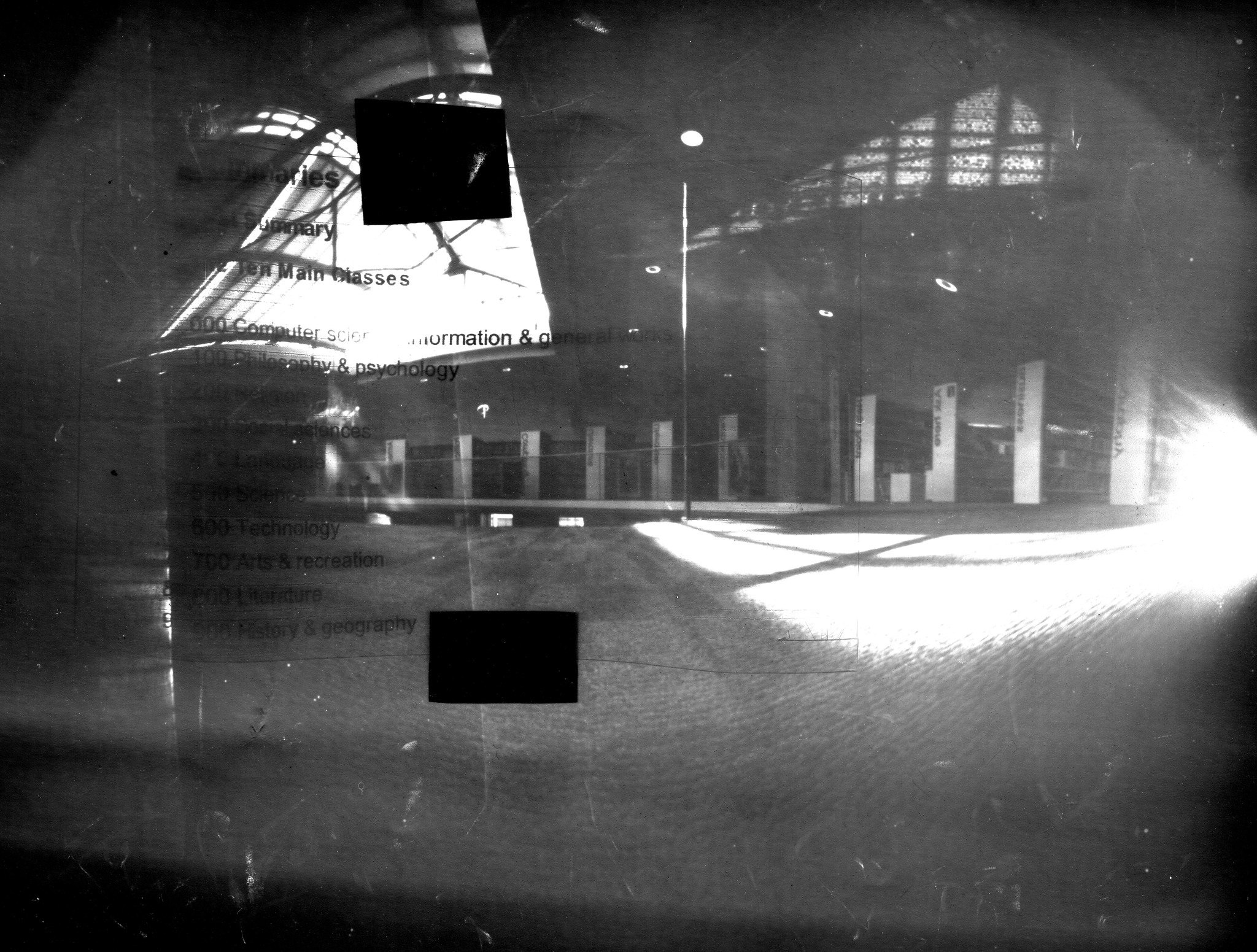
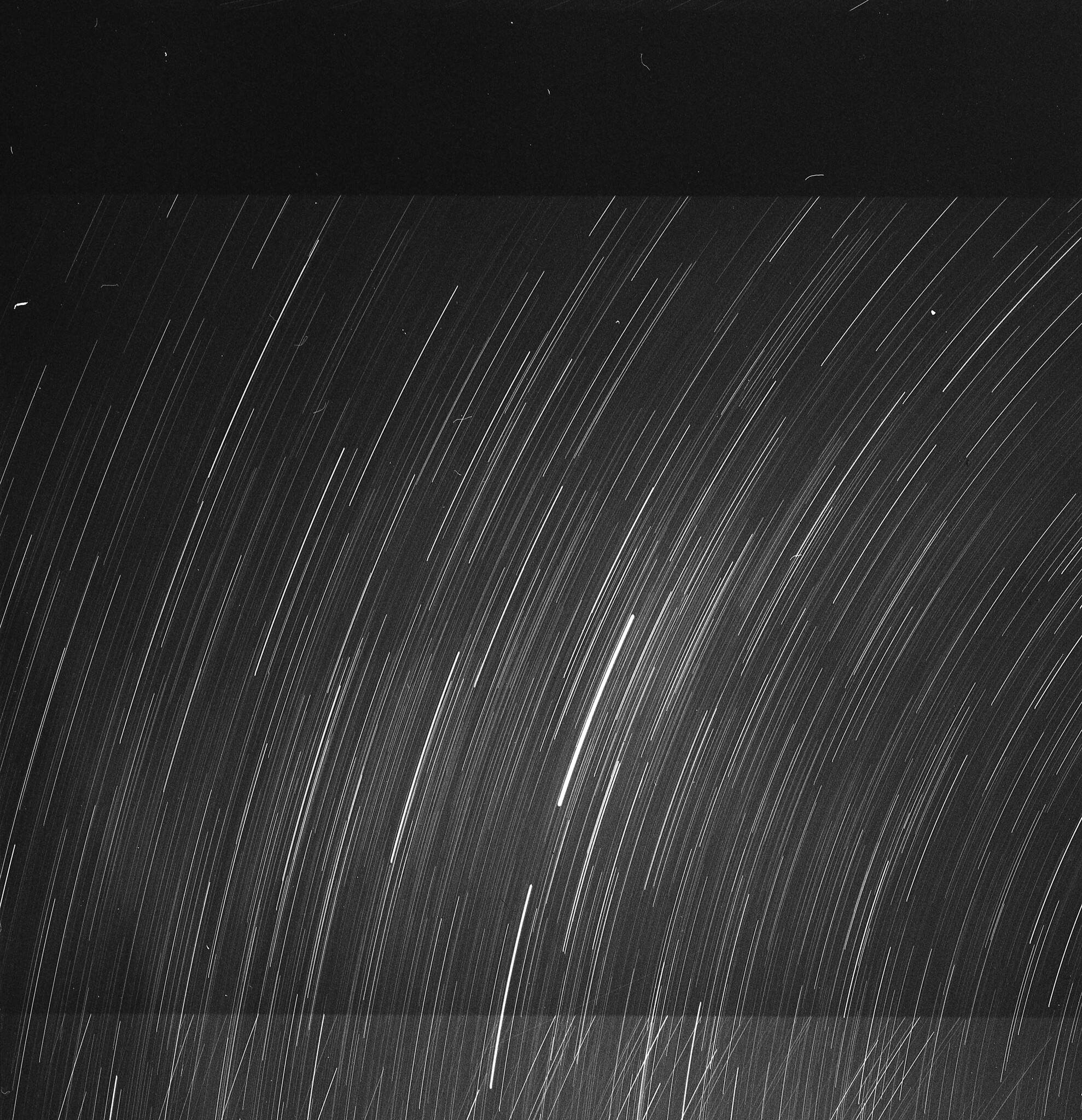
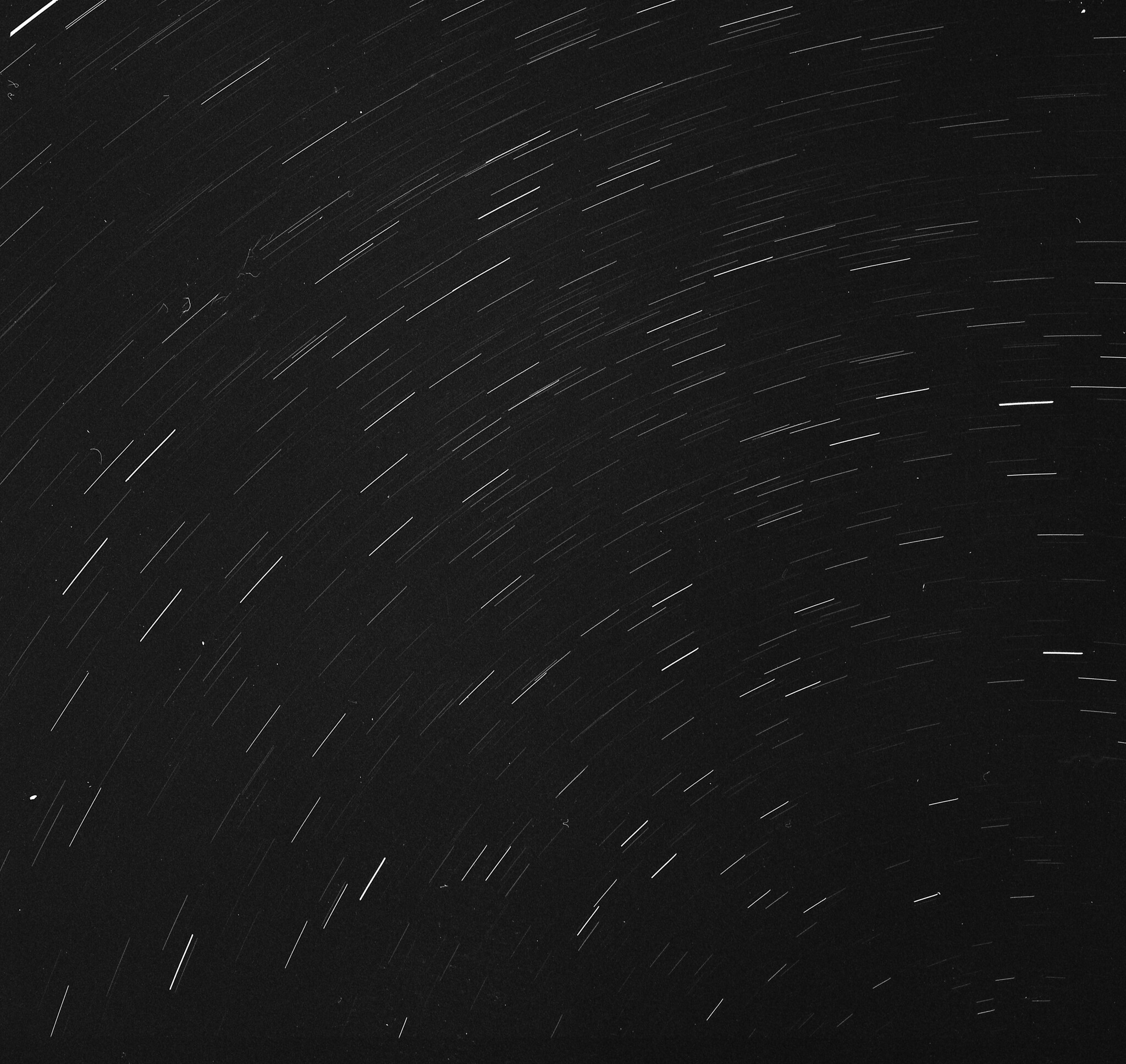
Library and Observatory/Abstract Fields of Inquiry : A Meditation on the Human Condition (Giacometti, artist-philosopher)

process,celestial sphere,observation,Karen Barad,zenith,analogue,trails,film,astronomy,night skies,dust particles,voids,Night Train,#russell moreton,#spatial practice,time cavity,The Seeing,naked eye universe,Martin Amis,


Books can step up to us- into us- in many ways.
Voices from Chernobyl by Svetlana Alexievich was for me that rare precipitate force which calls another book into being.

Mario Petrucci, Heavy Water, a poem for Chernobyl.


Norman Lockyer Observatory, Seaton.


Celestial Sphere : Stars and Dust Particles. 


https://www.flickr.com/photos/russellmoreton/25942954484/in/dateposted-public/


Astronomical archive

Hawking understood black holes because he could stare at them. Black holes mean oblivion. Mean death. And Hawking has been staring at death all his adult life. Hawking could see.
Martin Amis, Night Train, 1997.

For Baudrilland the actual photographs are beside the point. It is what precedes them that counts in his eyes- the mental event of taking a picture.
Sylvere Lotringer, The Piracy of Art, 2008.


Entanglements of matter and meaning.

Karen Barad, Meeting The Universe Halfway, 2007.

Meeting the Universe Halfway is an ambitious book with far-reaching implications for numerous fields in the natural sciences, social sciences, and humanities. In this volume, Karen Barad, theoretical physicist and feminist theorist, elaborates her theory of agential realism. Offering an account of the world as a whole rather than as composed of separate natural and social realms, agential realism is at once a new epistemology, ontology, and ethics. The starting point for Barad's analysis is the philosophical framework of quantum physicist Niels Bohr. Barad extends and partially revises Bohr's philosophical views in light of current scholarship in physics, science studies, and the philosophy of science as well as feminist, poststructuralist, and other critical social theories. In the process, she significantly reworks understandings of space, time, matter, causality, agency, subjectivity, and objectivity. In an agential realist account, the world is made of entanglements of "social" and "natural" agencies, where the distinction between the two emerges out of specific intra-actions. Intra-activity is an inexhaustible dynamism that configures and reconfigures relations of space-time-matter. In explaining intra-activity, Barad reveals questions about how nature and culture interact and change over time to be fundamentally misguided. And she reframes understanding of the nature of scientific and political practices and their "interrelationship." Thus she pays particular attention to the responsible practice of science, and she emphasizes changes in the understanding of political practices, critically reworking Judith Butler's influential theory of performativity. Finally, Barad uses agential realism to produce a new interpretation of quantum physics, demonstrating that agential realism is more than a means of reflecting on science; it can be used to actually do science.


Friday, 17 February 2017