Making Entangled : An eclectic synthesis of knowledge fields
Potters Wheel/Studio Space/Reconstrution/Licie Rie/V & A London.
Mary Quant, V&A London.
.jpg)


Confronting Spatial Intelligence-tracing the use of spatial intelligence.
What are we learning about in the concrete particularity of this space?
Leon van Schaik : Spatial Intelligence
‘Architecture is the product of our spatial intelligence, of its workings in establishing the mental spaces of every individual, and of the spatial values shared by groups.’
The Retreat, Upper Lawn Pavilion. 1959
This country retreat presents itself as a glass box but is grounded by its relationship to the pre-existing masonry of a walled garden.
Leon van Schaik comments that the little glass house retreat built by Peter and Alison Smithson around a walled garden evokes for him memories(mental spaces) of being a schoolboy working in a conservatory in a walled garden at Cliveden, such that the notion of a retreat is this ideal of being built into the walls of an existing walled garden.
You rise up into its glazed upper storey with views over the rolling hills beyond and perch atop the wall on the edge of a threshold space carved out of the woods, or remove yourself from view sink down to the ground and sit with your back to the wall.
Kenneth Frampton subscribes to a general theory of architecture independent of any local articulation beyond adaptations to meet the needs of local climatic conditions.
Dalibor Vesely, an architectural theorist who spent his teaching life demonstrating that in the modern era the unity of time, place and culture that is essential to architectural reality has been fractured. Leon van Schaik comments as a consequence in architecture today our spatial knowledge is either buried deep within our unconscious, or it is surfaced in a highly simplified (adolescent) form.
Architecture as ‘a purveyor of esoteric spatial luxuries to domestic elites’ (Schaik, 2008:84)
It follows that this fractured reality is deeply problematical to architecture, to the increasing number of architectural practices that have no ready connection to the daily expectations of citizens, resulting in a brutal instrumental policing of space (and our mental spaces) via the architecture that underpins the politics of our corporate or governmental interests.
Mediators for spatial experiences.


Interior design presented as an interactive and immersive spatial inquiry
The ruined site of the abbey at Waverley, near Farnham has been appropriated as a site and as a place within which to position and develop my practice. The Abbey, its buildings, and its grounds have provided a valuable source of the material evidence for thinking about hapticity and time in a pastoral setting.
The Scriptorium presents the “performativity of research” through specifically designed apparatuses and partitions. These designed components, made objects, together with annotated texts and drawings conspire to create a complex interior design, a “Place Study” staged in a niche-like space. This interior presents itself as both distinct and relational to the other projects in the MA Interiors Show. The interior presents the many manifestations of creative research that have been developed through engaging with the site.
The small ‘Scriptorium’ conceived as a space as a refuge, an intimate minimal construction that features a doorway and an interior that contains a place for objects, perhaps books, as well as a small sitting area. This construction, an open cell perhaps is evocative to a state of contemplation between the fabric of the everyday. The rather hybrid design appropriates a merging of minimalism, modernism and the plastic architecture of a ruined Cistercian Abbey. The construction comes into close contact with its occupant, it is a restricted spatial apparatus that attempts to promote through its awkwardness distinctive experiences.
Libraries with research conduits for immersive and interactive cognitive mappings, allowing a praxis to enter the practicability of the everyday, a crafted philosophical inquiry, building new livelihoods.


Colour Texture Surface Enclosures Voids
Sample Materials: Relationships through Localities/Mood Boards/Technical and Physical Details.
Erasure in drawing and architectural planning (space voids) as a methodology to superimpose multiplicities.
Erasing : Kirosan Observatory, Anti-Object, Kengo Kuma.
Multiplicities and Memory, Peter Zumthor.

Learning Spaces as a performative spatial practice through a process of tuning and minimizing. Noh stage in the forest, Kego Kuma.
PLANNING DOCUMENT use GRAPHIC DESIGN, theories and applications to visualize, design and map out the nature/interior spaces and experiences of this proposal.
Natural Connections: Retreat and Awareness through Architecture (Architectural Experience).
Experiencing The Phenomenology of Place at Waverley Abbey
INTERIOR ARCHITECTURE through a sensitive adaptation of place studies, and using materials and built spaces to form the container/scaffold/stage for an activity not its contents. Working spaces that can be given a multiplicity of tasks that can accommodate the humanities and the life sciences.
Architecture and landscape, together with the localised weather, and the sheltering buildings all contribute to finding the mental spaces for the retreat.
APPARATUSES DURATIONS EFFECTS
THINGS-MAKING-PEOPLE-IN THE WORLD
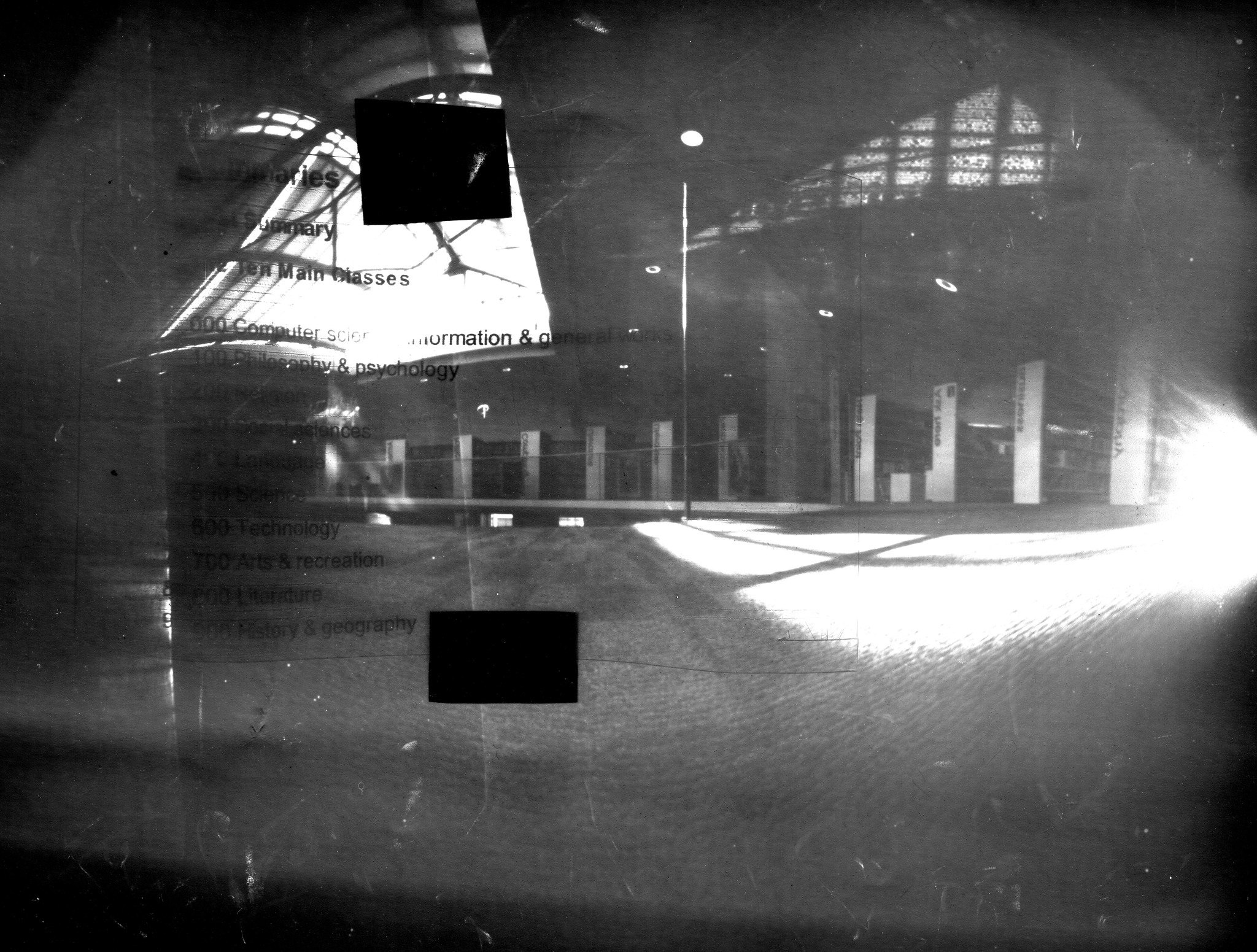
Heightening the experiential experiences of place. Ramps, stairs and passages as devices (movable) to examine and to create immediate architectural interventions. Notion of the observatory (part built/part still under development) (monuments as instruments, Japor). The camera obscura’s darken room becomes a stage and a cinema; a drawing black boarded room for making creative reciprocal social practices.
MAKING SPACES PARTIAL to the material flows and currents of sensory awareness in which IMAGES and OBJECTS reciprocally take shape/meaning.
The Body in Space: merging/mediating/climbing over architecture and its territory in the landscape.
Keywords,
Place Studies : Spatiality : Phenomenology of Place : Spatial Intelligence :
Relational Aesthetics:
Retreat, Sensing Spaces, Experiential, Pastoral, Architectural Fabric, Ruined Buildings, Historical Community/Order, Neo Romantic, Camera Obscura, Mortality, Consumption, Palimpsest, Remote Sensing, Architectural Interventions, Material, Massing, Body, Objects and Things, Craft, The Physical Body (Historical/Postmodern), Contemporary Art Practices, Tim Ingold
‘Making’ and the inter relationships of Archaeology, Anthropology, Art and Architecture.
Assets of Site
Listed Historical Site, Tranquil (of road site in parkland), Otherness (ruination and romance), Water, Archaeology (building), anthropology (significant settlement Cistercian Abbey)
CREATING FORMS AND MESSAGES
The Way Things Are Connected (or the stickiness of dependence between things and humans)
Kengo Kuma. Anti-Object
Not Networks, but rather Entanglements or Meshworks/Mesh (implying infinite connections and infinitesimal differences) or Mess (resists neat compartmentalization and order).
Mark Dion. Archaeology
The Work, its Shelter, the Collection and its Process and Furniture (Agency)
The Wunderkammer as a structural feature (De Waal, V&A )
The Mapping/Charting Table (conduit, meeting/passing place)
Tim Ingold. Making
Ian Hodder. Entangled: An Archaeology of the Relationships between Humans and Things.
Peter Greenaway. The Physical Self.
The Self in a Spatial/Social/Corporeal Situation The Tactility/Closeness of Learning (Craft)
DESIGN CREATIVELY/COLLABORATIVELY AND STRATEGICALLY THINKING IN THE RUINS
THINKING IN THE FICTION OF RUINS
THE ABBEY AS A REMNANT OF ITS WORLD, IN WHICH WE HAVE COME TO LATE,
TO A WORLD THAT HAS SEEN TOO MUCH.
POLITICS OF PLACE, English Heritage/Listed Building, has been used as a filming locating in contemporary cinema ranging in genres from the historical to the dystopian. Recently use of the site as a film location allowed the building of a temporary tower structure situated in close proximity to the existing ruinous fabric of the site.
POETICS OF SPACE/Bachelard AETHETICS OF DECAY/Trigg
THE WAR OF DREAMS/Marc Auge
The Theatre of Operations.


Ruins, as a notion and a phenomena are slowly disappearing from our western cities, out of a lack of time (faute de temps) Marc Auge further comments that we are condemned to produce waste, not remnants of the past.
LOCATION, Streetfinder O/S. GPS Locality and access options/experiences.
World placing with solar and astronomical positioning. Scale and proximity
HISTORY, site, occupations, ruination, dereliction, reclamation into a garden feature. SITE SPECIFIC to GLOBAL CONCERNS
LOCALITIES and HISTORIES
HUMAN EXPERIENCE, Qualitative and Quantitative
DWELLING, LEARNING, RUINS, AND MEMORY> WHAT REMAINS?
MAPPING/REMOTE SENSING using the palimpsest of this landscape/of its human occupation, of its demise to re-instate and re-imagine the cultural and anthropological shifts that have affected humanity.
RE-INSTATING a gathering with intellectual concerns in the humanities.


SPEAKERS/REASEARCH POSTERS/EXHIBITIONS and ART WORKS/SCREENINGS.
Oren Lieberman, Immediate Architectural Interventions/Intraventions.
Mark Dion, Thames Dig, tents, taxonomies, teeth and texts.
Kate Whiteford, Land Drawings, installations and excavations
Colin Renfrew , Remote Sensing, aerial photography of sites (WW2) being used to re image specific archaeological notions of place.
Tim Ingold, MAKING, on the entanglements of Archaeology, Anthropology, Art and Architecture.
METHODOLOGIES
Temporary structures, blue screens, stage flats, projection, surfaces and skins, envelopes and membranes, optics and materials, programmes and debate, exhibition and research, global networking and virtual presentations, workshops around the phenomenology of place and its interrelationships with critical spatial practice. Presentations and Symposium, Curriculum and Practices, Site Specific Work and Performance.
Public Intimacy in Social Spaces. Architecture and The Contemporary Arts.
Learning through Making, (The Parallel of Life and Art) Anthropology, Archaeology, Art and Architecture.
Visitor’s Centre, with interpretive exhibition (Stonehenge/Denton Corker Marshall) or an immersive intervention (Winchester Cathedral,Anima-Animus/Elferova and Wilson). A place where the interior space evokes a sense of place/a becoming (Existential, Historical, Social, Cultural) see ‘The Physical Self exhibition curated by Peter Greenaway. The Fate of Place/Human Sociology.
A contemplative space or spiritual/secular retreat featuring a series of interventions (Follies/Pavilions/Huts/Heidegger/Tschumi) that focuses the gaze on a particular view or detail, framing a distant reference (landmark or natural phenomenon, research into Lutyen’s ‘Thunder House’ for Gertrude Jekyll).
Museum of Wisdom. Kengo Kuma.
Noh Stage In The Forest. Kengo Kuma.
Hortus Conclusus. Peter Zumthor.
The Solar Pavilion. Alison and Peter Smithson.
The Secular Retreat, Living Architecture. Peter Zumthor.
Heidegger’s Hut, Bachelard’s Poetics, Ingold’s making.
Spatial Apparatuses, Buildings and Social Devices/Agendas
Events as Interventions producing Intraventions from Sociology, Architecture and the Humanities/Contemporary Arts.
USING the existing site to host concerns and education through a light footprint of temporary structures and intermediary arts based events.
THEMATIC SPACES in literature and the arts locate themselves within the ruins; become new creative points of departure, new narratives that add to the spatiality of the events experience.
CRITICAL SPATIAL PRACTICES (Architecture/Fine Art and Performance) as a methodology for engaging with the transformative processes now emerging is of vital scholarly concern for design practices and professionals.
Inclusions of observation and practice.
Experiential experiences from a place by the river, under the canopy of dappled sunlight; a secluded proximity of the monks dormitory through the pleasing decay that is aging beautifully.
Variegated and mutable veiling of transparencies through sunlight and a gentle breeze.
Shadow (voids) and Forms (layered movements) Permeable membrane (time passes through here)
The River (Jackie Leven/Kenneth Patchen, The Skaters) a corporeal presence on loss, memory/absence, subjectivity and flow.
Kengo Kuma. Complete Works, Kenneth Frampton.
‘Our aim is to create architecture that confronts and fuses with the earth’
‘Architecture should not be cut off from the ground like a building designed and transported to the site’
Kema’s ‘anti-objective’ architecture is anti-perspectival in that it is categorically anti thetical to the subject/object split of the occidental tradition.
‘The asymmetrical projection of the Water/Glass volume, derived from the diagonal platform of the Noh stage, makes it explicit that there is no single ideal point from which this waterborne scene may be experienced.’ (Frampton, 2012:12)
Katsura Aesthetic.
Non Corporeal Architecture ( 2001 A Space Odyssey, the final room with its dematerialised phantom character of absence and voyeurism)
Japanesse Vernacular, Void/Ma space, Translucency, Sequence of Spaces,
Siddig El’Nigoumi’s pots hold an interior space that cannot itself be transposed only broken ; they are in effect testimonial silences to his humility and his agency working with clay. In my mental space on these inner spaces of Nigoumi’s ceramics I can reach a correspondence, a pitch with its distinctive mutual timbre that is still active. The existential trait left in the innerness of these vessels is irreducible to my own subjectivity.
Site drawings, archaeology of found objects, anthropological observations, time based media, architectural plans.
Interior Spaces/Making and the adaptation of existing.
Photographic drawings, collage, montage, interventions through designed walls/pathways/interactions.
“Hut” Sensing Spaces/Building.
Materials, aesthetics, volumes, dwelling, social, light and dark, place.
Localities of experience and research.
Negative Capability Exhibition (art works in response to archaeological sites),Winchester University.


.jpg)