Showing posts with label books. Show all posts

Sunday, 27 August 2023

The Living Thing : Hidden Curriculum (Intermezzo)

a thousand plateaus
Deleuze, Guattari

Assemblage
Becoming
Body Without Organs
Nomad
Rhizome
Smooth Space
State
War Machine


ASSEMBLAGE:

An assemblage is any number of "things" or pieces of "things" gathered into a single context. An assemblage can bring about any number of "effects"—aesthetic, machinic, productive, destructive, consumptive, informatic, etc. Deleuze and Guattari's discussion of the book provides a number of insights into this loosely defined term:

In a book, as in all things, there are lines of articulation or segmentarity, strata and territories; but also lines of flight, movements of deterritorialization and destratification. Comparative rates of flow on these lines produce phenomena of relative slowness and viscosity, or, on the contrary, of acceleration and rupture. All this, lines and measurable speeds constitutes an assemblage. A book is an assemblage of this kind, and as such is unattributable. It is a multiplicity—but we don't know yet what the multiple entails when it is no longer attributed, that is, after it has been elevated to the status of the substantive. On side of a machinic assemblage faces the strata, which doubtless make it a kind of organism, or signifying totality, or determination attributable to a subject; it also has a side facing a body without organs, which is continually dismantling the organism, causing asignifying particles or pure intensities or circulate, and attributing to itself subjects what it leaves with nothing more than a name as the trace of an intensity... Literature is an assemblage. It has nothing to do with ideology. There is no ideology and never has been. (3-4)
The book, as described above, is a jumbling together of discrete parts or pieces that is capable of producing any number effects, rather than a tightly organized and coherent whole producing one dominant reading.
The beauty of the assemblage is that, since it lacks organization, it can draw into its body any number of disparate elements. The book itself can be an assemblage, but its status as an assemblage does not prevent it from containing assemblages within itself or entering into new assemblages with readers, libraries, bonfires, bookstores, etc.

http://www.rhizomes.net/issue5/poke/glossary.html


Speculative Learning Environment : Russell Moreton.

Re- Imagining Education, Brockwood Park School.

2011.


Thursday, 29 June 2023

The Black Workbooks : Edges of juxtaposed areas.

Harleston 290623

Perception, folds in an infinite play of foregrounding and backgrounding.
Eternal objects are nodes of relation for this elastic process of pulling in and out of experience's continuum. Perception moves-with these openings towards changes in nature occasioned by minuscule folds that are endlessly unfurling and bending on the edges of juxtaposed areas.
Erin Manning, Deleuze, Relationscapes.


Like a mist or fog that makes their surface sparkle at speeds that no one of our thresholds of consciousness could sustain.
Deleuze, 1993.

Wednesday, 1 February 2023

Architectural Light : Drawing into the photographic process

When you make photograms, without the use of a camera, you can indeed call that abstract photography, as the lens and the corresponding registration medium are lacking. No longer do you have pictures of reality or objects; you only have their shadows. It is a bit like Plato’s cave, where one could only imagine reality; the objects themselves were not visible.

Thomas Ruff

Found Objects : Archaeological Photogram

Drawings : Speculative Constructions in Photography

Deleuze claimed that he did not write “about” art, literature, or cinema, but, rather, undertook philosophical “encounters” that led him to new concepts.  As a constructivist, he was adamant that philosophers are creators, and that each reading of philosophy, or each philosophical encounter, ought to inspire new concepts. Additionally, according to Deleuze and his concepts of difference, there is no identity, and in repetition, nothing is ever the same.  Rather, there is only difference: copies are something new, everything is constantly changing, and reality is a becoming, not a being.


Cell

Court

Domain


Drawing into the photographic process


Poche/Niche : The shaped presence between two surfaces/volumes

Reading Rooms : Waverley Project


Tuesday, 29 November 2022

Exploratory Practices : Archive/Collage/Mapping


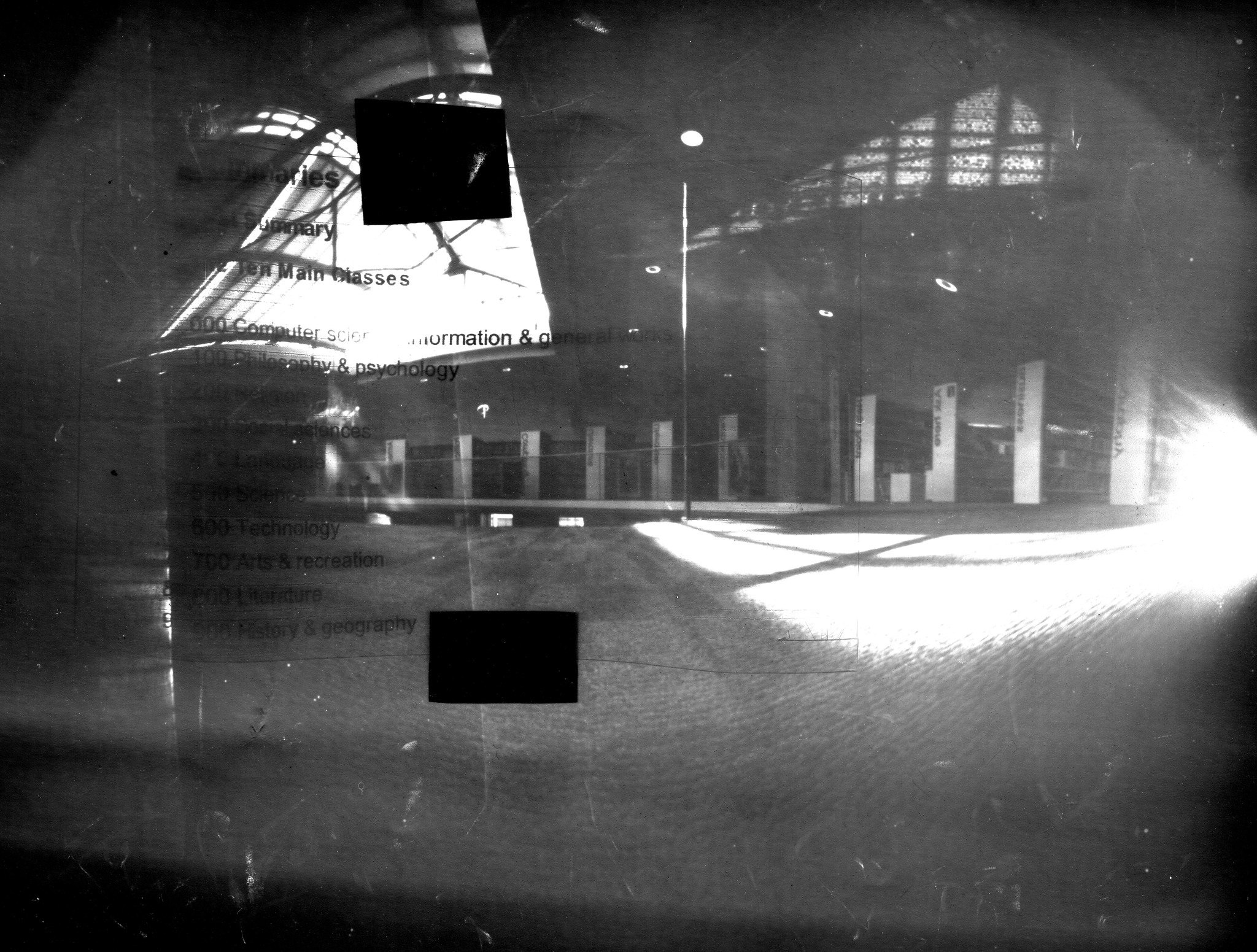
Displayed Books
Part of Visiting The Archive/Waveney and Blyth Arts 2011-2018

Exploratory Workshop

Pipers Places, Richard Ingrams. John Piper. 1983
The Poetics of Space, Gaston Bachelard. 1964
The Fate of Place, A Philosophical History. Edward S. Casey. 1997

The Experience of Landscape, paintings,drawings and photographs, Arts Council. 1987
Archaeology, Mark Dion. 1999
Kate Whiteford, Land Drawings, Installations, Excavations. 2008

Psychogeography, Merlin Coverley. 2010
This Enchanted Isle, Peter Woodcock. 2000
The Rings of Saturn, W. G. Sebald. 1998

Land, Antony Gormley, Clare Richardson, Jeanette Winterson. 2016
The Wild Places, Robert Macfarlane. 2007
A Field Guide To Getting Lost, Rebecca Solnit. 2017

Contemporary Art And Anthropology, Arnd Schneider, Christopher Wright. 2006
Melancholy And The Landscape, Jacky Bowring. 2017
The Eroded Steps, Giuseppe Penone. 1989

Mapping It Out, Alternative Atlas of Contemporary Cartographies, Hans Ulrich Obrist. 2014
Strange Tools, Art and Human Nature, Alva Noe. 2015
Ways of Curating, Hans Ulrich Obrist. 2014

Wildwood, A Journey Through Trees, Roger Deakin. 2007
One Green Field, Edward Thomas. 2009
Claxton, Mark Cocker. 2015

The Abstracted Vessel, Ceramics in studio, John Houston. 1991
A Potter's Book, Bernard Leach. 1977
An Anthropology Of Landscape, Christopher Tilley, Kate Cameron-Daum. 2017


Thursday, 30 September 2021

Library and Observatory/Abstract Fields of Inquiry : A Meditation on the Human Condition (Giacometti, artist-philosopher)

process,celestial sphere,observation,Karen Barad,zenith,analogue,trails,film,astronomy,night skies,dust particles,voids,Night Train,#russell moreton,#spatial practice,time cavity,The Seeing,naked eye universe,Martin Amis,


Books can step up to us- into us- in many ways.
Voices from Chernobyl by Svetlana Alexievich was for me that rare precipitate force which calls another book into being.

Mario Petrucci, Heavy Water, a poem for Chernobyl.


Norman Lockyer Observatory, Seaton.


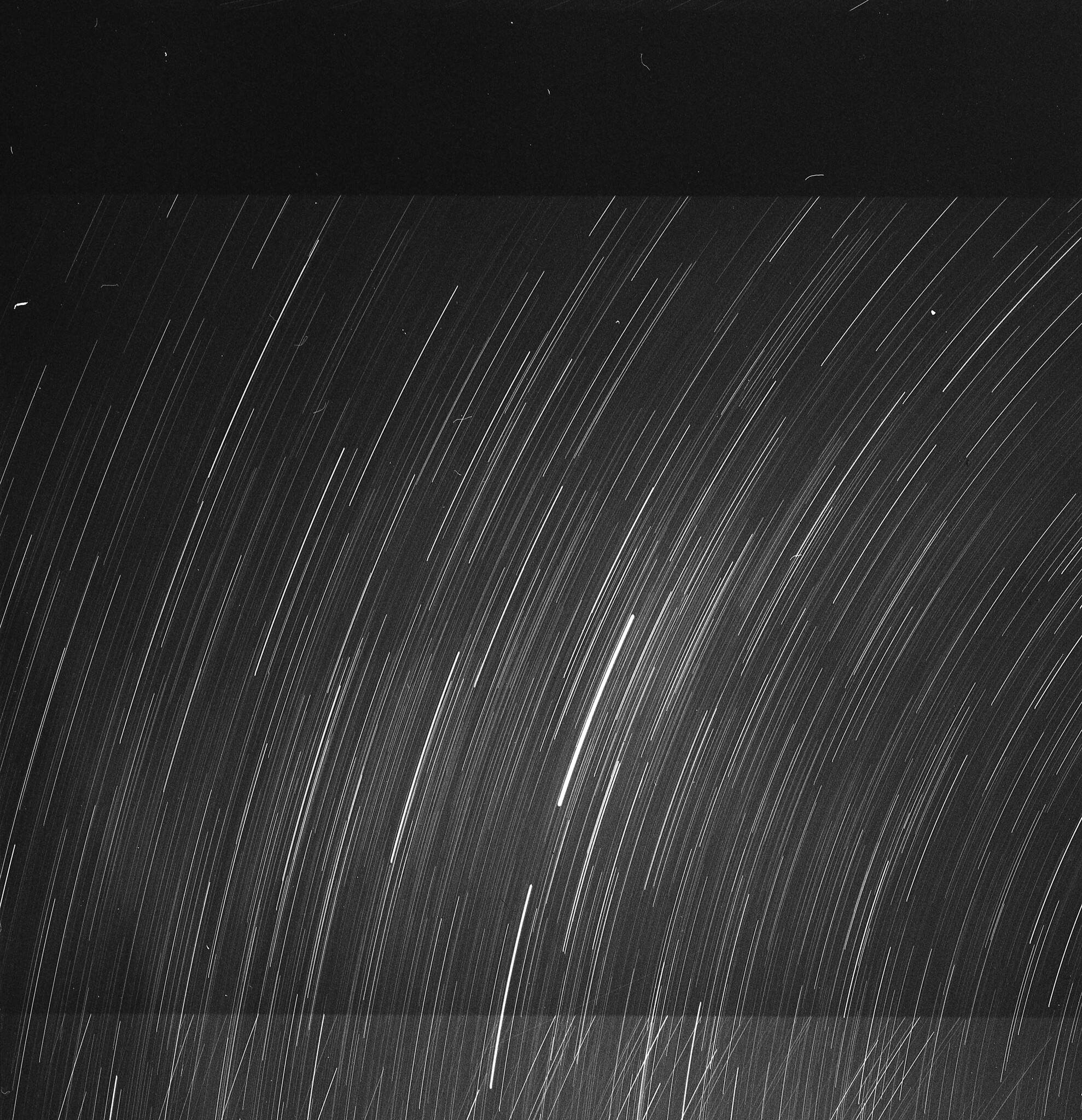
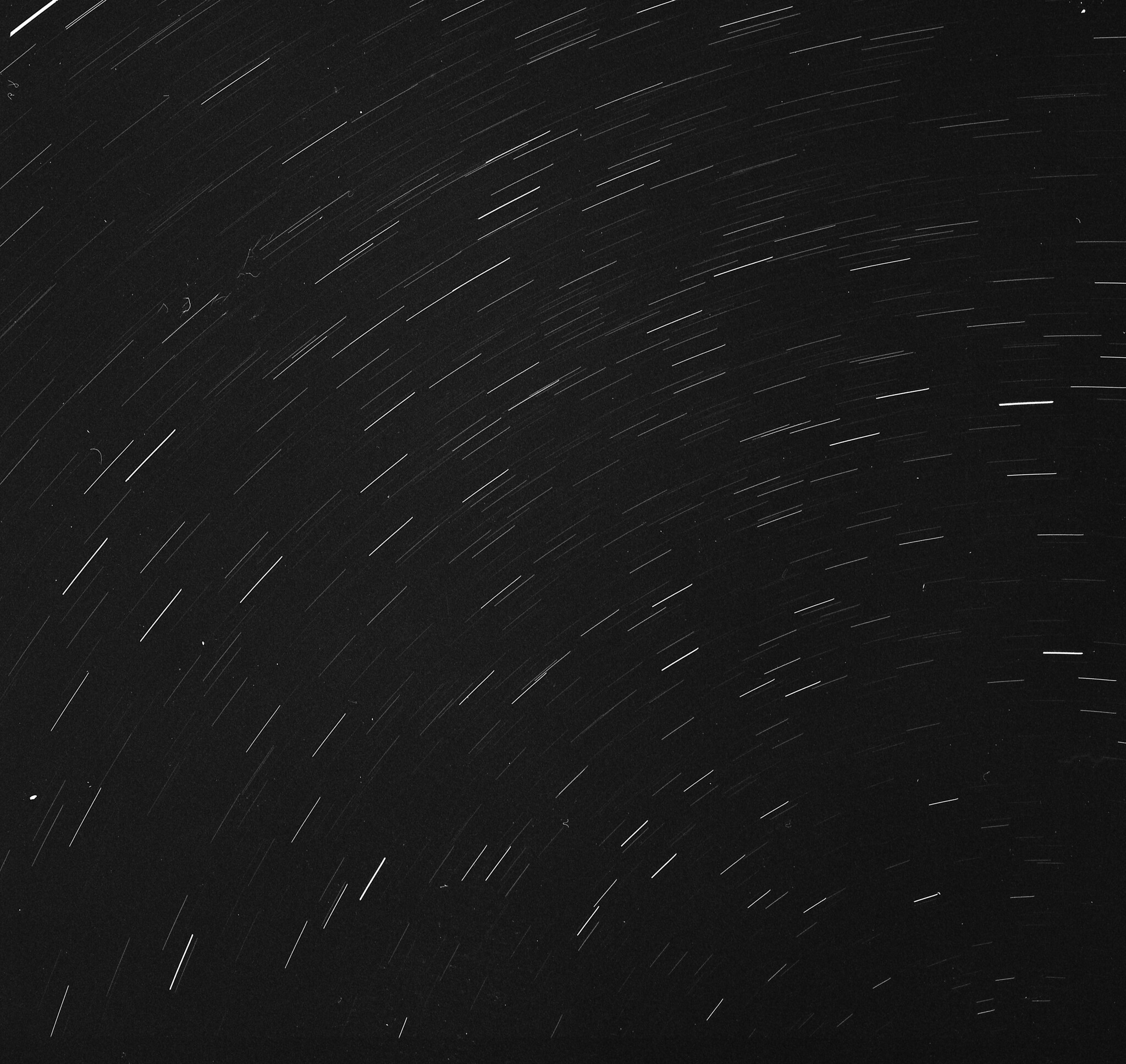
Celestial Sphere : Stars and Dust Particles. 


https://www.flickr.com/photos/russellmoreton/25942954484/in/dateposted-public/


Astronomical archive

Hawking understood black holes because he could stare at them. Black holes mean oblivion. Mean death. And Hawking has been staring at death all his adult life. Hawking could see.
Martin Amis, Night Train, 1997.

For Baudrilland the actual photographs are beside the point. It is what precedes them that counts in his eyes- the mental event of taking a picture.
Sylvere Lotringer, The Piracy of Art, 2008.


Entanglements of matter and meaning.

Karen Barad, Meeting The Universe Halfway, 2007.

Meeting the Universe Halfway is an ambitious book with far-reaching implications for numerous fields in the natural sciences, social sciences, and humanities. In this volume, Karen Barad, theoretical physicist and feminist theorist, elaborates her theory of agential realism. Offering an account of the world as a whole rather than as composed of separate natural and social realms, agential realism is at once a new epistemology, ontology, and ethics. The starting point for Barad's analysis is the philosophical framework of quantum physicist Niels Bohr. Barad extends and partially revises Bohr's philosophical views in light of current scholarship in physics, science studies, and the philosophy of science as well as feminist, poststructuralist, and other critical social theories. In the process, she significantly reworks understandings of space, time, matter, causality, agency, subjectivity, and objectivity. In an agential realist account, the world is made of entanglements of "social" and "natural" agencies, where the distinction between the two emerges out of specific intra-actions. Intra-activity is an inexhaustible dynamism that configures and reconfigures relations of space-time-matter. In explaining intra-activity, Barad reveals questions about how nature and culture interact and change over time to be fundamentally misguided. And she reframes understanding of the nature of scientific and political practices and their "interrelationship." Thus she pays particular attention to the responsible practice of science, and she emphasizes changes in the understanding of political practices, critically reworking Judith Butler's influential theory of performativity. Finally, Barad uses agential realism to produce a new interpretation of quantum physics, demonstrating that agential realism is more than a means of reflecting on science; it can be used to actually do science.