Showing posts with label pinhole. Show all posts

Thursday, 14 September 2023

Corporeal Phantoms/Attendants/Skins : Alternatives/Others in Photography/Phantasy Surfaces

Landscapes : entering/intruding/emerging (holga819)

Working Title : Montage Samples
Historical Presence #4

Helena Eflerova, 18 minute rehearsal ,GASP 2009

Art as Spatial Practice.
Space folds : Containing "Spatialities around historicality and sociality"

"All that is solid melts into air"

Karl Marx, Friedrich Engels,
(Poetic observation concerning the constant revolutionizing of social conditions)

Perceptions now gathering at the end of the millennium. Spatiality, Robert T. Tally Jr. 2013

Do you live as Humans in the Holocene or as Earthbound in the Anthropocene? (50.37)

Dr. Bruno Latour on climate change and the "Anthropocene": Wall Exchange, Fall 2013

Camera Obscura : Physical Touch #2

Photograph (240) drawing

Sequential Photograph : Performing Photography/The Inseparable Attendant


Monday, 16 May 2022

Postmodern : Contested Landscapes for Melancholy


Postmodern : Ever Changing, Fleeting, Positive, Nihilistic,

"There are no simple concepts. Every concept has components and is defined by them.
It therefore has a combination [chiffre]. It is a multiplicity, although not every multiplicity
is conceptual...
Not only do Descartes, Hegel, and Feuerbach not begin
with the same concept,
they do not have the same concept of beginning...
Every concept has an irregular
contour defined by the sum of its components,
which is why,
from Plato to Bergson,
we find
the idea of the concept being a
matter of articulation,
of cutting and
cross-cutting.
The concept is a whole because it totalizes
its components, but it is
a fragmentary whole.
Only on this condition can it escape the
mental chaos
constantly threatening it, stalking it, trying to reabsorb it."

Gilles Deleuze and Felix Guattari, What is Philosophy?, pp. 15-16.

Melancholy And The Landscape
Locating Sadness, Memory And Reflection In The Landscape
Jacky Bowrin

Path : Analogue Film Process
St Catherine's Hill, Winchester

Anthrocene : Nick Cave and the Bad Seeds, Skeleton Tree.
Walberswick :  Beach Slides/Digital Pinhole

Covehithe : Walking/Thinking/Physical Entanglements in the Landscape
Walking into Emergent Landscapes : Covehithe Beach
The OLD WAYS, a JOURNEY ON FOOT, Robert Macfarlane

“ Walking was a means of personal myth-making, but it also shaped his everyday longings:
 Edward Thomas not only thought on paths and of them, but also with them.”

“To Thomas, paths connected real places but they also led out-wards to metaphysics, backwards to history and inward to the self. These traverses- between the conceptual, the spectral and the personal-occur often without signage in his writing, and are among its most characteristic events. He imagined himself in topographical terms.”

Landscape : Entanglements of Affect

Deeper Darkness, Photographic Memory/Process, Metonymy, Negative,
Analogue, Negated Nocturne. Walking, Others, Presence, Becoming,

Landscapes : entering/intruding/emerging
Pinhole Photography (Holga)

Landscape : Entanglements of Affect/Aesthetics

Nihilistic Aesthetic :  Bleached Cyanotype


Thursday, 30 September 2021

Library and Observatory/Abstract Fields of Inquiry : A Meditation on the Human Condition (Giacometti, artist-philosopher)

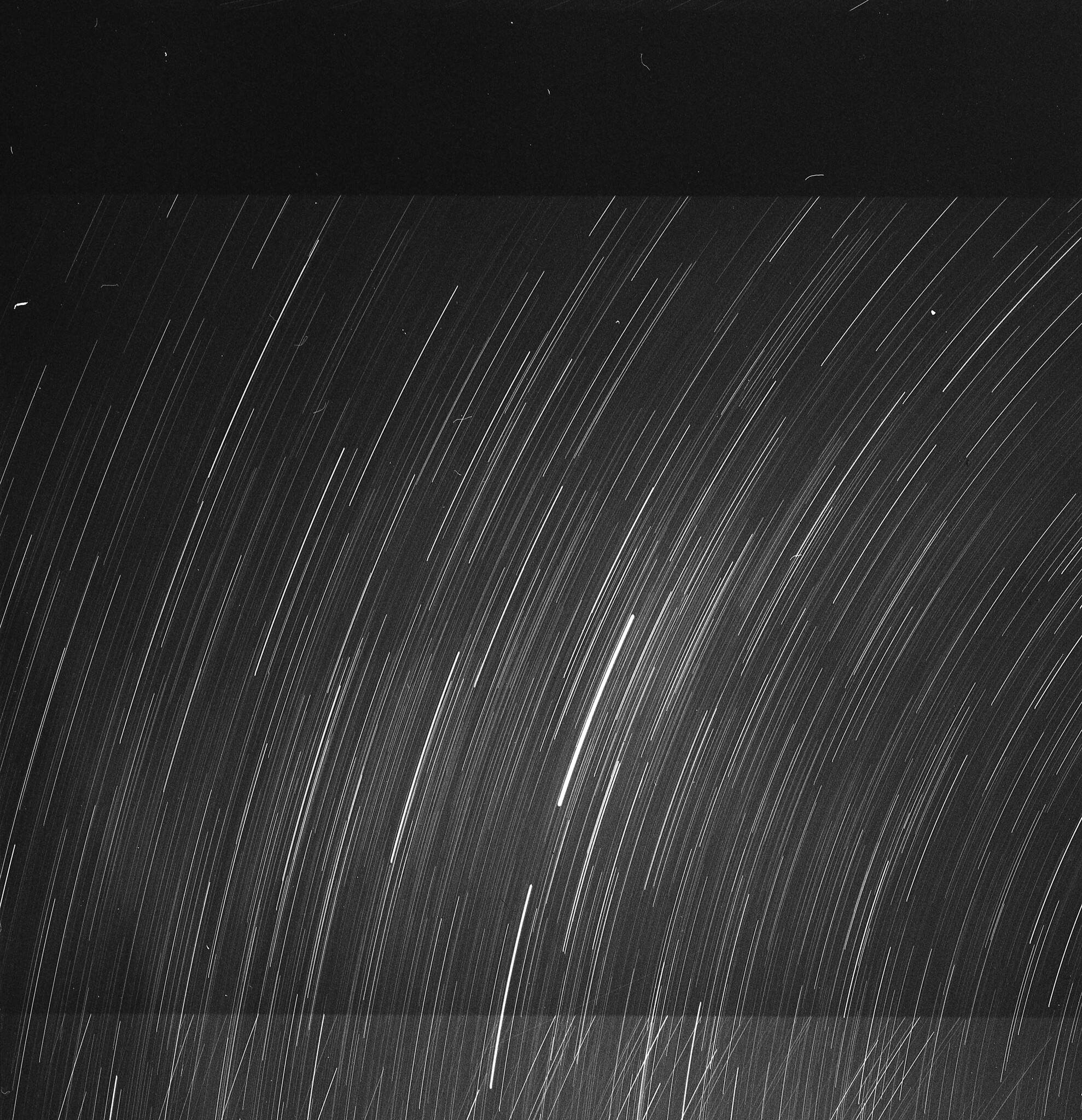
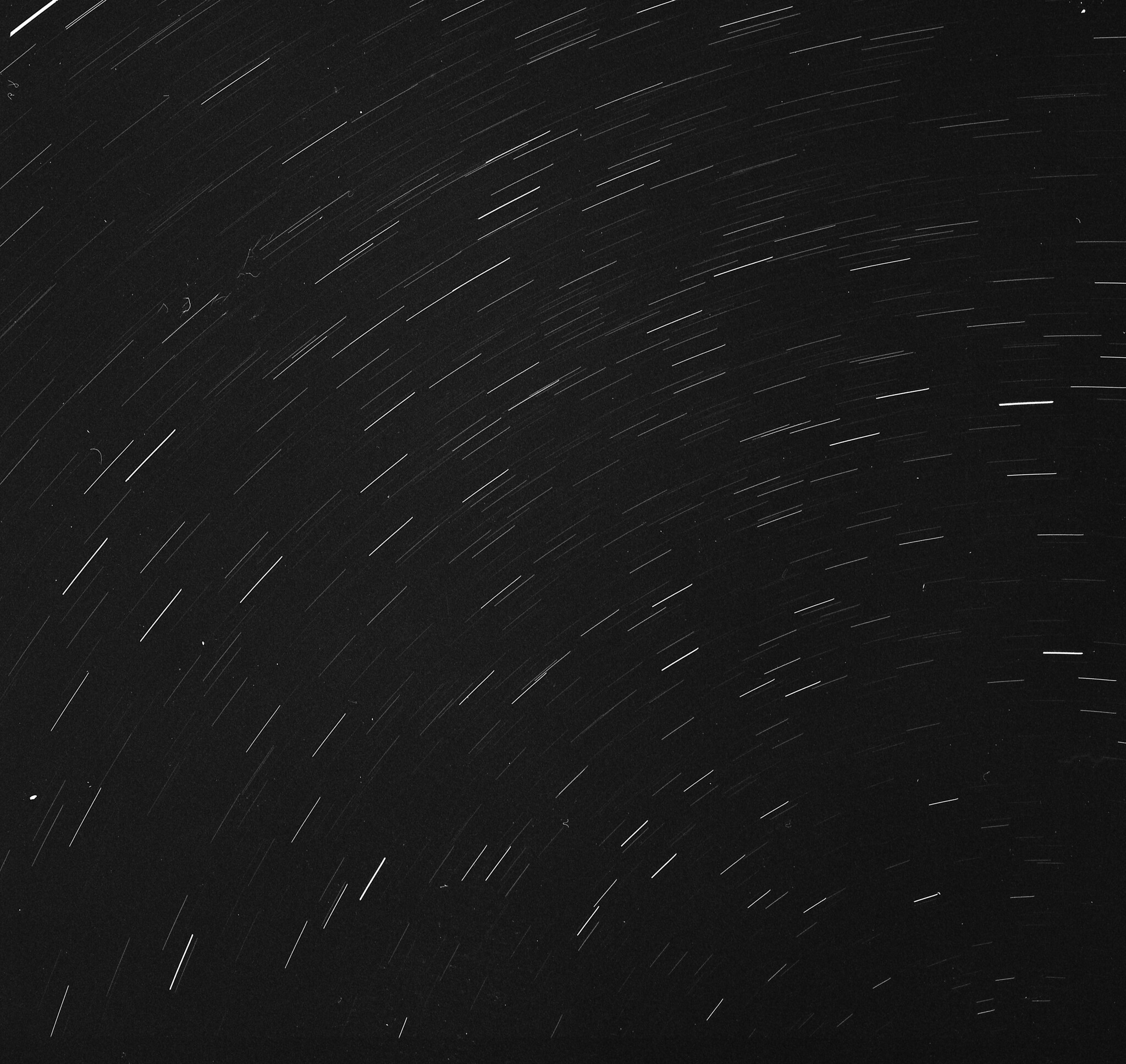
process,celestial sphere,observation,Karen Barad,zenith,analogue,trails,film,astronomy,night skies,dust particles,voids,Night Train,#russell moreton,#spatial practice,time cavity,The Seeing,naked eye universe,Martin Amis,


Books can step up to us- into us- in many ways.
Voices from Chernobyl by Svetlana Alexievich was for me that rare precipitate force which calls another book into being.

Mario Petrucci, Heavy Water, a poem for Chernobyl.


Norman Lockyer Observatory, Seaton.


Celestial Sphere : Stars and Dust Particles. 


https://www.flickr.com/photos/russellmoreton/25942954484/in/dateposted-public/


Astronomical archive

Hawking understood black holes because he could stare at them. Black holes mean oblivion. Mean death. And Hawking has been staring at death all his adult life. Hawking could see.
Martin Amis, Night Train, 1997.

For Baudrilland the actual photographs are beside the point. It is what precedes them that counts in his eyes- the mental event of taking a picture.
Sylvere Lotringer, The Piracy of Art, 2008.


Entanglements of matter and meaning.

Karen Barad, Meeting The Universe Halfway, 2007.

Meeting the Universe Halfway is an ambitious book with far-reaching implications for numerous fields in the natural sciences, social sciences, and humanities. In this volume, Karen Barad, theoretical physicist and feminist theorist, elaborates her theory of agential realism. Offering an account of the world as a whole rather than as composed of separate natural and social realms, agential realism is at once a new epistemology, ontology, and ethics. The starting point for Barad's analysis is the philosophical framework of quantum physicist Niels Bohr. Barad extends and partially revises Bohr's philosophical views in light of current scholarship in physics, science studies, and the philosophy of science as well as feminist, poststructuralist, and other critical social theories. In the process, she significantly reworks understandings of space, time, matter, causality, agency, subjectivity, and objectivity. In an agential realist account, the world is made of entanglements of "social" and "natural" agencies, where the distinction between the two emerges out of specific intra-actions. Intra-activity is an inexhaustible dynamism that configures and reconfigures relations of space-time-matter. In explaining intra-activity, Barad reveals questions about how nature and culture interact and change over time to be fundamentally misguided. And she reframes understanding of the nature of scientific and political practices and their "interrelationship." Thus she pays particular attention to the responsible practice of science, and she emphasizes changes in the understanding of political practices, critically reworking Judith Butler's influential theory of performativity. Finally, Barad uses agential realism to produce a new interpretation of quantum physics, demonstrating that agential realism is more than a means of reflecting on science; it can be used to actually do science.


Sunday, 30 December 2018

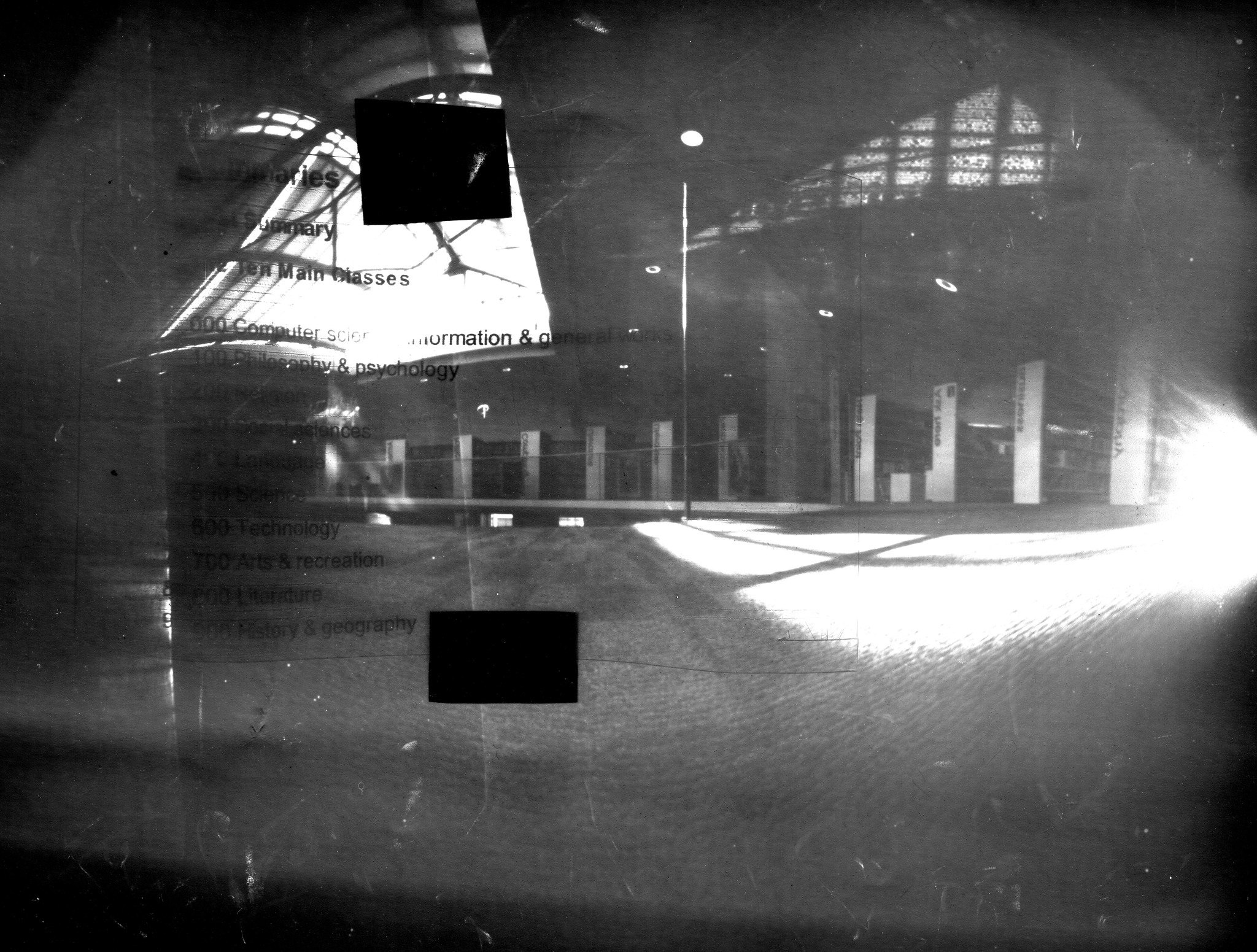
Anthropocene Library : Pinhole Photograph/Fingerprint (270)a-001

Contents
Etymology
Nature of human effects

New Dark Age

Technology and the End of the Future

James Bridle


The Silence of Animals

On Progress and Other Modern Myths

John Gray


The Drowned World

JG Ballard