Clay is always and idea~relation enbedded in its own movement of processual emergence.
.jpg)


.jpg)


.jpg)
.jpg)


.jpg)

.jpg)
Clay is always and idea~relation enbedded in its own movement of processual emergence.


Orange School Graph Books
Harleston 2020-2021
A Species of Spaces
The Social Turn
Museum Site and Display
Political Philosophy
Makers work in a world that does not stand still
Iteration allows for continual correction (material conversation) in response to an ongoing perceptual monitoring of the task as it unfolds, mixing the potential for blending or combining matter that already exists into new combinations
Tim Ingold 2010
The social life of making
Making speaks in vivid dialogue with two associated themes, material and skill
Creativity involves not merely a spark of innovation or the execution of artistic inspiration. But the capacity to respond to unfolding iterations with materials. To use slowly accrued haptic knowledge to manipulate processes on the fly, and to judge how to counteract error and seize opportunities as they evolve
Making becomes a process of iteration, and a maker works with this iteration prolifically
Matter and materials are lively and require attention, materials continue to thwart in unpredictable ways, decaying and breaking down or wearing or breaking under force
Vibrant Matter, A Political Ecology of Things
Jane Bennett 2010
Attending to the process of making opens up prospects for following the lead of the material, where the properties of the materials themselves shape the direction in which making proceeds
Tim Ingold 2010
New Urban Adventures in Collaboration/Conceptual Ceramics
Ceramic Practice as a form of research engaged in a process/ecology of inquiry, an exploration of ideas predicated on and exploiting the characteristics of clay
The transformation of the material is a central concern and semiotic significance unfolds with making
Seeking a symbiotic relationship between idea and object
Materials are substances in becoming
Karen Barad
Towards an Ecology of Materials
Tim Ingold 2012
From the 'objectness' of things to the material flows and formative processes wherein they come into being. It means to think of making as a process of growth or ontogenesis
Materials-Centered Perspective
Making, almost defies precise definition
The composition and/or manipulation of materials that bring into being new or revised objects
Tim Ingold 2010
Cultures of thrift and scavenging, maintenance and repair
Making encompasses the ingenuity of fluid, locally situated and adapted technologies
Materials carry on overtaking the formal destinations that, at one time or another, have been assigned to them
Sensibilities and dispositions that are centred on a deep and considered relationship with materials
The Craftsman, Richard Sennett 2008
Crafting, often reconnects mind and body in the sites and processes of production, thereby potentially reconstituting labour processes in ways that ascribe agency to workers
Makers finding ways to resist norms of gender and neoliberal entrepreneurial subjectivities, finding ways and spaces for ethical practice to predominate
Contemporary conceptual ceramics operates at the permeable boundary between art and craft, partaking of aspects of both, and ultimately demonstrating (or performing) that permeability
The emergence of the museum as proactive laboratory of social evolution
Extradisciplinary Investigations/Operative Principle
At work here is a new tropism and a new sort of reflexivity, involving artists as well as theorists and activists in a passage beyond the limits traditionally assigned to their practice
Microtopias, small contained sites of functioning democracy
Tropism conveys the desire or need to turn towards something else, towards an exterior field or discipline
The New Institutional Practice
Projective Enterprises (should unsettle, activate, and raise questions)
The exhibitions to emerge through new institutionalism are considered as points of exchange and collision, made through intersections of social, economic and political relations, it follows that the predominant forms of artistic practice included are the social, the spatial, the interdisciplinary
So our understanding of site has shifted from a fixed , physical location to somewhere or something constituted through social-economic-cultural and political processes
Site-Specific Art and Locational Identity
Miwon Kwon 2002
Collaborations and its Discontents
Claire Bishop 2006
The motivating factors for participatory projects is its critiquing of the essentialising of site and community in context-specific activities/exhibitions
A complex environment, awash in affect and subjectivity
When subjective and analytic processes mesh together to form a new productive and political 'contexts' of communicational labour
New curatorial initiatives must unpack the terminologies we use to distinguish one project from another
A playful psychogeographical situation, that resists the representative, illustrative and thematic narratives
Unsettling-Complicit
Provocative-Strategic
Interventionist-Collaborative
Perforative Curating/Prescribed Participation
Creating new/more coded patterns of behavior/conventions/role play for visitor's
New Institionalism and the Exhibition As Situation/Social Experiment
Claire Doherty 2006
Participation
In which people constitute the central artistic medium and material
In the manner of theatre and performance
Participatory art is both a social activity and a symbolic one, as it is both embedded in the world and at one, remove from it
The artist is conceived less as an individual producer of discrete objects, than as a collaborator and producer of situations
The contemporary artwork is finite, portable, commodifiable product, and is reconceived as an ongoing or long term project with an unclear beginning and end
Artists are more interested in the creative rewards of participation as a politicised working process, than the relational aesthetic which renders discursive and dialogic projects more amenable to museums and galleries
Artificial Hells (exposing the political and aesthetic limitations in the work)
Participatory Art and the Politics of Spectatorship
Claire Bishop 2011
Site-Specificity/Spatial Practice
The distinguishing characteristic of today's site-oriented art is the way in which both the art work's relationship to the actuality of a location (as site) and the social conditions of the institutional frame (as site) are subordinated to a discursively determined site that is delineated as a field of knowledge, intellectual exchange or cultural debate
Miwon Kwon 1997
Whilst temporary exhibitions can expand the scope of medium-specific discourse, they can also impose alternative, but equally restrictive frames
Participation, creating a bridge between socially engaged practice and the permanent collection
Expressing itself expressing
Creating a conceptual and linguistic dexterity between absolutes, certainties, definitions
Dissolving the intellectual relevance, with its symbiotic relationship with utility to create 'vessels' beyond art and artifact
The strategy of making artworks as response
The Ceramic Object, by means of preservation and display becomes a vehicle/vessel for a social and historical narrative/entanglement/engagement
Making vessels, beyond the examining and intellectually impoverished questions
A vessel is identified as such by its physical disposition, giving shape to the contents and clarifying what is inside and what is outside
Few boundaries are impenetrable
They are rather, semi-permeable membranes providing housing while allowing selective commerce
Like the vessel, the house shapes and nurtures the life contained inside
The Factory I build in the Tate is a place to discuss the transactions and transformations of Labour that Create Knowledge and Community
In the Factory we will examine skills and how we form Exchanges at Work , with ourselves and with others
Clare Twomey, Lead artist at Tate Exchange 2017
Post Studio Ceramics
Interfaces between Making-Makers-Museums
Exploring object engagement beyond the known historical models of clay practice
'Generate' Historical Material and Spatial Relations as they interacted with the work, and reflected on the role of the Museum/Hospital
Clare Twomey
Ceramics In The Environment
An International Review
Janet Mansfield 2005
With Fire, Richard Hirsch
A Life Between Chance and Design (invites the unknown)
Scott Meyer 2012
Hirsch takes us to the heart of the interface between ageless earth and the spare evidence of the rhythm of human utility
Raku as an Ideology
Breath-Energy-Immanence
Raku, A Review of Contemporary Work
Tim Andrews 1994
The Poetry of The Vessel
A calm invitation to thought and imagination
Chris Tyler
The vessel (making, thinking, subject) as both a historically grounded form, and a vehicle to examine abstract aspects of the physical body and the natural world
Arte Povera/Germano Celant, an aesthetic-philosophical movement
An eclectic synthesis of knowledge fields, that emerges into a total space where disparate categories can meet; a art that asks only for the essential information, that refuses the dialogue with the social and cultural system, and aspires to present itself as something sudden and unforeseen


Childhood a density of life not yet sensing the weight of living.
Expanding the space of the forgetting which is infinitely more creative/active than the space of what you remember.
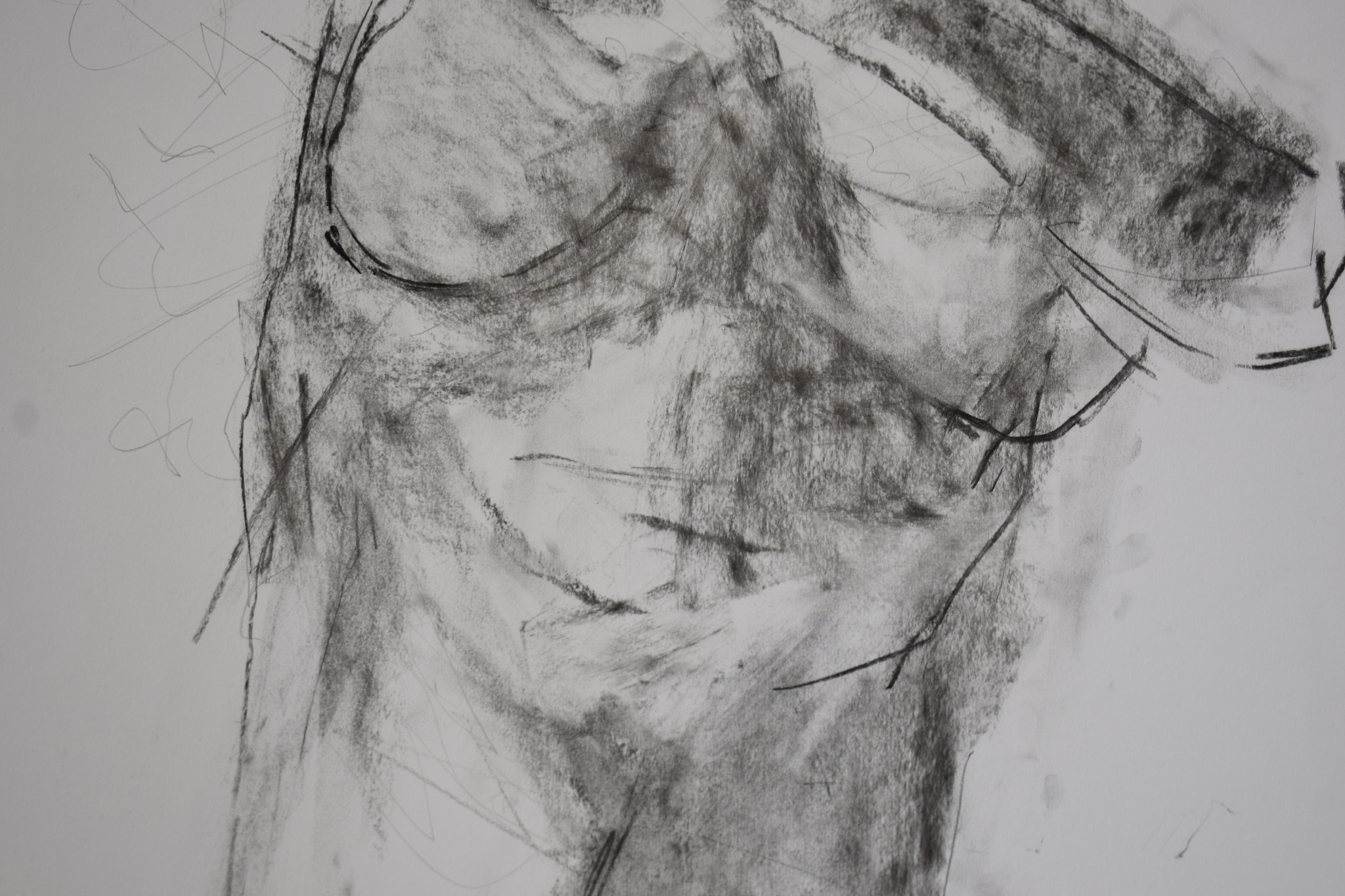
Events manifested through drawing, navigate spaces and their relations between/amongst/entangled by human bodies and spatial bodies.
Outpost 031224
longing to see a woman's face/the words that maketh murder
PJ Harvey, let England shake. 2010
Helena Eflerova,


Wolvesey Castle. 2007
Site Space-Movement/Earthing The Body.
100 Childhood Voyages of Play : The Boat.
The work doesn't fail, it just looses clarity, it retreats.
On Ceramic Spaces/Silences.
Creating and then investigating a silence in its surroundings. A silence that participates in the perception of things it attends/surrounds and resonances with.
Reclamations:
Missing and Abandoned Contexts.
Visual Fine Art 2004-2008.
Winchester School of Art.
On developing subjectivities through contemporary art practices and research strategies.
Philosophical theory/The Poetics of Space (Bachelard) documented alongside visual material/objects/images/installations.
Relationscapes: Human Body/Spatial Body.
Workings On Affective Potential.


Glenn Ligon: All Over The Place
The Fitzwilliam Museum.
On The Temporality Of Events.
Zuzana Kovar.
That they happen, that they occur, but they do not exist. They are virtual and always in process.
We cannot say that they exist but rather that they 'subsist' or 'inhere' ( having this minimum of being which is appropriate to that which is not a thing, a non-existing entity). They are not substantives or adjectives, but verbs. They are neither agents or patients, but results of actions and passions. They are impassive entities, impassive results. They are not living presents, but infinitives, the unlimited Aion, the becoming which divides itself infinitely in past and future, and always eludes the present.
Deleuze.
