Showing posts with label nude. Show all posts

Friday, 27 June 2025

Thresholds of The Body Image/Body Boundary

Outpost 291223


Drawing/Dwelling.

Thresholds of The Body Image/Body Boundary.


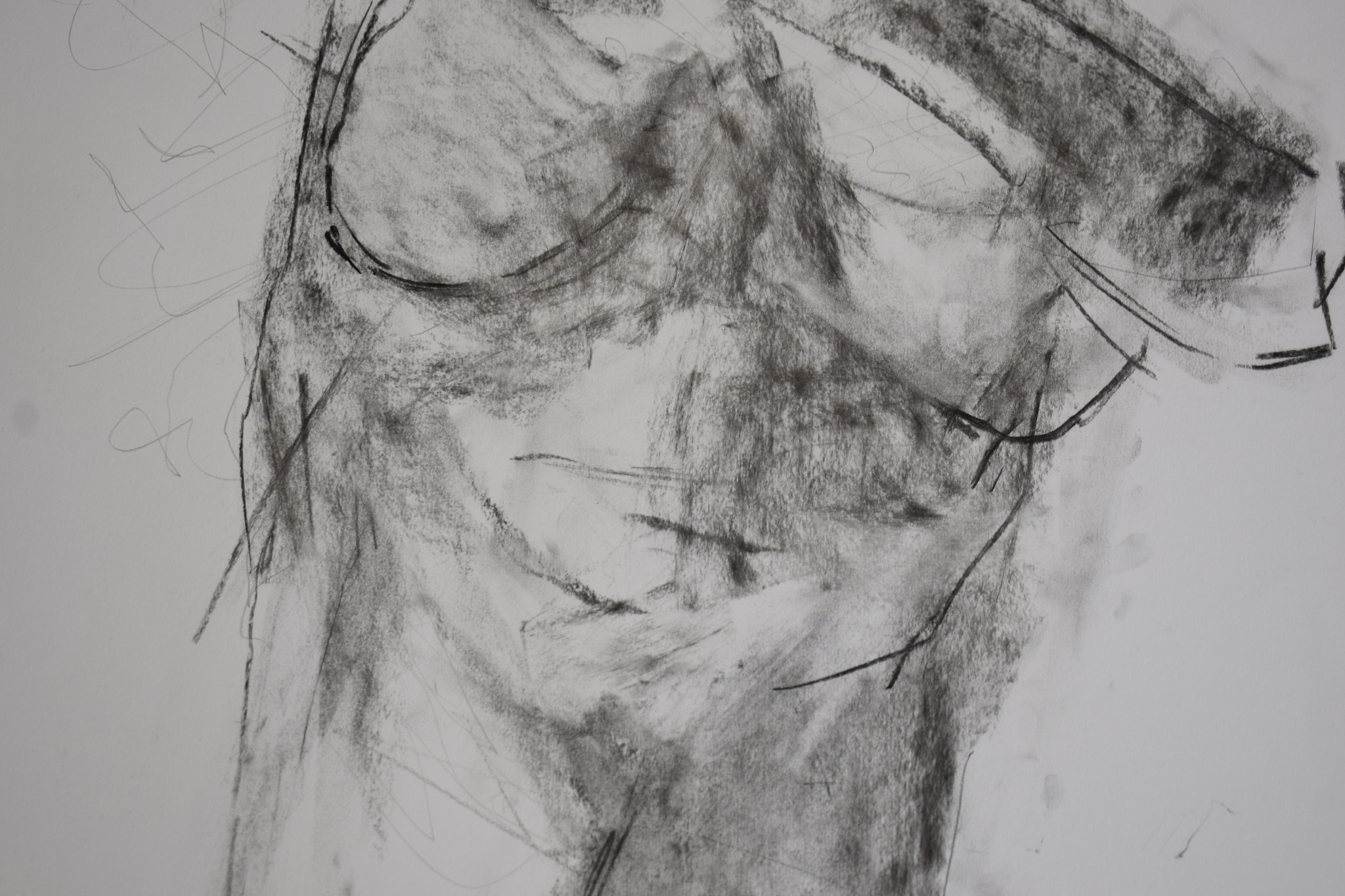
Drawings and their haptic experiences which include the entire body give fundamental meanings to visual experiences. The extra-personal space of drawing, haptically and psychically touching the space occupied with others. The body is the source of a 'personal world' which generates many of the meanings by which we experience the whole world. When we consciously stare at an object, the body boundary 'hardens' and there is a heightened sense of separation, whereas a casual viewing weakens the sense of separation and encourages instead a psychic fusion with the object.


Seated Woman with bent knee.

Her haptic experiences of space, the push and pull of gravity on her sense 'inside' of a centred body.

The Artist's Wife.

Egon Schiele. 1917


Readings beyond the success and failure of Life Drawing.

Art/Effrontery-Affect/Attraction/The Abject 


Drawing/Feeling through the framework of the body


Bachelard, on images, of pulling away from framing concepts.


The Drawing/Physical Self, with others in the  life class/in solitude in the studio.


Drawings/Graphic Correspondences, represent time spent searching the figure, finding its form.

Drawings present ways of/responses to seeing feelings.


Working From Corporeality.

Skin/Sensuality/Tensioned/Compressed Flesh.


The Situation/Observation and Criteria of Drawing from The Body.

Drawing on the hapticity of the living/sensing body.


Drawing from/present with the Body of Others.

Drawing from/working from the Images of Others.


Departures/Innovations/Differences from 'institutional drawing' situations and their outcomes.


The Figure/Human Form scrutinized/represented via the framing nature/device of the picture frame and its sensing gathering surface.


Painting/Drawings, mark making through abstraction and figuration.

Drawing intimacy/closeness with the drawn images, sensing self from their physical presence.


Life Drawing Re-Imagined.

Drawing from the Human Form.


The Nude in Art.

The Naked Human Form in Contemporary Art.


Drawing Bodily Transactions.

Private and Social Properties.


Egon Schiele.

Eros and Passion.

Klaus Albrecht Schroder.


In Schiele, the artist is always there, similarly in the drawings the exaggerated perspective, the striking angle of sight which situates every viewer of a Schiele drawing in a specific location of observation which defines the active relationship between artist and model. Schiele makes the process of observation his theme by giving thematic status to the observer.


Schiele's nudes are unsanctioned by any artistic genre, in his art  aesthetics disowns itself and art disowns its tradition.


Squatting Couple. 1918

Egon Schiele.

This painting appeared in the 1918 Secession catalogue as Squatting Couple, but after the death of Schiele and his wife it was retitled The Family.


Body-Fragmented-Modernity.

The Body of the individual in terms of isolation and alienation.

Fractured figures, bodies made from parts/areas of bounded/blemished flesh.


Schiele's fractured 'figure types' make visible the conflict, archetypal of its period between the whole and its parts. The points, areas of fracture, the angularities of their crooked members show each part independent of the others.


Drawings made of parts, areas constructed by components resulting in bodies being isolated from a somatic whole. Balanced though Schiele's compositions are in physical terms via his sureness of hand, the figures themselves have no core, the mobility of their limbs does not derive from any psycho-physical centre.


Looking Into Other Criteria.

Drawings Unpacking 1997-2017.

Expressive Content/The Body Exposed.


Selected From Living Bodies.


Selected From Other Images.


Monday, 5 May 2025

Drawing/Sociology/Art : Figuration/Flesh and the Body.

Drawing/ Being Part of Space and Time : A DISPERSION
Antony Gormley

Drawing is the most immediate way of making your ideas, sensations, and information explicit.
Euan Uglow

What do we look for from the nude today?
Drawing/Man : Oskar Schlemmer

The use of pure line compels the artist to a process of abstraction.
Energy/Tension : The Social Form of Living Flesh

To create a new intellectual image of reality

Line has an autonomous relationship with surface (a rhythmic lineation)
Rhythm is the means by which all kinds of movement are delineated.
It follows that the physiological movement of the body is rhythmically organised.

The figuration of the contemporary body through abstractions and representations.


INTERIOR : Environment, physical and psychological realms.

INTERIORITY : SELF.

The Picture Plane
Composition, elements and scale
Context-Content-Beginnings
Relationships- Figure- Ground, becomes psychological state of a figure both becoming and entropic

All pictorial representation is an intellectual and visual organisation.
Flesh follows the physiological movement of the body and is rhythmically organised/balanced.

ANTHROPOMETRICS
THE FIGURE IN SPACE
Performative, Sociological ; Structure and Agency (Klein)(Duality)
Measurement, Reach/Movement/Proportion

Making relationships between the spatial figure and the spatial arrangements of the picture plane. Bringing the spatial figures into the system of axes of the picture space.
Schlemmer's plane and spatial prospects contain architectonic motifs, which are presented orthogonally or in exaggerated perspective.

Anthropomorphic Collage
Morn Hill, chalk grave/leper hospital
Joseph Beuys/Reg Butler


Deleuze, Francis Bacon
Haptic Vision/Colour Space
Light is time, but space is colour.

Carnality/Sensation/Logic/Colour Space
Entropic/Seeing/Haptic/Violence


Monday, 5 June 2023

Life Drawing : An Emotional History of The Performative/Rhizomatic Body

Humanity : An Emotional History
Stuart Walton. 2004


Fear
Anger
Disgust
Sadness
Jealousy
Contempt
Shame
Embarrassment
Surprise
Happiness


Oxford Dictionary of Geography: spatiality
 
The effect that space has on actions, interactions, entities, concepts, and theories. Physical spatiality can also be metaphorical. It is used to show social power—thrones are higher than the seats of commoners, and ‘high tables’ for university teachers in most Oxbridge colleges physically elevate the teachers over the taught. People use proximity to show how intimate they want to be with others (See personal space), or orientation; we may face someone or turn away from them. Institutions and governments have used large architectural spaces to invoke awe, while restaurateurs may create ‘cosiness’ in small spaces.


LIFE DRAWING : Phenomenological Reductions

The body is not an object, but the condition and context through which I am able to have relations with others. 
Merleau-Ponty

A study of one body in front of another body.

Our body is our connection with the world and all its phenomena, it is fundamental in our communication and interactions.

The body is a force of creative action and a site of resistance.

An exploration in various forms of physical dialogue between performing bodies.
Energetic flows from others, what energy and phenomena will these relationships bring about on these bodies and the space they inhabit.

Personal and public boundaries of others, a being towards things through the intermediality of the body.

For Deleuze and Gauttari the body is rhizomatic (containing multiplicities, intensities and flows) and in active connection and interaction with its becomings, surroundings and situatedness.

What a body can do, what a body is capable of

The body without organs (BwO) is an attempt by Deleuze and Gauttari to denaturalize 'human bodies' and place the body in direct relation and connection to flows and particles of other bodies and things, creating constellations from its modes of organization of disparate substances.


"Spatial turn" The increased attention to matters of space, place and mapping in literary and cultural studies, as well as in social theory, philosophy, and other disciplinary fields.

Spatiality, Robert T. Tally Jr. Routledge 2013.

The origin of "True Humanity" : Tim Ingold


Tuesday, 28 September 2021

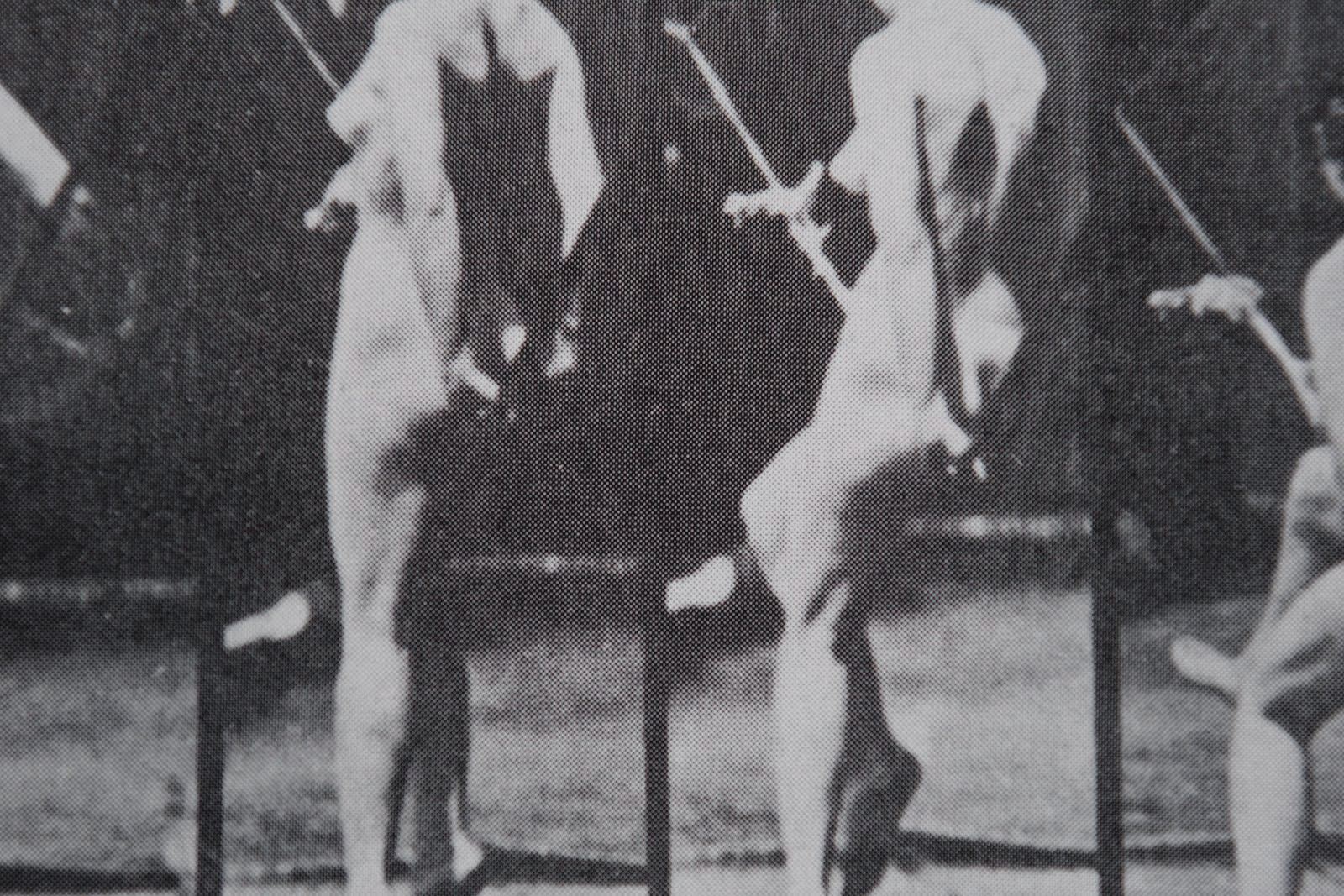
The Photographic Body/Working Documents : Bacon/Muybridge/Beuys/Butler/Piper

The Human Figure in Motion
Eadweard Muybridge

Francis Bacon
In Camera
The Human Body
The Violence of The Real

John Deakin
Heinrich Zille
Rodin
Beuys

Reg Butler
Woman 1949

John Piper
Eye and Camera, Blue to Ochre, 1976


Wednesday, 8 September 2021

Hortus Conclusus : A Serious Place

Hortus Conclusus : Enclosed Garden
Often translated as meaning “a serious place”
To construct a contemplative room, a garden within a garden.
Pavilion as both a monumental physical structure and as a site of emotional encounter.


With a refined selection of materials he has created a contemplative space that evokes the spiritual dimension of our physical environment, in so doing he is successfully emphasising the role the senses and emotions play in our experience of architecture. (Zumthor 2011: 15)

Enclosed all round and open to the sky.
A garden in an architectural setting.
“ Sheltered places of great intimacy where I want to stay for a long time.” (Zumthor 2011: 15)

Every plant name listed here evokes a distinct image; with each of them I associate specific lighting, smells and sounds, many kinds of rest, and a deep awareness of the earth and its flora.

A garden is the most intimate landscape ensemble I know of. In it we cultivate the plants we need. A garden requires care and protection. And so we encircle it, we defend it and fend for it. We give it shelter. The garden turns into a place.

There is something else that strikes me in this image of a garden fenced off within the larger landscape around it: something small has found sanctuary within something big.
(Zumthor 2011: 15)


Illustration of “Orchard” from Bible of Wenceslaus IV,Vienna, Austrian National Library

Depicts in the manner of an illuminated manuscript, the husbandry and community of the medieval workforce in the secure and sheltered space of a walled garden. This pastoral craft/gathering is evocative of Zumthor’s Hortus Concluses.

Working with ones hands, with the earth in sheltered spaces of a pastoral community.

Zumthor underscores this pastoral setting when he places a pavilion at the centre of the garden; he talks of future meeting there, of looking forward “to the natural energy and beauty of the tableau vivant of grasses, flowers and shrubs. I am looking forward to the colours and shapes, the smell of the soil, the movement of the leaves.” (Zumthor 2011: 15)

The Vintner’s Luck, Elizabeth Knox.
Tasting the soil in the wine, the soil and the wine are of the same substance, from the same locality; they are bonded together by the landscape.

Gardens Are Like Wells: Alexander Kluge
Inside every person (however serious or playful) lies an “enclosed garden”

Monasteries in medieval Europe were wells in which the clear waters of antiquity mingled with the dark waters of faith. At the centre of these monasteries was a garden, the most important part of which was enclosed. It was here that the most beautiful plants and medicinal herbs were concentrated. (Kluge 2011: 19)

Interestingly Kluge notes that these gardens were not everyday places, they were “timeless” because they were not subject to the general daily rituals of monastic life. These gardens were dedicated to the Blessed Virgin, but exposed perhaps to other texts, Homer, Ovid or the Gnostics. This relationship of literature finding a place of contemplation in the enclosed garden speaks perhaps of an “innerness”, an ability to unite mind and eye in the confusing realities of our age.

Civilisation and societies need ground that is uncultivated, gaps that are not subject to the principle of unity, something that is sufficient unto itself, which we do not consume: a sacrifice. Cities need spaces of piety. (Kluge 2011: 21)

“We need places in which we can engage in acts of mourning” Richard Sennett
(Sociologist)


Gardens of Information: DCPT (Development Company for Television Programmes)


Using the emblem of the Hortus Conclusus/The Enclosed Garden to stand for the relationship between the barren wastes on the one hand, and the happy isle on the other.

“To rescue facts from human indifference”

“To make gardens out of raw material and the bare bones of information.”

“A precursor of individualism, but has unmistakable traits in a way individualism never can.” (Kluge 2011: 21)


Spatial Practices for the Next Millennium.

Forming relationships not through superstructures, concepts or societies, but through inclusive structures/practices and localities. The Hortus Conclusus could stand for this type of concentration of identity (an inquiry, a person and a practice) within an intimate setting or situation.