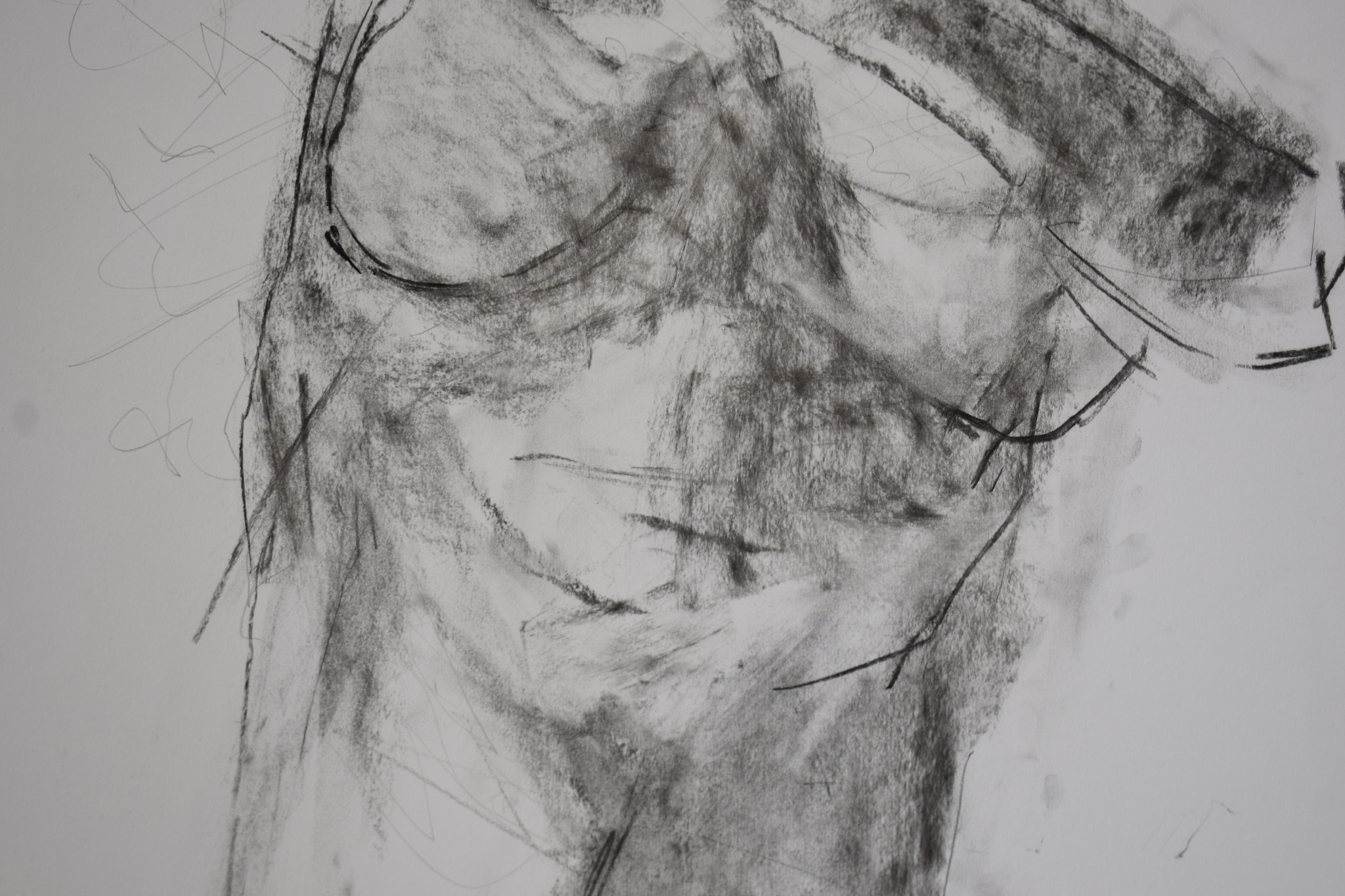
Outpost 181024
Siting Awareness : Studio event in the midst of its potentiality.
https://axisweb.org/artist/russellmoreton
Philosophical Solitudes~Sensual Objects
Here the full meaning of the philosopher's solitude becomes apparent. For he cannot integrate into any milieu; he is not suited to any of them. Doubtless it is in democratic and liberal milieus that he finds the best living conditions, or rather the best conditions for survival.
Gilles Deleuze.
Life Of Spinoza.
Ann Cline.
A Hut of One's Own/Life outside the circle of Architecture.
How to cook a wolf.
Essay as Cookbook.
The pleasure of Sue's little house and her inspired oblivion to the ugliness of poverty, appeals not because of its strangeness, but because of its calm. The pleasure of her little house as with the 'bagatelles' around Paris lay in the intensity of its inhabitation.
At first when you entered it, the house seemed almost empty, but soon you realised that it was stuffed with a thousand relics. You ate by one candle, everything from one large Spode soup plate. I have never eaten such strange things as there in her dark smelly room, with the waves roaring at the foot of the cliff. The salads and stews she made from these little shy weeds (gathered from the cliffs and nearby field) were indeed peculiar, but she blended and cooked them so skilfully that they never lost their fresh salt crispness. She put them together with thought and gratitude, and never seemed to realize that her cuisine was one of intense romantic strangeness, to everyone but herself, moreover it was good.
M. F. K. Fisher.
Inherent Light.
The light that seems to glow from within a colour.
To attend to colour, then is in part, to attend to the limits of language. It is to try to imagine, often through the medium of language, what a world without language might be like.
David Batchelor.
Retinal Studies
Colour, David Hornung. 2005
Knowing Obscures Seeing.
Vision is influenced by our preconceptions about reality. In viewing a scene, we establish unconscious hierarchies that reflect our functional relationship to objects and our momentary priorities.
The camera, like the human eye, sees only shapes and colours. It documents the world impartially through a lens that is similar to the eye. The functional relationship we have with objects creates visual expectations that interfere with our ability to see 'like a camera.'
In retinal painting, one concentrates upon colour and shape while resisting the urge to name individual objects. When vision is directed in this manner, one actually experiences a different way of seeing. The result is a picture in which the subjects seem to be constructed purely out of colour shapes.
The Impressionists developed a way of painting that, at its most extreme, sought to replace drawing as the basis of pictorial composition with the objective transcription of colour shapes as observed in reality. Claude Monet (1840-1926) in particular attempted to build his pictures strictly out of his response to visual sensations. He proposed that the painter should record only the patterns and colours that fall on the retina and ignore the 'identity' of the subject. This constituted a new kind of realism that reflected the physical nature of vision.
Bridge Tones.
Tones, tints, or shades that combine qualities of two distinctly different colours and act to soften those differences when placed near them in a composition.
Chromatic Darks.
Very dark chromatic greys that have discernible temperature.
Chromatic Greys.
Subtle colours that result from considerably lowering the saturation level of prismatic colours. Chromatic greys weakly exhibit the distinguishing quality of the hue family to which they belong.
Median Transparency.
An illusion of transparency where the value of the colour at the overlap is halfway between that of the two parent colours. The hue of the overlapping area blends the hues of the two overlying colours equally.
Luminosity.
The amount of light reflected from the surface of a colour. Value is a measure of luminosity.
High Key.
What an image is said to be when the colours in it are predominantly light in value.
Middle Key.
What an image is said to be when the colours in it are predominantly medium in value.
Achromatic Greys.
Greys that are created by mixing black and white. Achromatic greys have no evident coloration when seen against a white background. Black and white are also achromatic.
Greyscale.
A graduated representation of the value continuum broken down into a finite number of steps, usually ten, eleven, or twelve achromatic greys.
Non proportional Colour Inventory.
A graphic rendering of specific colours observed in an object.
Proportional Colour Inventory.
A graphic representation of the exact colours and their proportions in a observed object.
Retinal Painting.
A term coined by Harriet Schorr in reference to painting from observation in a manner emphasizing the faithful transcription of coloured shapes as they appear on the retina of the eye. An outgrowth of Impressionism, this method favours accurate colour rendering over drawing to describe form.
Shade.
The result of mixing a colour with black.
Tint.
The result of mixing a colour with white.
Tone.
Made by mixing grey (either chromatic or achromatic) with a colour. Tone can also have a more general meaning. The term is sometimes applied to all colours achieved by admixture including tints and shades.
Colour Unity.
The Altered Palette.
Unifying Strategies for Colour Mixing.
Any primary triad will have inherent limitations, but these are what give a palette its character.
Comparisons between the compositional study and the finished inventory clarify just how the inherent light in a design or painting is a projection of the palette from which it originates.
The colour overtones associated with specific pigments will limit possible saturation range. These limitations can be thought of as an expression of the character of illumination inherent in a colour. Just as a fluorescent light produces a characteristic quality of light that unifies what it illuminates, any primary triad exerts a characteristic quality of inherent light through intermixing.
An almost fool proof way to achieve family resemblance among a group of colours is to generate them from a limited source. Intermixing any primary triad (plus white) can produce a wide range of tones that share a common light quality.
A triadic dot study, teaches a mode of examination that, in a few steps summarizes the tonal range of a selected palette. The follow-up applies the colours of the study to a composition and puts the palette into action.
Earth Tone Primary Triad.
A primary triad of chromatic greys (so called because of their resemblance to pigments found in nature, e.g., ochres and umbers).
Low Key.
What an image is said to be when the colours in it are predominantly dark in value.
Ceramic Oxides/Body Stains.
Chromatic greys from earth tones producing weak muted colours.


.jpg)


.jpg)