Showing posts with label Alfred Gell. Show all posts

Wednesday, 18 March 2026

Speculative Gestures of Agencing Attention : Template and Form/Enchantments and Insights between materials

Making Objects : Of a critical and theoretical nature.

Clay : Atmospheric Interpretations.

Ceramics~Abstract Painting : Re-Consolidations/Abstract Vessels.

https://www.curatorspace.com/artists/russellmoreton


THE BODY AS A TERRITORY IN RAW CLAY

Developing Formative Histories/Indexical and Involuntary Markings 

Observational essay/account whilst work is resident in the Yard,

Pastoral Space: Material, Inquiry and Craft

Temporality. The state of existing within or having some relationship with time. A clay form with its pre-performative drawing used as a template.

These distinctively different yet closely related works are arranged with the clay piece on its custom made trolley with its calico material that acts as a sheet on which the clay work rests. The drawing is placed behind it fastened to a wall with the drawings bottom edge just making contact with the floor adjacent to the castors that grant the clays supportive trolley mobility. The clay work has a direct relation to this adjacent drawing, the drawing is revealing the traced female that is just discernable on the surface of the clay. On closer inspection of the drawing it is just possible to see a rubbing taken from the periphery of the clay form. Both the paper and the clay seem to be in some reflective mode of mutual intimacy, marks transferred between one another during the manufacture of both are subtly replicated on the form of one and the surface of another. The pierced clay slab (vessel) is the first visible casualty of the entropic process of shrinkage. A significant crack separates the clay vessel into two separate but unique entities that share the same defect as if they were still whole. This division through the continent of the body has been subtly marked by the raised furrow of silica deposited when the clay bodies were in closer proximity. The calico has also rendered a new visual territory around the entire periphery of the form, created by the deposited silica sand and the resultant shrinkage that is taking place. There is the sense of this form moving in two dimensions, creating an extended footprint of previously covered territory whilst continuing to shrink bodily within the details and markings on its surface. This phenomena seems to give the piece a strange complexity of both temporality and a duration on which that temporality is directly charted, the calico is instrumental in registering this perception. The agencies of both the silica sand and the calico sheet between them regulate and guide our understanding of the observation of the clays infinitesimal shrinkage. The compression of the clays structure due to its shrinkage increases its density and visually alters the arrangement of the piercing that are mapped over its surface, the concise circles and holes cut through the clay have now blended into the overall tension imparted by shrinkage, there is a sense that precision of the marks, their machined appearance which contrasted to the locality to the clay around them has been lost, reclaimed by the inner natural torsions taking control of the piece as a whole. The clays surface with its sandy granular deposits whose particle size has become visually larger at the expense of its hosts shrinkage now auger for a territory, a land mass devoid of water, the sense of this territory becoming anhydrous, giving rise to thoughts of thirst and fragility, even the once precise holes give the impression of barren watering places isolated within a landscape in a state of drought. The once visible markings are now obscured by the action of the shrinking territory and its granular coating as it now gains in its ability to obscure features. The traced and drawn female form is still harboured somewhere under this obscuring sand. Yet she now resides as a brittle uncompromising inscription of her former self, the plasticity that once gave her a sensuality into the yielding and pliable surface has succumbed to the unstoppable internal shrinkage of the clay particles starved of moisture. The clay is acknowledging the atmosphere of its given surroundings, our environment.


The Draught, J G Ballard 

The Woman in the Dunes, Kobo Abe

The Disposition of the Body, Peter Greenaway (The Draughtsman’s Contract)


The clay suffers, dehydrates as its moisture is absorbed by the surrounding atmosphere, giving up its plasticity and its almost inhuman sensuality and tactility. Presented amongst us, it is rendered into a state of its own homogeneity Conversely the working drawing which has evolved from being a simple template to aid the registration of celestial information within the territory of the body. Has itself become involved in its own creation as an art object. On completing its initial purpose, the task of transferring details onto the surface of the embryonic clay form. It has now become embroiled and entangled as it were with the creative issues of the clay form; “they” have become members of the same intuitions the same creative flux, sisters. The drawn “sister” contains the origin of their shared inscription, the originating female trace. The gesture and act still remains, visible only by physical impression of transference; which is left proud, raised and projecting passed the original flatness of the paper. These material read together render insights into superimposed temporalities shared by the art object, they question and reveal the reverse side of origins, of the work or its working drawing, they all underline the complexities and multiplicities of contemporary art practice.


The Drawing strangely or ironically displays values in a state of stasis, now lost with its sister. The cyanotype “sea” with its fluidity bleeding into the porosity of the news print. The “ streams” of residues washed from other areas are now deposited into the interior space where they have collected finally to evaporate leaving their watery remains. Only the clarity of the “permanent” marker pen remains untouched by any entropic activity. Objectively the drawing materials has slowed down to the point when one might grant it a measure of completeness. Its particular temporalities now exist within the interactions it can manifest from others, other things, other situations that are drawn into its proximity, its particular field of intuitive reverberations, its unique dwelling place.

The clay form seems to have gathered up its history of temporal acts that culminate in its present form. This presented object, with temporalities marked on site has become a vehicle, a vessel for its own entropic voyage, another temporality that itself adds a spatial dimension. This object for me appears to be totally contingent yet relational to aspects of space and time, it exists uniquely “once” in the present, presence it creates with its observer. The result of this contingent object is that “we through it” are constantly travelling away from its point of origin, we as a result feel the passage of the entropic value of time through the human condition. Whereas the drawing does refer to a now and a past, an elsewhere ,it seems locked between these two comprehensions.

The clay form has clearly an entropic element which seems to give rise to phenomenologically driven inquiry which in turn helps to creates our sense of a spatiality. Uniquely formed between observation and our own movement, we are in effect made to sense that the object heralds our own becoming.


Material Agency : Carl Knappett, Lambros Malafouris

Visualising Environmental Agency


"Agents are defined as persons or things, which have the ability and intention to "cause" something "in the vicinity" or "in the mileau" to happen ( Art and Agency, Alfred Gell 1998)"

"These latter artefacts are described with the term "index", to remove the appellation "art" and to imply that they are indexes of agency."

Some Stimulating Solutions, Andrew Cochrane.


Drawing intervention and speculative sculptural environment. 


Speculative Learning Environment : Russell Moreton.

Re- Imagining Education, Brockwood Park School. 

Teacher Education Manual

Insight-Bohm-Krishnamurti. 1979

David Bohm, Are we saying that insight is an energy which illuminates the activity of the brain, and that in this illumination the brain itself begins to act differently?

Krishnamurti, You are quite right. That's all-that is what takes place. That is -this flash has altered completely the pattern which the material process has set.


a thousand plateaus

Deleuze, Guattari


Assemblage

Becoming

Body Without Organs

Nomad

Rhizome

Smooth Space

State

War Machine

The book, as described above, is a jumbling together of discrete parts or pieces that is capable of producing any number effects, rather than a tightly organized and coherent whole producing one dominant reading.

The beauty of the assemblage is that, since it lacks organization, it can draw into its body any number of disparate elements. The book itself can be an assemblage, but its status as an assemblage does not prevent it from containing assemblages within itself or entering into new assemblages with readers, libraries, bonfires, bookstores, etc.


Thursday, 25 September 2025

Tarkovsky filming the Instant : Flux and Quality in Nature's Time

Reflective Narratives around The Instant.
Art and Aesthetic Patterns.

The theme of the human body as landscape and the biological link between humanity and nature. 

Filmic Modalities


An Ecology of Mind

We are so accustomed to thinking of aesthetic phenomena as a discursive or representational construct, that we often forget that without arousal of perception, no aesthetic experience is possible.

Going beyond what it may represent into the important psychic information it contains

Bateson credits art with playing the role of confronting the quantitative limit built into consciousnesses


Art assists mind in recognizing that the potentiality of heightened consciousnesses exist and that it resides in you and in me


Flux and Quality in Nature's Time

Perception of Environment/Relational Situations

Tim Ingold

Each thing framed dwells in the world differently.

The frame and framing, through its configuration, must never offer a gap or a bridge through which as it were, the world could get in, or from which the picture could get out.

The picture frame reminds us that the work of art, while it hangs in our room, does not disturb our day-to-day sentient and perceptual ecologies.

It is like an island in the world that waits until one approaches it and which one can as well pass by and overlook.

On The Picture Frame, Simmel


Art becomes art by virtue of literal and institutional framing

Aesthetic contemplation blurs reals and emotional space in a way that produces tangible affects in the world

The thinking hand that mediates a haptic bridge in which creating and holding, becoming and grasping are all practical everyday activities extending the thinking body

Objects that stand in two worlds at once and becoming drawn into the movement of practical life through the virtue of being held in the hand

The intermingling of persons and objects in pictorial space and the aesthetics of the intermingling of function and form in everyday things


The pictorial space is one in which persons and images intermingle and passions can be aroused. 

Art and Agency, Alfred Gell


Nature as “Comfort Zone” in the Films of Andrei Tarkovsky by Donato Totaro 
 
Volume 14, Issue 12 / December 2010  18 minutes (4324 words)

In this essay Totaro analyzes the unique thematic and aesthetic import of Tarkovsky’s use of nature.


Tarkovsky relies on nature and natural phenomena to underscore and often dictate the time-pressure (rhythm) of a shot. The movement of time, its flux and quality, flows from the life-process that is recorded in the shot. Even though the fires, downpours and gusts of wind are staged, re-shot or recreated there still remains the spontaneous element of “nature’s time” within the filmic time. Each of the natural events and elements (water, wind, fire, snow) have their own sustained rhythm. Tarkovsky uses these natural rhythms to express his own, that of his characters and the temporal shape of the film (23-24).

I would like to conclude this analysis of Tarkovsky’s unique use of nature as a ‘comfort zone’ by saying a few things about his two science-fiction films, Solaris and StalkerSolaris is based on the great same-titled science-fiction novel by Stanislaw Lem. The many philosophical and ethical differences between the novel and film can be summarized by the fact that, whereas the novel begins in space on the Solaris space station orbiting the planet Solaris, the film begins with a 45 minute prologue on earth, which establishes the importance of home, family, and ‘mother’ earth to the psychologist Kris Kelvin (and by extension all humans), who is soon to leave for outer space. The theme of the human body as landscape and the biological link between humanity and nature is established right from the opening, a (second) slow motion close-up shot of plant life swaying under a crystal clear stream that slowly pans right to reveal the hand of a man wearing brown trousers and a dark leather coat standing amidst waist high reeds.


http://offscreen.com/view/nature_as_comfort_zone


Waverley Abbey
Reflected ruins in flooded interior


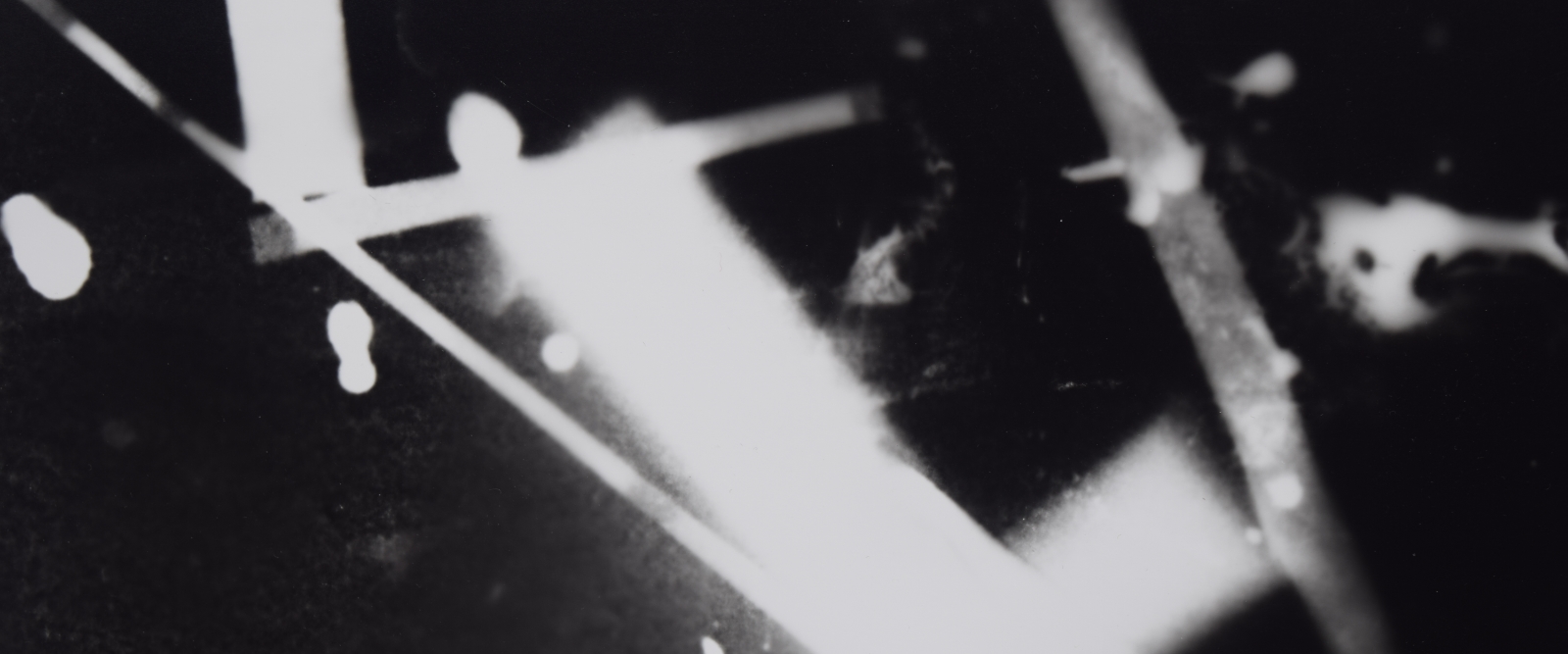
Photogram formed from a design collage for The Reading Room, Waverley Abbey.

Intuition of the Instant : Gaston Bachelard


Wednesday, 28 June 2023

Construction/Spatial Agency : A Visual Dwelling Space around Building


CRAFTSMANSHIP AND THE PHENOMENOLOGY OF CONSTRUCTION ON CREATIVITY


On Craftsmanship, towards a new Bauhaus, Christopher Frayling. 2011

The Craftsman, Richard Sennett.2008

Caruso St John: The Phenomenology of Construction, Eric Lapierre.2006

Adam Caruso on the medieval ruins of Fountains Abbey, Yorkshire.

Today the nuances of language that make up these architectures only exist as an intellectual discourse and do not operate at the emotional level that would have engaged the original inhabitants, or audiences, of these buildings. And yet we are still emotionally affected by these structures. Denied access to the specific culture of their iconography. We respond, at a more visceral level, to the more general culture of their construction. When this formal language ceases to be novel, a building becomes part of a more normative condition, the condition of not ‘being new’ and its qualities increasingly emerge from the more long-standing and stable world of construction.
Adam Caruso, Towards an Ontology of Construction, KnittingWeaving Pressing 2002

Waverley Abbey. Cistercian Monastery

The peculiarity of the ruin is defined in that it demythologises the impression of seamlessness and linearity. In the ruin, we are at once removed from dichotomised and levelled down space by entering a place at the threshold of experience. At the threshold, we return to the pre-spatial, if primordial, landscape, yet to submit to the suppression of space and site. Instead the place of ruin creates protrusions, which desolates the category of clean space.

The Aesthetics of Decay, An Uncanny Place. Dylan Trigg 


KIEFER AND CHIPPERFIELD TALK SPACE AND CREATIVITY
Discussion between the artist Anselm Kiefer and architect David Chipperfield.
Beginning with Kiefer’s extraordinary studio complexes in Germany and France, the discussion roamed over questions of materiality, the nature and feel of spaces, scale, history and the ruin. Kiefer continues to discuss the ways he has shaped his three successive studios, and their landscapes both as a place and as a place in which to work.

DAVID HILLS OF DSDHA DISCUSSES THE NEW STUDIO SPACE OF EDMUND DE WAAL.
British firm DSDHA has created a second new studio and gallery for ceramic artist Edmund de Waal within the shell of a converted munitions warehouse in south London.

(Royal Academy of Arts)

Material Agency : Carl Knappett, Lambros Malafouris
Visualising Environmental Agency

"Agents are defined as persons or things, which have the ability and intention to "cause" something "in the vicinity" or "in the mileau" to happen ( Gell 1998)"
"These latter artefacts are described with the term "index", to remove the appellation "art" and to imply that they are indexes of agency."
Some Stimulating Solutions, Andrew Cochrane.

 Andover Installation : October at the Chapel.

Gridshell
Weald and Downland Open Air Museum

Drawing, tissue paper, tape, body outline with astronomical data on paper.

Markings over Layered Drawings #1

Template and Form 2010. The Yard,Winchester.

Pastoral Space: Material, Inquiry and Craft.#2
Drawing intervention and speculative sculptural environment.

Body Outline with Stones and Threads : Mapping.

PB145023a : Mapping. Human Filament

Reverberations from excavated land #5

Speculative vocational processes #8
http://cargocollective.com/russellmoreton/To-consider-time-as-an-entity-we


Hidden Curriculum #1
a thousand plateaus
Deleuze, Guattari

Assemblage
Becoming
Body Without Organs
Nomad
Rhizome
Smooth Space
State

War Machine


Monday, 20 March 2023

Littoral Zones/Making Processes : Affect, an ecology of experience/Clay Work : Visceral Practices.

 Momentum Wheel : Lucie Rie Installation.

Clay/Ceramics as a concept to a way of thinking.

Speculative Tectonics : A Poetic of Construction.


The Clay can take to the mould and mould the clay.

Simondon, took the essence of matter or the material to lie in form-taking-activity.

Brian Massumi. 2009.


Clay Works --- In and Out of material : Clay plays the stone, the stone plays the clay

Tony Cragg


IN AND OUT OF MATERIAL


Demonstration


Tony Cragg : I basically mean the effectiveness of the object, of the material. But because the metaphysical and physical association are already occupied, I'm interested in somehow establishing some relationship with the materials and the things around me without using any preconceived notions of an already occupied language. It is a bit like taking away a Christian name and depersonalising something. What I mean is that it's an attempt on my side to restart the relationship with the material, which I think sculptors have to do anyway.


Jon Wood : Thinking of the increased awareness that this side of your work tries to capture and harness in the viewer, can you say a bit about the kind of sensitivities that you would like to be heightened? What would you see your work as demonstrations of and for? Your sculptures are triggers for what kind of thinking?


Tony Cragg : Well there is an attitude to looking at things and to looking at objects and materials which is based on a meditative tradition of contemplation : the universe in a grain of sand idea, or maybe even religious ideas where you actually get in contact on some level with the material world, on a deeper level than the one you obviously are capable of reaching in an everyday situation, so on an extraordinary level, outside of your own experiences.


I am not saying that that's not interesting or important. But I also think that this leaves the battleground for the everyday life to be governed by non-contemplative thought and non-meditative thought. And this may sound like a mixture of terms, but I think that there is a job to be done even on an everyday, “second for second” level of life—on the experiential level of life. I think there is a job to be done here improving the quality of contemplation about an awareness of the material world—the material world seen as an immediate extension of the communal social effort, the cultural effort that you are part of.


Jon Wood : How does it move from being an individual contemplative experience to being one that has a communal relevance?


Tony Cragg : In the main part it only has communal relevance. All you can do for yourself is formulate your sentences, cook yourself a meal that suits you, get dressed in a fashion that suits you, and everything else you have to put up with as having been made by other people for you. But obviously, even if they didn't ask your permission, there's something consensual about that, isn't there? Even though you don't like it, it doesn't look like you're making an effort to change it. And maybe there's some active thing there. My idea is that even if I don't like it, I wouldn't be able to change a great deal of it, but I could sow the seed for some change in the direction that I would feel would be important. It's a measure of how much responsibility one takes for the change. Looking for more in the visual world around me and looking for more language, in a sense, is one way of heightening sensibilities and expanding a vocabulary and then expanding the responses to a vocabulary is a way of heightening sensibilities. I'm not a politician, but I think we still live in a world that is greatly dominated by mesmerism and mystical models, which are very distracting because they actually stop us from really trying to face reality.


Realist Magic

Objects, Ontology,

Causality

Timothy Morton


Clay Work : Visceral Practices


https://www.flickr.com/photos/russellmoreton/

Pastoral Space: Material, Inquiry and Craft.

Longshore drift is a geographical process that consists of the transportation of sediments (clay, silt, sand and shingle) along a coast at an angle to the shoreline, which is dependent on prevailing wind direction, swash and backwash. 

This process occurs in the littoral zone, and in or close to the surf zone.


Material Agency : Carl Knappett, Lambros Malafouris

Visualising Environmental Agency.


"Agents are defined as persons or things, which have the ability and intention to "cause" something "in the vicinity" or "in the mileau" to happen ( Gell 1998)"

"These latter artefacts are described with the term "index", to remove the appellation "art" and to imply that they are indexes of agency."

Some Stimulating Solutions, Andrew Cochrane.


Tectonics in architecture is defined as "the science or art of construction, both in relation to use and artistic design." It refers not just to the "activity of making the materially requisite construction that answers certain needs, but rather to the activity that raises this construction to an art form." It is concerned with the modeling of material to bring the material into presence: from the physical into the meta-physical world.

http://dspace.mit.edu/handle/1721.1/78804


Situate them in such a way that useful space for life may form itself amidst them.

Kazimar Malevich 1924

Zaha Hadid on Malevich • BBC CH/4


Template and Form 2010.The Yard,Winchester.


Modern information theory claims that both the clay and the mould are engaged with matter and form. The clay is in a metastable state that possesses potential energy, unevenly distributed, but capable of effecting a metamorphosis. This quality of the clay is the source of its form. The mould places a limit on the expanding form of the molecular organisation of the clay as it fills the mould. The mould does not form the clay passively, but communicates a resonating action throughout the clay that alters the clay's molecular organisation.


Wednesday, 1 March 2023

Figuring it out : Display and Process : Conceptual Frameworks/Contexts

 Outpost 010323


https://www.flickr.com/people/russellmoreton/


The Parallel Visions of Artists and Archaeologists.

Figuring It Out.

Colin Renfrew.


Archaeologists/Artists, intuitively working with materials that are local and quotidian.

New insights into the way humans use things/people/the earth.


Encounters.

Art as archaeology, archaeology as art.


What is Art.

The tyranny of the renaissance.


Off the plinth.

Display and process.


The human condition.

Being and remembering.


The (al)lure of the artefact.


Baneful signs.

The archaeology of now.


Figuring it out.

The Indexical Body.

Corporeality/Aesthetics.

Contemporary Fine Art/Working from/with the body


Francis Bacon.

The figural body.


Manuel Neri.

The sculptural body in relief.


The Body/Spatial/Temporal

Rituals/Places/Vessels

Awareness/Repetition/Ritual can give meaning to existence.


What Are We?

Where Do We Come From?


The Anthropology of Art.

Constructed as a theory of agency or of the mediation of agency by indexes understood/conveyed through material entities which motivate/create inferences, responses and interpretations.


For Gell, art is not 'axiomatic' about a 'matter of meaning communication' but rather it is about doing that is theorized as agency in a process involving indexes and effects. Art, its actions and their effects are similarly not discrete expressions of individual will, but rather the outcomes of a mediated practice in which agents and recipients are all implicated in complex 'participations, ways of relations and their diffractions.


Artists/Prototypes/Things/Recipients/Affect/Generative Relations.

Practical Experience/Cognitive Knowledge/Analysis.


Art and its complex participation/phenomena is distributed by an agent with other agents, the artist attempts to distribute elements of their own efficacy amongst others. 


Artists are those who are considered to be immediately causally responsible for the existence and characteristics of indexes, artists/a person both distributed and implicated may also be vehicles of the agency of others.

Alfred Gell. 


Conceptual Frameworks/Context


Axes of Coherence/Indexes/Formal Analysis/Repetition/Improvisation. 


Resultants that incorporate the friction/asperity of their trajectories through a medium.

Tilt-up concrete construction, Chapel of St Ignatius, Seattle, Washington, USA.

Steven Holl.


Cathected, Aesthetic Phenomenon, Aesthetic Causality, Sensual Object, Allure,


The Projects.


Hungate.

Water, niche, Priscina, font, vessel, grounding body/spirit, apparatus, scaffold, un-doing of Place, Site, Reading the existential qualities of architectural spaces into the corporeal/haptic body, plaster, lime, canvas, whitewash, yellow ochre, water becomes a sacred conduit running through the architectural body.


Raveningham. 

Ground Marking, ceramic spheres, Fontana, clay/raku. Movements/Durations on grass to leave temporal traces. String line, shadow sticks, involuntary markers, found objects, collected phenomena,  


Undercroft Anglian Potters, Norwich.

Ferini Gallery, Lowestoft.

Saturday, 4 February 2023

Mesh/Material/Light : Cyanotype Process/Drawing Place

Movements and Archaeology  : Traces and Piercings.
Cyanotype photogram from Winchester Cathedral with pinholes.


The Cathedral : Place Studies

Pastoral Space: Material, Inquiry and Craft.

Material Agency : Carl Knappett, Lambros Malafouris
Visualising Environmental Agency

"Agents are defined as persons or things, which have the ability and intention to "cause" something "in the vicinity" or "in the mileau" to happen ( Gell 1998)"
"These latter artefacts are described with the term "index", to remove the appellation "art" and to imply that they are indexes of agency."
Some Stimulating Solutions, Andrew Cochrane.

Filament, drawing on lightweight paper.
Chapel Arts Studios, Andover.

Mesh/Material/Light, Cyanotype Process

Remote Sensing : Medieval Structures


Cyanotype is a photographic printing process that produces a cyan-blue print. Engineers used the process well into the 20th century as a simple and low-cost process to produce copies of drawings, referred to as blueprints. The process uses two chemicals: ammonium iron(III) citrate and potassium ferricyanide.

The English scientist and astronomer Sir John Herschel discovered the procedure in 1842.[1] Though the process was developed by Herschel, he considered it as mainly a means of reproducing notes and diagrams, as in blueprints.[2] It was Anna Atkins who brought this to photography. She created a limited series of cyanotype books that documented ferns and other plant life from her extensive seaweed collection.[3] Atkins placed specimens directly onto coated paper, allowing the action of light to create a silhouette effect. By using this photogram process, Anna Atkins is regarded as the first female photographer.[4]

From Wikipedia, the free encyclopedia