Showing posts with label aesthetics. Show all posts

Friday, 19 June 2026

Mediators : Vessels and Drawings creating Intercessors

Spaces/Aesthetics : 'Spatiality' between Objects, Concepts and Beings.
250724


In his discussion of mediators, Gilles Deleuze (1995,121) describes being taken up in the motion of a big wave. He notes that instead of looking for 'points of origin' attention should be directed to mediators that enable a 'putting-into-orbit' that facilitate the movement of concepts, sensations and matter without recourse to origins or destinations.

Katve-Kaisa Kontturi uses the term 'intercessor' instead of  'mediator' as it aligns better with Deleuze's argument, where importance is placed not on mediating between already formulated shapes or beings, but on opening beings up to movement through a third actant.
For Deleuze (1995,125), Intercessors are about entering into or creating a series.

Gilles Deleuze. 1995, Negotioations, 1972-1990.
Translated by Martin Joughin. New York: Columbia University Press.

Notes, Introduction
Ways of Following
Art, Materiality, Collaboration.
Katve-Kaisa Kontturi

Open Humanities Press
London 2018


Immaterial Architectures : Raveningham Pavilion #1
DSC_3283 Raku Beakers : Lead Glaze/Yellow Ochre
DSC_4049 Field Aesthetic : Causality/Layered Drawings
DSC_3776 Sacred/Secular : Vessels on Painting
DSC_4097 Field Aesthetic : Causality/Layered Drawings
DSC_8923 Artists Studio : Collage/Photography/Painting

Outpost Studies
Norwich
UK


Thursday, 9 April 2026

Making Apparatuses/Fictioning Space : Reading with Deleuze and Spinoza~Radical Intuitions : Interacting through abject(ions) between clay+ceramic.

Speculative and Exploratory Field Works.

Practical Philosophy ~in~the~making~

Asking of those that create things through material engagements, all the poetics~makings are crafted from modalities of becoming affective abject(ions)~aesthetics~


Inscriptions, handwriting, cognitive connections across visual art materialisms.

Gathered readings, walking across holloways and embodied dispositions, surfaces/inseparable cartographies of embodied experiences.

Undisciplined knowledge enables and sustains actions, gestures of a post disciplinary field.


Inseparable categories (containers and bodies) and their contents.


The Aesthetic,

The Economic,

The Political,

The Social,


Thursday, 1 January 2026

Thoughts on Art : Janie says we all such a crush of want. Nick Cave.

little Janie wakes up on the floor & she says!!!!
we’re GONNA HAVE A REAL COOL TIME TONITE!!!!
(Janie says we are all such a crush of want half-mad w/ loss we are
violated in our sleep & we weep & we toss & we turn & we
burn we are
hypnotised we are cross-eyed we are pimped we are bitched we are told
such monstrous lies—)
Janie wakes up & she says
we’re GONNA HAVE A REAL COOL TIME TONITE!!!!


Today's Lesson.
Nick Cave and The Bad Seeds. 
DIG!!!LAZARUS DIG !!!. 2008


The Planet drowns  in an ocean of photographic emulsion.

The more civilised we are, the fewer moral choices we have to make. But the mind atrophies. A moral calculus that took thousands of years to develop starts to wither  from neglect. Once you dispense with morality, the important decisions become a matter of aesthetics.
Super Cannes, J G Ballard. 2000


Sunday, 9 November 2025

Camouflage/Concept and Design : Re-Working Aesthetics/The Everyday

Everyday Aesthetics : Ordinary Lives

If the everyday can be considered an ecology where passions circulate in a perpetual state of intensification and entropic decline, the empirical self (and not just David Hume's version of it) is essentially in a state of flux. This posits the human as an organism constantly adjusting to its passionate environment, with a self that is constantly appearing and disappearing, crystallising and dissolving.

Ben Highmore


Camouflage : Neil Leach

Camouflage offers  a mechanism of locating the self against the otherwise homogenising placelessness of contemporary existence. It thereby promotes a sense of attachment and connection to place.

Camouflage may  therefore provide a sense of belonging in a society where the hegemony of traditional structures of belonging - the family, church and so on - has begun to break down. This aesthetic sense of belonging can be compared to other modes of belonging, such as religious devotion or romantic attachment.

In highlighting the creative capacity of human beings to adapt to their environment, this book offers a more optimistic account of human existence, which valorizes the present as the site of productive endeavor.

Here we might cite the work of more positive thinkers, such as Fredric Jameson who looks to the realm of representation for a mechanism of reinserting the individual within society. Jameson has  developed a notion of  ‘cognitive mapping', which serves  to overcome the lack of spatial co-ordinates within a society of late capitalism. He sees the potential of such mapping within the aesthetic  domain. What we need today, Jameson seems to be saying, is a viable form of aesthetic expression that reinserts the individual into society. The aesthetic  domain can therefore be seen to be somewhat Janus-faced. It is  both the source of many  of our problems, in a culture in which everything is co-opted into images and commodities, and potentially the way out.

Aesthetic  production should maintain the capacity  to operate as  a mediation between the self and the environment, but only aesthetic production whose design has been carefully  controlled can achieve this. The difference between productive and unproductive modes of expression is therefore a question of design. In this respect we can recognise the important social role of design in providing a form of connectivity for ‘cognitively  mapping an individual within the environment. 

Design becomes  a crucial consideration for the effective operation of camouflage.

Design plays a crucial social role in offering a form of connectivity, a mode of symbolisation, that allows  people to relate to their environment. Exquisitely designed works such as S, M, L, XL can therefore be interpreted not simply as highly aesthetic publications that could be accused of a process of ‘glossification’ — of turning the world into a designer representation of itself. 
Rather they  can be seen to be operating in the very space of contemporary culture, a space that is highly visual.

The concept of ‘Camouflage’ can therefore also respond to some of the questions that Koolhaas himself raises. In his essay on the Generic City, for example, Koolhaas offers a critique of the placelessness of the contemporary cityscape, where each city is virtually indistinguishable from the next. The theory  of camouflage, however, would seem to suggest that design itself can overcome this  condition by  providing a mechanism for relating the individual to the environment. 

Design here must be contrasted to junk. If the junk  city  has  become the placeless  generic  city, the exquisitely  designed city  can become the city  of a new form of spatial mapping. This  theory  of camouflage is therefore presented not only  as  a retroactive manifesto through which to appreciate Koolhaas’s work, but also as a contribution to the debates which he initiates.
The concept of ‘Camouflage’ will allow us, at least, to move beyond the often simplistic denigration of the aesthetic realm within recent critiques of postmodern culture, and to grasp the complexities involved in our negotiation with the world afforded through that realm. Above all, it will allow us  to recognise the important strategic  significance of aesthetics in contemporary culture in general and in Rem Koolhaas’s work in particular.


The Architectural Plan

An Anthropology of Architecture

Embodiment and Architectural Form
Process-Relational Philosophy


Building The Drawing

The drawing as analogue allows more subtle relations, of technique, material and process, to develop between drawing and building.
Immaterial Architecture
The Illegal Architect
Jonathan Hill

Oak Tree
Oil
Paper
Plaster
Rust
Sgratfito
Silence
Sound
Steel
Television
Weather

Frosted Light
Index of immaterial architectures

TRANSPARENCY : LITERAL AND PHENOMENAL
Colin Rowe, Robert Slutzky

Interactions of the Abstract Body
Josiah McElheny

Object Lesson
Interactive Abstract  Body (Square)
The Spatial Body (After Fontana)

Tracing Eisenman
Stan Allen
Indexical Characters

FABRIC=MASS+ FORM
Alan Chandler
The interest in fabric formwork is in its deployment in a building process, which is faster than conventional formwork. Fabric formwork is inherently more sustainable due to the minimising of both concrete and shuttering, and more radically, allows the constructor to intervene in the process of casting even as the cast is taking place.


ANTI OBJECT
Kengo Kuma
We are composed of matter and live in the midst of matter. Our objective should not be to  renounce matter, but to search for a form of matter other than objects.
What that form is called- ARCHITECTURE, GARDENS< TECHNOLOGY is not important.

ReThinking Matereriality
The engagement of mind with the material world
Elizabeth DeMarrais, Chris Gosden, Colin Renfrew

The Affordances of Things
Towards a  Theory of Material Engagement
Aesthetics, Intelligence and Emotions
Relationality of Mind and Matter

Material Agency
Towards a Non-Anthropocentric Approach
Carl Knappett, Lambros Malafouris

At The Potter's Wheel : An Argument for Material Agency
We should replace our view of cognition as residing inside the potter's head, with that of cognition enacted at the potter's wheel.

The Neglected Networks of Material Agency : Artefacts, Pictures and Texts

Material Agency as Cognitive Scaffolding

The Cognitive Life of Things
Material Engagement and the Extended Mind
Lambros Malafouris, Colin Renfrew

Minds, Things and Materiality
Michael Wheeler

Communities of Things and Objects : A Spatial Perspective
Carl Knappett

Imagining the Cognitive Life of Things
Edwin Hutchins

Things and Their Embodied Environments
Architectures for Perception
Structuring Perception through Material Artifacts
Charles Goodwin

Leach Pottery, Studio and Museum
A Potter's Book
Bernard Leach

Adventures of the Fire, Vessels Through Time
Ceramic Pavilion
People make space, and space contains people
Ceramic space and life

Gordon Baldwin
Objects For A Landscape
David Whiting
Vessels-Spaces that cannot be drawn, rather they  need to be experienced.
Imagining a Vessel in a Rock on a Beach, 2006,(charcoal on paper)

The Architecture of The Ceramic Vessel
The use of the vessel in the investigation of our world.
The exploration through the dichotomy of the analysis between exterior and interior, of one pot to another and from  the message they convey.

MATERIAL MATTERS
ARCHITECTURE
AND MATERIAL PRACTICE
Katie Lloyd Thomas

PLENUMS : RETHINKING MATTER, GEOMETRY AND SUBJECTIVITY
Peg Rawes

ARCHITECTURE
IN THE AGE  OF DIVIDED REPRESENTATION
The Question of Creativity in the Shadow of Production
Dalibor Vesely
The Nature of Communicative Space
Creativity in the Shadow of Modern Technology
The Rehabilitation of Fragment
Towards a Poetics of Architecture

The Projective Cast
Architecture and its Three Geometries
Robin Evans
Architects do not produce geometry, they consume it

Analysing ARCHITECTURE
Simon Unwin
Geometries of Being
Architecture as Making Frames
Space and Structure


Thursday, 25 September 2025

Tarkovsky filming the Instant : Flux and Quality in Nature's Time

Reflective Narratives around The Instant.
Art and Aesthetic Patterns.

The theme of the human body as landscape and the biological link between humanity and nature. 

Filmic Modalities


An Ecology of Mind

We are so accustomed to thinking of aesthetic phenomena as a discursive or representational construct, that we often forget that without arousal of perception, no aesthetic experience is possible.

Going beyond what it may represent into the important psychic information it contains

Bateson credits art with playing the role of confronting the quantitative limit built into consciousnesses


Art assists mind in recognizing that the potentiality of heightened consciousnesses exist and that it resides in you and in me


Flux and Quality in Nature's Time

Perception of Environment/Relational Situations

Tim Ingold

Each thing framed dwells in the world differently.

The frame and framing, through its configuration, must never offer a gap or a bridge through which as it were, the world could get in, or from which the picture could get out.

The picture frame reminds us that the work of art, while it hangs in our room, does not disturb our day-to-day sentient and perceptual ecologies.

It is like an island in the world that waits until one approaches it and which one can as well pass by and overlook.

On The Picture Frame, Simmel


Art becomes art by virtue of literal and institutional framing

Aesthetic contemplation blurs reals and emotional space in a way that produces tangible affects in the world

The thinking hand that mediates a haptic bridge in which creating and holding, becoming and grasping are all practical everyday activities extending the thinking body

Objects that stand in two worlds at once and becoming drawn into the movement of practical life through the virtue of being held in the hand

The intermingling of persons and objects in pictorial space and the aesthetics of the intermingling of function and form in everyday things


The pictorial space is one in which persons and images intermingle and passions can be aroused. 

Art and Agency, Alfred Gell


Nature as “Comfort Zone” in the Films of Andrei Tarkovsky by Donato Totaro 
 
Volume 14, Issue 12 / December 2010  18 minutes (4324 words)

In this essay Totaro analyzes the unique thematic and aesthetic import of Tarkovsky’s use of nature.


Tarkovsky relies on nature and natural phenomena to underscore and often dictate the time-pressure (rhythm) of a shot. The movement of time, its flux and quality, flows from the life-process that is recorded in the shot. Even though the fires, downpours and gusts of wind are staged, re-shot or recreated there still remains the spontaneous element of “nature’s time” within the filmic time. Each of the natural events and elements (water, wind, fire, snow) have their own sustained rhythm. Tarkovsky uses these natural rhythms to express his own, that of his characters and the temporal shape of the film (23-24).

I would like to conclude this analysis of Tarkovsky’s unique use of nature as a ‘comfort zone’ by saying a few things about his two science-fiction films, Solaris and StalkerSolaris is based on the great same-titled science-fiction novel by Stanislaw Lem. The many philosophical and ethical differences between the novel and film can be summarized by the fact that, whereas the novel begins in space on the Solaris space station orbiting the planet Solaris, the film begins with a 45 minute prologue on earth, which establishes the importance of home, family, and ‘mother’ earth to the psychologist Kris Kelvin (and by extension all humans), who is soon to leave for outer space. The theme of the human body as landscape and the biological link between humanity and nature is established right from the opening, a (second) slow motion close-up shot of plant life swaying under a crystal clear stream that slowly pans right to reveal the hand of a man wearing brown trousers and a dark leather coat standing amidst waist high reeds.


http://offscreen.com/view/nature_as_comfort_zone


Waverley Abbey
Reflected ruins in flooded interior


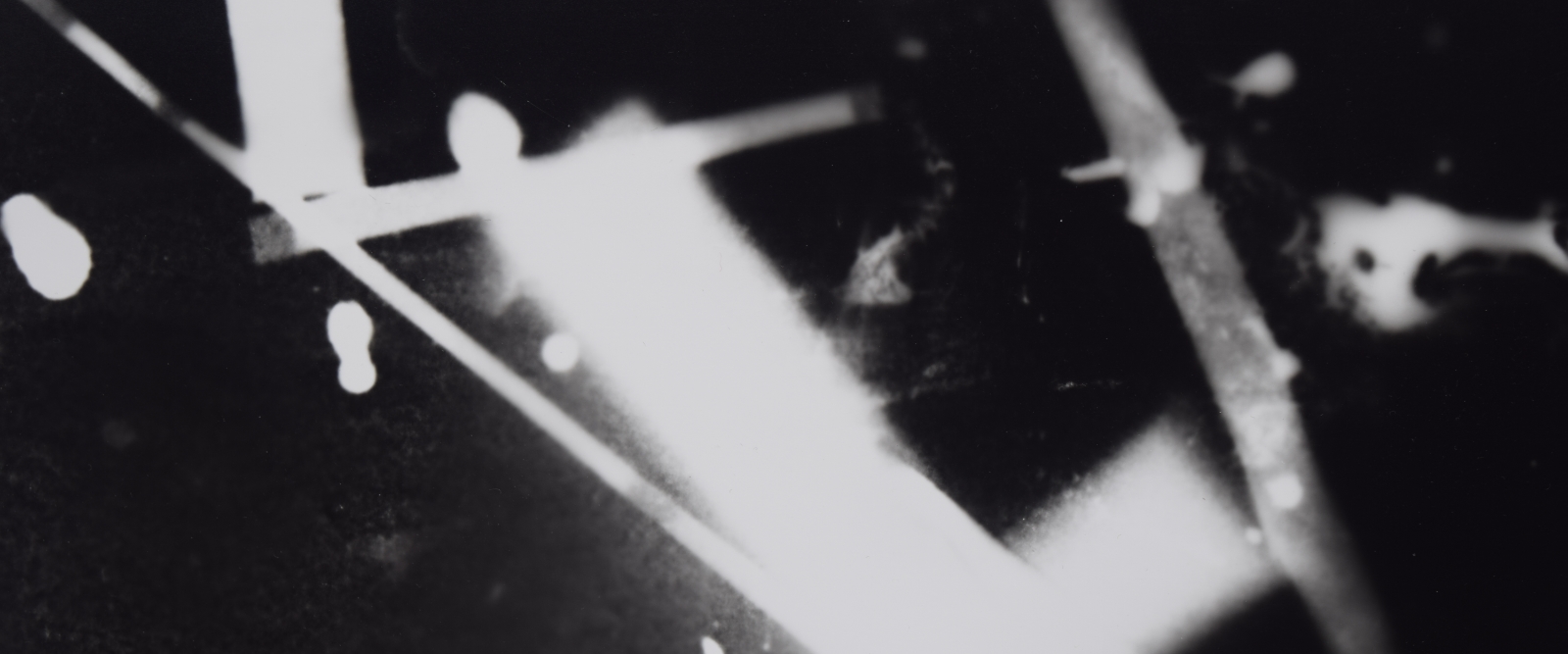
Photogram formed from a design collage for The Reading Room, Waverley Abbey.

Intuition of the Instant : Gaston Bachelard


Sunday, 27 April 2025

The Social : Catching The Light/Architectural Apparatuses/Spatial Methodologies

It would probably not be wrong to define the ex­treme phase of capitalist development in which we live as a massive accumulation and proliferation of apparatuses.

To recapitulate, we have then two great classes: liv­ing beings (or substances) and apparatuses. And, be­ tween these two, as a third class, subjects. I call a sub­ject that which results from the relation and, so to speak, from the relentless fight between living beings and apparatuses. Naturally, the substances and the subjects, as in ancient metaphysics, seem to over­ lap, but not completely. In this sense, for example, the same individual, the same substance, can be the place of multiple processes of subjectification.­

 I shall call an apparatus literally anything that has in some way the capacity to capture, orient, determine, intercept, model, control, or secure the gestures, behaviors, opinions, or discourses of liv­ing beings.

What Is an Apparatus? Giorgio Agamben 2009.


Alternative Photography : Photography and Architectural Space.

Photogram, a numinous construction, spaces amongst and within other spaces

Catching The Light.

The Entwined History of Light And Mind. Arthur Zajonc


PROXIMITY OF SPACE 

INTIMACIES IN SOCIAL SPACES 

SCRIPTORIUM


THREE STAGE METHODOLOGY (Kikutake) Mitsuo Taketani 

KA ‘ESSENCE’

KATA ‘SUBSTANCE’ 

KATACHI ‘PHENOMENON’ 

Characteristics of an architect

CHI ‘BLOOD’

TACHI ‘TEMPERAMENT’ 

KATACHI ‘EMBODIMENT’


The Phenomenology of Reading. GLAS, Derrida Literature and Language. 

The Stride of The Mind

Reading Rooms. Figuring Space. Text/Fumiture/Dwelling Reading with Paths

The Production/use of Space into Places to engender Societies.

A site specific induced inquiry into dwelling and building through/by way of an attentive awareness (anthropological) to people and place.

‘What I am post interested in now is inverting the structure of a culture that is centred around the city.’

‘The richness and strength of that (their) culture cannot be understood until one has worked with the people who live their- until one has eaten their food, drunk their sake, talked together with the craftsmen and made things with them.’

Kengo Kuma, Complete Works, (preface) 2012 

Relativity/Relationality through Walking and Thinking. Subjectivity. Space - Politics - Affect


Waverley Abbey. Cistercian Monastery

The peculiarity of the ruin is defined in that it demythologises the impression of seamlessness and linearity. In the ruin, we are at once removed from dichotomised and levelled down space by entering a place at the threshold of experience. At the threshold, we return to the pre- spatial, if primordial, landscape, yet to submit to the suppression of space and site. Instead the place of ruin creates protrusions, which desolates the category of clean space.


The Aesthetics of Decay, An Uncanny Place. Dylan Trigg 


Immaterial Architecture : The Glass Observatory

Photograph (132) Cyanotype Alternative Photography

Documents from research archive

Tracing Light: Petworth House, West Sussex 2000 David Alan Mellor, Garry Fabian Miller.

Light And The Genius Loci

For Derrida, the sun not only marks the beginning of metaphoricity but it is also an inescapable reminder of the solar system and oscillations, hidings and occultrations, inherent in 'a certain history of the relationships; earth/sun in the system of perception'.

Mutations Of Light

Petworth Window, 6 July 1999 Light's Windows And Rooms

Passing towards the Invisible.

The prospect of some metaphysical realm beyond the blue end of the spectrum and beyond material things illuminated to carnal sight, was a recurrent theme in William Henry Fox Talbot's early speculations.

CATCHING THE LIGHT

The entangled history of light and mind Arthur Zajonc

BROUGHT TO LIGHT

PHOTOGRAPHY AND THE INVISIBLE 1840-1900 Sight Unseen

Picturing The Universe Corey Keller

Invisible objects, penciled by nature's own hand.

In his introduction to the exhibition catalogue Iconoclash: Beyond the Image Wars in Science, Religion, and Art, the historian of science Bruno Latour argues that scientific pictures are powerfully affective because they more than mere images; they are, as he puts it, the 'world itself.

The Social Photographic Eye Jennifer Tucker

Nineteenth century science was characterized by both the appeal to visual evidence and the need for confirmation by the testimony of eyewitnesses. The latter explains why scientists pursued public viewings of their photographs by means of illustrated slide lectures, exhibitions, and reproduction in newspapers and magazines.

An understanding of the social boundaries of nineteenth century science helps make sense of a certain paradox within contemporary attitudes towards photography of the invisible. The ideal of mechanical objectivity in documenting visual knowledge demanded the elimination of the artist-observer and all of the subjectivity implicit in drawing by hand.

Invisible Worlds Visible Media

Tom Gunning

William Henry Fox Talbot, Slice of horse chestnut, seen through the solar microscope, 1840, salt print 18.6x22.5 cm.

Techniques Of The Observer

On Vision And Modernity In The Nineteenth Century Jonathan Crary

The Camera Obscura and its Subject

Above all it indicates the appearance of a new model of subjectivity, the hegemony of a new subject­ effect. First of all the camera obscura performs an operation of individuation; that is, it necessarily defines an observer as isolated, enclosed, and autonomous within its dark confines. It impels a kind of askesis, or withdrawal from the world, in order to regulate and purify one's relation to the manifold contents of the now 'exterior' world.

UNDER THE SUN

By The Light Of The Fertile Observer

Metaphors of illumination in the photography of Christopher Bucklow, Susan Derges, Garry Fabian Miller, and Adam Fuss.

An Epiphany Of Light

David Alan Mellor

Christopher Bucklow, Guests Jeanette Winterson, Gut Symmetries

Matter is provisional and that includes me. If the physics is correct then we are neither alive or dead as we commonly understand it, but in different states of potentiality.

From The Adamantine Land

Variations on the art of Christopher Bucklow David Alan Mellor

Etienne-Jules Marey

A Passion For The Trace Francois Dagognet

Painting, Photography, Film Laszlo Moholy-Nagy

A Bauhaus Book

L. MOHOLY-NAGY:

DYNAMIC OF THE METROPOLIS SKETCH FOR A FILM

ALSO TYPOPHOTO OSKAR SCHLEMMER

MAN

Interaction of Color Josef Albers

The Elements of Color Johannes Itten

Pedagogical Sketchbook Paul Klee

The New Landscape in art and science Gyorgy Kepes

The Colour of Time Garry Fabian Miller

The Majesty of Darkness Adam Nicolson

The Unmade

The Pregnant

The Half Erotically Unmade


Camera Obscura of Ideology Sarah Kofman

An optical instrument, which used in drawing, allows one to see at the same time the objects being drawn and the paper.

I Am Not This Body 

Barbara Ess


Working Collages

Ann Wilde, Ulrike Meyer-Stump

A German Tradition of Photographic Typology

Collages made from contact prints from Blossfeldt's negatives, showing the isolation of particular motifs. The working collages were an archive, not for the negatives but for motifs.

The viewer is less interested in the subjects of the pictures, than in the effect created by the formal system subsuming them.

His photographic archive of plant forms is not a finished work, but material awaiting processing.


Enchantments and Crossings : Somatic Effects

Spatial Methodologies. Worlds and Thresholds.


The Fanciful and The Scientific.

The Playful and The Reverent.

The Material and The Metaphysical.


Tensions in built spaces.


Between Evanescence and Substance.

Between Illusion and Specificity.

Between Slickness and Tactility.


Today there is not even a single instant in which the life of individuals is not modeled, contaminated, or controlled by some apparatus, In what way, then, can we confront this situation, what strategy must we follow in our everyday hand-to-hand struggle with ap­paratuses?

What Is an Apparatus? Giorgio Agamben 2009.

Making Places where times and tastes, human fabrications and accidents of nature, all collide; in these situations under the shelter of a forming/becoming architecture these ‘spatial texts’ or ‘visual conversations’ of one sort or another are suggested and are manifested and explored through a praxis of inquiry and making.


Facility and retreat for cross-disciplinary inquiry (Humanities and the Social Sciences).

Repository and archive of artefacts, texts and objects.

Exhibition and making spaces, workshops and residential living spaces. Walled garden complex containing a reading pavilion and library.

Philosophy of Solitude, thresholds/spaces of serenity, a poetics of dwelling.

Relationships between Art, Photography, Craft and Building. Expanded through Exhibition, Performance, Teaching and Making.

Realized as a dialogue/delivery (Built Work) into Architectural Terms between Sites of Collection and Sites of Construction.


Art as Spatial Practice.

Catalyst Events/Situations to engender the experience of learning.

West Dean, Singleton. Residential courses in the arts, both the grounds and the house are fully utilised in the social activity of learning.

Kilquhanity,Scotland. Free School in country setting, used as a site for exploratory fine art practices(converted a pottery into a camera obscura and drew a garden from the movements of the sun across a specific terrain).

Brockwood Park School, Bramdean. Re-imagining learning, conducted a walk across a landscape with clay, and hidden curriculum in the library with objects and texts centred around philosophy and architecture.

Space folds : Containing "Spatialities around historicality and sociality"

Perceptions now gathering at the end of the millennium. Spatiality, Robert T. Tally Jr. 2013

"All that is solid melts into air"

Karl Marx, Friedrich Engels,

(Poetic observation concerning the constant revolutionizing of social conditions)

Posted 2018