Showing posts with label film. Show all posts

Thursday, 25 September 2025

Tarkovsky filming the Instant : Flux and Quality in Nature's Time

Reflective Narratives around The Instant.
Art and Aesthetic Patterns.

The theme of the human body as landscape and the biological link between humanity and nature. 

Filmic Modalities


An Ecology of Mind

We are so accustomed to thinking of aesthetic phenomena as a discursive or representational construct, that we often forget that without arousal of perception, no aesthetic experience is possible.

Going beyond what it may represent into the important psychic information it contains

Bateson credits art with playing the role of confronting the quantitative limit built into consciousnesses


Art assists mind in recognizing that the potentiality of heightened consciousnesses exist and that it resides in you and in me


Flux and Quality in Nature's Time

Perception of Environment/Relational Situations

Tim Ingold

Each thing framed dwells in the world differently.

The frame and framing, through its configuration, must never offer a gap or a bridge through which as it were, the world could get in, or from which the picture could get out.

The picture frame reminds us that the work of art, while it hangs in our room, does not disturb our day-to-day sentient and perceptual ecologies.

It is like an island in the world that waits until one approaches it and which one can as well pass by and overlook.

On The Picture Frame, Simmel


Art becomes art by virtue of literal and institutional framing

Aesthetic contemplation blurs reals and emotional space in a way that produces tangible affects in the world

The thinking hand that mediates a haptic bridge in which creating and holding, becoming and grasping are all practical everyday activities extending the thinking body

Objects that stand in two worlds at once and becoming drawn into the movement of practical life through the virtue of being held in the hand

The intermingling of persons and objects in pictorial space and the aesthetics of the intermingling of function and form in everyday things


The pictorial space is one in which persons and images intermingle and passions can be aroused. 

Art and Agency, Alfred Gell


Nature as “Comfort Zone” in the Films of Andrei Tarkovsky by Donato Totaro 
 
Volume 14, Issue 12 / December 2010  18 minutes (4324 words)

In this essay Totaro analyzes the unique thematic and aesthetic import of Tarkovsky’s use of nature.


Tarkovsky relies on nature and natural phenomena to underscore and often dictate the time-pressure (rhythm) of a shot. The movement of time, its flux and quality, flows from the life-process that is recorded in the shot. Even though the fires, downpours and gusts of wind are staged, re-shot or recreated there still remains the spontaneous element of “nature’s time” within the filmic time. Each of the natural events and elements (water, wind, fire, snow) have their own sustained rhythm. Tarkovsky uses these natural rhythms to express his own, that of his characters and the temporal shape of the film (23-24).

I would like to conclude this analysis of Tarkovsky’s unique use of nature as a ‘comfort zone’ by saying a few things about his two science-fiction films, Solaris and StalkerSolaris is based on the great same-titled science-fiction novel by Stanislaw Lem. The many philosophical and ethical differences between the novel and film can be summarized by the fact that, whereas the novel begins in space on the Solaris space station orbiting the planet Solaris, the film begins with a 45 minute prologue on earth, which establishes the importance of home, family, and ‘mother’ earth to the psychologist Kris Kelvin (and by extension all humans), who is soon to leave for outer space. The theme of the human body as landscape and the biological link between humanity and nature is established right from the opening, a (second) slow motion close-up shot of plant life swaying under a crystal clear stream that slowly pans right to reveal the hand of a man wearing brown trousers and a dark leather coat standing amidst waist high reeds.


http://offscreen.com/view/nature_as_comfort_zone


Waverley Abbey
Reflected ruins in flooded interior


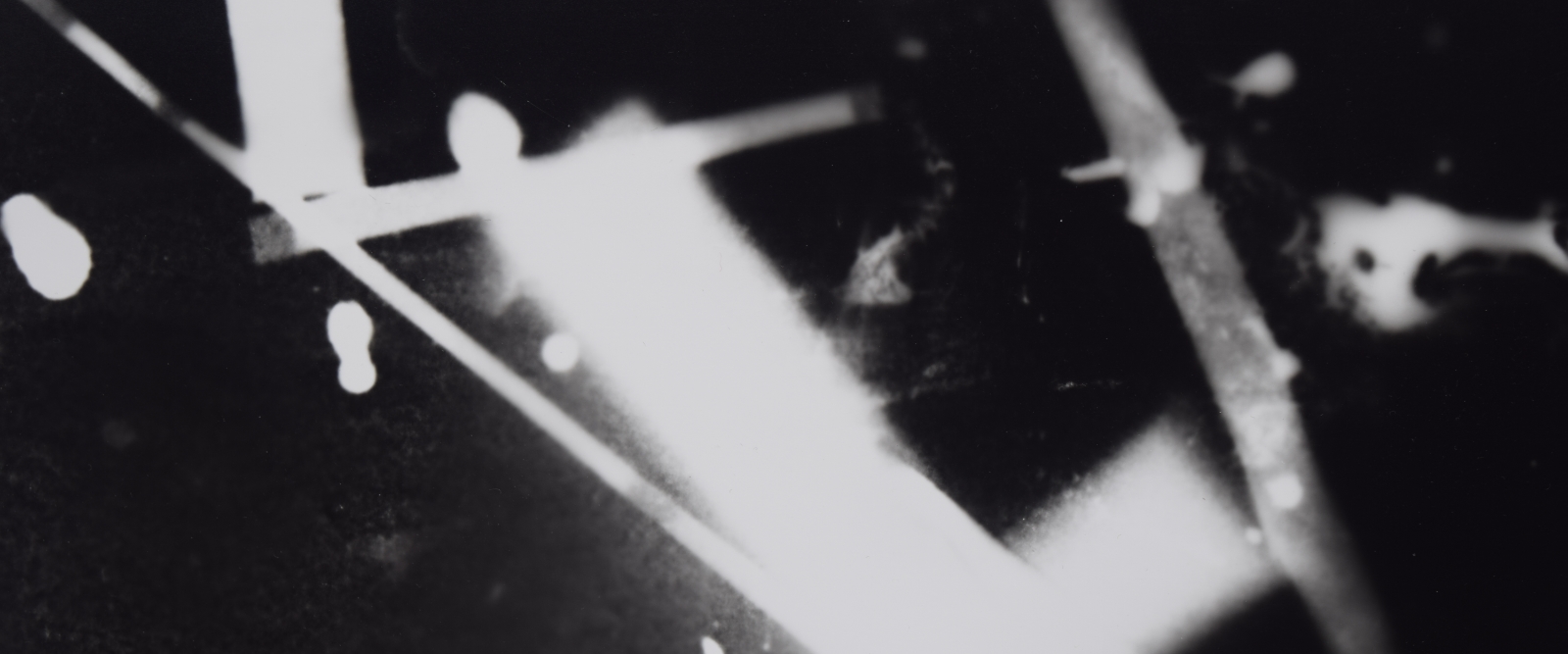
Photogram formed from a design collage for The Reading Room, Waverley Abbey.

Intuition of the Instant : Gaston Bachelard


Monday, 16 May 2022

Postmodern : Contested Landscapes for Melancholy


Postmodern : Ever Changing, Fleeting, Positive, Nihilistic,

"There are no simple concepts. Every concept has components and is defined by them.
It therefore has a combination [chiffre]. It is a multiplicity, although not every multiplicity
is conceptual...
Not only do Descartes, Hegel, and Feuerbach not begin
with the same concept,
they do not have the same concept of beginning...
Every concept has an irregular
contour defined by the sum of its components,
which is why,
from Plato to Bergson,
we find
the idea of the concept being a
matter of articulation,
of cutting and
cross-cutting.
The concept is a whole because it totalizes
its components, but it is
a fragmentary whole.
Only on this condition can it escape the
mental chaos
constantly threatening it, stalking it, trying to reabsorb it."

Gilles Deleuze and Felix Guattari, What is Philosophy?, pp. 15-16.

Melancholy And The Landscape
Locating Sadness, Memory And Reflection In The Landscape
Jacky Bowrin

Path : Analogue Film Process
St Catherine's Hill, Winchester

Anthrocene : Nick Cave and the Bad Seeds, Skeleton Tree.
Walberswick :  Beach Slides/Digital Pinhole

Covehithe : Walking/Thinking/Physical Entanglements in the Landscape
Walking into Emergent Landscapes : Covehithe Beach
The OLD WAYS, a JOURNEY ON FOOT, Robert Macfarlane

“ Walking was a means of personal myth-making, but it also shaped his everyday longings:
 Edward Thomas not only thought on paths and of them, but also with them.”

“To Thomas, paths connected real places but they also led out-wards to metaphysics, backwards to history and inward to the self. These traverses- between the conceptual, the spectral and the personal-occur often without signage in his writing, and are among its most characteristic events. He imagined himself in topographical terms.”

Landscape : Entanglements of Affect

Deeper Darkness, Photographic Memory/Process, Metonymy, Negative,
Analogue, Negated Nocturne. Walking, Others, Presence, Becoming,

Landscapes : entering/intruding/emerging
Pinhole Photography (Holga)

Landscape : Entanglements of Affect/Aesthetics

Nihilistic Aesthetic :  Bleached Cyanotype


Thursday, 3 March 2022

Temporal Perspectives : Urban Space and Place

Architectutally
Speaking
Practices of Art, Architecture and the Everyday
edited by Alan Read

Thirdspace  : expanding the scope of the geographical imagination
Edward W. Soja

Space-time and the politics of location
Doreen Massey

Space and Place
The Perspective of Experience
Yi-Fu Tuan

Experiential Perspective
Space, Place, and the Child
Body, Personal Relations, and Spatial Values
Spaciousness and Crowding
Spatial Ability, Knowledge, and Place
Architectural Space and Awareness
Time in Experiential Space
Intimate Experiences of Place
Attachment to Homeland
Visibility : the Creation of Place
Time and Place


for
space
Doreen Massey

Living in Spatial Times
Instantaneity/depthlessness

A Relational Politics of The Spatial
Making and Contesting time-spaces


Saturday, 18 December 2021

Tuesday, 7 December 2021

Observatories : Boundaries/Mapping Spatial Representations

Entanglements of matter and meaning.


Karen Barad, Meeting The Universe Halfway, 2007.

Meeting the Universe Halfway is an ambitious book with far-reaching implications for numerous fields in the natural sciences, social sciences, and humanities. In this volume, Karen Barad, theoretical physicist and feminist theorist, elaborates her theory of agential realism. Offering an account of the world as a whole rather than as composed of separate natural and social realms, agential realism is at once a new epistemology, ontology, and ethics. The starting point for Barad's analysis is the philosophical framework of quantum physicist Niels Bohr. Barad extends and partially revises Bohr's philosophical views in light of current scholarship in physics, science studies, and the philosophy of science as well as feminist, poststructuralist, and other critical social theories. In the process, she significantly reworks understandings of space, time, matter, causality, agency, subjectivity, and objectivity. In an agential realist account, the world is made of entanglements of "social" and "natural" agencies, where the distinction between the two emerges out of specific intra-actions. Intra-activity is an inexhaustible dynamism that configures and reconfigures relations of space-time-matter. In explaining intra-activity, Barad reveals questions about how nature and culture interact and change over time to be fundamentally misguided. And she reframes understanding of the nature of scientific and political practices and their "interrelationship." Thus she pays particular attention to the responsible practice of science, and she emphasizes changes in the understanding of political practices, critically reworking Judith Butler's influential theory of performativity. Finally, Barad uses agential realism to produce a new interpretation of quantum physics, demonstrating that agential realism is more than a means of reflecting on science; it can be used to actually do science.


Norman Lockyer Observatory, Seaton.


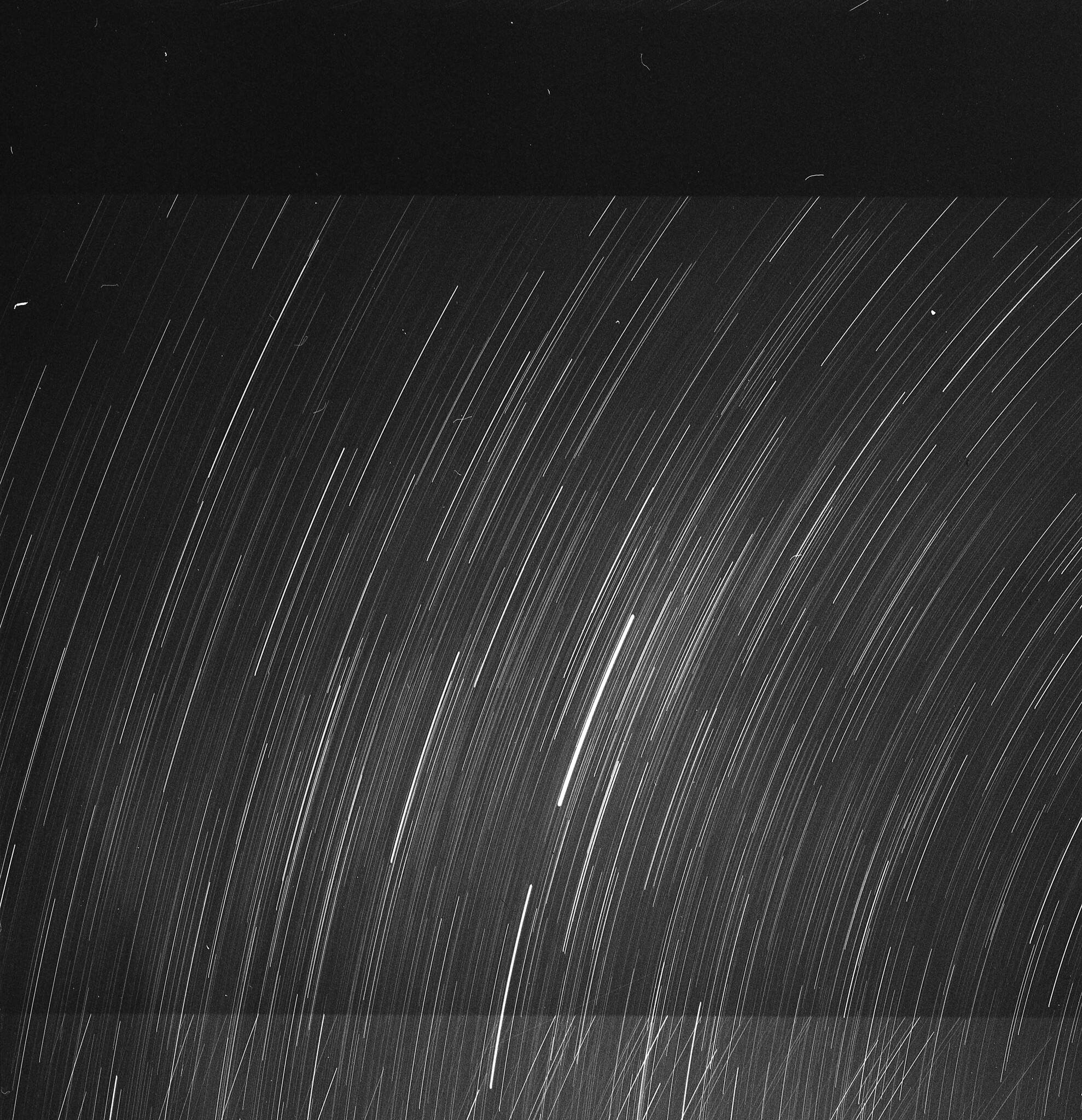
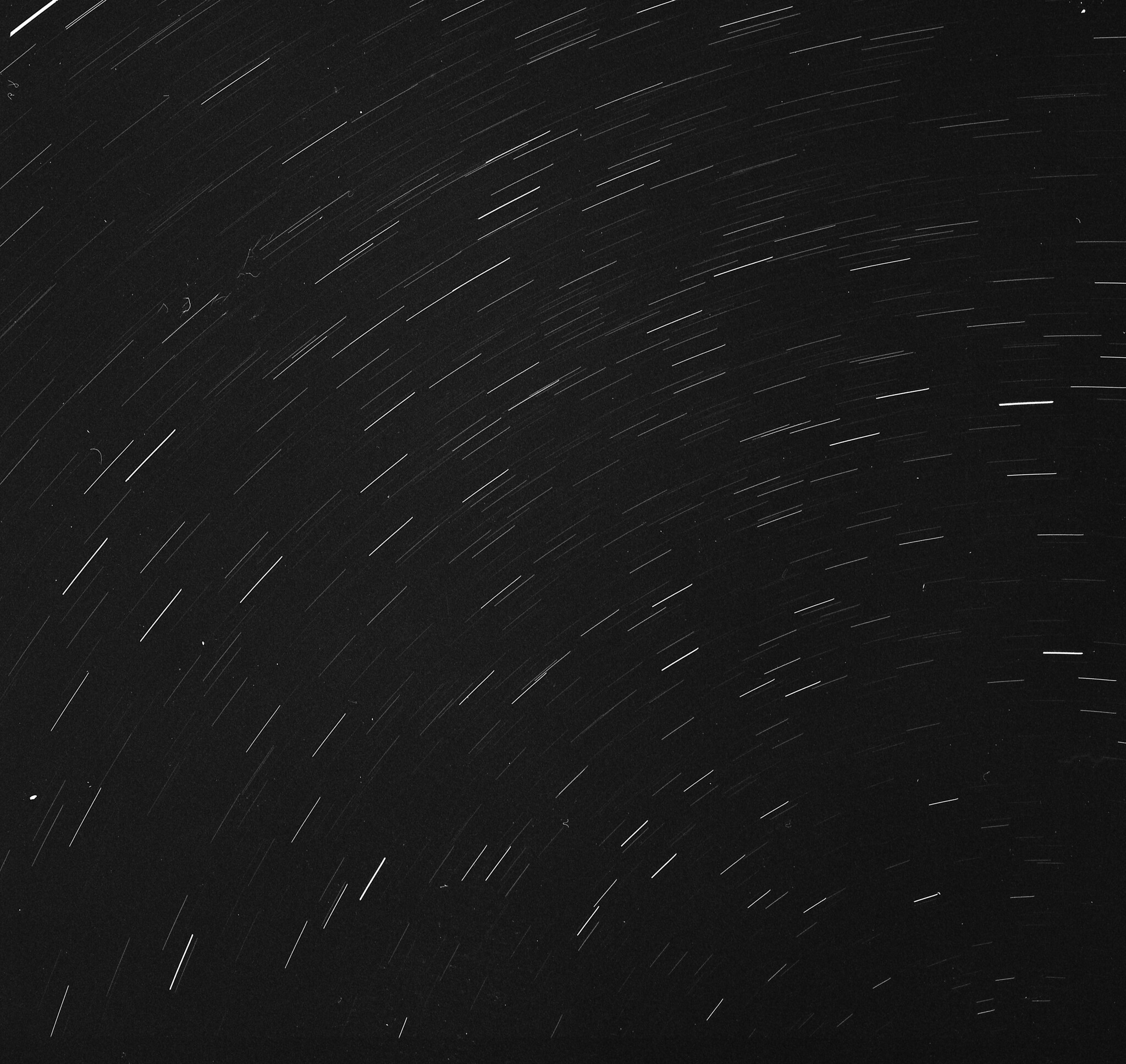
Celestial Sphere : Stars and Dust Particles. 


Astronomical archive

Hawking understood black holes because he could stare at them. Black holes mean oblivion. Mean death. And Hawking has been staring at death all his adult life. Hawking could see.
Martin Amis, Night Train, 1997.

For Baudrilland the actual photographs are beside the point. It is what precedes them that counts in his eyes- the mental event of taking a picture.
Sylvere Lotringer, The Piracy of Art, 2008.


Thursday, 10 May 2018

Working Title : "you are immersed in an illusionary, yet sensate, world"

Space Between People

How the virtual changes physical architecture
Stephan Doesinger

This book shows how the virtual has completely changed the physical world around us. If architecture is the construction of space between people, what happens when that space exists in a virtual world? That question is the starting point for this collection of revolutionary projects by a new generation of designers. The book begins by examining the important issues that have emerged as technology reshapes our idea of place and proceeds to present the four winning projects from the first architecture competition held within the explosively popular Internet community known as Second Life. Chosen for their inventiveness and aesthetic excellence, these structures - a cloud that can be inhabited; a meta-museum; an interactive sound scape; and a snow palace of discarded objects - illustrate the mindbending possibilities of digital design. In the books final section, media artists share their real-time experiences conceptualizing and creating projects for the virtual world.


Non Spaces : Fire escape Winchester School of Art

Meshworks/Norwich : Midway/Dante
Beginning as one always does in the middle, in mediis rebus, one experiences a sense of disorientation, a sort of cartographic anxiety or spatial perplexity that appears to be part of our fundamental being-in-the-world. It is an experience not unlike that of Dante, in the opening lines of his Commedia:

Midway along the journey of our life,
I woke to find myself in a dark wood,
for I had wandered off from the straight path.

( Dante 1984 : 67)
Introduction : Spatiality .
Robert T. Tally Jr.
the New Critical Idiom, Routledge 2013

Art as Spatial Practice.
Space folds : Containing "Spatialities around historicality and sociality"

"All that is solid melts into air"

Karl Marx, Friedrich Engels,
(Poetic observation concerning the constant revolutionizing of social conditions)

Perceptions now gathering at the end of the millennium. Spatiality, Robert T. Tally Jr. 2013

Transparent Folder : Tarkovsky Polaroids

Transparent Folder : Rodin - Beuys

Transparent Folder : The Politics of Things

Transparent Folder : Nineteen Eighty-Four