Showing posts with label James Turrell. Show all posts

Tuesday, 12 August 2025

The Ceaseless Flux of Disappearances/The Examination of Sight.

Outpost 240923

Drawing in Charcoal : Sensing through Movement.


#The Examination of Sight.

The act of drawing refuses the the process of disappearances, and instead proposes the simultaneity of a multitude of moments.


#Light.

The Ceaseless Flux/Causality Of Disappearance.


#Seeing.

On Disappearances Opposed By Assemblage.

The Drawing Challenges Disappearance/Oblivion.


Catching The Light : The Entwined History of Light and Mind, Arthur Zajonc.


Drawn To That Moment.


A drawing is more than a memento, more than a device for bringing back memories of the time past.


From each glance, a drawing assembles a little evidence, but it consists of the evidence of many glances which can be seen together. On one hand there is no sight in nature as unchanging as that of a drawing or painting, on the other hand what is unchanging in a drawing consists of so many assembled moments that they constitute a totality rather than a fragment.


For Cezanne, one minute in the life of the world is going by, paint it as it is.


For John Berger, how does a drawing or painting encompass time? 

What does it hold in its stillness?

Thus if appearances, at any given moment are a construction emerging from the debris of all that has previously appeared, might it be understandable that this very construction may give birth to the idea that everything will one day be recognizable and the flux of disappearance cease.


Because the faculty of sight is continuous, because visual categories, red-yellow-dark-thick-thin remain constant, and because so many things appear to remain in place, one forgets that the visual is always a result of an unrepeatable-momentary-encounter.


Any image, like the image read from the retina records an appearance which will disappear.


The faculty of sight developed as an active response to continually changing contingencies, and the more complex the view of appearances it could construct from events. 


For the faculty of sight to become developed, the mind uses recognition as an essential part of the construction of appearances, and recognition depends upon the phenomenon of reappearance sometimes occurring in the ceaseless flux of disappearance.


An event in itself has no appearances.


To draw is to look, to examine the spectrum of appearance.


Drawings reveal the process of their own creation, and  their own looking.

On Drawing/John Berger.
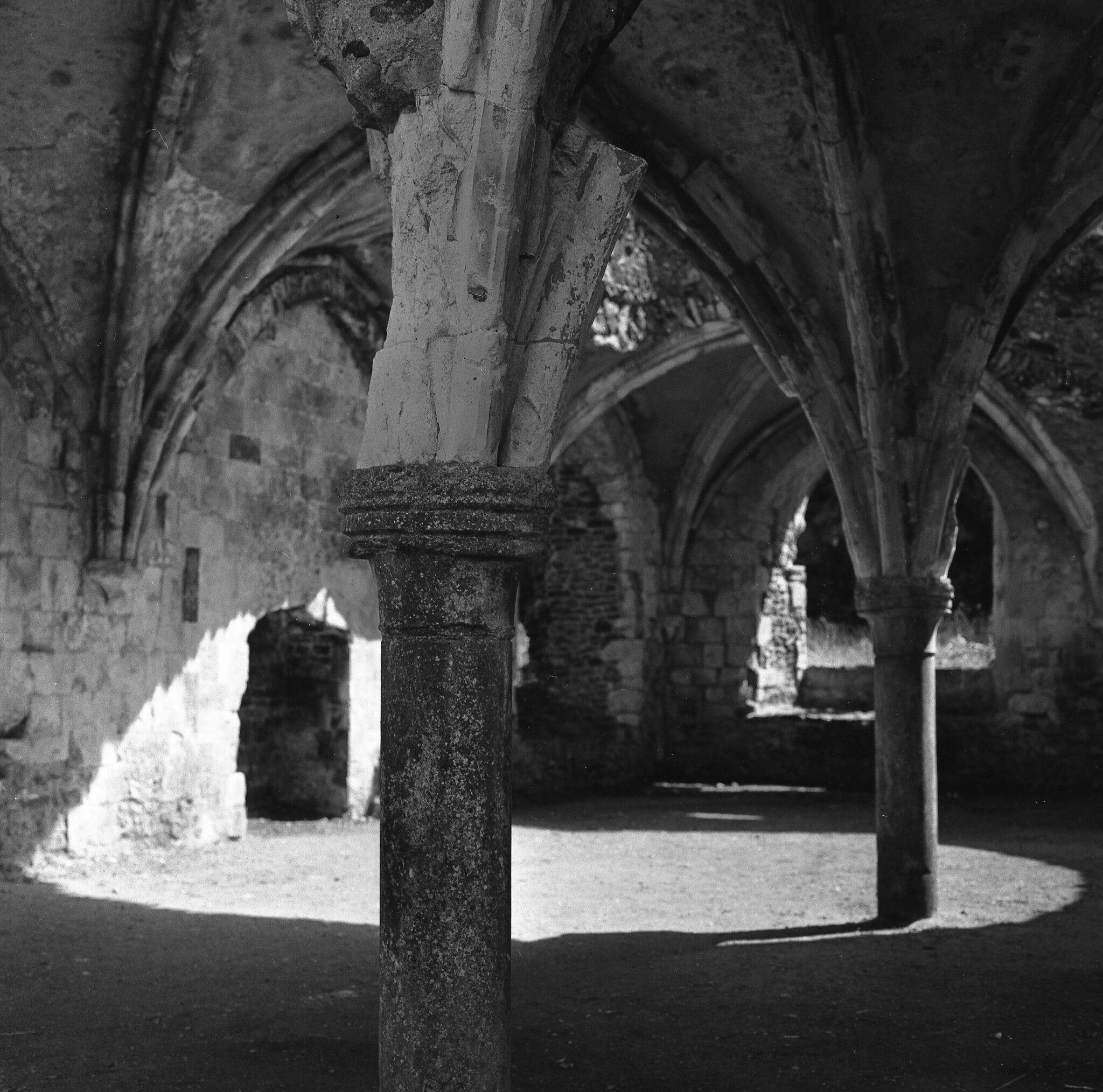


Drawing into awareness.

Things/Feelings that are both hermetic and infinite.


Drawing 'situates' impressions between relations and responses.

Between seeing and feeling.


Butades/Haptic trace, inscription.

Derrida/Blindness inherent in drawing.


The drawing is as much about a haptic experience as it is an optical one, the actual contact between paper and brush informs me that a mark will materialize, a mark marking the abstract and the concrete, a hybrid image of reality.


Perceptual Psychology.


My desire is to set up a situation to which I can take you and let you see.


My art deals with light itself, not as a bearer of revelation, but as revelation itself.


Immersive architectural environments to carry the inner world into the outer spaces, so that our sense of lived-in-territory is increased.


James Turrell/Deer Shelter Skyspace.


In the trajectory of the intermezzo.

The Working Diagram.

Relays between points/paths.

Nomadology, Deleuze/Guattari.


Friday, 13 September 2024

Creative Ecologies/Drawing Concepts : Clay/Fire/Space-Situatedness.

Clay/Fire/Space-Situatedness.

An Exploratory Ceramic Based Inquiry.

Propositional Drawing/Speculative Architecture.

Drawing Inscriptions : Situatedness in Ceramics


Notes Towards a Conditional Art.

Robert Irwin.


Shallow - Space Constructions

Veils

Structural Cuts : Skyspaces

Skyspaces : Autonomous Structures

Site Specifity

Dark Spaces

Autonomous Structures : Models

Perceptual Cells

James Turrell

Fundacon 'la  Caixa' 1993.


https://www.flickr.com/photos/russellmoreton/


The House is all about the poetry of shelter and siege from the elements and cosmos.

Gaston Bachelard.


Volume And Space.

Alberto Giacometti's sculpture, 'Man Pointing,' is an important statement in Western art for many reasons, not the least of which is what it says about volume and space. The elongated and spindly form gestures vaguely in the vastness of the space surrounding it. The gesture seems more about the space opened up by it and around it than it does about the physical. There is power in space more palpable than substance. This also is the conceptual heart of the Japanese garden.

Scott Meyer.


With Fire.

Richard Hirsch.

A Life Between Chance And Design.

Scott Meyer.


The Psychoanalysis Of Fire.

Gaston Bachelard.


Gaston Bachelard was intrigued by the process of imagination, the way in which the pensive mind brings to any given reality a multiple perspective. About many substances such as earth, air, water, and fire, he contended, we harbour subconscious convictions which modern science may disprove in fact but cannot seem to eradicate from artistic reverie.

Northrop Frye. 1964.


Against Hylomorphism.

Gilbert Simondon. 1964-89-2005.


Individuation, the generation of things, should be understood as a process of ontogenesis in which form is ever emergent, rather than given in advance.


The Clay can take to the mould and mould the clay.

Simondon, took the essence of matter or the material to lie in form-taking-activity.

Brian Massumi. 2009.


Concepts rendered into material relations.

Making new aesthetic utilities, materialities for thinking about the world.


Making is central to our legacy as a society, materially, economically, ecologically and socially.

A modern version of hylomorphism is enacted by a culture that furnishes the forms and nature the material. In the superimposition of one upon the other, human beings create the material culture with which, to an ever increasing extent, they surround themselves.

Tim Ingold. 


Frames, Handles and Landscapes.

Georg Simmel and the Aesthetic Ecology of Things. 2016

Eduardo de la Fuente.


The tool/the thinking hand, has grown to be a part of the hand, using a tool is both a practical and aesthetic action involving the artful manipulation of material by hand.

Juhani Pallasmaa.


Affordances of Things.


Affordances provide strong clues to the operation of things. A psychology of causality is at work as we use everyday things.

Donald Norman. 2002.


Ecological Approaches to Aesthetics.

Aesthetic Patterning/Matters in Everyday Life.


Organism-Person-Environment

Ecological, interested in the organism-environment relationship.


An aesthetic ecology, each thing is a mere transitional point for continuously flowing energies and materials, comprehensible only from what has preceded it, significant only as an element of the entire natural process.

Theory/Culture/Society, Simmel 1994.


Matter and materials are lively and require attention. 

Materials continue to thwart us in unpredictable ways.

Jane Bennett.


Aleatory, by chance, lots of the 'acts' of nonhuman agents are aleatory exactly because they are not directed by any intension.


In And Out Of Material. 2007.

Tony Cragg.


All our senses scan the space in front of us; the future, in both a literal and metaphorical sense, lies before us.

Tony Cragg, 1998.


Cutting Things Up.

Material In Space.

Scale.

Impulses through Drawing.

Working Things.


Generation/Generative/Material.

I think mass and energy need to be generated, any effective change has to be generated. It's to do with a positive directed  initiative to change things.


“Generative” for me, in terms of my work, is the fact that within my own work, within any given period the work generates itself and there is a self-generating characteristic. The work I'm making today is only possible because of the previous work of three or four months ago and that was only possible because of the work of nine or twelve months ago.


Even if it's not a linear thing, things are generating. There is a sort of self-propagating, self-generative energy that is inherent in the material, I think. And even in the  term “generative”, from “genus”, is the idea of making a family group of things, whether making an associative group of things or creating a population, a species of things which “relativise” generation.

Tony Cragg.


The material is just part of the vocabulary of meaning.

Cragg wanted  to give the materials 'more meaning, mythology and poetry' He used the skills available to him at the EKWC residency to create ambiguities and tensions, to suggest past and present, to complicate rather than to describe.

European Ceramic Work Centre, Netherlands. 1990, 1992.


With the return of Cragg to studio based work in the early 1990s, when he was experimenting with clay; ideas around humanness, archaeology, and ritual were being explored within different areas of the fine arts. In addition, studio ceramics were frequently using the vessel as an initiating point to develop new forms and sculptural ideas.


Laibe, with its rich possibilities of interpretation that incorporates the past in the present and the universal aspects of human survival within the ceramic vessel form, lies at the heart of these complex and overlapping areas of practice.

Imogen Racz. 2009.  


The Ceramics Reader. 2017.

Andrew Livingstone.

Kevin Petrie.


Ceramics : Materiality and Metaphor.


Why are Ceramics Important?

The Existential Base, Philip Rawson.

Containers of Life: Pottery and Social Relations, Silvia Forni.


Ceramics and Metaphor.

Analogy and Metaphor in Ceramic Art, Philip Rawson.

Sculptural Vessels, Tony Cragg's  Laibe and the Metaphors of Clay, Imogen Racz.


Ceramics in Contexts.

Historical Precedents.

Studio Ceramics.

Sculptural Ceramics.

Ceramics and Installation.

Theoretical Perspectives.


Conceptual and Post Studio Practice.

Contemporary Clay, Clare Twomey. 

Extending Vocabularies: Distorting the Ceramic Familiar

Clay and the Performative 'Other', Andrew Livingstone.


Gender, Sexuality and Ceramics.

Identity and Ceramics.

Image.

Figuration and the Body.

Ceramics in Education.

Ceramics, Industry and New Technologies.


Museum, Site and Display.

Re-defining Ceramics through Exhibitionary Practice (1970-2009), Laura Breen.


Sunday, 14 April 2024

Celestial Architecture/Skyspaces/Serenity/Re-Animating Thought.

Outpost 190923

Matter and materials that create the potential to act. 

STRUCTURE AS OBJECT

Light supply's the raw material for consciousness and its perception. 


The structural frame as generator of architectural form.

Vitruvius implies that the geometric forms of both the  Colchians and the Phrygians primitive houses are the consequence of direct operation with physical objects, rather than the abstractions that pre-existed in the mind of the builder.

Space/Structure/Light/Performativity/Physical Participation and Play.

Tate St Ives. 2011


Profound but intimate subjective evocations/assemblages of space and time.

Prototypes for Sculpture.

Model for Spheric Theme. 1937

Naum Gabo.

These prototypes give a unique insight into his working process, one in which he employed a playful intuition and childlike, hands-on approach to the development of what were often extraordinarily complex and apparently 'manufactured' forms.


Concetto Spaziale/Spatial Concept 1962

Lucio Fontana.

Buchi Works by Lucio Fontana are characterised by holes or punctures through various surfaces. By opening up these surfaces, Fontana introduces another dimension to his work, one of space, depth and time. In their almost infinite variation and difference, as well as their primal simplicity, they seem to approach something both fundamental and universal. 


Celestial Architecture.

Architecture Without Architects.

Bernard Rudofsky.

Among abstract architecture, some of the most imposing examples stand in Jaipur, India. They are gigantic astronomical instruments built in the eighteenth century to the plans of Maharajah Sawai Jai Singh 11.Their purpose was to achieve greater accuracy of astronomical data than that available from portable brass instruments. Since they never lived up to expectations, they represent that rare instance of pure, or nearly pure, architecture of a functionless kind.


Oxfam, Madeleine Street, Norwich. 

Aesthetics of Installation Art, Juliane Rebentisch.

Situation, Documents of Contemporary Art, Claire Doherty.


Deer Shelter Skyspace, James Turrell.


The layering of traces where the reader can find the intricacy of memory and imagination.


Rethinking The Animate.

Re-Animating Thought.

Tim Ingold. 2006


Contemporary western cultures have created our estrangement to nature, which has been established by the spiritual and religious ascendency of humankind over nature, and by the rational dissociation of the human intellect from the organic world. 

European civilizations neglect of the natural world and its needs has clearly been encouraged by a style of awareness that disparages sensorial reality denigrating the visible and tangible order of things on behalf of some absolute source, assumed to exist entirely beyond, or outside of, the bodily world.

Spell of The Sensuous, David Abram.


Cosmic Serenity/Solitude.

A Mind Attuned to the Intimate Garden.


In a culture exhausted and irreparably fragmented, the walls surrounding Luis Barragan's gardens are, perhaps one of the last defences to preserve centuries of thought and emotion.


On Nomadology.

Gilles Deleuze and Felix Guattari. 1980


Fieldwork.

Deterritorialized Spaces.


The nomad has a territory; he follows customary paths; he goes from one point to another; he is not ignorant of points (water points, dwelling points, assembly points, etc.). But the question is what in nomad life is a principle and what is only a consequence. To begin with, although the points determine paths, they are strictly subordinated to the paths they determine, the reverse of what happens with the sedentary. The water point is reached only in order to be left behind; every point is a relay and exists only as a relay.


A path is always between two points, but the in-between has taken on all the consistency and enjoys  both an autonomy  and a direction of its own. The life of the nomad is the intermezzo. Even the elements of his dwelling are conceived in terms of the trajectory that is forever mobilizing them. 


The nomad is not at all the same as the migrant; for the migrant goes principally from one point to another, even if the second point is uncertain, unforeseen, or not well localized. But the nomad goes from point to point only as a consequence and as a factual necessity; in principle, points for him are relays along a trajectory.


Skyspaces.

James Turrell.


The sky is no longer out there, but is right on the edge of the space you are in. The sense of colour is generated inside you. If you then go outside you will see a different coloured sky. You colour the sky. 


In working with light, what is really important to me is to create an experience of wordless thought. The Deer Shelter is one of only a handful of private and public Skyspaces in Britain, including Cat Cairn, Kielder Forest in Northumberland.


Across the world Turrell has realised around forty temporary and permanent Skyspaces, although the Deer Shelter is one of very few that have been formed from an existing historic structure.

Drawing/Diagram/Script as a gesture of propulsion into the world.

Emotional Sensibility/Selective Intuition.

Making with the Inner Tensions of Each Element.


Timbre/Tone/Colour/Patina.

On Sonority.

Art and Technique.

Marcel Moyse. 


Spatial Distinctions/Piercings and their Movements.

In and Out of Material/Traces and Trails.


Interstices/Voids, Surfaces, Ceramic Forms, Black and White Slip over Terracotta.


Templates,Setting Bocks, Prototypes, Geometry Sets, Monoprints, Boxes.


Use of experimental photographic techniques and new materials through invention and application.


Wednesday, 16 February 2022

Hortus Conclusus/A Return to Things : Substances, Materials, Making Drawings, Thinking Assemblages


Outpost 160222


Hortus Conclusus, a serious place in the midst of mattering local ecologies.

Studio/Garden of forked paths

Substances, Materials, Making Drawings, Thinking Assemblages.


A drawing can be silly or crude, but locked inside it might be a little idea that given enough care and attention can rise above the rest of the orchestra and be heard individually.

Art as a clear and synthetic understanding of structured relationships that reveal innovative space-time through hidden sources of line and light, that suggest what art might become.

Brian Clarke.


Spatial Agent : Camera Tin/Molecular Sieve 115

The theoretical apparatus that practices physical movements and theory.


Grisaille/Procedural/Performative Grounds and Scripts/Double Occupations.

Speculative inquires, creative agencies that move through material thinking.


Diffraction as a tool for analysis that attunes us to the differences generated by our knowledge making practices have on the world.


A diffractive methodology is a knowledge making process that uses utilises and explores on going differences between phenomena. Diffractions open up ways for greater sensitivity towards how we are part of the worlds continuous becoming. 

Barad.


Paintings/Discursive Drawings around capacitance, interval,patterning and redundancy.

Diagrams for the imagination

Social noise cancelling artworks/bitumen, felt,foil,ceramic and lead.


Filtered Light/Projections and Transitions

Procedural Architecture/Assemblages and Environments


The Nature of Light and Colour in the Open Air (1954), Marcel Minnaert.


Minnaert offers a basis for understanding how myriad phenomena are concretely produced in the ordinary world. As opposed to Goethe's subjectively written Theory of Colours (1810), whose conjectures were based on personal examination unhampered by physics, Minnaert blends careful observations of luminous effects with analysis of how those effects are generated by physical modulations of light.


His work not only helps to throw attention onto light's beauty and mystery in the daily environment, but also treats those phenomena as palpable qualities that can be consciously perceived and described, and to some extent causally understood according to how light is modified when interacting with material things. 


The Architecture of Natural Light.

The Re-discovery of Ephemeral Light.

A Return to Things.


Light is not so much something that reveals, as it is itself the revelation.

James Turrell. 


On Phenomenology, a phenomenal way of thinking and seeing.


When one is filled with wonder, a method of examining phenomena through intensified seeing and sensing, as opposed to intellectual abstractions and constructions.


The broad import of phenomenology for architecture, and for understanding the role of light in places we care deeply about, has gained a poetic dimension in the writings of Gaston Bachelard. 

In his still astonishing book, The Poetics of Space (1958), and later in The Flame of a Candle (1961), Bachelard introduces the concept of a primal image, and locates the source of its imaginative power in simple archetypal places, ranging from nests and corners, to cellars and attics, and in metaphysical places such as the lamp that glows in a window, reveries of faint light, and spaces that participate in cosmic events.


The mesmerizing allure of images where light is fighting of darkness, argues Bachelard, originates in primordial memories that are only  accessible through poetic imagination, daydream and reverie, sublimations that lie below rational thought.

The Other Architecture/Constructing Metaphysical Space, Henry Plummer. 2009


The arts are the wilderness areas of the imagination surviving.

Claude Levi-Strauss.


The Practice of the Wild, Gary Snyder.


Cultures of wilderness live by the life and death lessons of subsistence economies.


The world is nature, and in the long run inevitably wild, because the wild, as the process and essence of nature, is also an ordering of impermanence.


Practice, meaning a deliberate sustained and conscious effort to be more finely tuned to ourselves and to the way the actual existing world is. 


A Place in Space, proposes that we must ground ourselves in the dark of our deepest selves, and that a good part of that grounding  takes place in communities, which exist whether we know it or not within the natural nations, shaped by mountain ranges, river courses, flatlands and wetlands.


The place-based stories the people tell, and the naming they've done, is their archaeology, architecture, and title to the land.