Showing posts with label place. Show all posts

Thursday, 21 May 2026

Reliquaries for experience : Wayfaring/Lines and Interior Spaces : Materials of movement and attention.

Reliquaries.

https://www.curatorspace.com/artists/russellmoreton

https://www.flickr.com/photos/russellmoreton/


2024

Ceramic

170mmL x 240mmH x 60mmW

Wayfaring/Lines and Interior Spaces : Materials of movement and attention.

Processual clay+ceramic constructions that articulate through processes of mark making and intermediaries, surfaces spatial bodies and interiors all entangled in a complex scaffolding of its own making.


"Makers work in a world that does not stand still, Iteration allows for continual correction (material conversation) in response to an ongoing perceptual monitoring of the task as it unfolds, mixing the potential for blending or combining matter that already exists into new combinations" Tim Ingold, 2010.


The Quiet Mind : Silently without resistance. Books/Reliquaries : Working of matters and the exteriority of their relations. Marking/Wayfaring Inscriptions : Clay+Ceramic


(Sound of barking) Do you listen to that dog? Wait, wait. Silently? Listen to it completely silently, which means without any resistance, without any irritation, just listen to it. When you listen quietly there is no resistance, there is no irritation, you do not identify yourself with the dog and the barking of it, your mind is quiet. Krishnamurti.


Meditation The meaning of that word is to measure, basically (for oneself).


Exploring Ceramic Art: Movement and Attention

This title targets specific keywords like ‘ceramic art’ and ‘movement’, enhancing SEO by attracting audiences interested in art processes.


Meditation and Art: The Quiet Mind in Ceramics

Combines popular search terms ‘meditation’ and ‘ceramics’, appealing to those exploring mindfulness in creative practices, increasing search visibility.


Wayfaring Through Clay: Art and Perception

Focuses on the unique concept of ‘wayfaring’ linked to clay art, appealing to niche audiences and improving content relevance in search results.


Thursday, 9 April 2026

Vessels of Retreat/Dark Pots/ : The Body and its Entanglements with Things/St Ninian's Cave, Scotland.

Vessels of Retreat : Dark Pots around the Innerness of Ceramics.

2025, Ceramic, 180mmW x 265mmH x 65mmW.


Curriculum making as the enactment of dwelling in places,


Thrown ceramic vessels fired on the remote beach at St Ninian’s Cave, Scotland.

These vessels were originally thrown on a momentum wheel situated in the small niche like space of a scriptorium. The interiority of the bowls seek to reflect the quietness and openness of a ‘retreat’ through material and the muted light of its surroundings. A post firing process was employed of removing the bowls and their still molten interior into a chamber excavated on the beach to become reduced by local organic material and to cool. Once cooled the bowls were washed in the Irish Sea to reveal their glazed interiors for the first time.

Heidegger’s topology, Being Place, World.

Jeff Malpas on the concept of place and how it relates to core philosophical issues found in Heidegger’s engagement with place, his philosophical starting point: of finding ourselves already ’’there” situated in the world, in “place.”

Clarifying the relation between space and place which contains inherent difficulties in as much as they are necessarily connected (inasmuch as place carries a spatial element within it even while space is also a certain abstraction from out of place), but there has been a pervasive tendency for place to be understood in terms of purely spatial. Jeff Malpas

SPACE= ROOM TO MOVE

or as a verb To Make EMPTY, EVACUATE, EMPTY OUT. The Production of Space/Human Agency/Place

PLACE=VTLLAGE, TOWN, or OTHER SETTLED LOCALITY.

PLACE=HOME

PLACE=A VERY SPECIFIC FORM OF BOUNDEDNESS/GATHERING As a gathering of elements that are themselves mutually defined only through the way in which they are gathered together within the place they also constitute.

DESIGN=TO PUT IN PLACE

Place referred to merely in the sense of position or location - usually the location or position of some already identified and determined entity.

Slippages, Anomalies and liminal spaces. Our relationships with space and place.

THE MEMORY OF PLACE

A PHENOMENOLOGY OF THE UNCANNY

Dylan Trigg’s The Memory of Place charts the memorial landscape into the body and its experience of the world. Trigg analyses monuments in the representation of public memory, “transitional” concepts such as airports and highway rest stops; and the “ruins” of both memory and place in sites such as Auschwitz. The Memory of Place argues that the eerie disquiet of the uncanny is at the core of the remembering body, and thus of ourselves.

STOA, a complex topology.

The Stoics took their name from the place where they met. In the stoa they talked as they walked along the long shaded alcoves. The stoa offered shelter from the sun and rain without becoming an enclosed room. It was an in-between and transitional space, neither outside nor inside. Conversations could commence through casual interruptions in a site of gossip, rumour and information.

We imagine the stoa as a spatial metaphor for the emergence of critical consciousness within the transnational public sphere. It is a space for criticality without the formal requirement of political deliberation and for sociality without the duty of domestication.

The stoa is the pivot point at which private and public spheres interact and from which the cosmopolitan sense of being and belonging from the vantage point of the stoa, then the telematic linking of two screens in the public squares of Australia and Korea can be viewed in a new light.

The linking of these screens creates a new transnational public space, a space for the creation of a new discourse on the topology of the cosmopolitan imagination in contemporary art practice.

Thinking the place of art within this context is more than jumping from either the local to the global, the private/oikos to the public/bouletrion, or even the singular to the universal. It is more like the liminal zone of the stoa.

Public Screens and Participatory Public Space Nikos Papastergiadis, Scott McQuire

Flesh and Stone,

The Body and the City in Western Civilization. Richard Sennett.1994

Basically a long shed, the stoa contained both cold and hot, sheltered and exposed dimensions; the back side of the shoa was walled in, the front side consisted of of a colonnade which gave access onto the open space of the agora. Though free-standing the stoas were not conceived as independent structures, but rather as edging for the open space of the agora.

Sennett: Flesh and Stone, page 50. Bringing Things to Life

Creative Entanglements in a World of Materials Tim Ingold

EWO= The Environment Without Objects

THINKING AT WAVERLEY, as a site of multiplicity and memory. Walking is Thinking, Richard Long

Heidegger-To participate with the thing in its thinging

Our most fundamental architectural experiences, as Juhani Pallasmaa explains, are verbal rather than nominal in form. They consist not of encounters with objects - the facade, door-frame, window and fireplace - but of acts of approaching and entering, looking in or out, and soaking up the warmth of the hearth (Pallasmaa 1996: 45). 

As inhabitants, we experience the house not so much as an object but as a thing. (Ingold 2008: 8)

Curriculum making as the enactment of dwelling in places

Ceramic Gate/Waverley Stoa : Objects in a landscape/studio space of Gordon Baldwin


One Place After Another: Notes on Site Specificity, Miwon Kwon. 1997

The Reading Room (a library of subjective taxonomies on the alchemy of building)

The Listening Room (a soundscape interior in time with its environment)

The Sheltering Corridor (a modernist Stoa as a place for encounters/dialogues)

The Pot Room (a installation of thrown objects creating the interior partitions)

The Empty Studio (a adaptation of architecture through the ritual of creativity)


Kengo Kuma, Anti-Object, mindfully and experientially explores voids, vernacular materials and agency of spaces.

Utsu means nothing or emptiness, the void.

Wa means the border between nothing and something.

I want to make what we don’t see, and that means I must make what we see. My work is a container for what we don’t see.

Taizo Kuroda, Potter.


Natural Connections, Exhibition Proposal.

Humanities about the processes and experiences that map the evolving human condition.

Humanities and the Arts.

The Body and its Entanglements with Things.

The Ceramic House, 

A space of life. 

Exhibition 

Architecture of the ceramic vessel

Ideologies of Innerness 

The Archive

Flesh can house no memory of bone; only bone speaks memory of flesh. Voids, spaces between the bones, residues of the flesh

Flesh and Stone, Richard Sennett


Understanding the beliefs and practices that enable Relational Egalitarianism 

Kuper, Tim Ingold


Exhibitions, Pavilions, Huts and Observatories.

The Parallel of Life and Art, Alison and Peter Smithson The Physical Self, Peter Greenaway

Thames Dig, Mark Dion

The Barcelona Pavilion, Mies de Rohm

The Solar Pavilion, Alison and Peter Smithson


Field Photography: Light on Natural Phenomena and Site.


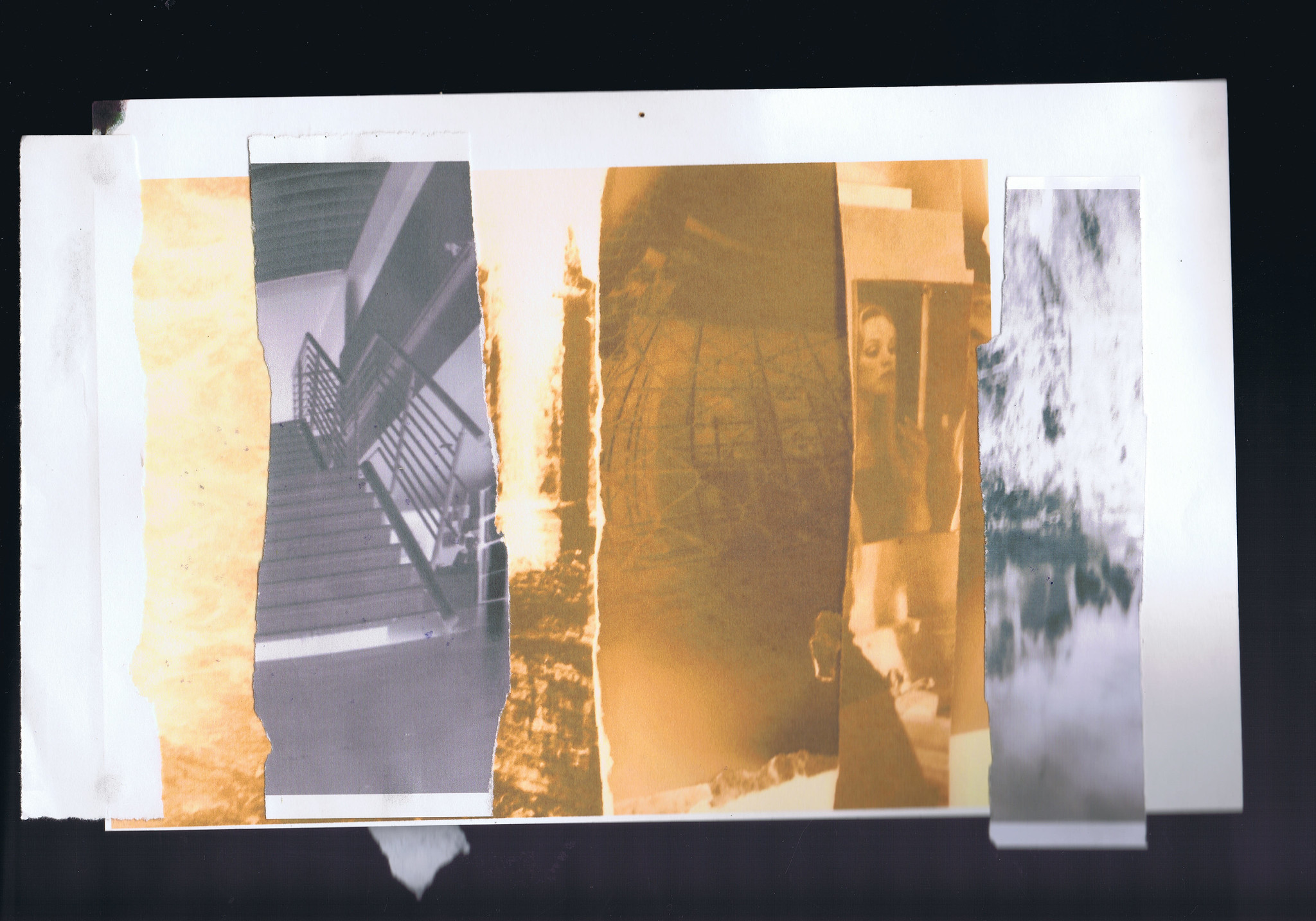
Pinhole photography and photograms on light sensitive paper with annotations from both research material and working practices. Visual material and artefacts acquired from archaeological sites whilst participating in recording the archaeological process at St Mary Magdalene Leper Hospital, Mom Hill, Winchester. The work explores subjectivities in the recording of natural phenomena, the spirit of place and its scientific inquiry and production of fabricated forms in the realm of a contemporary art context.

Sunday, 8 September 2024

Working Out of the Archive : Praesentia/In the Light of the Day.


Adam Sharr, notes that for Heidegger, a building was built according to the specifics of place and inhabitants, shaped by its physical and human topography.

Made from earth/clay/fire connected the human experience of earth and sky. Heidegger attributed sacred qualities to the jugs ability to give/to pour. Part of his fourfold cosmology of earth, sky, divinities and mortals. This “fourfold” represents Heidegger’s attempt at what he judges to be the most primary circumstances of existence, “ the inescapable pre-requisite of the world into which humans are thrown without consent (1962,164-168).


Heidegger's Topology
Things exist rooted in the flesh (R. S. Thomas)

Being, Place, World
Jeff Malpas. 2008

David Smith : Sprays, The Absent Object. Peter Stevens
Eidetic Image, Nearness/Proximity/Atmosphere
Temporal Structures,

Unthinking Eurocentrism
The Political Writing of Adam Kuper and Tim Ingold
Justin Kenrick. 2011

Pottery, The mindfulness of making social
Anthropological Notebooks 17

The War of Dreams
Exercises in Ethno-Fiction.
Marc Auge

The Culture of The New Capitalism
Richard Sennett.

VISITORS
a film by Godfrey Reggio

The World of The Anthropologist
Marc Auge, Jean-Paul Colleyn. 2006


The Field.

The basic methodology of anthropology is ethnography. This is the famous 'fieldwork' in which the researcher shares the daily life of a different culture (remote or close), observes, records, tries to grasp the 'indigenous point of view' and writes.
Objects of Anthropology
Politics is also the art of administrating and producing subjects, citizens.


The Woman in The Dunes
Kobo Abe

Site-Specific Art
Performance, Place and Documentation.
Nick Kaye

Heidegger For Architects
Adam Sharr
Poetically Man Dwells

The Perception of The Environment
Essays in Livelihood, Dwelling and Skill.
Tim Ingold

Hans Coper
Sensations in the Vessel/Innerness
Clay and The Engagements of Mind and Body

Peter Zumthor
Thinking Architecture/ A Way of Looking at Things.

Zumthor mirrors Heidegger's celebration of experience and emotion as measuring tools.
The physicality of materials can involve an individual with the world.

The Visual Poetics of Jannis Kounellis
Suzanne Cotter and Andrew Nainre.

He translates the painterly relationship of figure and ground into the space of real situations
Kounellis's engagement with the social and historical content and with the material fabric of a given space is critical to his art.

The Castelvecchio in the Opus of Carlo Scarpa
Possibly until very recently Scarpa's work was still judged as anachronistic, small scale and craft intensive.


An Attitude to History, The Drawings, Formal Language,
Technical Specifications of Materials.

What is the relationship between the visual arts and 'performativity'?
Site-Specific Art. Nick Kaye

Wittgenstein : The Duty of Genius
The work of art/aesthetics/ethics seen 'under the form of eternity'
Schopenhauer discusses, in a remarkably similar way, a form of contemplation in which we relinquish 'the ordinary way of considering things', and 'no longer consider the where, the when, the why, and the whither in things, but simply the what'.

Spatial Practices : Thinking Sociologically

'What does it do'?
Oren Lieberman


Sunday, 30 June 2024

The Sleeper Awakes : Veiled Melancholy/Book Narratives : Film Collages. #3

Preface (1921) ” The great city of this story is no more than a nightmare of Capitalism triumphant, a nightmare that was dreamt a quarter of a century ago. It is a fantastic possibility no longer possible. Much evil may be in store for mankind, but to this immense, grim organization of servitude, our race will never come” H.G. Wells. Easton Glebe, Dunmow,1921.

28/01/2016

https://uk.pinterest.com/russellmoreton/art-objects-russell-moreton/

"Spatial turn" The increased attention to matters of space, place and mapping in literary and cultural studies, as well as in social theory, philosophy, and other disciplinary fields.

Spatiality, Robert T. Tally Jr. Routledge 2013.


 The Politics of Architecture : Theorizing through speculative spatial practices.

Immediate Architectural Interventions, Durations and Effects : Apparatuses, Things and People in the Making of the City and the World. Alberto Altes Arlandis, Oren Lieberman. 2013


"He rubbed his eyes. The riddle of his surroundings was confusing but his mind was quite clear - evidently his sleep had  benefited him. He was not in a bed at all as he understood the word, but lying naked on a very soft and yielding mattress, in a trough of dark glass. The mattress was partly transparent, a fact he observed with a sense of insecurity, and below it was a mirror reflecting him greyly. Above his arm- and he saw with a shock that his skin was strangely dry and yellow - was bound a curious apparatus of rubber, bound so cunningly that it seemed to pass into his skin above and below. And this bed was placed in a case of greenish-coloured glass (as it seemed to him), a bar in the white framework of which had first arrested his attention. In the corner of the case was a stand of glittering and delicately made apparatus, for the most part quite strange appliances, though a maximum  and minimum thermometer was recognizable."

H. G. Wells : The Sleeper Awakes. 1899/1910


Monday, 20 May 2024

Giving Sensations Place/Site/Raveningham Sculpture Trail : Subjective/Hypothesis/Bricolage/Tectonics/Working Scripts/Making Camps.


IMMATERIAL ARCHITECTURES MAKING IN THE LANDSCAPE.

RAVENINGHAM SCULPTURE TRAIL 2018/2020

STIMULATING TENSIONS.

BRICOLAGE / HEURISTIC PRACTICE, Using things at hand, temporal, self constructions, becomings, mind forming explorations.


Mediating/Architecting the experience of LANDSCAPE.

The building as nothing more than an exposition of itself.

Georg Simmel, text Frames, Handles, Landscapes and the aesthetic ecology of things.


A subjective hypothesis, a drawing developed into an objectivity for experience/learning.

SITE, the undoing of PLACE.


The House-sheds : Camping

There's more truth about a camp than a house. Planning laws need not worry the improvising builder because temporary structures are more beautiful anyway, and you don't need permission for them. There's more truth about a camp because that is the position we are in. The house represents what we ourselves would like to be on earth: permanent, rooted, here for eternity. But a camp represents the true reality of things: we're just passing through.

Roger Deakin

WILDWOOD

A Journey Through Trees


Art Practice as a Speculative Spatial Practice.

A reflective building is an echo not a statement.

Haptic devices/seating/dwelling in the landscapes of the mind. Landscape assemblages and the significance of solitude.


The immensity/intimacy and its immediacy to the imagination. Immensity is within ourselves. Gaston Bachelard

The site a Raveningham offers the spatial practice of a social event and the opportunity to playfully engage with architectural forms, fine art surfaces and textures.

The sensing space, a sculptural assemblage created at Raveningham is an inquiry into 'making' and 'reflexivity' amongst a social landscape.


SENSING AND SPATIAL PRACTICE.

Creating a new viewer, who has to look in two self contradictory/self annihilating directions at once. Darkest Spaces of Our Times, Therese Oulton, Jacqueline Rose.


CONTEMPORARY ART AND ANTHROPOLOGY : SPATIAL PRACTICE.

Making Place/Tools, cognitive enactments/materials and performativity/wellbeing.

Sociological aspects of the Arts

Archaeology, Anthropology, Architecture, Art, Tim Ingold.


A FIELD GUIDE TO GETTING LOST : Rebecca Solnit 

Experiential anthropology / Walking as 'being/becoming in place' 

Sensate, Sensing Sensuality, Otherness.


WHITEBOARD : PAVILIONS/RAVENINGHAM

Art as Contemplative Practice : An Applied Praxis/Inquiry

Expressive Pathways/Building/Making as an extension to the Self/Selves In Response : To Place/Site and “Dwelling/Hut”

Subjective Hypothesis Bricolage/Tectonics/Making.


Poetic Abstractions/ Components, Elements

Physical Experience/Experiential Phenomena ( Light/Gravity/Air) Sculptural Assemblage, Building/Making an Exposition of Itself

Smithsons, The Parallel of Life/Art the everyday/quotidian Grounding/Earthing/Dwelling/Home : Reflexivity/Reflection/Reverberations

Knowing Through Making/ Embodying Insights, Tim Ingold

MAKING : Deliberation/Awareness : Constructed Situations/SURFACES and TEXTURES SENSING, Sensorium/Embodied Experience, Sensate, Intra/Intervention


PLACES that transform Chaos into Cosmos, Karsten Harries


PERCEPTUAL psychologist, J.J. Gibson departs from 'the classical approach to depth or space' in favour of an ECOLOGICAL approach to VISUAL SPACE PERCEPTION, which take SURFACES and TEXTURE as its starting point.


Socializing a Sculptural Practice, Jack Robins 2015

Strange Tools, Art and Human Nature, Alva Noe 2015

Visual Tool, Post Studio, Daniel Buren

INDEXICAL, Traits/Traces and subjective narratives Situational/Relational Aesthetics, Victor Burgin, Nicollas Bourriaud

Handmade, Repetition, Empirical, Experiences.

Metonymy, Cristina Iglesias ( Metonymic Thinking Processes)

Architecturally Speaking, Practices, praxis between art .architecture and the everyday. Visual Perceptions/ The Image

Surrealist Techniques, Collage, Photograms. Decalmania, Frottage. Assemblage, Brutalist/Modemity/Intervention

Minimalist/Drawing/Painting ARCHAEOLOGY : Mark Dion

Agency/Nature/Subject Matter. Collection of Finds, Metaphors/Interpretations for the lived experience. AN ANTHROPOLOGY OF LANDSCAPE :

Taskscapes/Relationscapes

Anarchism, everyday Aesthetics/The aesthetics of everyday LIVING Pragmatist Aesthetics/Interpretation of Concepts

Materiality, material makes more than one language possible, excess of material. LANDSCAPES for an excess of Interpretation/Politics

EXPLORING THE LANDSCAPE, through/with the CORPOREAL EXPERIENCE of OTHERS

A STRUCTURE INTERPOSED between the sunlight and the interior space it encloses. Poetic abstractions/Physical experience

Soft/Blurring boundaries between art and the everyday making/becoming REFLEXIVITY / TRANSLUCENCY surfaces into an architectural presence TEXTURES ILIMINALITY on the absence of material

STATIC ENVIRON I ANIMATED THROUGH THE BODY

THE ARCHITECTURAL SKIN / SURFACE. Blurring, revealing, masking, filtering, ARCHITECTURAL FEATURE / WALL / ARCH / PASSAGE /

VISUAL TOOL / POCHOIR, hand coloured through stencils

SCULPTURAL ASSEMBLAGES, towards Speculative Forms/Expression 

TECTONICS IN MAKING, and the tectonics of immateriality/traces hidden by building.

Concerned with bringing the material from its physical form into the meta-physical world.

PAVILION 

FUSELAGE


THE CAMP/HUT

represents the true reality of things, Deakin.


MOBILITY MOVEMENT

TEMPORAL CONSTRUCTED SPACE

A building component, scaffold, joists and fixings, a surface of absences and the movement of others come together.

MAKING, from form to programme.


WAVENEY VALLEY SCULPTURE TRAIL 2018 RAVENINGHAM

AUDIT OF NOTE FRAGMENTS 27 August 2018.


Archive as a generative form/membrane Tarlaton, mesh, paper, liquid light,

Presenting, Creating, Synergies, that further explore site embodiments. The Politics of Things

Diffractive Practices : Agential Cut, Barad, Learning Spaces, 

Brockwood Park School. Reimagining  Education 

In The Cave/Canvas of the Cave

ART. began with the questioning of the involuntary, trace of a human hand, an otherness. 

Moments, Nowness, The Instant, Actuality,

Habitus of Difference

Robert Mangold text on painting/drawing minimalist interrogation into the spaces around perception Minimalist Works / Working Processes represent fields of energy/causality within our experiential perceptions.

Drawing is the experience of seeing made visible/manifest Rhizomic feedback and flow, Deleuze

Research Horizons,

Culture drives growth, wellbeing, social enterprise and community

Lines of intervals, linerality, chains of codes, intersections, utilities, interventions Causality and Chance of ideas, creative acts, art,nature, becoming, the everyday,

Quotidian/Everyday Interests, Complexities of Contemporary Life. Ambients, Phenomenas, Objects, Subjectivities,

Everyday aesthetics, heuristic practice,

Photography, Social pathology of traces layered into ecologies (Anthropological localities of desire)

Photography, The Body, Life, Death, Flemish Painting, Vivitas, Domestic Life, Nature on reclaiming the void left by the death of the mind

Walking creates its own feedback loop, The Journey, The Return,

The specific, Here and Now

Psychogeography, Dossier, Forensic Study, Inquiry.

Spatial Abstractions : Reflexivity on Reflection. Embodiment on Experiential Subjectivity LANDSCAPES Constituted by creative practice

Walks as erasures, sedimentation, (Gardiner)

Getting Lost, Walking whilst deep in thought/embodiment in the environment 

Working Towards a Secular Retreat in the Landscape


Between PLACE and SITE.

Art Making  Agency/Spatial Agency.

Art Poverva, Materiality, Agency, Making, Nesting Building, 


NASCENT FINDINGS

Encoding DATA, LANGUAGE

Entanglements of Visual Data and Abstract Language 


CATHEDRALS OF INTELLIGENCE

The Urban Documentary,Text, Sebalt, 

The River : The Colour of Light

Albers/Colour Perceptions

Vernacular Architectures, Building/Making beyond the design

Footings, Voids, Roof Structures, Cavities, Between Walls.

Sensing Spaces in the very making of the building.

The Architectural plan/model and its proposal became the real virtual space for architectural energy and innovation.


TRANSACTIVE MEMORY Texts, Contents, Particulars, Process,

Working through ideas with things/devices/apparatuses Cognitive Landscapes /Relationalities ? Possible Worlds Subsumed by the causality of relationships/culture

Mies van der Rohe 

The Art of Sculpture

Moholy Nagy 

The New Vision Abstract of an Artist

Light brings the moment in time to us

Presence, Praesentia, exactitude of light on place and time.


LAND, LANDSCAPE, CLAY

Pot, Shard, Remnant, Culture, Jug, Dominion/Grounded Temporal/Spatial Perspectives

Light/Dark Room : Towards a new Interior Experimental Vision : Research Collage

Aesthetics of the Everyday Creative, Human Praxis


Supportive Material/Texts/Cyanotype Drawings from found objects


SITE / COLLAGE COMPONENTS working/walking, developing a creative spatial syntax  

AFFECT

SENSATION / CAUSALITY LIVING

THINKING LOOKING


DRAWING and THE LAW OF STRATIFICATION, the inevitable results of the working of GRAVITY STRATIFICATION OF RECOLLECTION / MEMORY OF THE WORLD. 

A Land, J Hawkes.


FACTORING THE TACTILE CONDITIONS OF THE REAL WORLD into perceptual awareness. 


PERCEPTUAL psychologist, J.J. Gibson departs from 'the classical approach to depth or space' in favour of an ECOLOGICAL approach to VISUAL SPACE PERCEPTION, which take SURFACES and TEXTURE as its starting point.


COLOUR AS CONDUIT.

PERCEPTUAL ENVIRONS / CRAFT MEDIA /IMPROVISATION


PIERCED /DAPPLED NATURAL LIGHT


DIFFERENTIATED SHADOW /SURFACE


EXTRAORDINARY MATERIALS.

TECTONICS AND TEXTILES. 

INDEXICAL /GESTALT / VISUAL PERCEPTION


NETWORKS / RESOURCES / AGENCY for the potential of BUILDING SCAFFOLDS / GAUZE / POCHE solids of a building/architectural plan


ABSENCES / INTERSECTIONS I GRIDS / MESHES / SPRAYS / MOTIFS ACTUALITY


IMMATERIAL / REPETITION / SINGULARITY ENCLOSURES / ITERATIONS / THINKING FORMS


MINIMALIST SPACES / INTERVALS, tuning objects to construct environments A child 'concretizes' its existential space.


Dwelling, Reverberations, Epiphanic Instant, Gaston Bachelard. 


Tidbury Ring, field drawings with cyanotype liquid on paper.

A Hut of Ones Own. Heidegger for Architects. 

Immaterial Architectures.


SENSING AND SPATIAL PRACTICE

EXPLORING THE LANDSCAPE


Soft/Blurring boundaries between art and the everyday making/becoming REFLEXIVITY / TRANSLUCENCY surfaces into an architectural presence TEXTURES / LIMINALITY on the absence of material.


STATIC ENVIRON / ANIMATED THROUGH THE BODY


THE ARCHITECTURAL SKIN / SURFACE, Blurring, revealing, masking, filtering, ARCHITECTURAL FEATURE / WALL / ARCH / PASSAGE /


VISUAL TOOL 


SCULPTURAL ASSEMBLAGES, towards Speculative Forms/Expression. 

TECTONICS IN MAKING, and the tectonics of immateriality/traces hidden by building. Concerned with bringing the material from its physical form into the meta-physical world.


PAVILION / FUSELAGE

THE CAMP / HUT

represents the true reality of things, Deakin.


The building as nothing more than an exposition of itself.


A subjective hypothesis, a drawing developed into an objectivity for experience/learning. 


SITE, the undoing of PLACE. (Casey)


BRICOLAGE / HEURISTIC PRACTICE, Using things at hand, temporal, self constructions, becomings, mind forming explorations.


DWELLING / MOBILITY / MOVEMENT IN THOUGHT

TEMPORAL CONSTRUCTED SPACE


TETHERED FOLLY against a fabric of time.

ART AS INDETERMINATE, able to arrest perceptions into different states (becomings) Stone Worlds

Narrative and Reflexivity in Landscape Archaeology Architecture and Ritual, how buildings shape society.


Bought to Light

Photography and The Invisible 1840-1900

CURATORIAL / DEVICE / BENCH / INTERLOCATOR

Jannis Kounellis, Theatre, stage crew shifting actors during a performance. Interconnected, between contexts, opening places between the social fabric.

Making spaces, expanding vision to create spaces 'between' in which to write ourselves. 


CONTEXT AND CONSIDERATIONS :

ART MUSEUM CULTURE

THE CONTEXT FOR CONTEMPORARY ART IS THAT WE MAKE, EXHIBIT AND VIEW.

MUSEUM DIRECTOR, CURATOR, COLLECTOR, ARTIST

None of that means anything anymore. Artists are now more DIVIDUALISTIC. They discover themselves not by securing a role within the historic narrative of a chosen medium. But by INTERGRATING into a more DIFFUSE ECOLOGY that involves not only making art, but also putting on shows, publishing, organizing events, teaching, networking.


THE STUDIO is no longer a retreat, but it now INTEGRATES, IT IS ALL EXTERIOR. THE NETWORK places the artist as a ’like' ITEM within an INTEGRATIVE

INVENTORY or DATABASE.


Immateriality/Temporal/Transitions material and movement/Human agency

A Species of Spaces.


Construction/Making/Collage

Forming, slowness and repetition, elements of painting

Assemblage, sensation, surface, objects and spaces between them gathered/thresholds

Sheltering/Weathered/ Exploring a fragility of a painting in the landscape


Robert Mangold, Paintings and Architectural Forms


Fragments from sketchbooks.


Ephemeral Architecture


Canvas as spatial verb

Yellow Ochre, Molochite, Gesso, Canvas, Paper, Textiles,Wood, Lead, Nails.


Canvas as folded construction/shelter/place

Operative Design, A Catalogue of Spatial Verbs.