The Sensate Intelligence in Clay.
Contemporary Ceramics : Practices in Craft and Design.
01-05-2017 Original Blog.
10-08-2026 Some images added.
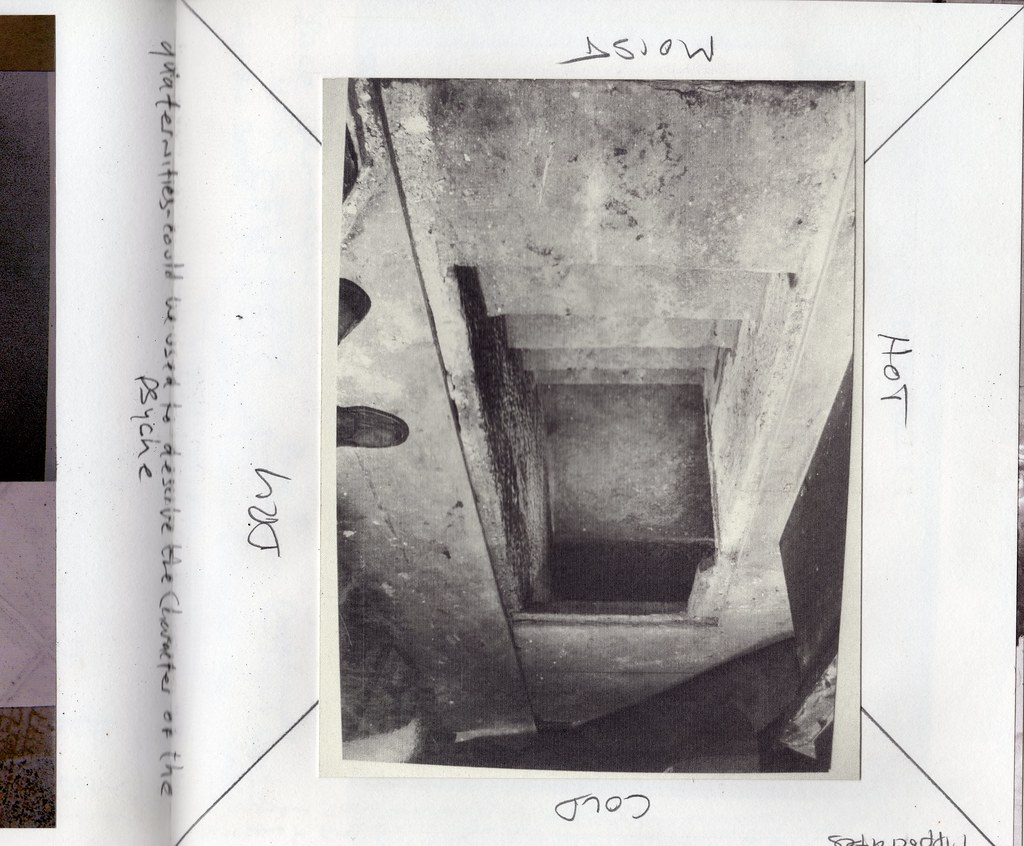
The ceramic body becomes a threshold between what is held and what passes through. Skin, interior, light and darkness gather around the vessel, making emptiness materially present. The surface is not simply the outside of a form; it is where inside and outside begin to negotiate. Clay becomes atmospheric here, opening towards memory, sensing and the experience of being situated within and around a body.
Interior Spaces. Environments and Atmospheres.
Ceramic Building Technologies.
Screens, Boundaries and Borders.
Sensuality, Materiality as Memory in the Poetics of Space.
Breaking The Mould : New Approaches to Ceramics. 2007
Ceramic Environments.
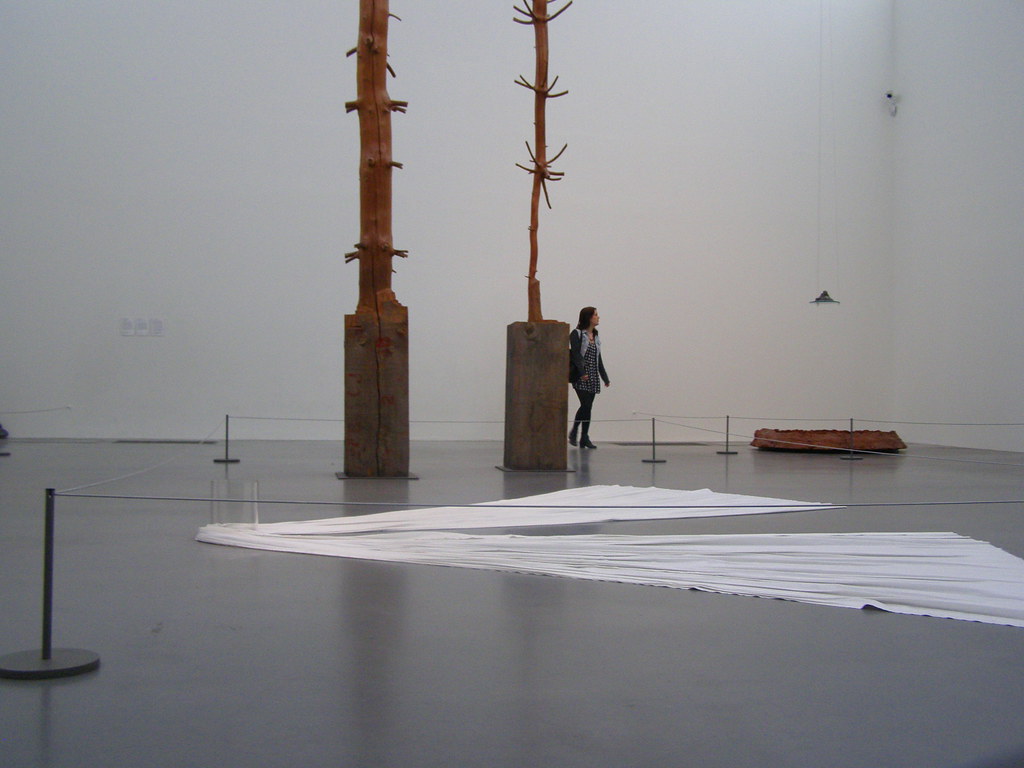
Space/Time based work, using clay in large-scale contexts, in gallery or outside spaces to create a fully immersive moment that challenges the common perception of what clay is capable of.
Surreal Geometries.
Makers who use large and small-scale sculpture that is in some way abstracted or represents a heightened version of reality.
The Vessel.
Works around the practicalities of functional ceramics.
Human Interest.
Explorations into the human form and human nature.
Beyond The Vessel.
Experimentation around the ideas of deconstructing the vessel.
Earthly Inspirations.
Formal and conceptual properties of using the very nature of clay.
Surface Pleasures.
The exterior skin of ceramics and clay.
Notes from The Essential Vessel, Natasha Daintry.
A Vessel defines emptiness as presence.
Vessel as a fundamental expression of being and non-being a ‘no-thing’
A vessel is both a hollow receptacle for liquid, and also a place where
“The mind of man balances and reconciles opposites” Tom Chetwynd,
“We turn clay to make a vessel; but it is on the space where there is nothing that the usefulness of the vessel depends.” Tzu, Lao, Tao Te Ching.
Around Form and Formlessness.
A Vessel is an effortless three-dimensional manifestation of form and formlessness.
‘The benign existential riddle of the vessel is that we only see the material bit that holds our coffee.’ (Daintry2007:8)
One comes about as a result of the other, and this search has a particular resonance at the beginning of this fledgling millennium as technological progress masks a perilous sense of physical and psychological uncertainty. (Daintry2007:6)
Pottery is bound up with the elemental needs of civilisation.
The search of form/cultural and individual through participating with the potters’ wheel.
Alternative “Thinking”States, Sensing, Doing and Being.
‘Its not easy to talk about sensing, doing and being. They’re not concepts as such, neat little fixed shiny packages of ideas, but more existential states which shift and move as you inhabit them-more amorphous, like clay.’ (Daintry2007:6)
Amorphous values of things/memory manifested through existential states (as a spatial device/movement/atmosphere) in architectural spaces?
Zumthor, Holl,Paalasa, Bachelard.
For the potter the making of a cup or bowl through the opening up or hollowing out of clay is itself ‘an essay into abstraction, a clothing of emptiness’; for a vessel is as much defined by the negative space in and around it, as the skin of the ceramic itself.
This skin is a sort of negotiation between inside and outside, between solid and fluid, and where they intersect. A vessel embodies something and nothing and is an effortless three-dimension manifestation of form and formlessness. (Daintry2007:8)
The vessel inhabits rich, liminal territory of uncertainty and abstraction. (Daintry2007:12)
Metaphors of Memory and Experience by way of the Vessel.
Spatial Negotiations (Metamorphosis) between Inside and Outside.
A vessel (as membrane/threshold that can hold social rituals/traditions and memories) seems to occupy space but simultaneously be occupied by space.
Water, although fluid it is supremely germinative and represents the condition of all potentials.(Eliade Mircea1983)
Permeable in flux, water and water’s symbolism became the pagan’s way of intuitively knowing the world. Matter was plastic, fluid and changeable. The body was plastic with parameters defined not only by individual consciousness, but also in relation to other realms of the physical world.
The pagan participated in a vast mythology where his identity changed according to narrative fantasies that combined and recombined human and animal activity endlessly, weaving together memory, reason and sensation. In this permeable world there is no sharp division between things or between life and death. It is a world of energetic flow where bodies can indifferently become attached or unattached from myriad objects and forms. (Daintry2007:9)
Flexible Ways of Seeing/Re-Making the World.
“A large part of the reason for making is to see things that I have never seen before, to build something which I cannot fully understand or explain.”
Artist Statement, Ken Eastman.
Theories of relativity and uncertainty have shown that all matter, even the airy oxygenated void inside a vessel is energy, and that it is composed of the same building blocks generated from exploded stars. (Daintry2007:10)
Italo Calvino : Six Memos for the Next Millennium. 1996
LIGHTNESS
Lucretius, preoccupied with infinitesimal entities on the nature of things.
A philosophy of lightness (Calvino) formed from Lucretius ‘he is the poet of physical concreteness, viewed in its permanent and immutable substance, but the first thing he tells us that emptiness is just as concrete as solid bodies.’(Calvino1996)
Knowledge of the world tends to dissolve the solidity of the world. (Daintry2007:10)
The synchronic flow between form and emptiness, solid and fluid is in itself an awareness of conjoining the concrete with emptiness. The drawings of Cy Twombly as Roland Barthes comments have the ‘appearance of a form (that) testifies to its simultaneous ineluctable disappearance’ this produces a sort of life-death thought and gesture caught within a semblance of writing (graphism). This mark making is evident in the drawings of Alberto Giacometti where the very mark itself seems to illustrate both its arrival and its disappearance. This erasure and its subsequent superimposure is a sensation caught in flux, the written in the unwritten.
The painted bottles of Giogio Morandi share a similar quality where reality floats somewhere between inscription and erasure. (Daintry2007:11)
Morandi ‘I believe that nothing can be more abstract, more unreal than what we actually see.’ He comments further on the specifics of an objects he paints that a ‘precipitous position can be seen in psychological terms as a confrontation with the void of existence.’(Tate Modern 2001)
‘The didactic boundaries of the outer pot surrender to an informal space within that seems far larger than the vessel itself.’ This is how Gareth Clark has described Ebuzziya Siesbye’s hand built pots, how they seem to levitate volume and float in space. (Daintry2007:11)
A “Retreat” as an entrance to a vast, limitless space- an inner landscape.
One can speak of this duality of inside and outside but the real experience is more kinetic, more fluid and interchangeable. (Daintry2007:11)
This dialectic of ‘outside’ and ‘inside’ is explored by Gaston Bachelard in his Poetics of Space. Bachelard points to an interlockingness that inverts the experience of in and out through the imagination. He notes that ‘we absorb a mixture of being and nothingness’ explaining that ‘being does not see itself; it does not stand out, it is not bordered by nothingness’. (Bachelard1994)
Form
Form as a Transport/Transitional Device to arrive/present somewhere/something.
The Abstract to The Concrete.
Architectural Experiences.
Anthropomorphic Qualities.
The Physical Self.
Materials and material sensuality in both architecture and the making processes of vessels.
Thinking and Learning through Objects.
Do we notice the minute differences between textures, light and spatial volumes?
This attending to the physicality of things has the effect of locating you in the world and connecting you to you own physicality. It represents a way of felt experience, of being known and knowing the world through the corporal. (Daintry2007:12)
The Body in Pain: The Unmaking and Making of the World. Elaine Scarry.
Theorises how creative efforts-making both stories and objects-construct the world. Scarry describes both tools and objects as being extensions of the body into the world and therefore they become ways of knowing it. Importantly Scarry documents how tools have become increasingly detached from the body over time. This detachment from our bodies is creating a disembodied relationship with ourselves, and the technological world we now inhabit.
Wanderlust, A History of Walking. Rebecca Solnit. 2002
The Mind at Three Miles an Hour.
Solnit explores Susan Bordo’s claim that ‘if the body is a metaphor for our locatedness in space and time and thus for the finitude of human perception and knowledge, then the postmodern body is no body at all.’ Solnit comments on this postmodern body that it is more of a passive object, appearing most often laid out upon an examining table or in bed. ‘A medical and sexual phenomenon, it is site of sensations, processes, and desires rather than a source of action and production, this body has nothing left but the erotic as a residue of what it means to be embodied. Which is not to disparage sex and the erotic as fascinating and profound, only to propose that they are so emphasised because other aspects of being embodied have atrophied for many people.’(Solnit 2002)
The pagan life that St Augustine (born 354AD) sought to reorganise was too complicated, sensuous and unsettling to be contained within a monotheistic belief system. He stood on the cusp of the two worlds, the sensual, fluid pagan one and the incipient Christian. He succeeded in steering the Christian church into absorbing the essentially Platonic philosophy of a timeless and non-material self, existing alongside the fleeting and decaying material world of the sensory body. Thus creating a reality that was divided onto two, the material and the non material. (Daintry2007:12)
Are we using objects to feel are way back into the world?
Does the interior spaces of Hans Coper’s ceramics reverberate with this archaic pagan sense of a permeable sensuality? Is this not what he himself writes about when he comments on the Platonic values of “the Egyptian vessel”.
Endless repetition, Graham Gussin can take you nowhere, to a non state, a kind of Utopia-meaning literally ‘no place’ Gregory Bateson cites this no place as like a plateau ‘a continuous, self-vibrating region of intensities whose development avoids any orientation towards a culminating point or external end’. (Daintry2007:13)
Voids within vessels become sources of emptiness that cause flows of intensities, held in place and time by being able to allow ourselves to become permeable to the place, to the situation.
Artists and potters who make reduced forms often work in series. They seemingly go over and over the same terrain in minute but varying detail
Throwing and its vocational situation allow the phenomena of ‘forgetting themselves in a function, W.H. Auden’ Finding deep satisfaction from losing themselves in their work.
What sense of interior space do we experience with Edmund de Waal’s installations, are we in some way becoming further located in a conceptualised and contextualised postmodern body. A body created and grafted into a “fetishism” by being nourished solely on conceptual concerns in highly contextualised and ultimately passive spaces.
Bachelard’s interlockingness, his mixture of being and nothingness (the sensory space of the void, Ma), is in effect the fluid and kinetically driven attendances we give to the physicality of things.
Ceramics are like an architecture experience as recorded by Pallasmaa “ The duty of architecture is to slow down perceptions and create silences” ceramics are also able to create a ‘sensory map of actions slowed down’.The viewer like the visitor has to slow down their own act of looking and begin to sense and feel their way inch by inch over the pots or the interior spaces of a room, in so doing one is beginning the process of undoing the conceptual knowledge of our current situation into a nowness that allows us to re-learn, to feel something from the inside out, in effect to regain our innerness through the ‘usefulness’ that Tzu, Lao explains as being the usefulness of which the vessel depends, Tao Te Ching.
This is the most immediately connected to your present practice.
It already contains an extraordinary amount of the vocabulary we have subsequently been developing: vessel, emptiness, inside/outside, skin, threshold, memory, atmosphere, permeability and spatial occupation. The post explicitly describes the ceramic skin as a negotiation between inside and outside and the vessel as simultaneously occupying and being occupied by space.
And importantly, it records itself as an older body: “01-05-2017 Original Blog”, with images added in 2026.
First constellation — Ceramic Bodies
Making Matter(s)~Truth
Overspilling Forms
The Ceramics Reader / Brickyard Ceramics
Making Iterations / Procedures
Working Notes : Clay, Interior Skins of Light and Dark
Archival / Anarchival: Anarchival
Migration judgement: Extremely strong.
This one could become a significant ancestral body for Permeable Chambers and In~~Touching.
Ceramic Bodies
Making Matter(s)~Truth
→ matter / experience / correspondence
Overspilling Forms
→ transformation / excess / displacement
The Ceramics Reader
→ material history / energy / persistence
Making Iterations
→ repetition / care / becoming
Sensate Intelligence
→ interiority / threshold / atmosphere
And underneath them there is an emerging trajectory:
matter → movement → energy → iteration → interiority
But I don't think that trajectory should be written into the archive as a linear argument.
It is better understood as a field of correspondence.
The constellation makes Ceramic Bodies feel much more convincing as a WordPress category than it did in isolation.
Because “body” is doing several different things across these posts:
-
body as material
-
body as vessel
-
body as architectural form
-
body as accumulation
-
body as surface
-
body as interior
-
body as movement
-
body as memory
-
body as something porous
-
body as something becoming
So Ceramic Bodies isn't simply a category for posts about your ceramic work.
It becomes a proposition:
What is a ceramic body capable of carrying?
That question allows all five posts to remain different.
And this is exactly the kind of hospitality we were talking about with the Anglian Potters statement. The category doesn't tell the reader what ceramics is. It opens a space in which ceramics, clay, making, history, architecture, body, atmosphere and thought can meet.
.jpg)
.jpg)


.jpg)


.jpg)


.jpg)


.jpg)

.jpg)
.jpg)




.jpg)


.jpg)


.jpg)