Showing posts with label Nomadology. Show all posts

Sunday, 12 July 2026

The Ceaseless Flux of Disappearances/The Examination of Sight.

Outpost 240923

Drawing in Charcoal : Sensing through Movement.


#The Examination of Sight.

The act of drawing refuses the the process of disappearances, and instead proposes the simultaneity of a multitude of moments.


#Light.

The Ceaseless Flux/Causality Of Disappearance.


#Seeing.

On Disappearances Opposed By Assemblage.

The Drawing Challenges Disappearance/Oblivion.


Catching The Light : The Entwined History of Light and Mind, Arthur Zajonc.


Drawn To That Moment.


A drawing is more than a memento, more than a device for bringing back memories of the time past.


From each glance, a drawing assembles a little evidence, but it consists of the evidence of many glances which can be seen together. On one hand there is no sight in nature as unchanging as that of a drawing or painting, on the other hand what is unchanging in a drawing consists of so many assembled moments that they constitute a totality rather than a fragment.


For Cezanne, one minute in the life of the world is going by, paint it as it is.


For John Berger, how does a drawing or painting encompass time? 

What does it hold in its stillness?

Thus if appearances, at any given moment are a construction emerging from the debris of all that has previously appeared, might it be understandable that this very construction may give birth to the idea that everything will one day be recognizable and the flux of disappearance cease.


Because the faculty of sight is continuous, because visual categories, red-yellow-dark-thick-thin remain constant, and because so many things appear to remain in place, one forgets that the visual is always a result of an unrepeatable-momentary-encounter.


Any image, like the image read from the retina records an appearance which will disappear.


The faculty of sight developed as an active response to continually changing contingencies, and the more complex the view of appearances it could construct from events. 


For the faculty of sight to become developed, the mind uses recognition as an essential part of the construction of appearances, and recognition depends upon the phenomenon of reappearance sometimes occurring in the ceaseless flux of disappearance.


An event in itself has no appearances.


To draw is to look, to examine the spectrum of appearance.


Drawings reveal the process of their own creation, and  their own looking.

On Drawing/John Berger.
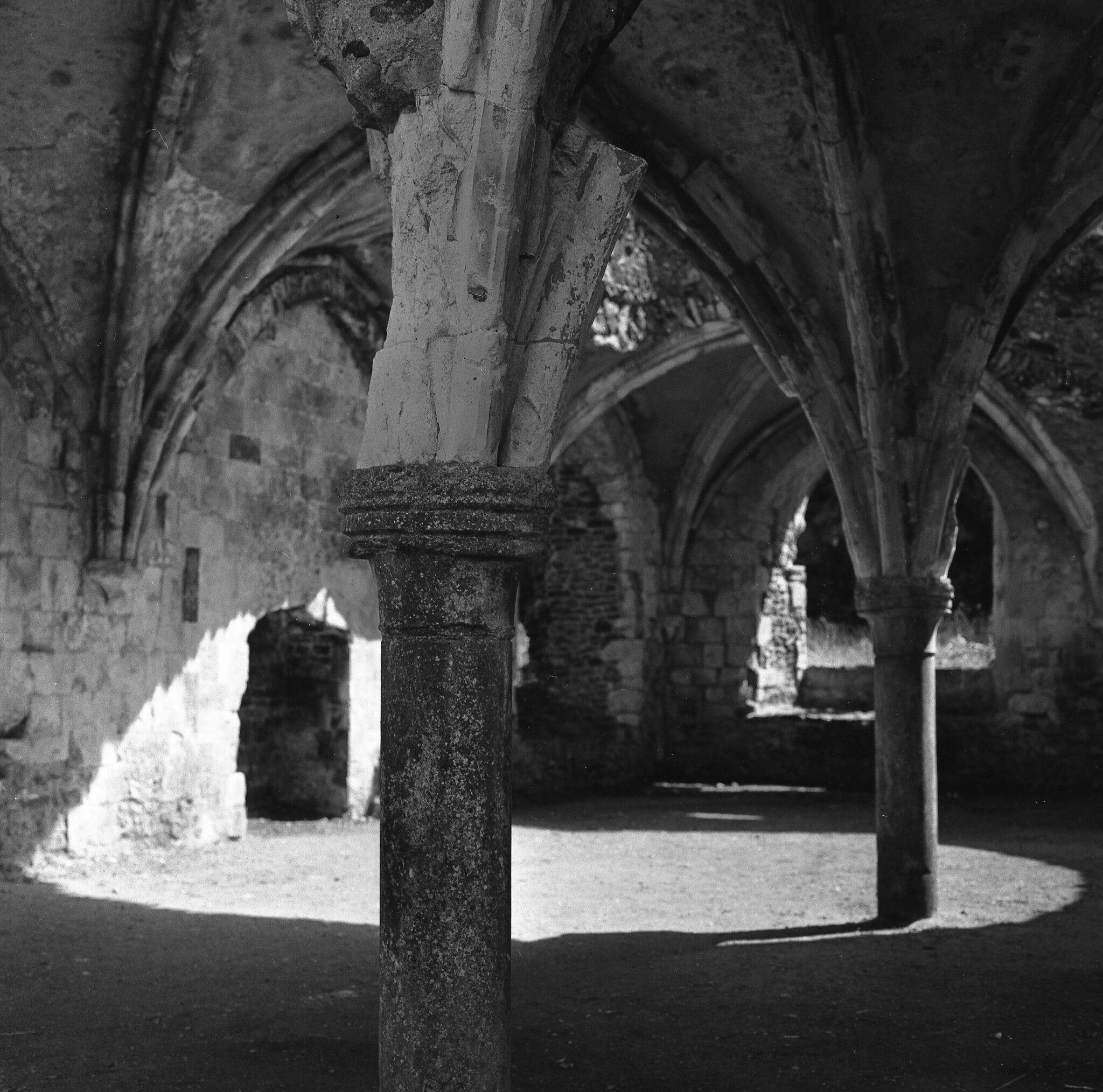


Drawing into awareness.

Things/Feelings that are both hermetic and infinite.


Drawing 'situates' impressions between relations and responses.

Between seeing and feeling.


Butades/Haptic trace, inscription.

Derrida/Blindness inherent in drawing.


The drawing is as much about a haptic experience as it is an optical one, the actual contact between paper and brush informs me that a mark will materialize, a mark marking the abstract and the concrete, a hybrid image of reality.


Perceptual Psychology.


My desire is to set up a situation to which I can take you and let you see.


My art deals with light itself, not as a bearer of revelation, but as revelation itself.


Immersive architectural environments to carry the inner world into the outer spaces, so that our sense of lived-in-territory is increased.


James Turrell/Deer Shelter Skyspace.


In the trajectory of the intermezzo.

The Working Diagram.

Relays between points/paths.

Nomadology, Deleuze/Guattari.


Sunday, 14 April 2024

Celestial Architecture/Skyspaces/Serenity/Re-Animating Thought.

Outpost 190923

Matter and materials that create the potential to act. 

STRUCTURE AS OBJECT

Light supply's the raw material for consciousness and its perception. 


The structural frame as generator of architectural form.

Vitruvius implies that the geometric forms of both the  Colchians and the Phrygians primitive houses are the consequence of direct operation with physical objects, rather than the abstractions that pre-existed in the mind of the builder.

Space/Structure/Light/Performativity/Physical Participation and Play.

Tate St Ives. 2011


Profound but intimate subjective evocations/assemblages of space and time.

Prototypes for Sculpture.

Model for Spheric Theme. 1937

Naum Gabo.

These prototypes give a unique insight into his working process, one in which he employed a playful intuition and childlike, hands-on approach to the development of what were often extraordinarily complex and apparently 'manufactured' forms.


Concetto Spaziale/Spatial Concept 1962

Lucio Fontana.

Buchi Works by Lucio Fontana are characterised by holes or punctures through various surfaces. By opening up these surfaces, Fontana introduces another dimension to his work, one of space, depth and time. In their almost infinite variation and difference, as well as their primal simplicity, they seem to approach something both fundamental and universal. 


Celestial Architecture.

Architecture Without Architects.

Bernard Rudofsky.

Among abstract architecture, some of the most imposing examples stand in Jaipur, India. They are gigantic astronomical instruments built in the eighteenth century to the plans of Maharajah Sawai Jai Singh 11.Their purpose was to achieve greater accuracy of astronomical data than that available from portable brass instruments. Since they never lived up to expectations, they represent that rare instance of pure, or nearly pure, architecture of a functionless kind.


Oxfam, Madeleine Street, Norwich. 

Aesthetics of Installation Art, Juliane Rebentisch.

Situation, Documents of Contemporary Art, Claire Doherty.


Deer Shelter Skyspace, James Turrell.


The layering of traces where the reader can find the intricacy of memory and imagination.


Rethinking The Animate.

Re-Animating Thought.

Tim Ingold. 2006


Contemporary western cultures have created our estrangement to nature, which has been established by the spiritual and religious ascendency of humankind over nature, and by the rational dissociation of the human intellect from the organic world. 

European civilizations neglect of the natural world and its needs has clearly been encouraged by a style of awareness that disparages sensorial reality denigrating the visible and tangible order of things on behalf of some absolute source, assumed to exist entirely beyond, or outside of, the bodily world.

Spell of The Sensuous, David Abram.


Cosmic Serenity/Solitude.

A Mind Attuned to the Intimate Garden.


In a culture exhausted and irreparably fragmented, the walls surrounding Luis Barragan's gardens are, perhaps one of the last defences to preserve centuries of thought and emotion.


On Nomadology.

Gilles Deleuze and Felix Guattari. 1980


Fieldwork.

Deterritorialized Spaces.


The nomad has a territory; he follows customary paths; he goes from one point to another; he is not ignorant of points (water points, dwelling points, assembly points, etc.). But the question is what in nomad life is a principle and what is only a consequence. To begin with, although the points determine paths, they are strictly subordinated to the paths they determine, the reverse of what happens with the sedentary. The water point is reached only in order to be left behind; every point is a relay and exists only as a relay.


A path is always between two points, but the in-between has taken on all the consistency and enjoys  both an autonomy  and a direction of its own. The life of the nomad is the intermezzo. Even the elements of his dwelling are conceived in terms of the trajectory that is forever mobilizing them. 


The nomad is not at all the same as the migrant; for the migrant goes principally from one point to another, even if the second point is uncertain, unforeseen, or not well localized. But the nomad goes from point to point only as a consequence and as a factual necessity; in principle, points for him are relays along a trajectory.


Skyspaces.

James Turrell.


The sky is no longer out there, but is right on the edge of the space you are in. The sense of colour is generated inside you. If you then go outside you will see a different coloured sky. You colour the sky. 


In working with light, what is really important to me is to create an experience of wordless thought. The Deer Shelter is one of only a handful of private and public Skyspaces in Britain, including Cat Cairn, Kielder Forest in Northumberland.


Across the world Turrell has realised around forty temporary and permanent Skyspaces, although the Deer Shelter is one of very few that have been formed from an existing historic structure.

Drawing/Diagram/Script as a gesture of propulsion into the world.

Emotional Sensibility/Selective Intuition.

Making with the Inner Tensions of Each Element.


Timbre/Tone/Colour/Patina.

On Sonority.

Art and Technique.

Marcel Moyse. 


Spatial Distinctions/Piercings and their Movements.

In and Out of Material/Traces and Trails.


Interstices/Voids, Surfaces, Ceramic Forms, Black and White Slip over Terracotta.


Templates,Setting Bocks, Prototypes, Geometry Sets, Monoprints, Boxes.


Use of experimental photographic techniques and new materials through invention and application.


Thursday, 16 November 2023

Making exteriorises and extends internal capacities and conditions

 Outpost 161123


The process of making is a magical act, organic and physiological. 

Making exteriorises and extends internal capacities and conditions.

Tim Ingold.


The new virtual social spaces are changing actual physical space.


The virtual world continues to overlap with the real one, further weakening of the boundaries between the two domains is inevitable.


Drawing Concepts/Identities.

Gathering Situatedness.

Nomadology on the relay between points, paths, territories, boundaries, borders and lines.


The drawing acts/re-enacts through the forces and flows of materials/matter/media and experience.


The Space/Situation of Art as a Sociological Phenomena.


The Drawing Class

10 Days in The Laundry

Winchester 2009.


Drawing-Traces-Bodies-Movements.

The Production of Space/Spatiality.


Line as a Graphic Inquiry.

Johannes Schreiter.


Wellbeing and Mediated Spaces within Drawing.


How I was drawing was far more important than what I was drawing. I decided to abandon figurative representation and actually focus on my own body as a producer. My interest in space mediation is materialised in site-specific works, where the combination of the performance and the specific features of the site, its architecture, history, etc of a particular context determine decisively the appearance of the work.

M. Lohrum.


Resonances/Reverberations (Bachelard) as the performativity between things and of the innate reversibility of inside and outside, such that intimate spaces loose their clarity, whilst exterior spaces loose their sense of void.


For Bachelard, inside and outside, as experienced by the imagination can no longer be taken in their simple reciprocity, consequently by choosing  more concrete, more phenomenologically exact implications/inceptions, we shall come  to realize that the dialectics of inside and outside multiply with countless diversified nuances.


All matter vibrates, causing correspondences between people, things in movement with each other.


Making/Matter/Intervening.

Drawings that are intimately tied/underpin/inquiry/situate into your emotions/sociological self.


Social Contexts Making Artistic Creation.


During the act of drawing, the artist focuses on the physicality, movement, and gesture of their body , or the bodies of others. The resultant drawings work as documentation of the performance, they retain the indexical trace of the performance that produced them.


Drawing practices that are performative, inspired by the uncertain and changeable nature of both our social context and artistic creation.


Performative Drawing explores drawing as a consequence of a residue of a performance or event, as such it is very process oriented, doing things with unknown or unfolding outcomes.


The experiences and knowledges of the body.

Drawings that remain in the  exploratory realm of drawings.


The Drawing needs to be 'read' forward into an ongoing generative movement that is once itinerant, improvisatory and rhythmic. 


Corporeality  in Drawing.

Situated Awareness/Attraction.


Drawing onto the openness of the resonances of bodies.


The Radical Nude, Egon Schiele.

A creative corpus of extreme representations of the human body that  show an ambivalent treatment of sexuality, creation and death.


The Nietzschean Perspective.

Nietzsche explains that ever art, every philosophy may be viewed as a remedy and an aid in the  service of growing and struggling life; they always presuppose suffering and sufferers.


A Philosophy of The Body.

Schiele experimented to see how he could represent the experiences and knowledges of the body by using his own body as an object and as a tool for experimentation.


For Nietzsche, to what extent can truth endure incorporation? That is the question, that is the experiment. This evokes both gleaning the truths of the fleshy and making something lived corporeally, truth is now of and in the body. The body is the source of the soul and of our most valuable forms of knowing.


The naked, primal vulnerability that has been socially and culturally manipulated turning the naked into the nude. 


Marie's body was dedicated to a dance of death, masquerading as the cycle of life. By the time she bore Egon, Marie had already given birth to no fewer than four babies, only one of whom would survive beyond childhood. Egon the male heir was bought into a world in which sexuality, disease and death were not only inextricably intertwined but also oppressively omnipresent, and his art evinces this fearsome reality most memorably in his brutal treatment of the naked body.


Dioysian Ugliness and Radical Beauty in Egon Schiele's oeuvre.

Kathryn Simpson.


Vienna, was saturated both with Nietzsche's actual writings and with the multiple and various Nietzscheanisms. Every educated person was familiar with Nietzsche's Philosophy, indeed the ubiquity of Nietzschean influences can barely be overstated.