Showing posts with label Morn Hill. Show all posts

Tuesday, 28 July 2026

Making Intensified Surfaces : A Transdisciplinary Spatial Inquiry.

Making~Intensified Surfaces of a Transdisciplinary Spatial Inquiry.

Morn Hill Archaeological Site~Hyde Artist Collective


My practice begins somewhere between the hand and the structure.

Ceramic sculptural work titled Ceramic Multiples/Excess Energy 


Transductions~Remembrances by artist Russell Moreton.

Features serial variations on fired clay with layered textural brushwork and aperture details.

Explores transitional zones between thinking, making, and the tactility of minor gestures in contemporary studio practice.


Clay is not simply a material to be formed. It is a body in negotiation: resistant, absorbent, unstable, enduring. Through making, I enter into a process of continual adjustment in which the work is never entirely known in advance. Form emerges through a reciprocal encounter between intention, matter, gesture, tool, surface, gravity, failure, and time.

I am interested in ceramic bodies that begin to exceed their own material designation. Slab-built, perforated, scored, drilled, painted, weathered, and reconfigured, they occupy an unstable interval between vessel, sculpture, architectural fragment, diagram, ruin, and spatial apparatus. Their surfaces become intensified fields of activity. The hole is an aperture; the grid is a structure; the line is a proposition; the surface is a record of becoming.

Making is therefore not the execution of an idea but a mode of inquiry.

I understand the studio as an expanded environment: no longer a retreat from the world, but a site of continuous exchange. Ideas enter through materials, bodies, texts, places, conversations, architectures, and acts of attention. The work develops through an iterative process of monitoring, correction, combination, and transformation.

My site-based practice extends this inquiry into environments and situations. I construct provisional spatial compositions in which craft, architecture, theory, drawing, sociality, and embodied experience become entangled. These works are not fixed objects but relational propositions: spaces for inhabiting, encountering, sensing, imagining, and thinking.

I am interested in what happens when the distinction between object and environment begins to collapse.

A ceramic body becomes a spatial body.

A surface becomes a threshold.

A structure becomes an event.

Making becomes a way of producing knowledge through the material, the embodied, and the situated.

The work emerges through an excess of form: something always remains unfinished, unresolved, overspilling the structural integrity of the object. This excess is not a failure of construction but its generative condition.

I work within this instability.

Between craft and architecture.

Between matter and thought.

Between the body that makes and the space that is made.

Between the object and the world it begins to produce.

Saturday, 7 February 2026

A Sensation of Looking/Manifesting Seeing

Outpost 310323


A Sensation of Looking/Manifesting Seeing


Matters of Concern/Fact.

Drawing/Contingency/Sensing/Seeing

Drawing away from descriptive depictions that illustrate preconceptions/aesthetics.


Julian Stair.

Quietus. 2012.

The Vessel.

Death and The Human Body.


There is an alchemy to making ceramics. We take an inert material, fashion it, dry it and expose it to heat and flame. The practice of cremation, of exposing the body to fire, going through an alchemical change, echoes and parallels the process of firing.

Julian Stair.


The materials he works, lead and clay are dense, both physically and emotionally. But Stair's use of these materials is not representational. These objects do not depict or illustrate, instead they enact and embody.


Stair's achievement in this cyclical exhibition is to have expressed both the universality and the specificity of death, each as an aspect of the other.


The great hand-thrown jars that stand at the heart of the exhibition exemplify this doubleness. Though completely abstract, they exist at the scale of the body. They invite a tactile response, visitors might stroke the ridges circumscribing the jars or tap them, or even give them a gentle hug.

Glenn Adamson.


Life drawing on the psychology of  nakedness and the human body in contemporary art.

Life-Class/Anatomy/Pathology.


The practical and theoretical problems of the confrontation with the human form.

Georg Eisler.


Herbert Boeckl.

His nudes speak a physical language, interpreting life and death in terms of human bodies, of functioning muscle and bone and the tactile aspects of flesh, and the knowledge of what lies beneath/behind it. 


Alfred Hrdlicka. 

A Group. 1973.

Proximity does not read as intimacy, the entangled naked bodies convey a sense of insecurity.

The Posed/Nakedness/Social Scrutiny.

The Life-Class.

Isabel Bradshaw/Michael Grimshaw


Drawings/Sculpted lines that bring sensations onto the surface of the paper.

Lines of Movement/Vectors

Lines of Static Forms/Boundaries


Mark-making, rendering the spatialities of the human form.

Form-Movement

Mass-Volume

Skin-Surface


Line is only the visual interpretation of an extremity of a volume. Mark-making on a drawing becomes a conduit for a sensation of seeing others.


The concept of anthropomorphism is central to the identity of pottery. We use bodily terms such as a neck, shoulder, hip and foot to describe the constituent parts of a pot. And the very nature of the vessel as a container, a holder of things, is analogous to the idea of the body as physical container for the soul or spirit.

Julian Stair.


Thursday, 29 June 2023

Earthbound : Alternative Processes/Art/Archaeology/Philosophy

 The Archaeological Site : Speculative Fields/Spatial Practices

What are we? Art/Archaeology.

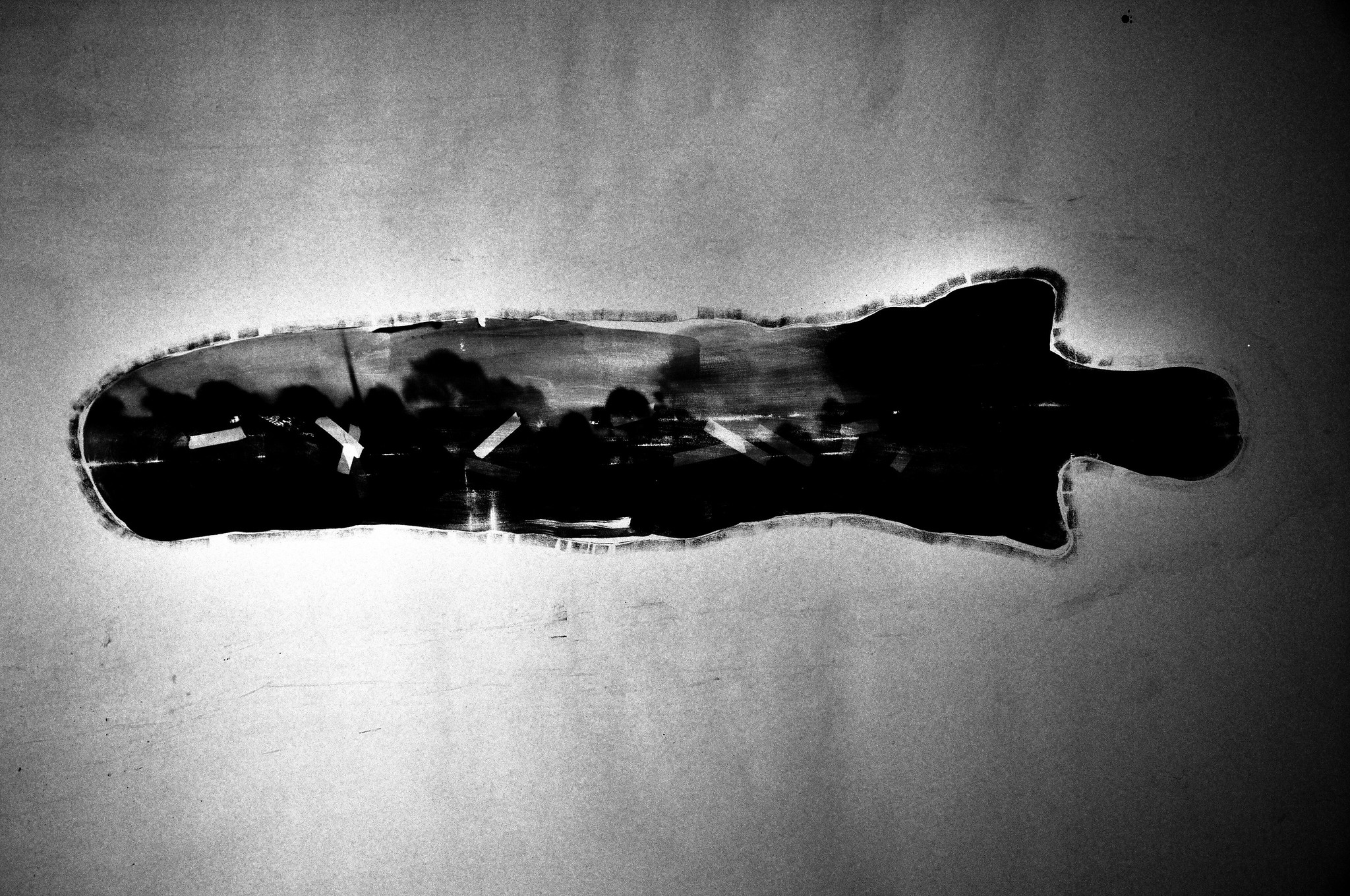
Contact Photography.

Historical Presence #4


Figuring it out.

What are we?

Where do we come from?

The parellel visions of artists and archaeologists.

Colin Renfrew.


Do you live as Humans in the Holocene or as Earthbound in the Anthropocene? (50.37)


Dr. Bruno Latour on climate change and the "Anthropocene": Wall Exchange, Fall 2013


Studio Practices
Silver Gelatin
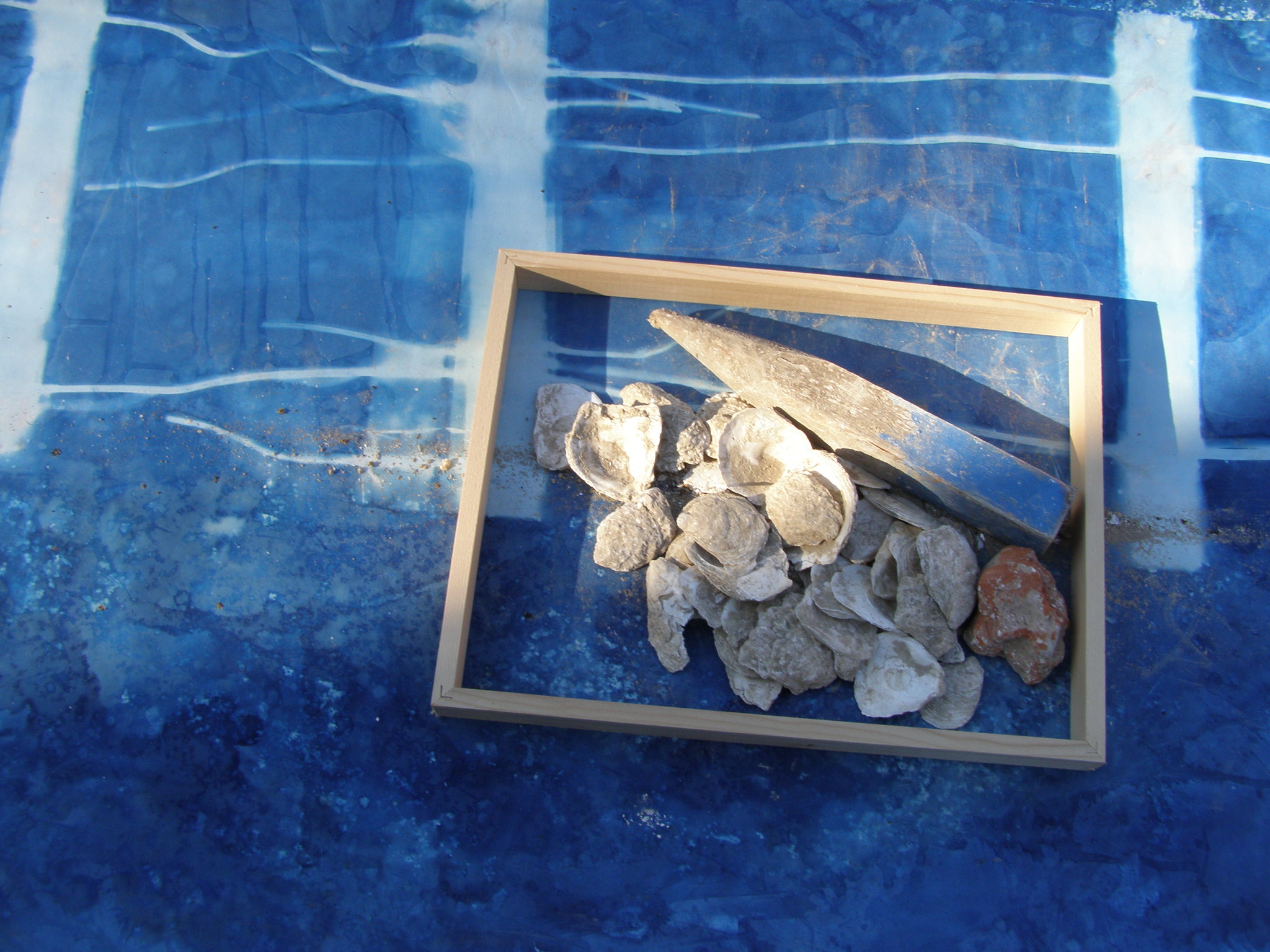
Cyanotype
Drawing
Liquid Light


Saturday, 5 March 2022

The Leper Hospital/Morn Hill, Winchester : Anthropomorphic Geography/Landscape on Photographic Ground


A few feet below the ground a thick line of rock would mark us off from all that had gone before. Condensed into that six-inch sooty layer would be our cities, vehicles, roads, bridges, weapons. Also, all sorts of chemical compounds not found in the previous geological record.
 Ian McEwan : The Children Act, 2014.

  Against SPACE : Place-Movement-Knowledge
 "I wish to argue, in this chapter against the notion of space. Of all the terms we use to describe the world we inhabit, it is the most abstract, the most empty, the most detached from the realities of life and experience."
 Tim Ingold


Environments

Land

Earth
Pastures

Country
Ground
Landscape

Indoors
Open

Sky


Air