Showing posts with label photograms. Show all posts

Sunday, 14 June 2026

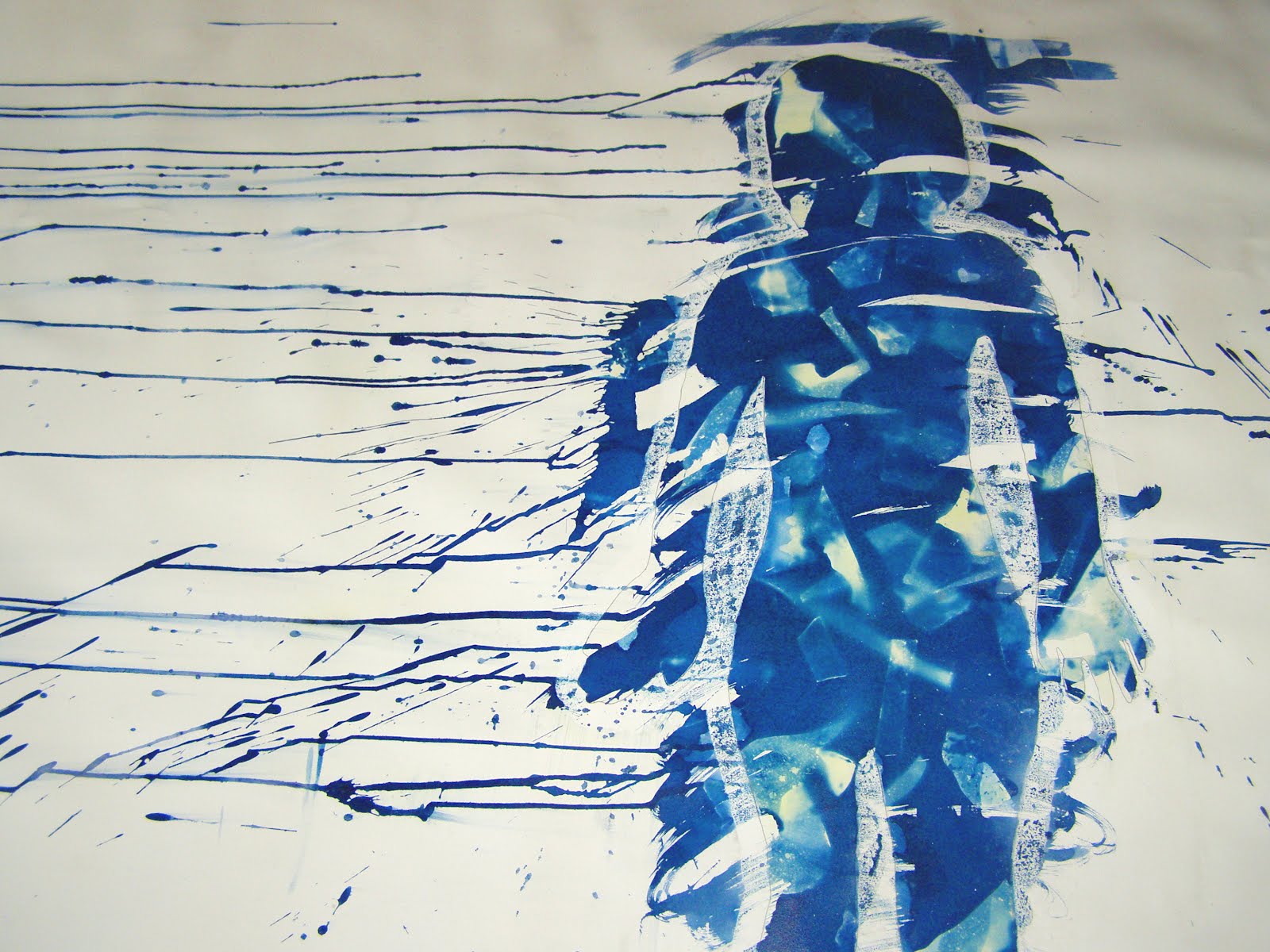
Spatial Bodies : Visual Art Materialisms~Processual Workings


Drawing iterations into the ritual body~site~time

Body Assemblage/Diffracted Material #1-3 : Composition~Dissolution

https://www.flickr.com/photos/russellmoreton/

https://russellmoreton.tumblr.com

Artist's Statement. 2012

UK based visual fine artist working in alternative photographic processes, installation and drawing. Interested in using "Spatial Practices" to inquire into architectural space through fine art and performative interventions. Practicing craftsman in architectural glass and ceramics.

Russell Moreton, Winchester. 


Sunday, 27 April 2025

The Social : Catching The Light/Architectural Apparatuses/Spatial Methodologies

It would probably not be wrong to define the ex­treme phase of capitalist development in which we live as a massive accumulation and proliferation of apparatuses.

To recapitulate, we have then two great classes: liv­ing beings (or substances) and apparatuses. And, be­ tween these two, as a third class, subjects. I call a sub­ject that which results from the relation and, so to speak, from the relentless fight between living beings and apparatuses. Naturally, the substances and the subjects, as in ancient metaphysics, seem to over­ lap, but not completely. In this sense, for example, the same individual, the same substance, can be the place of multiple processes of subjectification.­

 I shall call an apparatus literally anything that has in some way the capacity to capture, orient, determine, intercept, model, control, or secure the gestures, behaviors, opinions, or discourses of liv­ing beings.

What Is an Apparatus? Giorgio Agamben 2009.


Alternative Photography : Photography and Architectural Space.

Photogram, a numinous construction, spaces amongst and within other spaces

Catching The Light.

The Entwined History of Light And Mind. Arthur Zajonc


PROXIMITY OF SPACE 

INTIMACIES IN SOCIAL SPACES 

SCRIPTORIUM


THREE STAGE METHODOLOGY (Kikutake) Mitsuo Taketani 

KA ‘ESSENCE’

KATA ‘SUBSTANCE’ 

KATACHI ‘PHENOMENON’ 

Characteristics of an architect

CHI ‘BLOOD’

TACHI ‘TEMPERAMENT’ 

KATACHI ‘EMBODIMENT’


The Phenomenology of Reading. GLAS, Derrida Literature and Language. 

The Stride of The Mind

Reading Rooms. Figuring Space. Text/Fumiture/Dwelling Reading with Paths

The Production/use of Space into Places to engender Societies.

A site specific induced inquiry into dwelling and building through/by way of an attentive awareness (anthropological) to people and place.

‘What I am post interested in now is inverting the structure of a culture that is centred around the city.’

‘The richness and strength of that (their) culture cannot be understood until one has worked with the people who live their- until one has eaten their food, drunk their sake, talked together with the craftsmen and made things with them.’

Kengo Kuma, Complete Works, (preface) 2012 

Relativity/Relationality through Walking and Thinking. Subjectivity. Space - Politics - Affect


Waverley Abbey. Cistercian Monastery

The peculiarity of the ruin is defined in that it demythologises the impression of seamlessness and linearity. In the ruin, we are at once removed from dichotomised and levelled down space by entering a place at the threshold of experience. At the threshold, we return to the pre- spatial, if primordial, landscape, yet to submit to the suppression of space and site. Instead the place of ruin creates protrusions, which desolates the category of clean space.


The Aesthetics of Decay, An Uncanny Place. Dylan Trigg 


Immaterial Architecture : The Glass Observatory

Photograph (132) Cyanotype Alternative Photography

Documents from research archive

Tracing Light: Petworth House, West Sussex 2000 David Alan Mellor, Garry Fabian Miller.

Light And The Genius Loci

For Derrida, the sun not only marks the beginning of metaphoricity but it is also an inescapable reminder of the solar system and oscillations, hidings and occultrations, inherent in 'a certain history of the relationships; earth/sun in the system of perception'.

Mutations Of Light

Petworth Window, 6 July 1999 Light's Windows And Rooms

Passing towards the Invisible.

The prospect of some metaphysical realm beyond the blue end of the spectrum and beyond material things illuminated to carnal sight, was a recurrent theme in William Henry Fox Talbot's early speculations.

CATCHING THE LIGHT

The entangled history of light and mind Arthur Zajonc

BROUGHT TO LIGHT

PHOTOGRAPHY AND THE INVISIBLE 1840-1900 Sight Unseen

Picturing The Universe Corey Keller

Invisible objects, penciled by nature's own hand.

In his introduction to the exhibition catalogue Iconoclash: Beyond the Image Wars in Science, Religion, and Art, the historian of science Bruno Latour argues that scientific pictures are powerfully affective because they more than mere images; they are, as he puts it, the 'world itself.

The Social Photographic Eye Jennifer Tucker

Nineteenth century science was characterized by both the appeal to visual evidence and the need for confirmation by the testimony of eyewitnesses. The latter explains why scientists pursued public viewings of their photographs by means of illustrated slide lectures, exhibitions, and reproduction in newspapers and magazines.

An understanding of the social boundaries of nineteenth century science helps make sense of a certain paradox within contemporary attitudes towards photography of the invisible. The ideal of mechanical objectivity in documenting visual knowledge demanded the elimination of the artist-observer and all of the subjectivity implicit in drawing by hand.

Invisible Worlds Visible Media

Tom Gunning

William Henry Fox Talbot, Slice of horse chestnut, seen through the solar microscope, 1840, salt print 18.6x22.5 cm.

Techniques Of The Observer

On Vision And Modernity In The Nineteenth Century Jonathan Crary

The Camera Obscura and its Subject

Above all it indicates the appearance of a new model of subjectivity, the hegemony of a new subject­ effect. First of all the camera obscura performs an operation of individuation; that is, it necessarily defines an observer as isolated, enclosed, and autonomous within its dark confines. It impels a kind of askesis, or withdrawal from the world, in order to regulate and purify one's relation to the manifold contents of the now 'exterior' world.

UNDER THE SUN

By The Light Of The Fertile Observer

Metaphors of illumination in the photography of Christopher Bucklow, Susan Derges, Garry Fabian Miller, and Adam Fuss.

An Epiphany Of Light

David Alan Mellor

Christopher Bucklow, Guests Jeanette Winterson, Gut Symmetries

Matter is provisional and that includes me. If the physics is correct then we are neither alive or dead as we commonly understand it, but in different states of potentiality.

From The Adamantine Land

Variations on the art of Christopher Bucklow David Alan Mellor

Etienne-Jules Marey

A Passion For The Trace Francois Dagognet

Painting, Photography, Film Laszlo Moholy-Nagy

A Bauhaus Book

L. MOHOLY-NAGY:

DYNAMIC OF THE METROPOLIS SKETCH FOR A FILM

ALSO TYPOPHOTO OSKAR SCHLEMMER

MAN

Interaction of Color Josef Albers

The Elements of Color Johannes Itten

Pedagogical Sketchbook Paul Klee

The New Landscape in art and science Gyorgy Kepes

The Colour of Time Garry Fabian Miller

The Majesty of Darkness Adam Nicolson

The Unmade

The Pregnant

The Half Erotically Unmade


Camera Obscura of Ideology Sarah Kofman

An optical instrument, which used in drawing, allows one to see at the same time the objects being drawn and the paper.

I Am Not This Body 

Barbara Ess


Working Collages

Ann Wilde, Ulrike Meyer-Stump

A German Tradition of Photographic Typology

Collages made from contact prints from Blossfeldt's negatives, showing the isolation of particular motifs. The working collages were an archive, not for the negatives but for motifs.

The viewer is less interested in the subjects of the pictures, than in the effect created by the formal system subsuming them.

His photographic archive of plant forms is not a finished work, but material awaiting processing.


Enchantments and Crossings : Somatic Effects

Spatial Methodologies. Worlds and Thresholds.


The Fanciful and The Scientific.

The Playful and The Reverent.

The Material and The Metaphysical.


Tensions in built spaces.


Between Evanescence and Substance.

Between Illusion and Specificity.

Between Slickness and Tactility.


Today there is not even a single instant in which the life of individuals is not modeled, contaminated, or controlled by some apparatus, In what way, then, can we confront this situation, what strategy must we follow in our everyday hand-to-hand struggle with ap­paratuses?

What Is an Apparatus? Giorgio Agamben 2009.

Making Places where times and tastes, human fabrications and accidents of nature, all collide; in these situations under the shelter of a forming/becoming architecture these ‘spatial texts’ or ‘visual conversations’ of one sort or another are suggested and are manifested and explored through a praxis of inquiry and making.


Facility and retreat for cross-disciplinary inquiry (Humanities and the Social Sciences).

Repository and archive of artefacts, texts and objects.

Exhibition and making spaces, workshops and residential living spaces. Walled garden complex containing a reading pavilion and library.

Philosophy of Solitude, thresholds/spaces of serenity, a poetics of dwelling.

Relationships between Art, Photography, Craft and Building. Expanded through Exhibition, Performance, Teaching and Making.

Realized as a dialogue/delivery (Built Work) into Architectural Terms between Sites of Collection and Sites of Construction.


Art as Spatial Practice.

Catalyst Events/Situations to engender the experience of learning.

West Dean, Singleton. Residential courses in the arts, both the grounds and the house are fully utilised in the social activity of learning.

Kilquhanity,Scotland. Free School in country setting, used as a site for exploratory fine art practices(converted a pottery into a camera obscura and drew a garden from the movements of the sun across a specific terrain).

Brockwood Park School, Bramdean. Re-imagining learning, conducted a walk across a landscape with clay, and hidden curriculum in the library with objects and texts centred around philosophy and architecture.

Space folds : Containing "Spatialities around historicality and sociality"

Perceptions now gathering at the end of the millennium. Spatiality, Robert T. Tally Jr. 2013

"All that is solid melts into air"

Karl Marx, Friedrich Engels,

(Poetic observation concerning the constant revolutionizing of social conditions)

Posted 2018


Monday, 19 June 2023

Anthropological Settings : Drawings/Photograms and Intermediaries


Found Objects : Archaeological Photogram

When you make photograms, without the use of a camera, you can indeed call that abstract photography, as the lens and the corresponding registration medium are lacking. No longer do you have pictures of reality or objects; you only have their shadows. It is a bit like Plato’s cave, where one could only imagine reality; the objects themselves were not visible.

Thomas Ruff

Archipelagic : Solar Drawing/Circumpolar Star Chart

Sociological Gathering : Winchester Cathedral/Space For Peace

Blueprints : Anthropological Forms/Botanical traces with leper graves


Wednesday, 1 February 2023

Architectural Light : Drawing into the photographic process

When you make photograms, without the use of a camera, you can indeed call that abstract photography, as the lens and the corresponding registration medium are lacking. No longer do you have pictures of reality or objects; you only have their shadows. It is a bit like Plato’s cave, where one could only imagine reality; the objects themselves were not visible.

Thomas Ruff

Found Objects : Archaeological Photogram

Drawings : Speculative Constructions in Photography

Deleuze claimed that he did not write “about” art, literature, or cinema, but, rather, undertook philosophical “encounters” that led him to new concepts.  As a constructivist, he was adamant that philosophers are creators, and that each reading of philosophy, or each philosophical encounter, ought to inspire new concepts. Additionally, according to Deleuze and his concepts of difference, there is no identity, and in repetition, nothing is ever the same.  Rather, there is only difference: copies are something new, everything is constantly changing, and reality is a becoming, not a being.


Cell

Court

Domain


Drawing into the photographic process


Poche/Niche : The shaped presence between two surfaces/volumes

Reading Rooms : Waverley Project


Monday, 3 October 2022

Photograms : Without the agency of time and light, there is no record.

Photogram of an allium using the historical process of cyanotype. The stilled nature of the image  is caused through its contact with the paper and the exposing sunlight over time. Photographic processes such as cyanotype yield these sorts of veiled images, manifested from the revelation captured within the photograph itself.


Without the agency of time and light, there is no record.


Saturday, 28 May 2022

Mesh/Material/Light : Cyanotype Process/Indexical Remains

Cyanotype is a photographic printing process that produces a cyan-blue print. Engineers used the process well into the 20th century as a simple and low-cost process to produce copies of drawings, referred to as blueprints. The process uses two chemicals: ammonium iron(III) citrate and potassium ferricyanide.

The English scientist and astronomer Sir John Herschel discovered the procedure in 1842.[1] Though the process was developed by Herschel, he considered it as mainly a means of reproducing notes and diagrams, as in blueprints.[2] It was Anna Atkins who brought this to photography. She created a limited series of cyanotype books that documented ferns and other plant life from her extensive seaweed collection.[3] Atkins placed specimens directly onto coated paper, allowing the action of light to create a silhouette effect. By using this photogram process, Anna Atkins is regarded as the first female photographer.[4]


Monday, 23 May 2022

Art and Architecture : a place between, Jane Rendell, Peter Greenaway, Intertextuality/Transparency

 OPEN TEXTS. 

Allow readers to have multiple interpretations, they allow for the possibility of  “determinations”.

Intertextuality fundamental concept “that no text much as it might like to appear so, is original and unique in itself. Rather it is a tissue of the inevitable , and to an extent unwittingly references to and quotation from other texts.” 


SELECTED BIBLIOGRAPHY AND REFERENCES 

Edward S. Casey, The Fate of Place (Berkley: University of California Press, 1998 ) 

Juhani Pallasmaa, Eyes of the Skin, Architecture and the Senses (Chichester: Wiley, 2005 )

Peter Greenaway, The Physical Self (Rotterdam: Boymans-van Beuningen Museum, 1992)

Henri Lefebvre, The Production of Space (Oxford: Blackwell, 2000) 

J. G. Ballard, High Rise (London: Jonathan Cape, 1967)

David Wood, The Deconstruction of Time (Evanston: Northwestern University Press, 2001 )

Ian Buchanan, Deleuze and Space (Edinburgh: Edinburgh University Press, 2006) 

Vilem Flusser, Towards a Philosophy of Photography (London: Reaktion, 2000 )

Robert Cooper, Peripheral Vision: Relationality (London: Sage Publishing, 2005) 

Jonathan Murdoch, Post Structuralist Geography ( London: Sage Publishing, 2006) 

Markus Miessen, Did Someone Say Participate, an atlas of Spatial Practice (Cambridge, Massachusetts: MIT Press, 2006)

Russell Ferguson, Francis Alys, Politics of Rehearsal (Los Angeles: Hammer Museum, 2008)

Elizabeth Grosz, Space, Time, and Perversion (London: Routledge, 1996) 

Tracey Wan, The Artists Body (London: Phaidon Press, 2000)

Francois Dagonet, Etienne-jules Marey: a passion for the trace ( New York: Zonebooks, 1992 )

Colin Rowe, Transparency ( Basel: Birkhauser, 1997)

Avis Newman, The Stage of Drawing, Gesture and Act (London: The Tate Drawing Centre, 2001)

Giuseppe Penone, The Eroded Steps (Halifax: HMST, 1989)

Glen Onwin, The Recovery of dissolved substances ( Halifax: HMST, 1992) 

Carolyn Bakargiev, Arte Povera (London: Phaiden Press, 2003)

David Green, Stillness and Time, Photography and the moving image ( Brighton: Photoworks, 2006)

Catherine Lupton, Chris Marker, memories of the future (London: Reaktion, 2004 ) 

Martin Amis, Times Arrow (London: Jonathan Cape, 1991)

Yve Lomax, Sounding the Event: escapades in the dialogue and matters of art, nature and time (London: I. B. Tauris, 2005 )

John Wood, The Virtual Embodied, presence, practice, technology (London: Routledge, 1998)

Lucy Bullivant, Responsive Environments, Architecture Art and Design { London: V&A, 2005)

Gaston Bachelard, The Poetics of Space (Boston: Beacon Press, 1994)

Italo Calvino, Six Memos for the next millennium (London: Jonathan Cape, 1992) 

Douwe Draaisma Metaphors of Memory (Cambridge: Cambridge University Press, 2000)

Paul St George, Sequences: Contemporary chronophotography and experimental digital art ( London: Wallflower, 2008)

Hans Christian von Baeyer Information, The new language of Science (London: Weidenfeld and Nicolson, 2003)

Andrey Tarkovsky, Sculpting in Time (Austin: University of Texas Press, 1986) 

Susan Broadhurst, Liminal Acts ,a critical review of contemporary performance and theory ( London: Cassell, 1999)

Eduardo Cadava, Words of Light (New Jersey: Princetown University Press, 1997) 

Giuliana Bruno, Public Intimacy ( London: MIT press, 2007 )

Jeanette Winterson, Written on the body (London: Jonathan Cape, 1992)

Jane Rendell, Art and Architecture, a place between (London: I. B. Tauris, 2006 ) 

Thierry de Duve, The Definitively unfinished Marcel Duchamp ( Cambridge, mass: MIT Press, 1991 )

Always fascinated by the “return shelves” in a library, its like a barometer of specific activity, it holds within it occurrences and possibilities that are un-calculable to predict It concurs traits of other events/projects happening outside, it reflects those items of the libraries resource have been selected and those not. It is perhaps the curiosity, the reading between what is presented that prompts speculation and ultimately one forms/registers a subjectivity and an opinion based around ones own particular space of time. These shelves “sample” my potentialities amid a on-going field of relations of which I am part as my “returns” configure a new abstraction of data.


RESEARCH METHODOLOGIES:

Fluctuating networks of existential events.

Emergent state of continguences that create materials for relationality.


TRANSPARENCY: LITERAL AND PHENOMENAL. COLIN ROWE AND ROBERT SLUTZKY.

Space-time, simultaneity, interpenetration, superimposition, ambivalence. Transparency has a material condition that is pervious to light and air. Together with an “intellectual imperative” this has an “inherent demand for that which should de easily detected, perfectly evident, and free from dissimulation.”1 Transparency allows things to interpenetrate. Things can become masked and ambivalent by this superimposition but the things themselves remain authentic and unabridged.

Transparency can grant us a “simultaneous perception of different spatial locations.” These values of being able to interpenetrate simultaneously and thus create a potential threshold that is in a state of in-betweeness. 

Transparency by its very nature confronts us with the contradiction of spatial dimensions. Contradictions that might require the physicality of the body to authenticate. There are also Contradictions centred on a linguistic transparency. 

Transparency could become a site or form of temporal phenomena, granting some sort of deconstruction when viewed as a simultaneous multiplicity.

The interesting proprieties of transparency is its ability to have the quality of a substance ( glass, plastics, film, water) together with qualities we ascribe to it when we use it in the context of organisational systems. It is this literal and phenomenal spatiality that is infinitely relational. This relation allows us to invest transparency with a literal depth so as we can assume the phenomenal substance beyond it. 

This sense of a spatial transparency is exploited as a filmic phenomenon, film directors by moving in and out of the framic reference of the camera, create within the mind of the viewer an illusion of a spatiality that is both transparent and virtual.

The use of transparency as a device to aid the spatial organisation of place in architecture is under investigation. Notions that “worksites” could be “assigned directional systems” which could help to engender relations of human enterprise and encounter. 

The organizational transparency of the figure ground relation in architectural mapping creates a differentiation to the integral ordering of space. This opens up the possibilities of investigative ideas around poche (a drawing method showing material structure and space in relation to each other) poche is related to transparency by precise inversion (material and space). 

Transparency can be used as a method of creating multiplicities through the device of superimposition.In so doing it creates surfaces that have mutuality by the nature of being able to be visually overwritten.

1.Colin Rowe and Robert Slutzky, Transparency: Literal and Phenomenal (Berlin: Birkhauser Basel, 1998),page 22.


ALLEGORY, MONTAGE AND DIALECTICAL IMAGE, JANE RENDELL.

This chapter, in Jane Rendell’s Art and Architecture, A Place Between, offers a number of possibilities for the interpretation of my current investigative research. In particular, her analysis of Walter Benjamin’s discussion on the temporal aspects of allegorical and montage techniques in works of art.1

 Rendell cites Benjamin’s The Origin of German Tragic Drama,2 as having a particular form of a baroque theatre, where the temporal, and the corporeal body, meet the transcendental. Within the structure of these there plays a sadness of life represented as a “nature petrified in the form of fragments of death.”3

This notion of using objects as allegorical devices within the duration and place of an event, interests me.

This allegorical device within “Place” is further elaborated by Benjamin himself when he remarks, “allegories are, in the realm of thoughts, what ruins are in the realm of things”.4

This relationship with time and allegory could be performative and immersive. Benjamin notes baroque allegory to be “an appreciation of the transience of things, as well as an expression of sadness over the futility of attempting to save for eternity those things that are transient.”5 This expression could be rendered as a work of art. Joseph Beuys has used the device of vitrines that suggest the collection of relics from a museum. His work Sweeping Up 1972/85 is a vitrine containing contents originated from an “action” performed by Beuys. In this work the contents were collected after a political parade in Berlin. This work, on view in Tate Modem, has a sensibility of indexical residues suffused with almost alchemeric properties. The notion of a vitrine being able to carry a visual joke or pun is perhaps Duchampian. Peter Greenaway’s curated exhibition, The Physical Self6 explores these notions further, through static displays of both objects and human bodies presented in the context of a museum. Greenaway has in effect, attempted to use a museum setting to amplify the sense of retrospectective contemplation of our own temporality.

Rendell remarks on Benjamin’s interest in the dialectical image, explained as an image whose “moment where the past is recognized in the present as a ruin that was once desired.”7 The interesting thing is that Benjamin’s dialectical image is an “attempt to capture dialectical contradiction in an instant, as a visual image or object.”8 It is this dialectical threshold the “point at which thesis and antithesis converged”9 that could be utilized as a physical possibility (intervention) within a place. The clarification of ideas through interactions and contradictions through a performative exploration with an immersion with site might be made to occur. The uses, as noted by Rendell, of montage and Dadaist artwork in film, was admired by Benjamin for its shock tactics and are also  associative with the notion of interventions whose purpose is to “interrupt the context into which it is inserted.”10 This idea of an intervention, could work as an emergent phenomena that sets up a sense of temporal dynamics in a location or place.

A number of contemporary artists have used a wide range of physical interventions with their particular dialogues with place. Jane Prophets, Conductor 2000 was a site specific response to Wapping Hydraulic Pumping station. Prophet utilized water and electro luminescent cables in her installation. Glen Onwins, As Above So Below 1991, was again a site specific intervention, utilizing black and white dyed brine, gypsum and coal with green light, all installed at Square Chapel, Halifax. Graham Gussin, Spill 1999, was a filmic work of a situation in which a disused commercial building was infiltrated by “fog” (dry ice). 


The architect Rem Koolhaas has used an intervention device in the initial design, which produces an architectural structure that is inherently “weak”, then requiring a major structural intervention to be made to stabilize the building. This in turn re-scripts the building through chance and change and produces innovative and creative possibilities through contingences now made apparent.

To bring about some sense of conclusion regarding Benjamin’s dialectical image or rather its device of using “dialectics at a standstill” that create an intervention of retrospective contemplation, is Jane Rendell’s suggestion, taken from Howard Caygill, that Benjamin’s writing was part of the “speculative effort to discover and invent new forms.”11 This speculative nature promotes “moments where the viewer is required to act as critic and to engage in a slower time.”12 The interlocutor into a site could be said to be given the dialectical task of synthesizing/theorizing what has been “present”, with what has become emergent with their own encounter .This notion of both site specificity and open text is of interest.

Further potentials within “place” for an immersive engagement that might foster an “open reading”. This scripting of ones presence as an interlocutor amongst others could create a performative gesture. Like a drawing whose informative mark is just a starting point amongst others unknowable until the intimacy of the unfamiliar is breached, so the “place “ is inscribed or known by its initial un-familiarity.


1  .Jane Rendell, Art and Architecture: A place Between (London: I. B. Tauris,2006), page75.

2  .Benjamin, Origin of German Tragic Drama, translated by John Osborne (London: Verso, 1977).

3  .Ibid., page 178.

4  .Ibid., page 178.

5  .Benjamin, Origin of German Tragic Drama, translated by John Osborne (London: Verso, 1977),page223.

6  .Peter Greenaway, The Physical Self (Rotterdam: Museum Boymans-van Beuningen,1992).

7  .Jane Rendell, Art and Architecture: A Place Between, (London: I. B. Tauris,2006), page 77.

8  .Ibid., page 77.

9  .Ibid., page 77.

l0  .Jane Rendell, Art and Architecture: A Place Between (London: I. B. Tauris, 2006),page 78.

11 .Howard Caygill, The Colour of Experience (London: Routledge, 1998),page74-75.

12 .Jane Rendell, Art and Architecture: A Place Between (London: I. B. Tauris, 2006), pagel43.

Mise-en abyme “Play within a Play”

“A play within a play alludes to and explicates the plot of a larger play within which it is staged"


THE PHYSICAL SELF: PETER GREENAWAY, 

MUSEUM BOYMANS-VAN BEUNINGEN ROTTERDAM.

Peter Greenaway’s work interests me with its playful and investigative attitudes to the visualization of dialogues around what he himself calls “the physical human predicament.” 

His exhibition is centred on the interactions on the issue of “the physical human predicament” and the available “contents” of the place of its presentation. The situation and contents of the display of historical artefacts and naked human beings in glass cases are relational attempts to illustrate Greenaway’s sense of the dissimilarities between objects and human existence. 

This work touches the territory of the allegorical. Walter Benjamin has said of the allegorical “allegories are, in the realm of thoughts, what ruins are in the realm of things.”1 This relation is embodied by the physical display of living human beings being firstly dislocated/annexed and then displayed as “an equivalent”, along side with that of the artefacts objectivity. 

This shared proximity prompts, as does allegory notions of the transcendental, as to what of “the human”, remains from this objectivity. This presentation is not so dissimilar from a theatrical showcase, with elements of “baroque theatre” and objects from a personal taxonomy drawn mostly with haptic associations. Artefacts could be said to be “orphans” taken out of the ruins of place. 

The museum becomes their adopted orphanage, a repositoiy, where they can be viewed scrutinized. Greenaway makes this comment about the inclusion of the human, “to put an unclothed body in a glass case, to load it with the expectations and connotations of a museum object, to be deliberately contemplated, is to make particular demands on a viewer to look and see, compare and adjudicate the sensitivities of the physical self.”2

MOTHER AND CHILD 

AGE

MAN AND WOMAN 

MAN

WOMAN 

TOUCH 

FEET 

HANDS 

NARCISSISM

1  Benjamin, The Origin of German Tragic Drama, translated by John Osborne (London: Verso, 1977), page 178.

2 Peter Greenaway, The Physical Self (Rotterdam: Museum Boymans-van Beuingen, 1992), page 13.


Saturday, 21 May 2022

Working Title : Sensorium/The significance of the hut.

The Poetics of Space : The house, from cellar to garret. 

The significance of the hut.


"He will revive the primitivity and the specificity of the fears. In our civilization, which has the same light everywhere, and puts electricity in its cellars, we no longer go to the cellar carrying a candle. But the unconscious cannot be civilized. It takes a candle when it goes to the cellar."

 
Gaston Bachelard.

 
"All religions, nearly all philosophies, and even a part of science testify to the unwearying heroic effort of mankind desperately denying its contingency."

 
Jacques Monod,

The Human/Straw Dogs, John Gray.

Is there still an aesthetic illusion? And if not, a path to an “aesthetic” illusion, the radical illusion of secret, seduction and magic? Is there still, on the edges of hypervisibility, of virtuality, room for an image?

— Jean Baudrillard, The Conspiracy of Art, 2005 


Discursive photography and documentation.


Jana Sterbak
Remote Control 1989
<a href="http://art-history.concordia.ca/eea/artists/sterbak.html" rel="noreferrer nofollow">art-history.concordia.ca/eea/artists/sterbak.html</a>

A heuristic technique (/hjᵿˈrɪstᵻk/; Ancient Greek: εὑρίσκω, "find" or "discover"), often called simply a heuristic, is any approach to problem solving, learning, or discovery that employs a practical method not guaranteed to be optimal or perfect, but sufficient for the immediate goals.

A Hut of One's Own, Ann Cline

Texts, Annotations, Foundations, Pathways, Corridors, Bookmarks, Walking, Thinking, Ramble, Cross Country, Disciplines, 


Sensorium : A Partial Taxonomy, Caroline A. Jones.

Contemporary artists aim to produce specific relations with the technologies they adopt and adapt;
This schematic offers a partial taxonomy.
Caroline A. Jones, Sensorium : Embodied Experience, Technology and Contemporary Art 2006

Immersive
the "cave" paradigm, the virtual helmet, the black-box video, the earphone set

Alienated
taking technology and "making it strange," exaggerating attributes to provoke shock, using technologies to switch senses or induce disorientation

Interrogative
work that repurposes  or remakes devices to enhance their insidious or wondrous properties; available data translated into sensible systems

Residual
work that holds on to an earlier technology, repurposes or even fetishizes an abandoned one

Resistant
work that refuses to use marketed technologies for their stated purpose; work that pushes viewers to reject technologies or subvert them

Adaptive
work that takes up technologies and extends or applies them for creative purposes, producing new subjects for the technologies in question