Showing posts with label photogram. Show all posts

Friday, 24 February 2023

Making/Photography/Process and Aesthetics

Found Objects : Archaeological Photogram

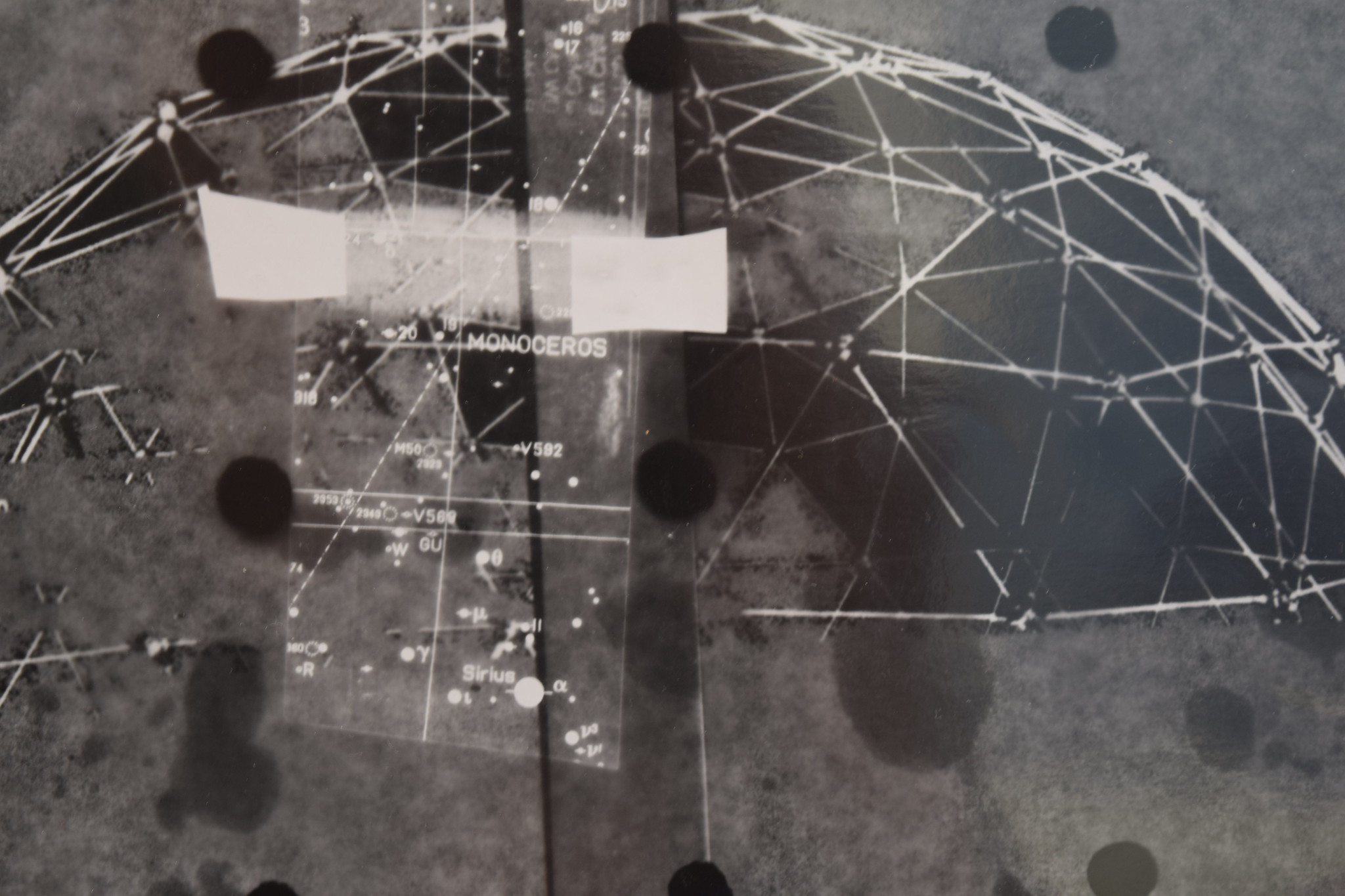
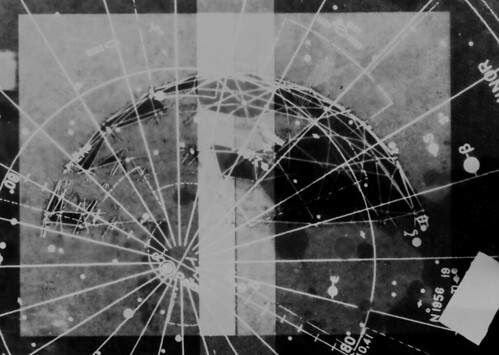
When you make photograms, without the use of a camera, you can indeed call that abstract photography, as the lens and the corresponding registration medium are lacking. No longer do you have pictures of reality or objects; you only have their shadows. It is a bit like Plato’s cave, where one could only imagine reality; the objects themselves were not visible.
—Thomas Ruff

Frameworks with Enclosures 6

Of the mason's who built them, we can say that they both designed as they drew, and drew as they designed. But their designing, like their drawing, was a process of work, not a  project of the mind.
Tim Ingold 'Making'

The Mirrored Abbey :  The Photographic Aesthetics of Decay

Nothingness, Nostalgia and the Absence of Reason.
The Aesthetics of Decay, Dylan Trigg,

TRANSPARENT MEDIA : Form,structure, space, enchantment
Double Take
15 APR - 3 JUL 2016

A two-venue exhibition exploring the relationship between drawing and photography, taking place at Drawing Room and The Photographer’s Gallery, London.

Drawing and photography are each considered the most direct, ‘transparent’ media with which to engage with the world.  They share fascinating parallels:  the relationship to the indexical, the blank sheet of paper or surface, graphite and silver, pencil weight and aperture, the sense of an invisible ‘apparatus’ (the camera and pencil), the engagement with surface, light, negative and positive and the trace. Double Take seeks to explore the multifarious ways photography and drawing have been combined and mirrored to extend both practices into new arenas in modern and contemporary practices.

“… a freehand sketch diagram that was at the tangent between idea and imagination…if the parti – the first critical diagram – is not made well, it will be difficult for architecture to follow.  If there is no parti, there will be no architecture, only (at best) little more than the utility of construction.  Buried within their early sketches is the germ of a narrative or language.  The early diagrams are reflective conversations with the language of architecture.”

-  Alan Phillips, Brighton, UK


Thursday, 16 June 2022

Collage/Assemblage : Architectural Blueprint and Historical Garment (detail/archive) Winchester 2011

Collage : Architectural Blueprint and Historical Garment (detail) 2011 by Russell Moreton


The Unfolded Garment
Embracing Subjectivity
Pierced Assemblage on Photogram

What is Philosophy?
Gilles Deleuze, Felix Guattari


Their book is a profound and careful interrogation of what it might mean to be a 'friend of wisdom', but it is also a devastating attack on the sterility of what has become, when 'the only events are exhibitions and the only concepts are products which can be sold'. Philosophy, they insist, is not contemplation, reflection or communication, but the creation of concepts

Assemblage/Garden Design : Architectural Plan/Victorian Corset
Blueprint, Photogram and Collage.

a thousand plateaus
Deleuze, Guattari

Assemblage

The beauty of the assemblage is that, since it lacks organization, it can draw into its body any number of disparate elements. The book itself can be an assemblage, but its status as an assemblage does not prevent it from containing assemblages within itself or entering into new assemblages with readers, libraries, bonfires, bookstores, etc.


Becoming
Body Without Organs
Nomad
Rhizome
Smooth Space
State
War Machine


Saturday, 28 May 2022

Mesh/Material/Light : Cyanotype Process/Indexical Remains

Cyanotype is a photographic printing process that produces a cyan-blue print. Engineers used the process well into the 20th century as a simple and low-cost process to produce copies of drawings, referred to as blueprints. The process uses two chemicals: ammonium iron(III) citrate and potassium ferricyanide.

The English scientist and astronomer Sir John Herschel discovered the procedure in 1842.[1] Though the process was developed by Herschel, he considered it as mainly a means of reproducing notes and diagrams, as in blueprints.[2] It was Anna Atkins who brought this to photography. She created a limited series of cyanotype books that documented ferns and other plant life from her extensive seaweed collection.[3] Atkins placed specimens directly onto coated paper, allowing the action of light to create a silhouette effect. By using this photogram process, Anna Atkins is regarded as the first female photographer.[4]


Sunday, 6 March 2022

The Film Stilled : Photograms/Assemblages/ Reading Texts

The Film stilled, Raymond Bellour pdf, Chris Marker

Spatial Apparatus : Pinhole Photography/Cyanotype,  Tate Turbine Hall.

From the photogram to the pictogram : on Chris Markers La Jetee, Reda Bensmaia.
Camera Obscura, Sept 1990.

Nostalgia and La Jetee
Karla Huebner

The Mirrored Abbey :  The Photographic Aesthetics of Decay

Nothingness, Nostalgia and the Absence of Reason.
The Aesthetics of Decay, Dylan Trigg,

The Custodians, Richard Cowper 1976.
https://russellmoreton.wordpress.com/

Humanity : An Emotional History
Stuart Walton. 2004

Fear
Anger
Disgust
Sadness
Jealousy
Contempt
Shame
Embarrassment
Surprise
Happiness

Camera/Room Obscura : Physical Contact Print
Light Writing : Surface Architectures
Kilquhanity, Scotland.

Sculptural Form/Everyday Interior (Bramdean)
Scarred Time/Photographic Surface/Negative