Showing posts with label pinhole camera. Show all posts

Tuesday, 25 November 2025

Photography/A Fragmentary Whole : The Temporal Flow of Things


Postmodern : Ever Changing, Fleeting, Positive, Nihilistic,

"There are no simple concepts. Every concept has components and is defined by them.
It therefore has a combination [chiffre]. It is a multiplicity, although not every multiplicity
is conceptual...
Not only do Descartes, Hegel, and Feuerbach not begin
with the same concept,
they do not have the same concept of beginning...
Every concept has an irregular
contour defined by the sum of its components,
which is why,
from Plato to Bergson,
we find
the idea of the concept being a
matter of articulation,
of cutting and
cross-cutting.
The concept is a whole because it totalizes
its components, but it is
a fragmentary whole.
Only on this condition can it escape the
mental chaos
constantly threatening it, stalking it, trying to reabsorb it."


-- Gilles Deleuze and Felix Guattari, What is Philosophy?, pp. 15-16.

“Philosophy is really homesickness,” says Novalis: “it is the urge to be at home everywhere.”

Literary cartography is not a literal form of mapmaking, after all; rather, it involves the ways and means by which a given work of literature functions as a figurative map, serving as an orientating or sense-making form.

Lukács’s Literary Cartography:
Spatiality, Cognitive Mapping, and The Theory of the Novel
Robert T. Tally Jr.


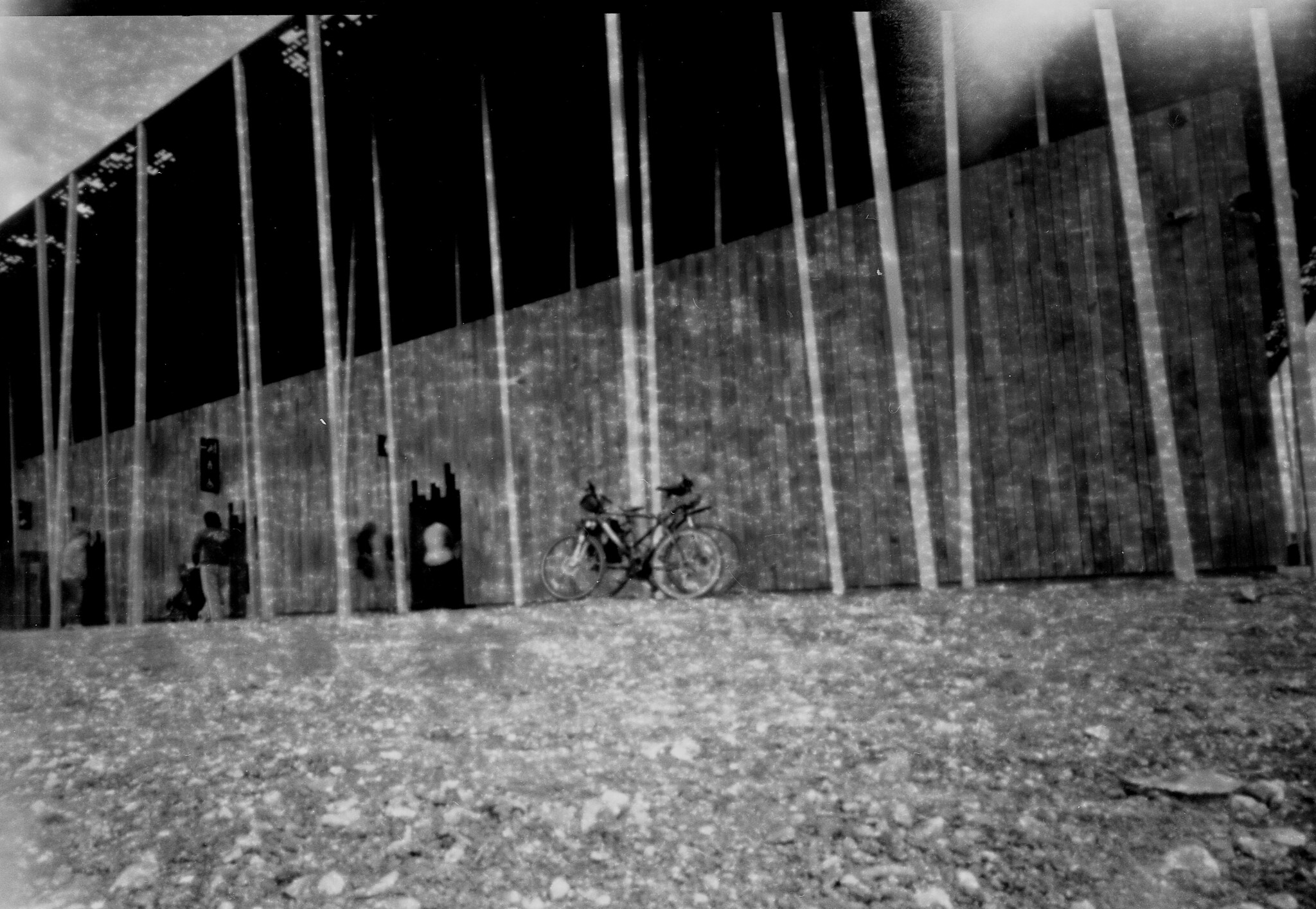
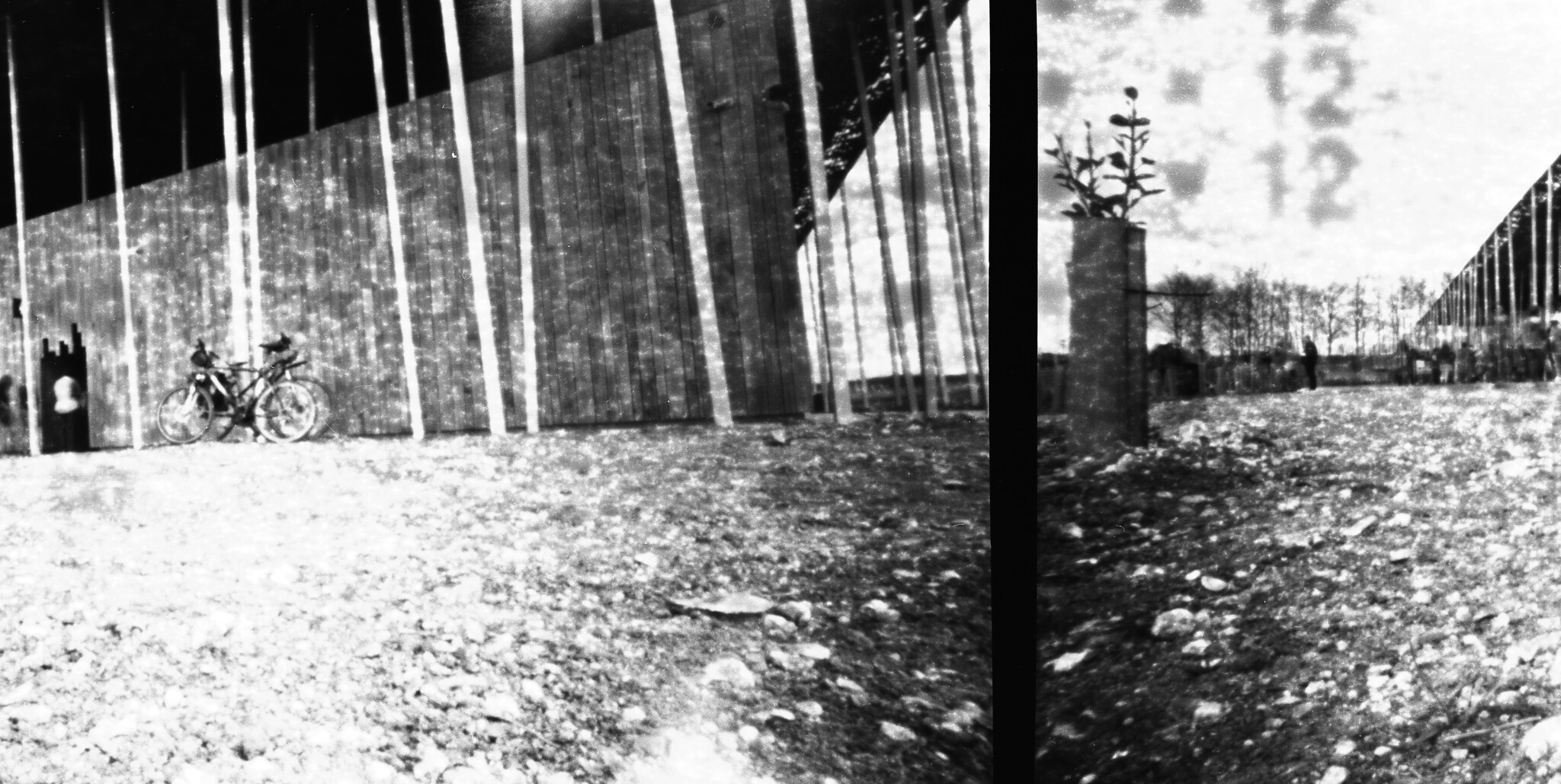
Path : Circular, Stonehenge

Transparency,time and matter #2

Camera Obscura : Kilquhanity 2011. #4

Dark Session's : Shadowy speculations in the pottery. Kilquhanity 2011

Silver gelatin prints from a "room obscura" set up at Kilquhanity, Scotland 2011 as part of "Back to Free school, Drawing out the Archive".

Blue Spaces : White Absences #2
https://visualartpractices.wordpress.com/

Walking into Emergent Landscapes : Covehithe Beach
Deeper Darkness, Photographic Memory/Process, Metonymy, Negative,
Analogue, Negated Nocturne. Walking, Others, Presence, Becoming,

London/Millennium Bridge : Architectural Abstracts/Drawing Traces


Monday, 3 July 2023

Existential/Propositional Objectiles/ Spaces/In-Situ : Architecture/Photography/Installation


Objects exist in the between of a proposition and its eventness, and in so doing they are inciting co-constellations of movement-moving.

Forsythe invites his students to participate in creating physical solutions to dramaturgic propositions. 
Erin Mannng.

Sainsbury Centre, University of East Anglia

Tate Modern

Millennium Bridge

VITRINES : Art Spaces/interiors/interventions
Anselm Kiefer :
In the Annenberg Courtyard
Velimir Khlebnikov: Fates of Nations: The New Theory of War
Anselm Kiefer often dedicates his works to intriguing figures of the past, be they poets or philosophers. This piece is one of a number of works emerging from Kiefer’s ongoing exploration of the Russian Futurist avant-garde writer, theorist and absurdist Velimir Khlebnikov (1885-1922).

After years of study, Khlebnikov concluded that a major sea battle took place every 317 years, or multiples thereof. Kiefer celebrates this heroic and ludicrous activity with a work that is both monument and anti-monument. Measuring almost 17 metres in total and consisting of two large glass vitrines, Kiefer creates a transparent, reflective sea-scape in three dimensions that calls to mind the Romantic sublime of painters from JMW Turner to Caspar David Friedrich. Kiefer uses the frames of the vitrines to stage a mysterious drama, in which viewers, seeing each other and their own reflections, become participants.

Paul Soldner
Sainsbury Centre
University of East Anglia


2017/2023


Wednesday, 2 March 2022

Landscape/Slow Motion : A Porous Atmosphere of Light/Experience


River Waveney, Mendham Marshes


The Experience of Landscape

Landscape, Memory and Desire

An Anthropology of Landscape

Up, Across and Along

Slow Motion

Tim Ingold


Friday, 25 February 2022

Temporal Surfaces : Moments of Translucency/Halting the camera's fetishising gaze.


Pinhole oil drum camera traps a vechicle in its shallow and temporal depth of field. 
Sun Street , Canterbury.

Digital prints from two paper negatives (45cmx60cm)


DSC_1930 Sun Street : Canterbury
DSC_1926 Sun Street : Canterbury
DSC_1927 Sun Street : Canterbury
DSC_1944 Sun Street : Canterbury
DSC_1931 Sun Street : Canterbury


Monday, 17 May 2021

Mechanisms of Seeing : 10 Days at the Laundry/Axisweb post migrations

MOLECULAR SIEVE, is a performative analysis of “this place” utilising the simple properties of the pinhole camera. This appropriated apparatus makes visible the extrusive nature of time as it is deposited on the photographic surface. 


The extended durations required to register “place” impart a sense of dwelling as recorded by the apparatuses passive gaze. These surfaces record and register a relation constructed by the architecture of the chamber and what is beyond it. Movements when visible appear as simple abbreviated enactments caught like inclusions within this consolidated and timely consolation of place.


https://www.axisweb.org/p/russellmoreton/#projects


Cameras consist of small voids, the ‘camera’, a lens and photographic film. They are camerae obscurae  that collect light and allow it to meet the surface of the film. But in fact the light comes from the larger void outside the camera. The moment the light has registered on the light-sensitive surface of the film, memories are constructed. The memory is literally conceived in this meeting and is added to life as an additional layer of being. The process through which void meets surface is therefore also about love—the love of ancestors and relatives, but also of life and its conception.

Daniel Libeskind’s building will, when finished, offer a path for the visitor, the path of history that crosses the void of commemoration.