Sunday, 5 March 2023

Wim Delvoye’s Stained Glass Windows


Wim Delvoye’s Stained Glass Windows – Morbid & Spooky
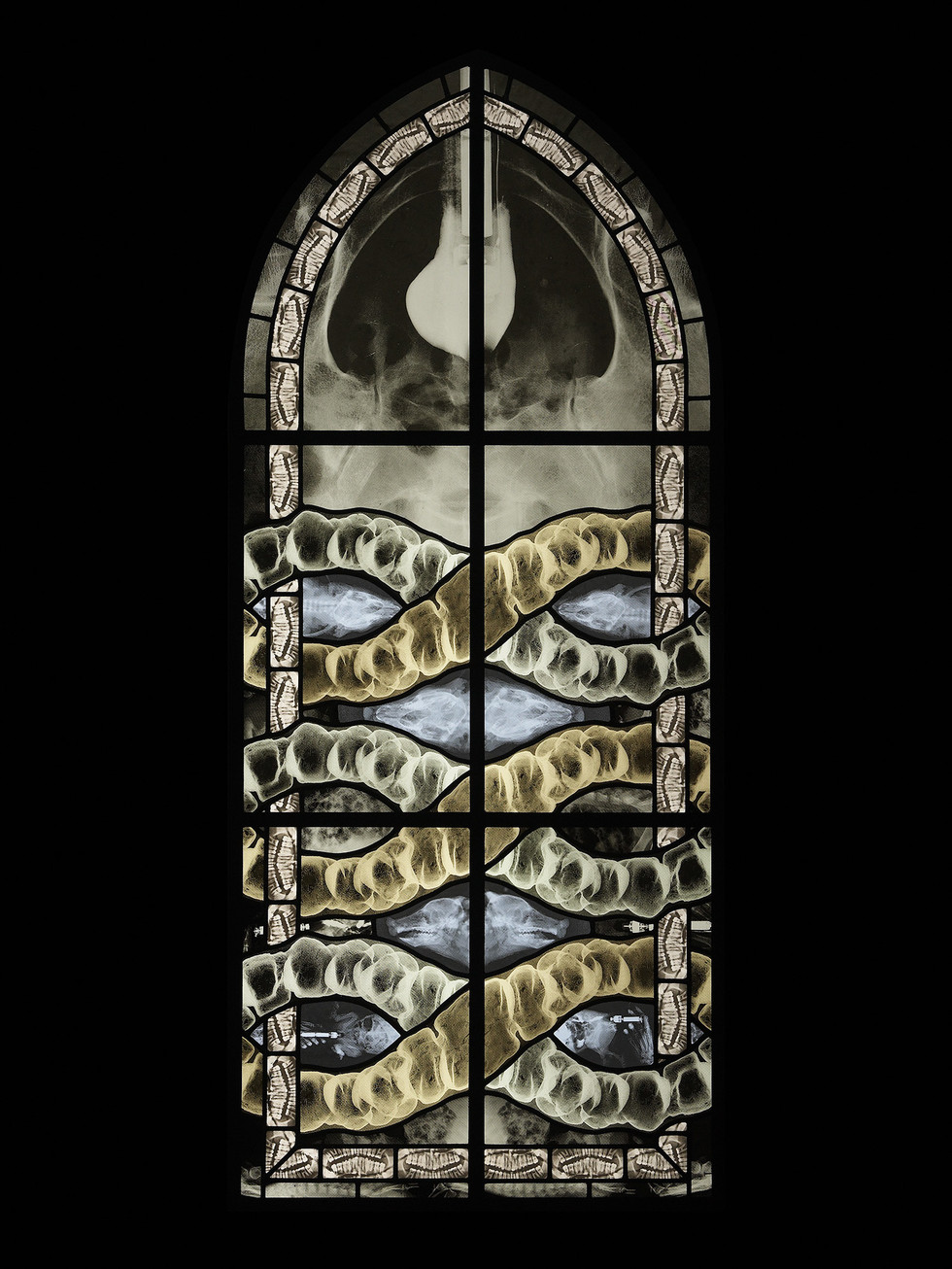
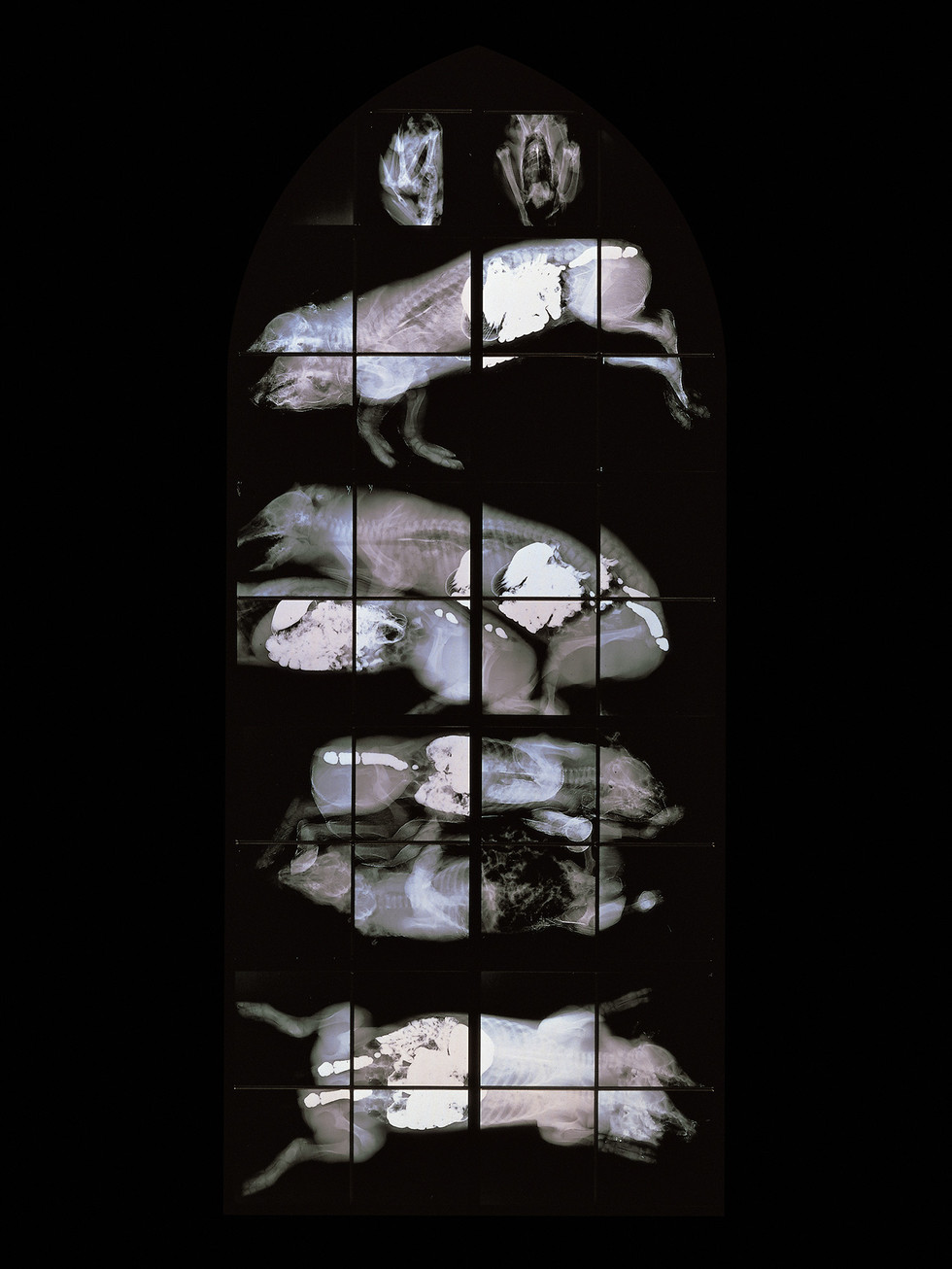
Wim Delvoye - Monday, 2008, steel, x-rays photographs, lead, glass, 83 x 198 cm
Wim Delvoye – Monday, 2008, steel, x-rays photographs, lead, glass, 83 x 198 cm

Wim Delvoye – Stained glass

Belgian artist Wim Delvoye has always had a proclivity for employing the shock factor in his works. Known and designated as a confrontational and revolutionary artist, his works celebrate the paradox.
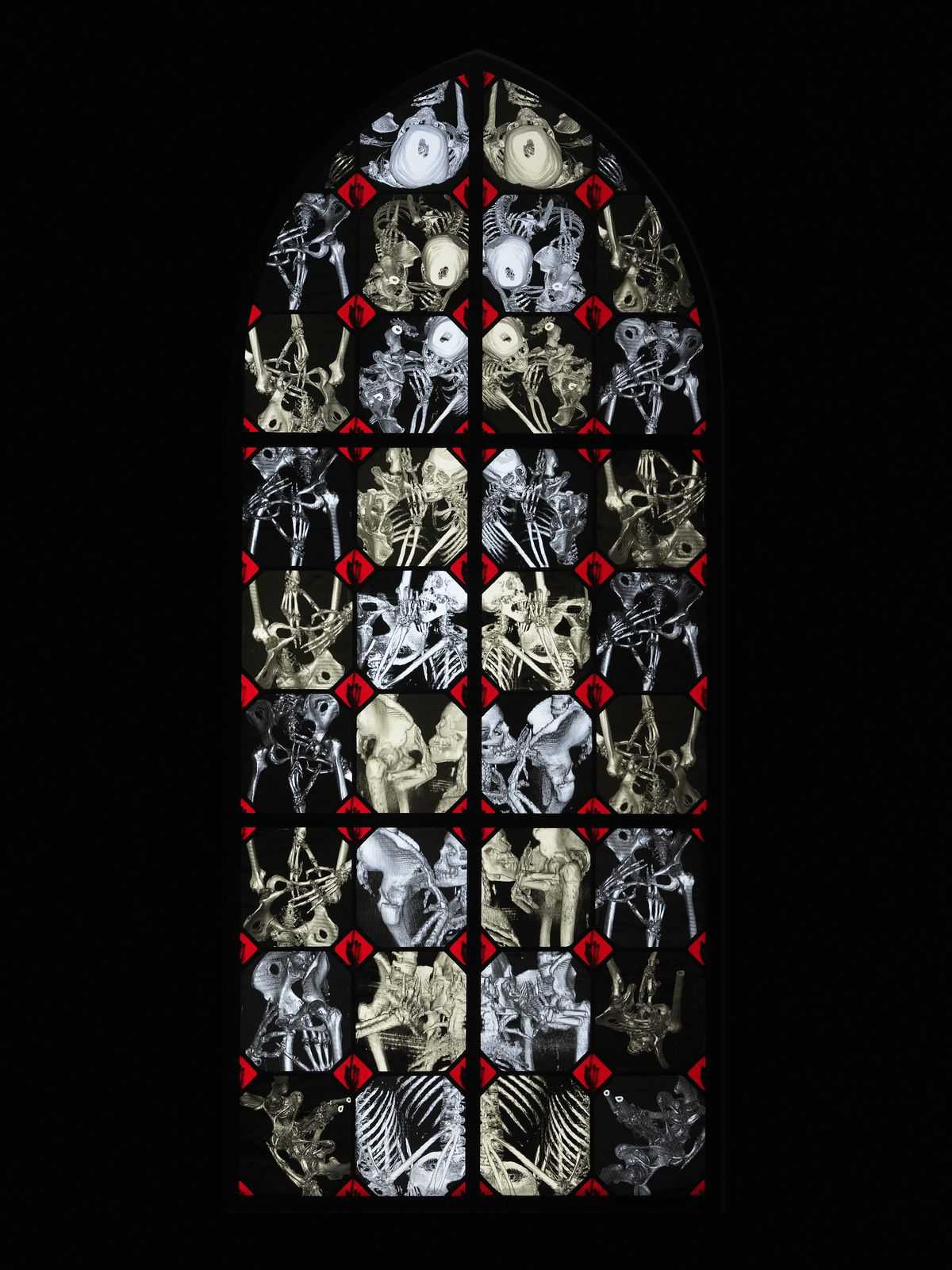
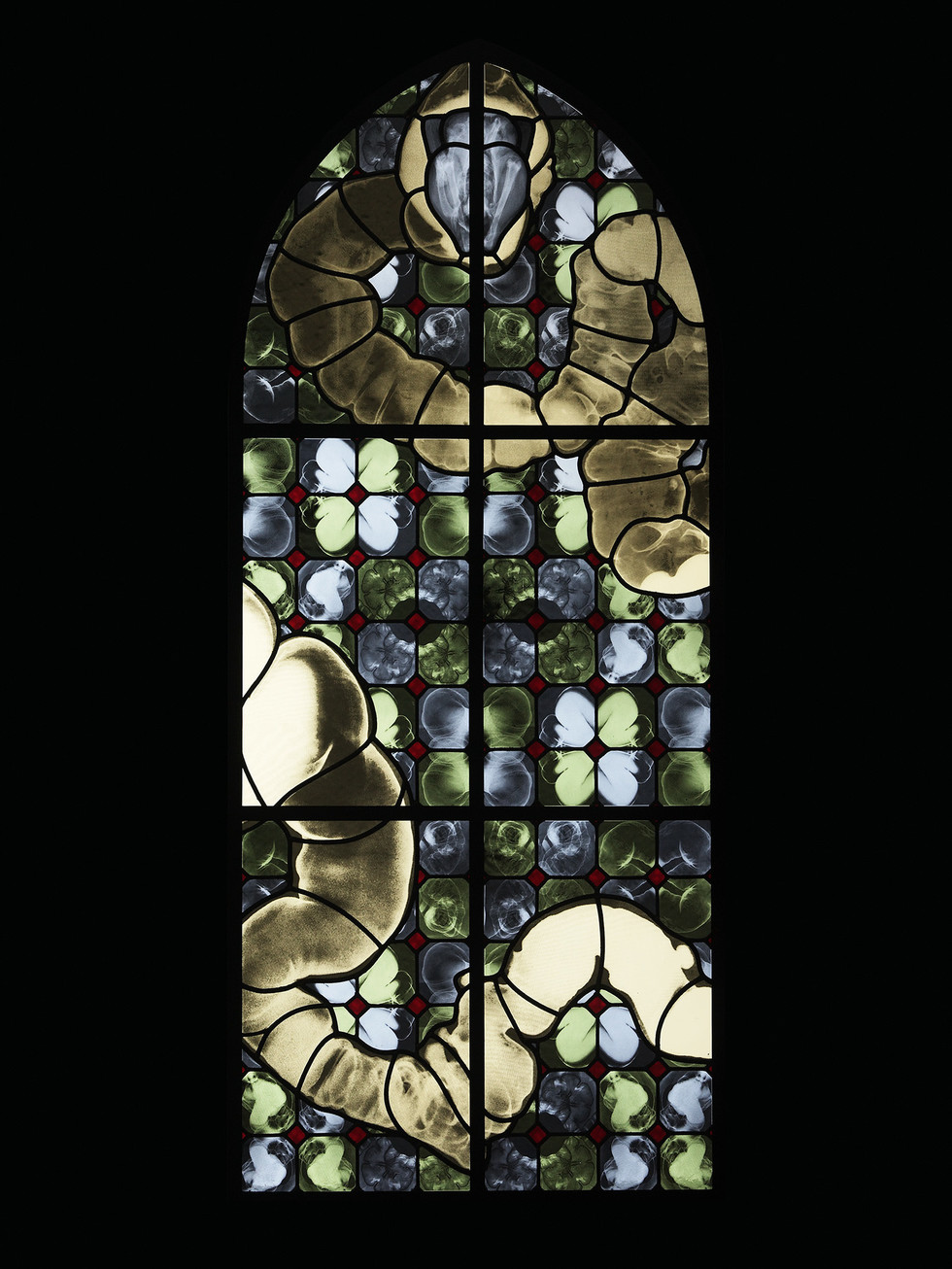
Wim Delvoye - Tuesday, 2008, steel, x-rays photographs, lead, glass, 83 x 198 cm
Wim Delvoye – Tuesday, 2008, steel, x-rays photographs, lead, glass, 83 x 198 cm
Wim Delvoye - Wednesday, 2008, steel, x-rays photographs, lead, glass, 83 x 198 cm
Wim Delvoye – Wednesday, 2008, steel, x-rays photographs, lead, glass, 83 x 198 cm

The artist builds on the Belgian surrealist tradition of combining superficially unrelated components and engaging assorted provoking abstract themes by referencing various styles and movements, including Baroque, Gothic and Rococo conventions.
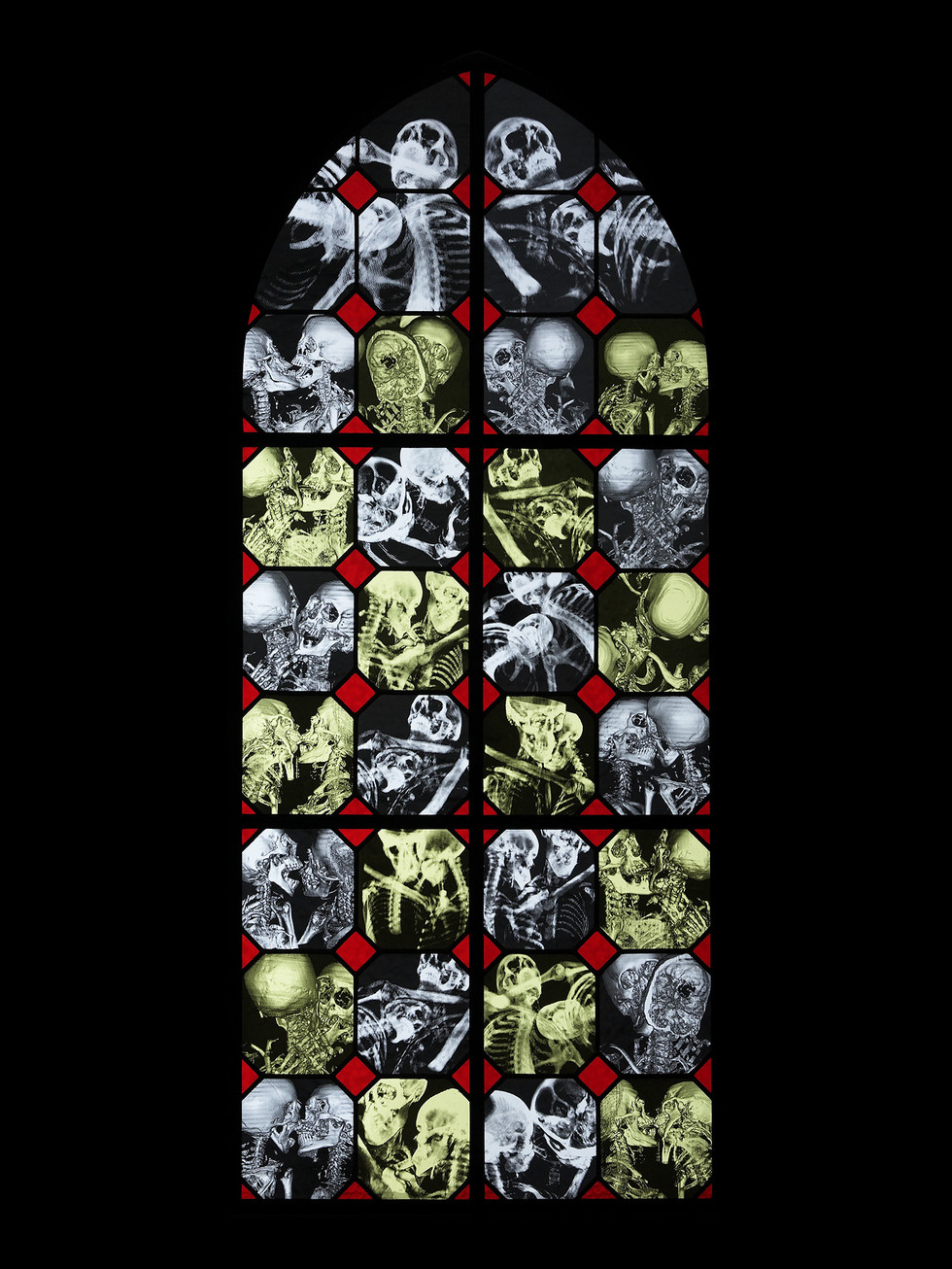
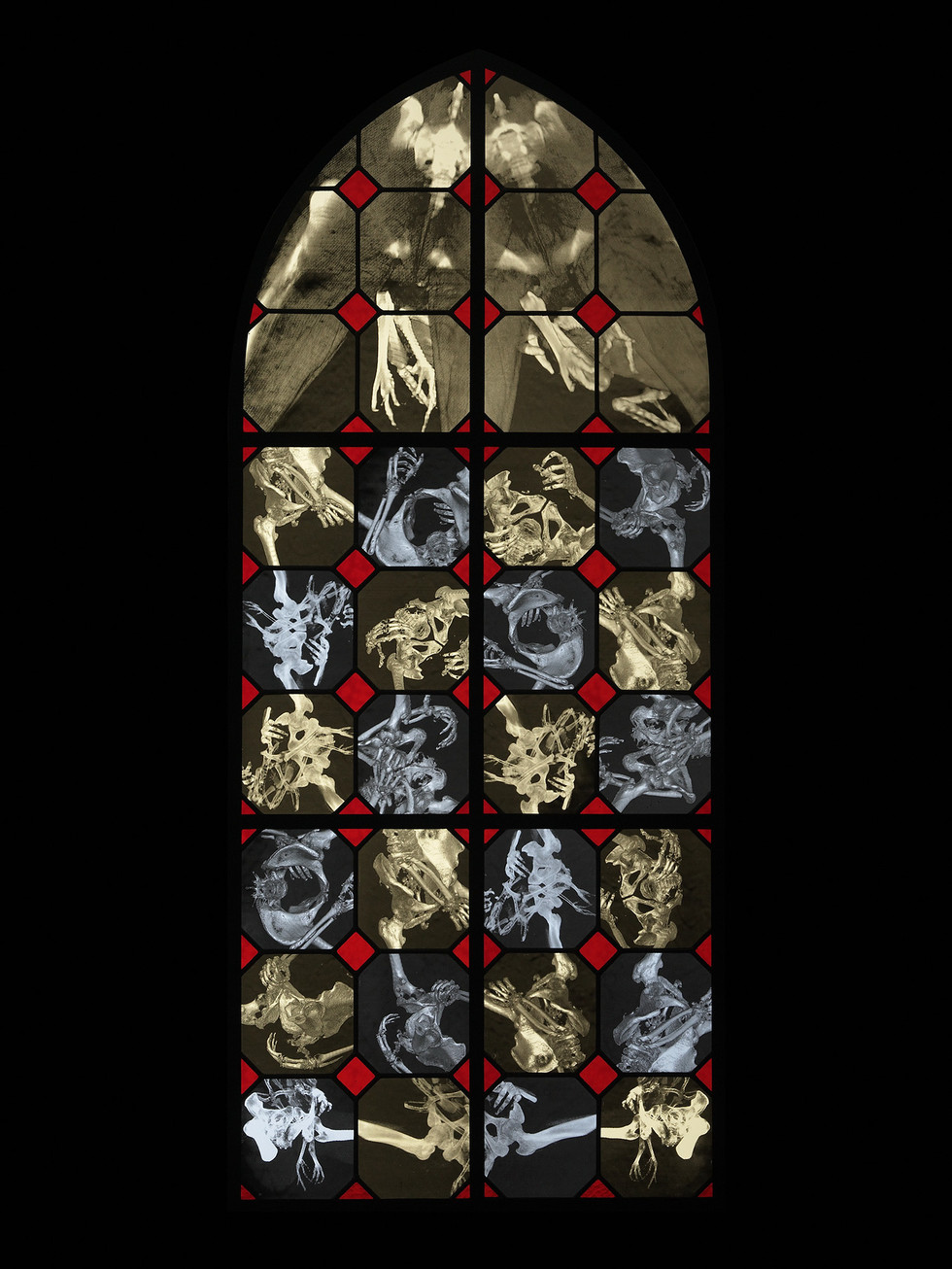
Wim Delvoye - Thursday, 2008, steel, x-rays photographs, lead, glass, 83 x 198 cm
Wim Delvoye – Thursday, 2008, steel, x-rays photographs, lead, glass, 83 x 198 cm
Wim Delvoye - Friday, 2008, steel, x-rays photographs, lead, glass, 83 x 198 cm
Wim Delvoye – Friday, 2008, steel, x-rays photographs, lead, glass, 83 x 198 cm

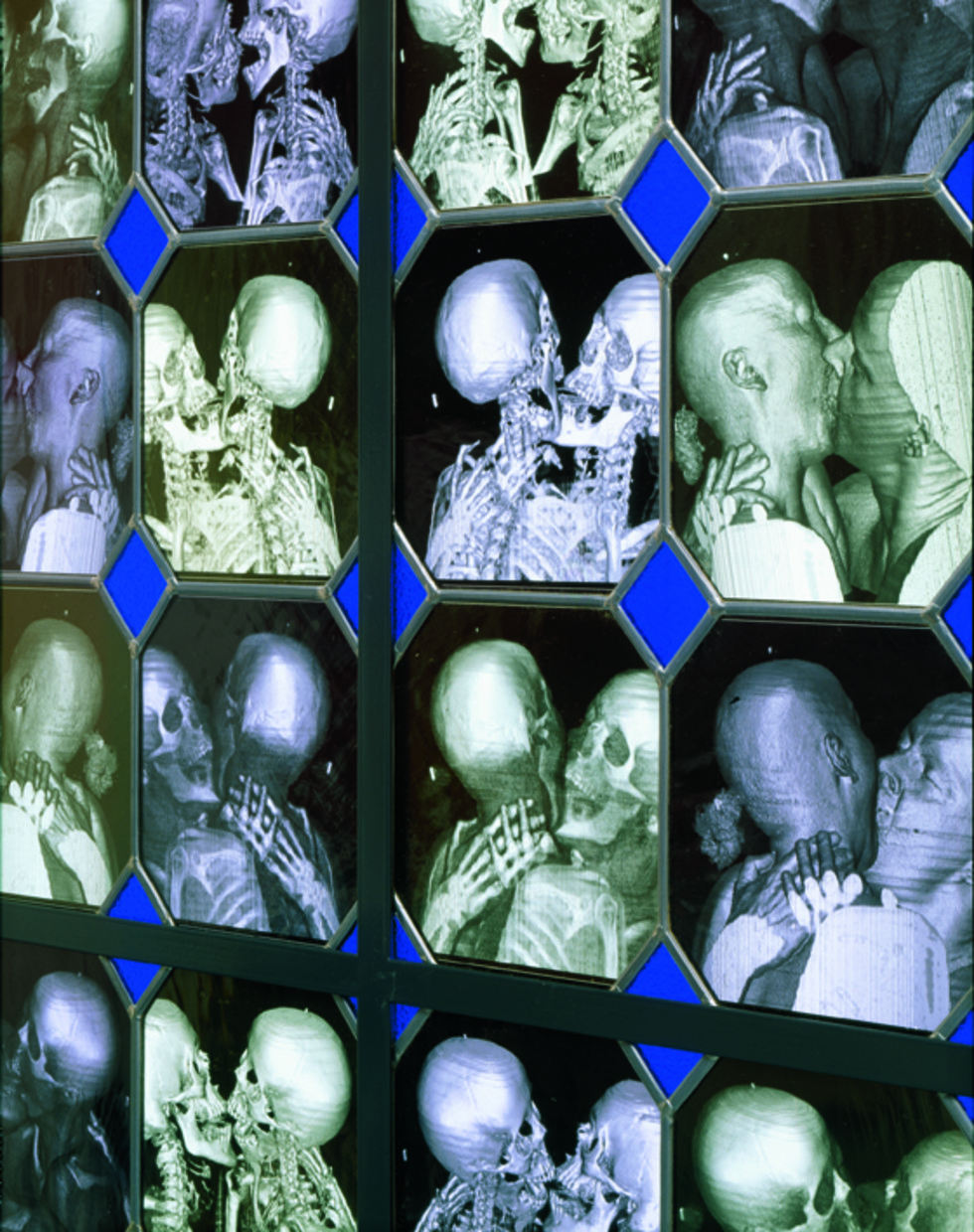
In particular, his Stained Glass series has always been a source of controversy. For this work, Delvoye transformed the way artists approach stained glass designs. Rather than using saintly images and biblical characters for his massive stained glass windows, Delvoye incorporated skeletons of humans involved in passionate embraces, hugging, and kissing between the different panels that make up the windows.
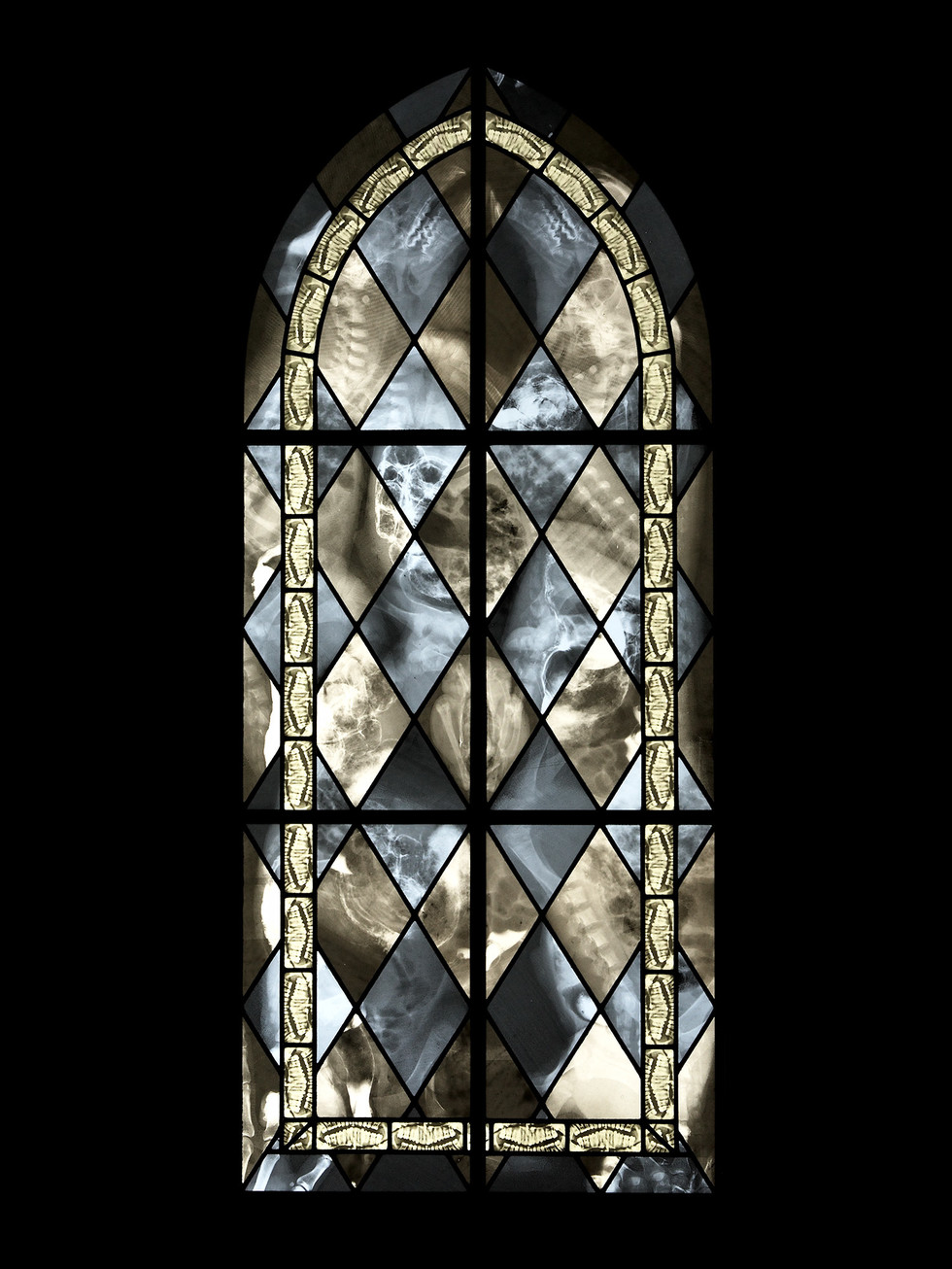
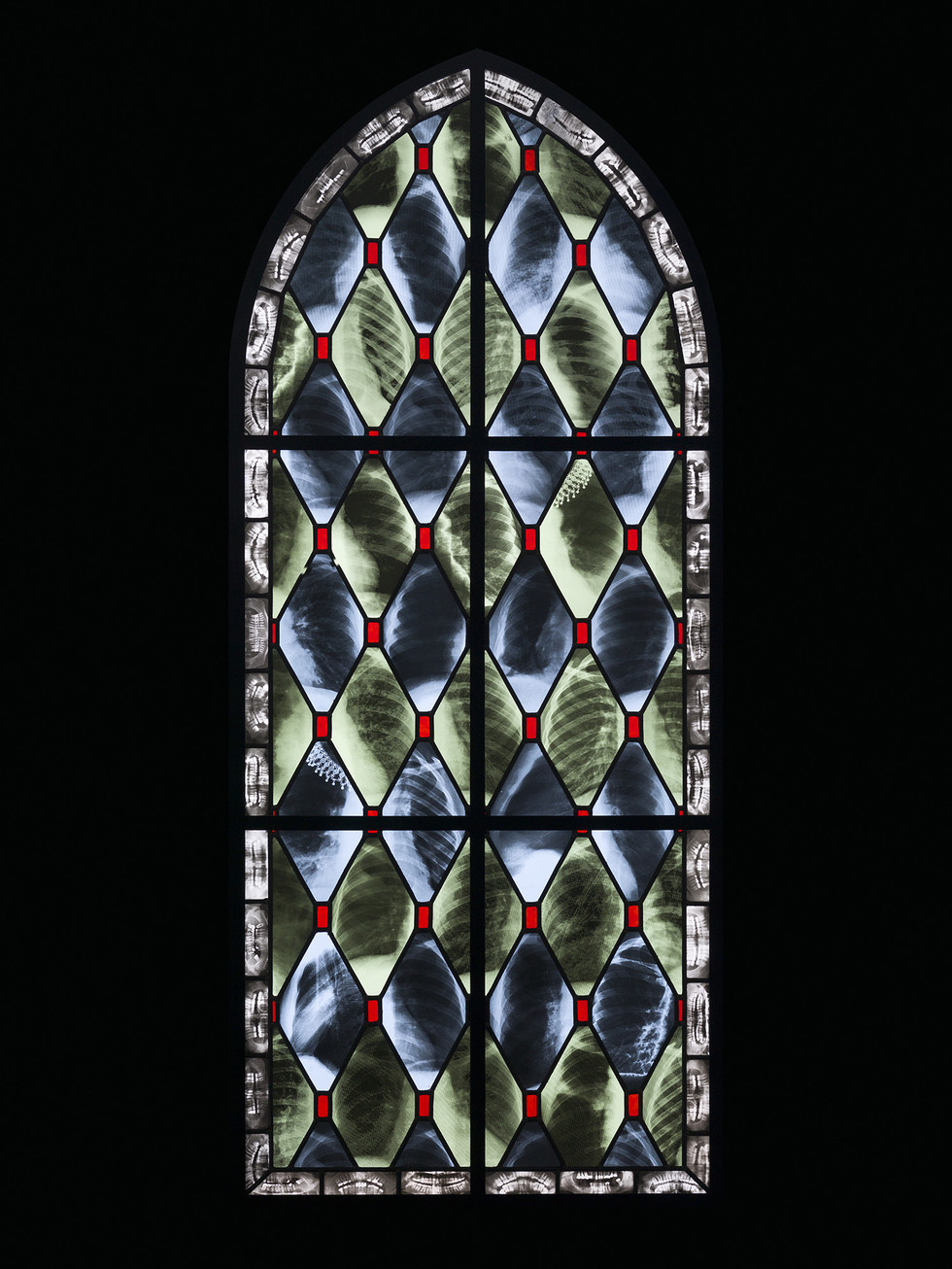
Wim Delvoye - Saturday, 2008, steel, x-rays photographs, lead, glass, 83 x 198 cm
Wim Delvoye – Saturday, 2008, steel, x-rays photographs, lead, glass, 83 x 198 cm
Wim Delvoye - Sunday, 2008, steel, x-rays photographs, lead, glass, 83 x 198 cm
Wim Delvoye – Sunday, 2008, steel, x-rays photographs, lead, glass, 83 x 198 cm

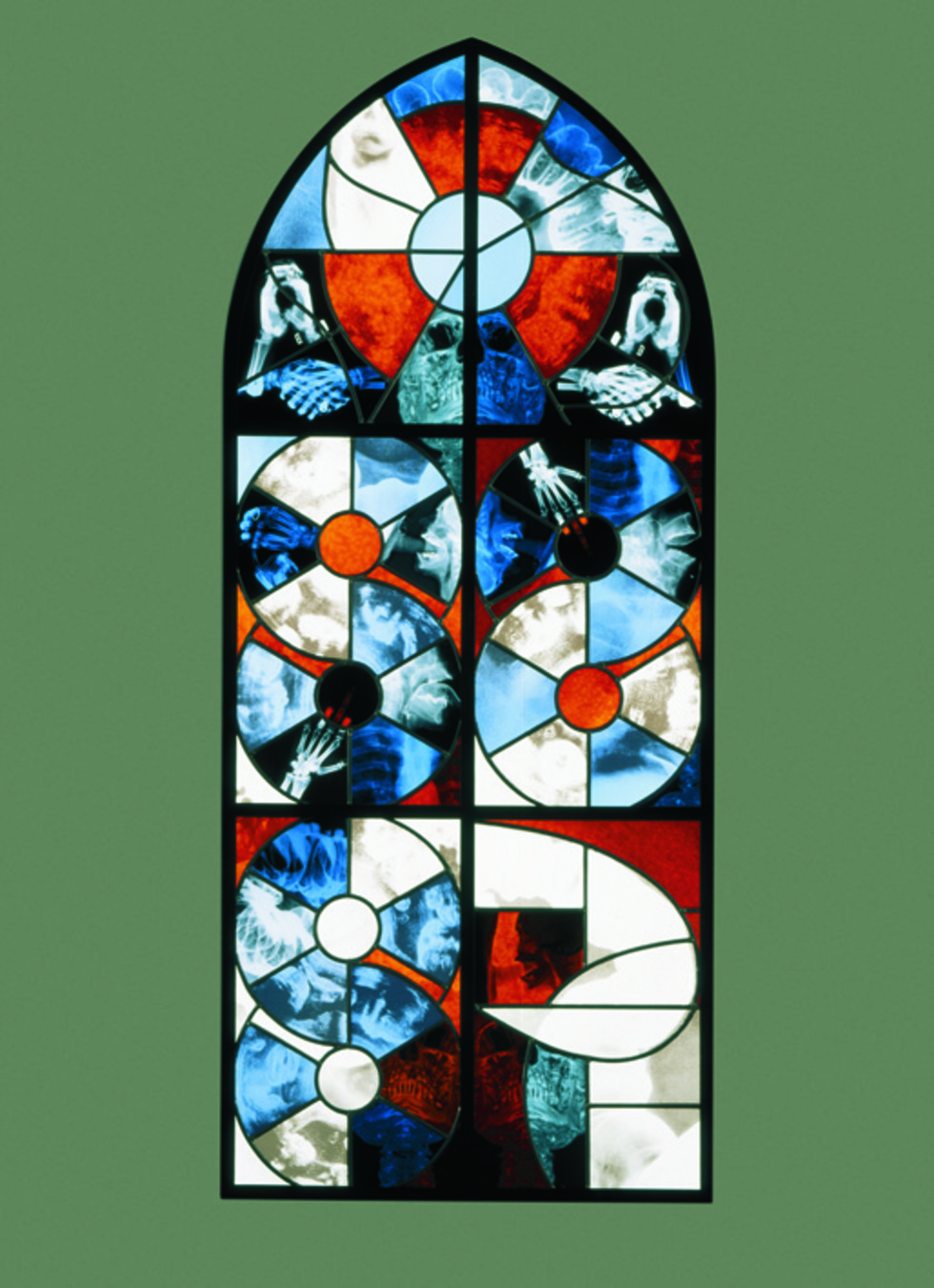
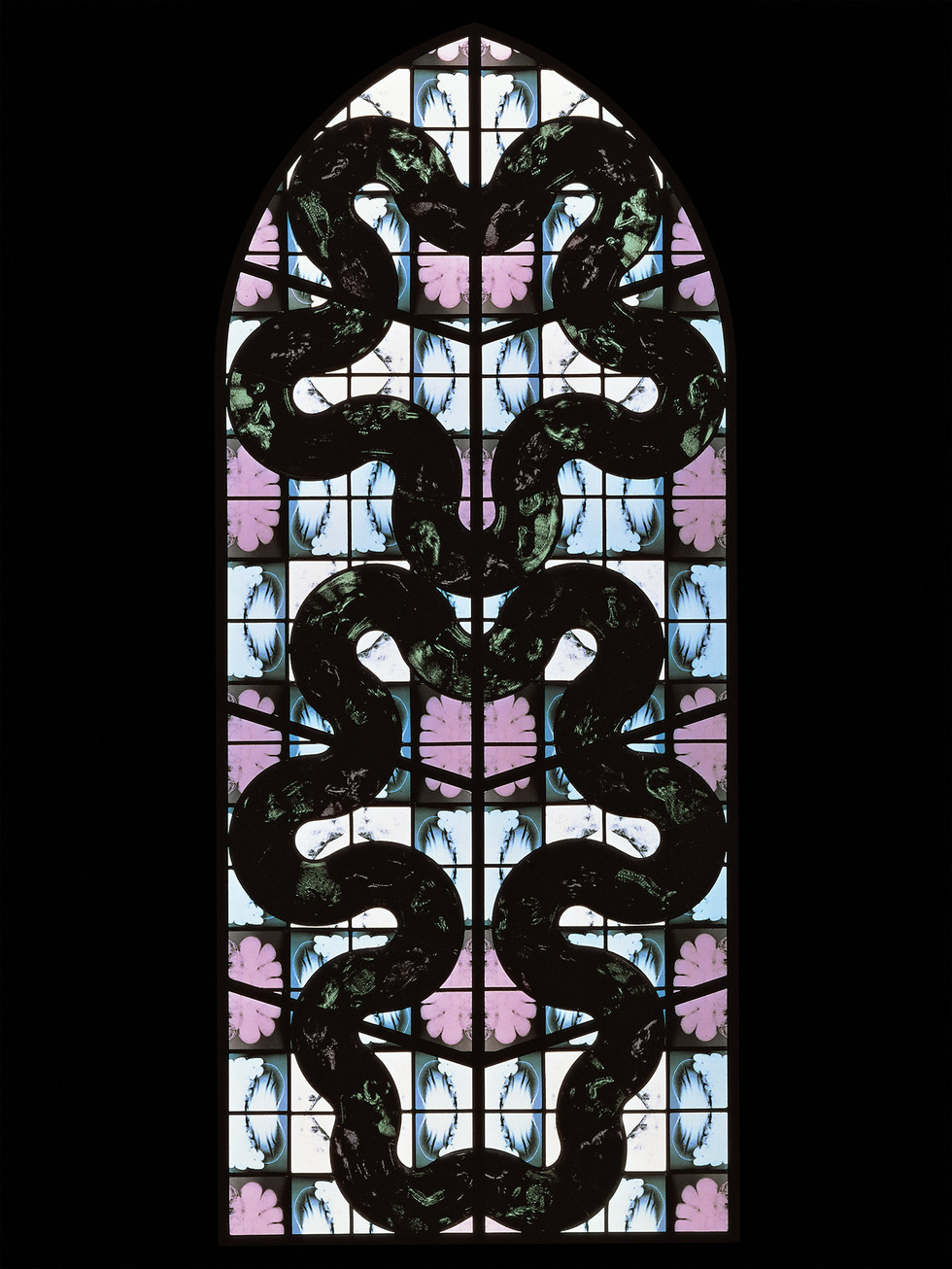
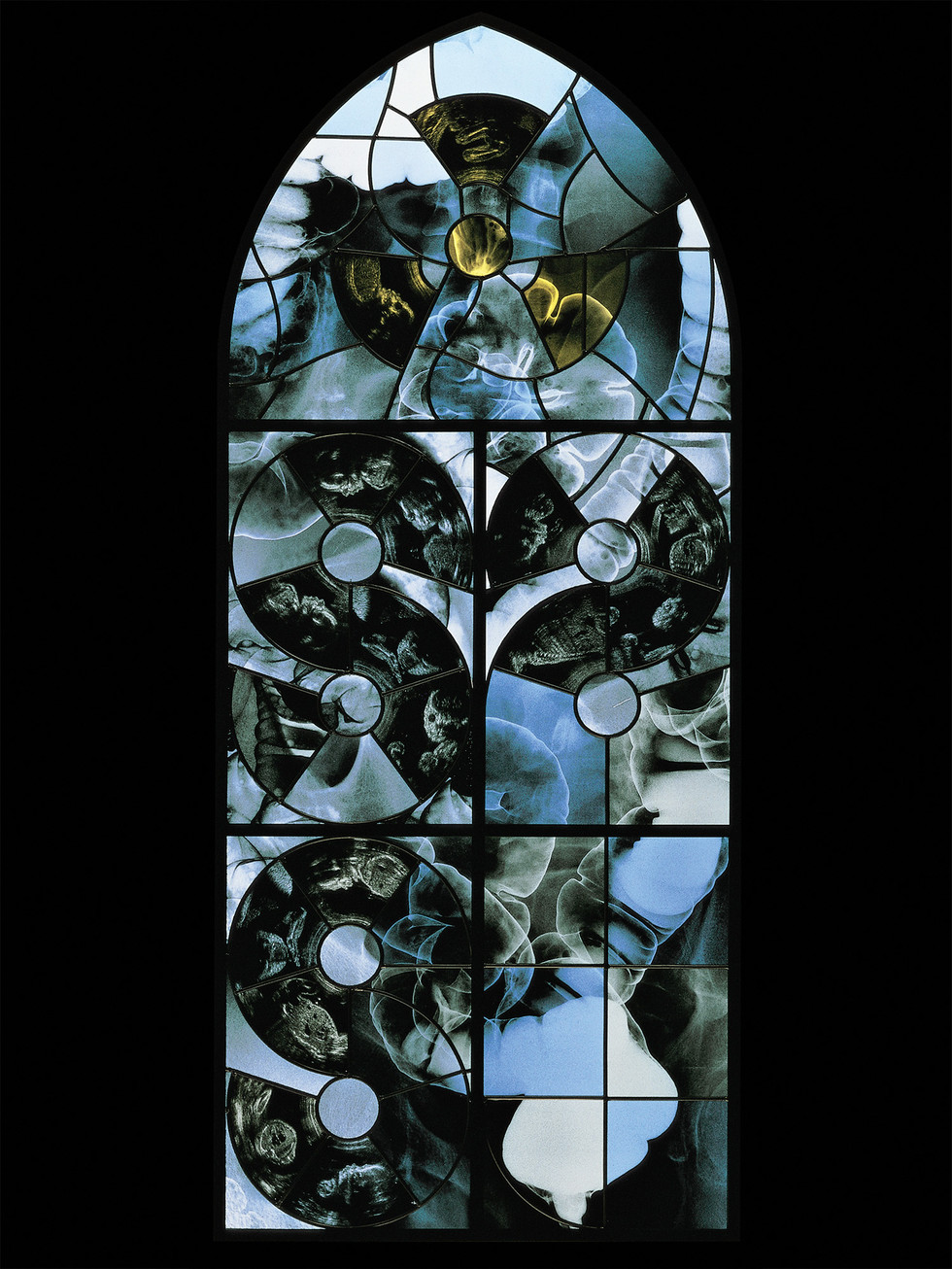
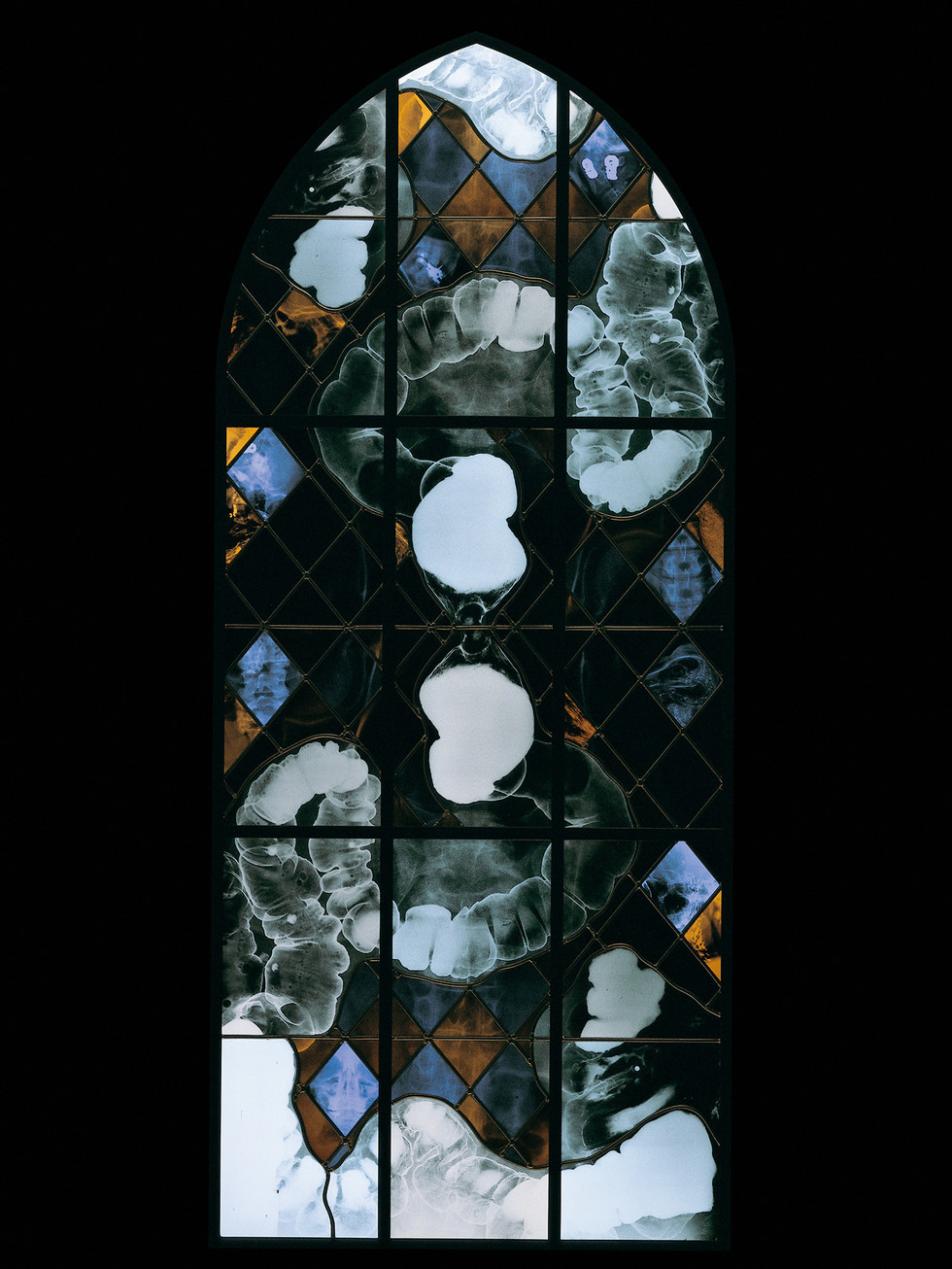
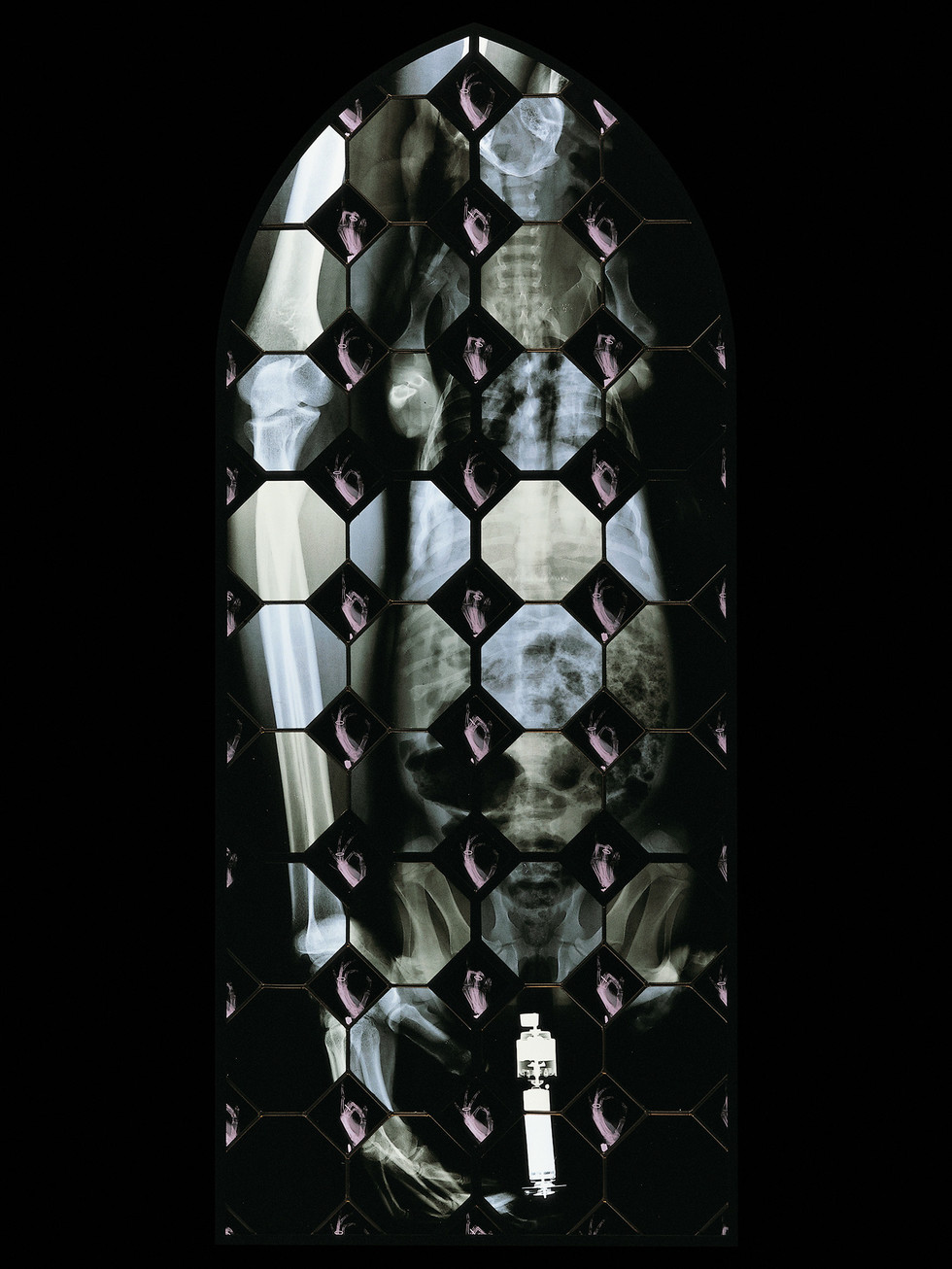
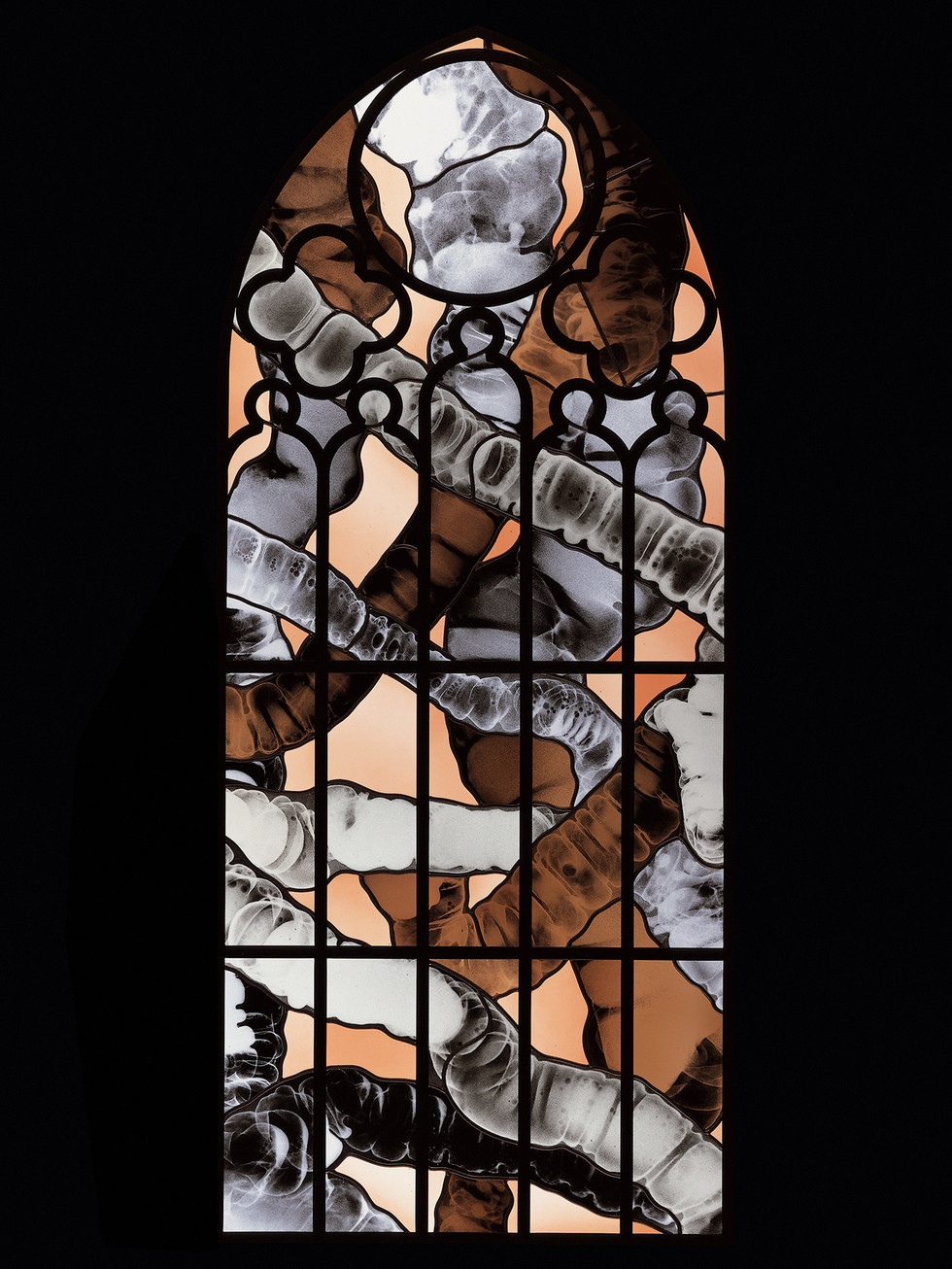
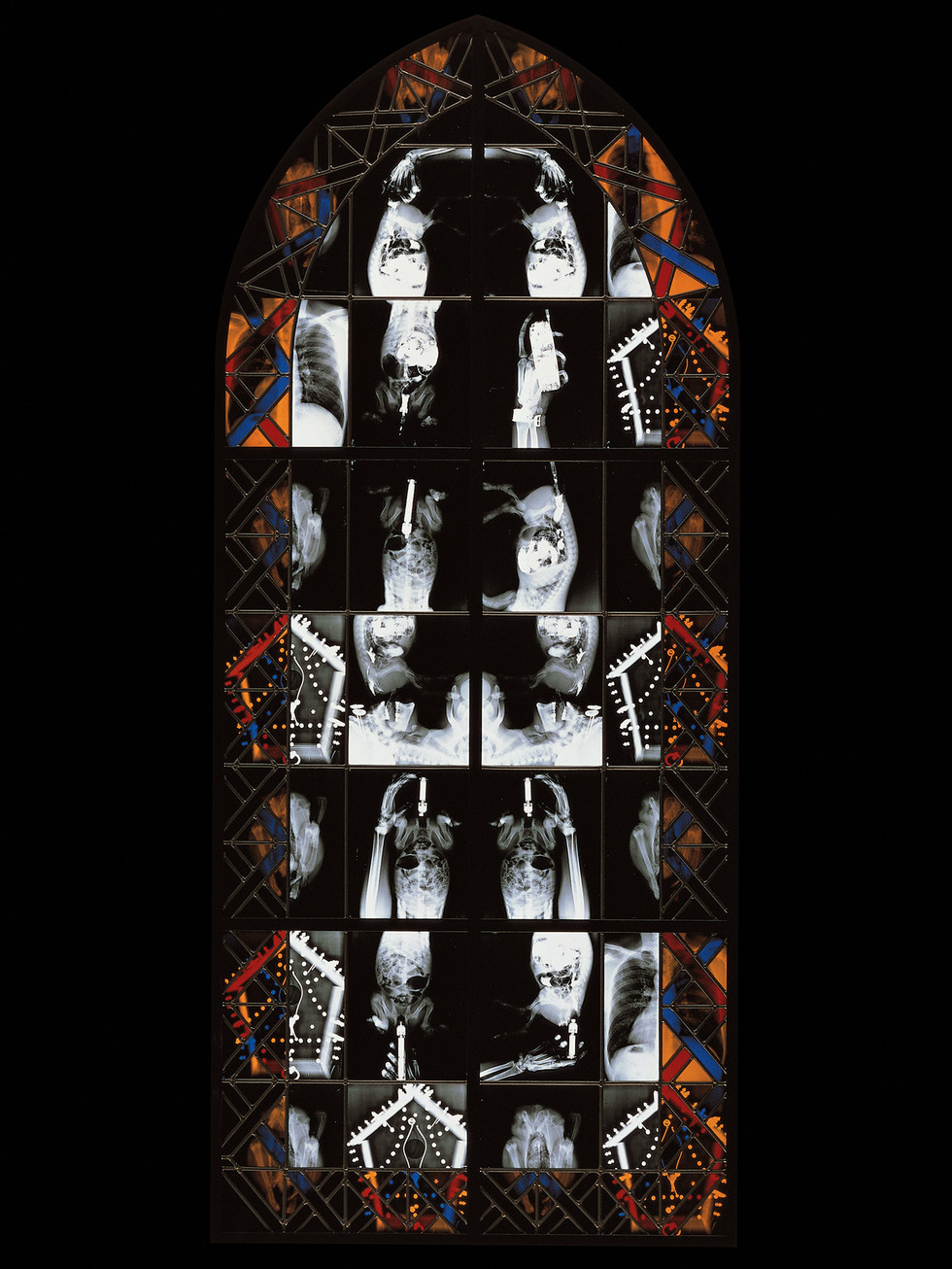
As part of his ongoing sequences of Gothic works, Delvoye created a series of intriguing and peculiar stained glass windows and sculptural works. Stained glass was a popular part of late Medieval art before becoming the main feature of the Gothic Style of architecture. Delvoye commenced on these pieces of Stained Glass work in 1999 using a combination of materials, including glass, lead, steel, and authentic x-rays.
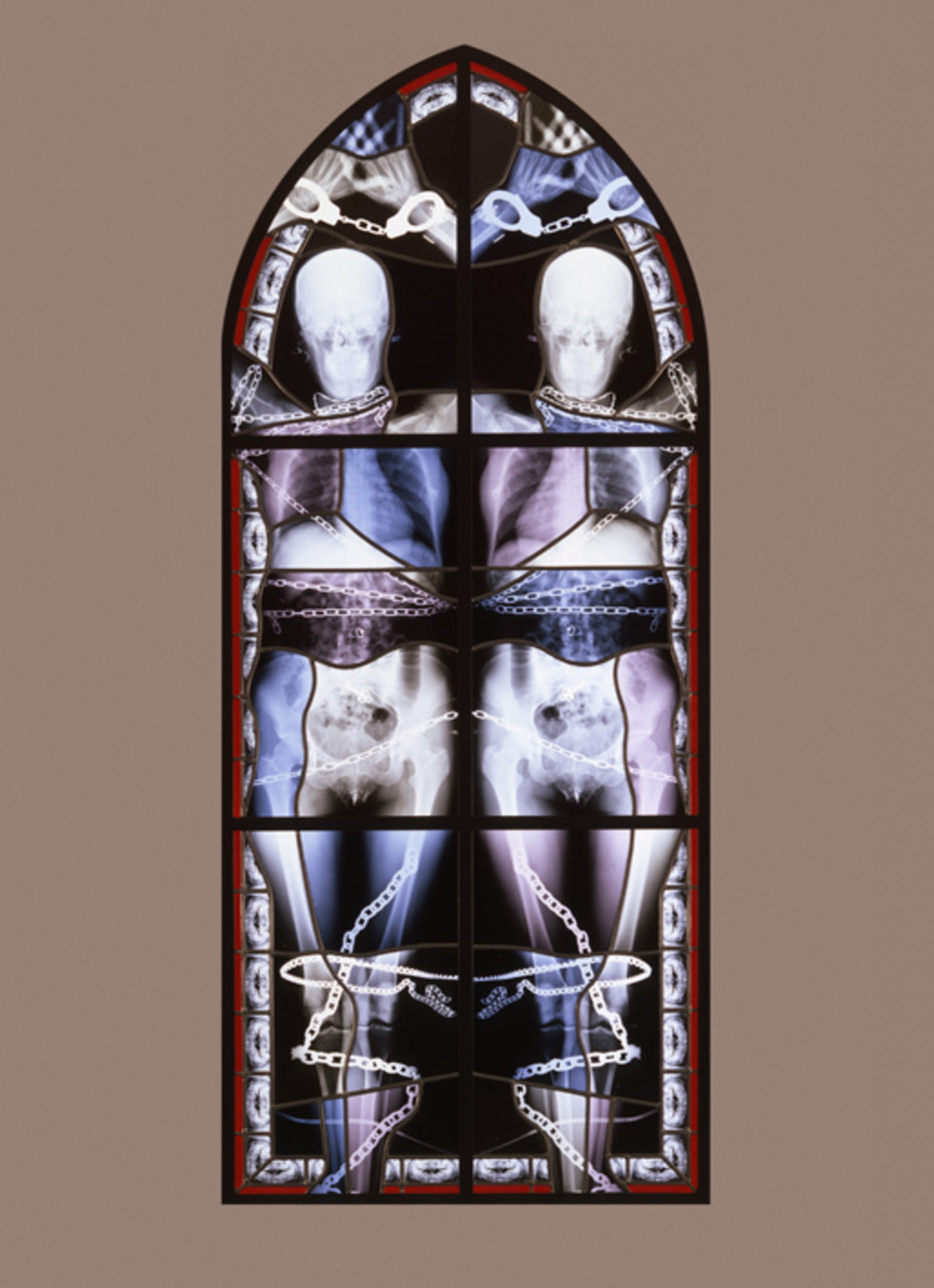
Wim Delvoye - Caliope, 2001-2002, steel, x-ray photographs, lead, glass, 200 x 80 cm
Wim Delvoye – Caliope, 2001-2002, steel, x-ray photographs, lead, glass, 200 x 80 cm
Wim Delvoye - Caliope (detail), 2001-2002, steel, x-ray photographs, lead, glass, 200 x 80 cm
Wim Delvoye – Caliope (detail), 2001-2002, steel, x-ray photographs, lead, glass, 200 x 80 cm

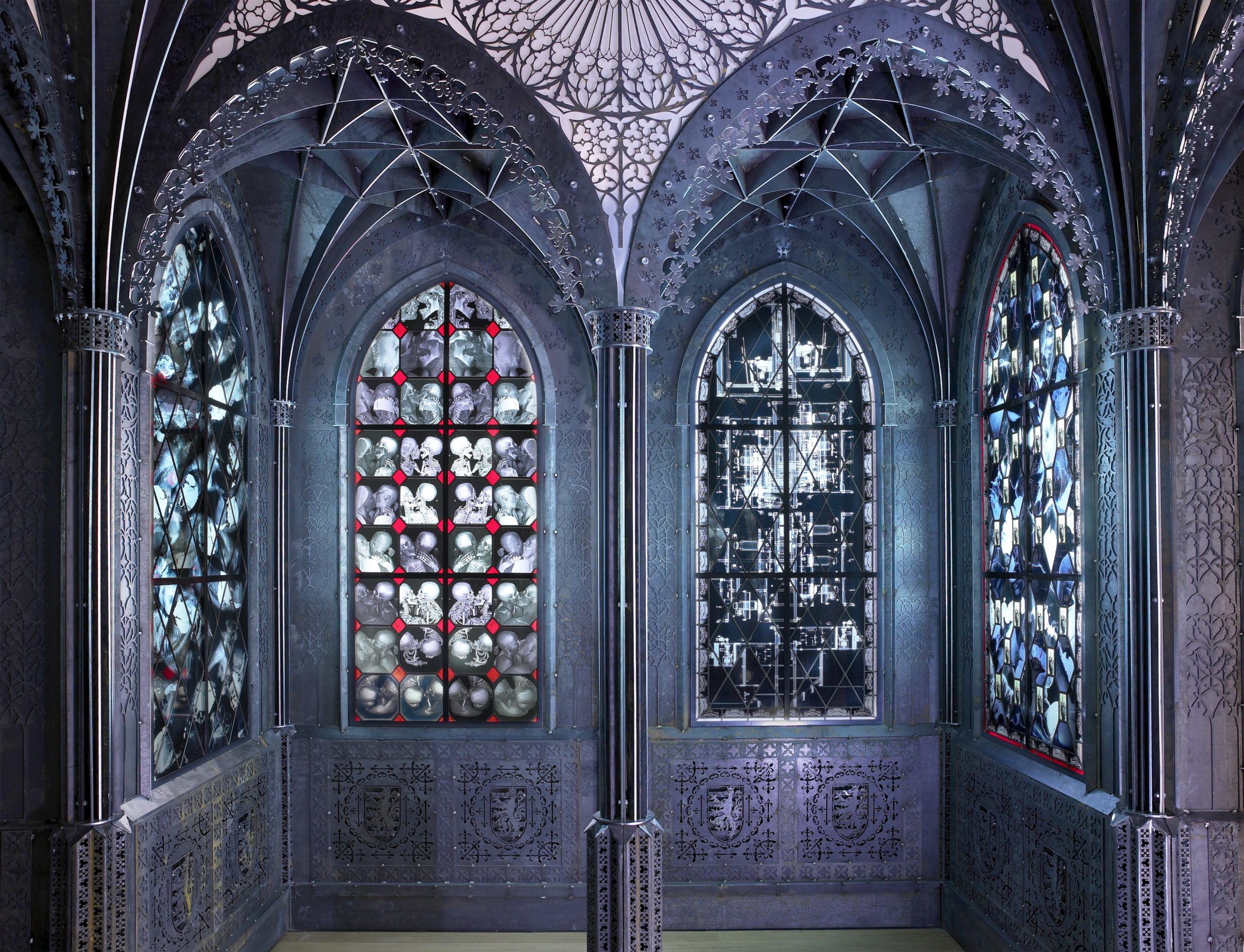
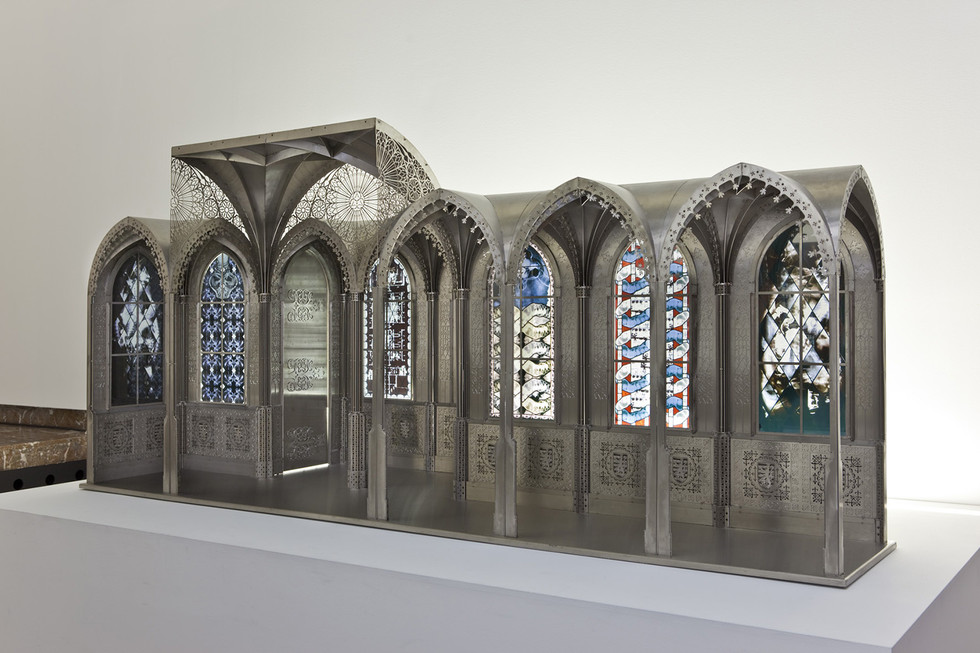
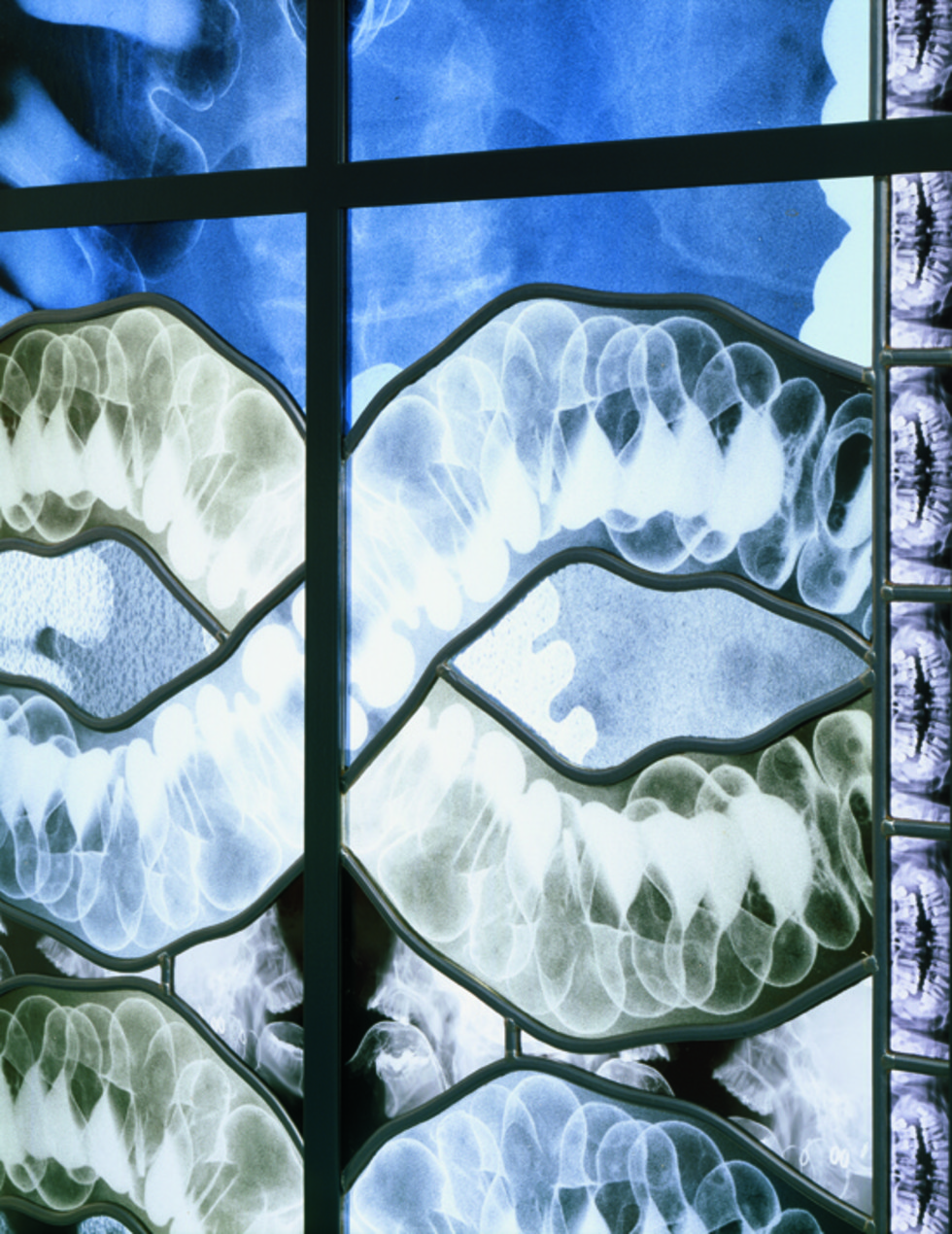
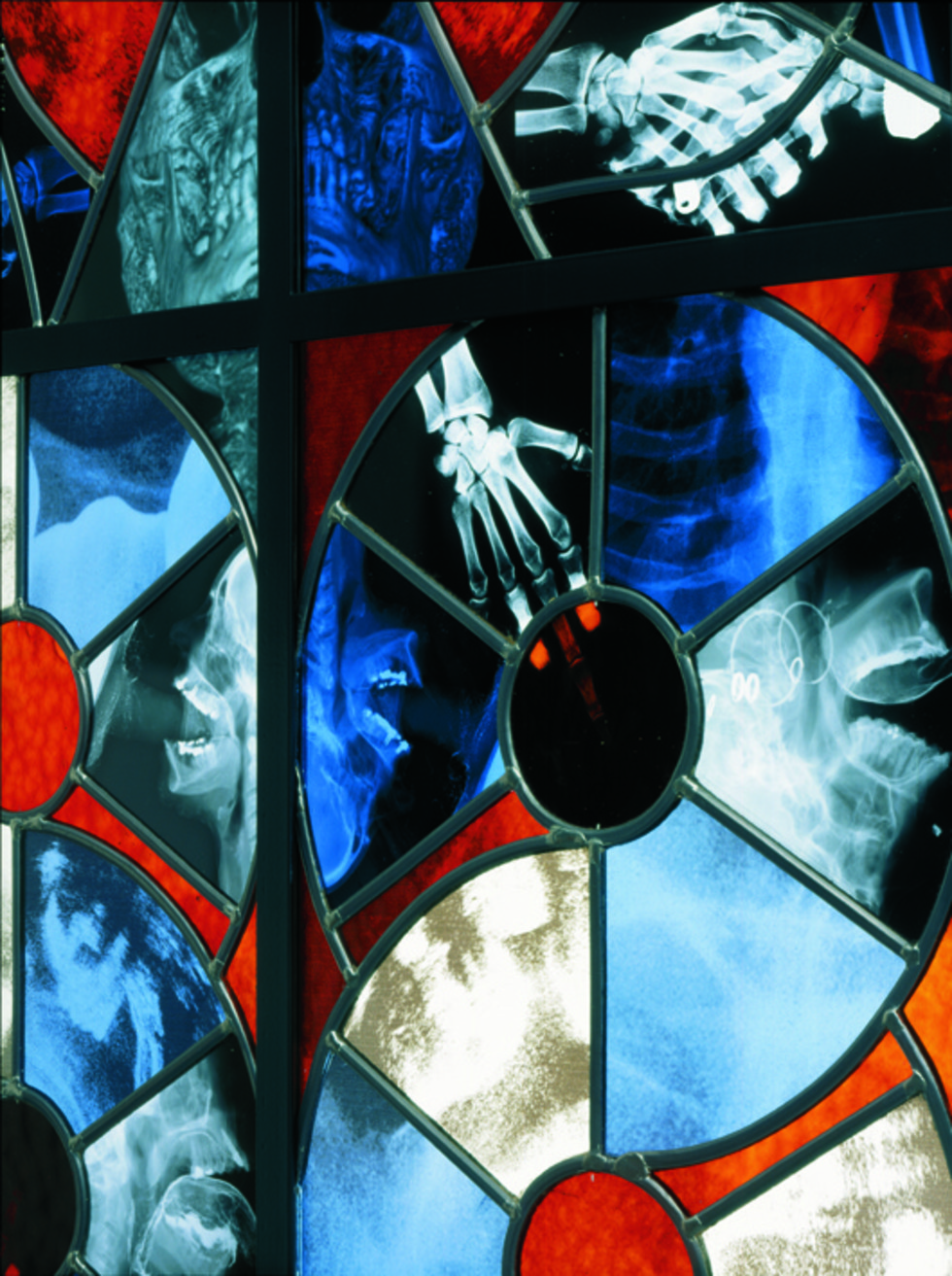
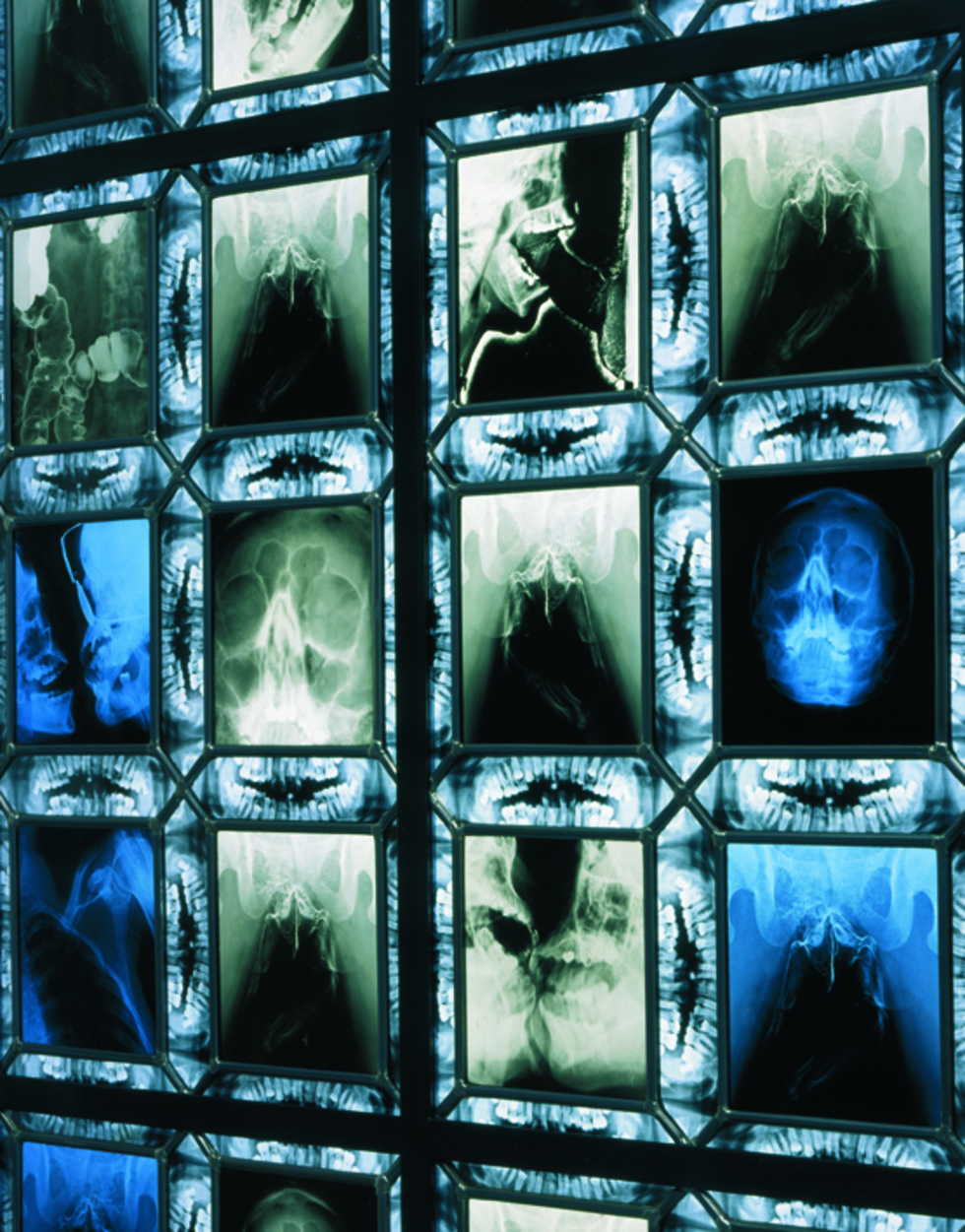
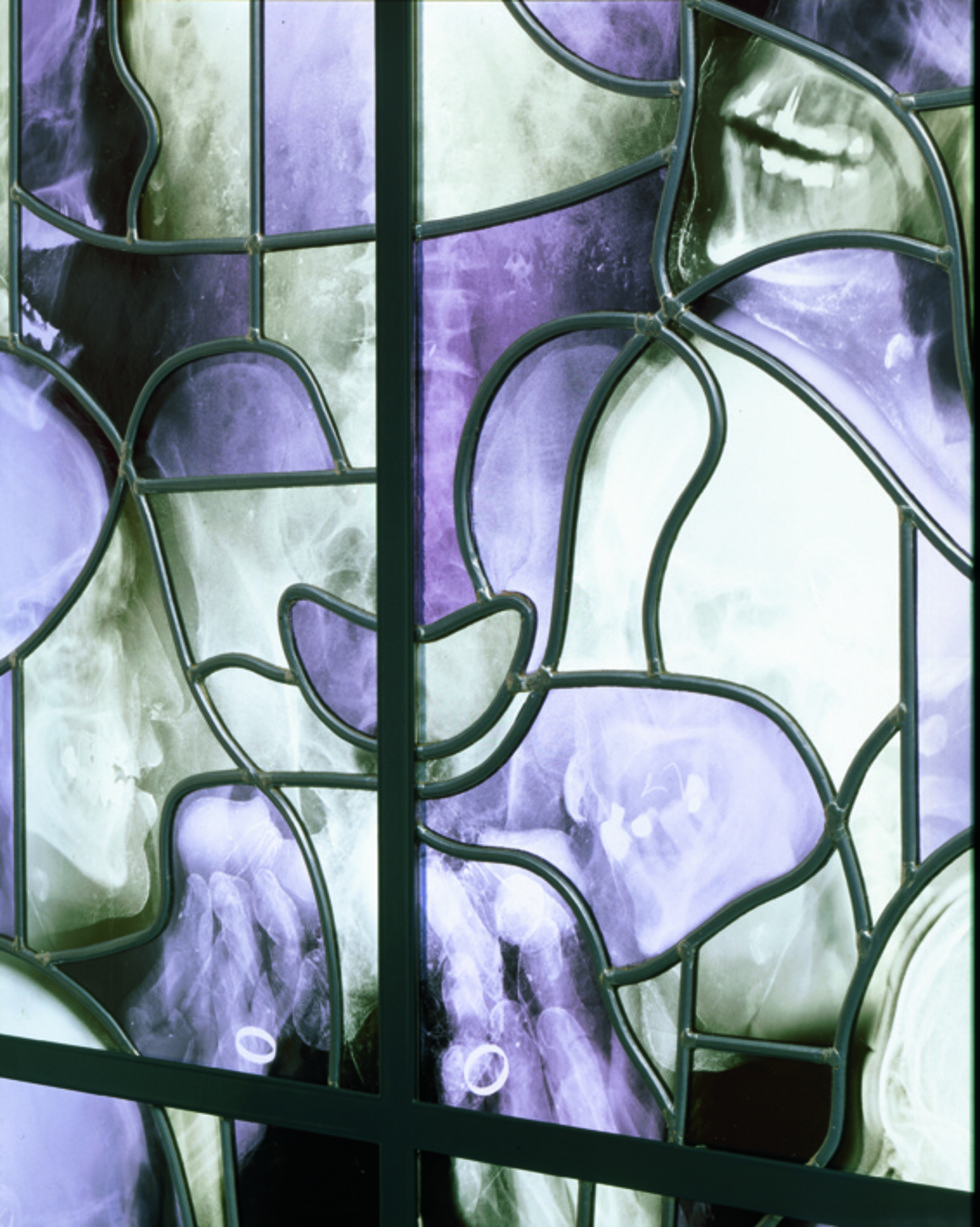
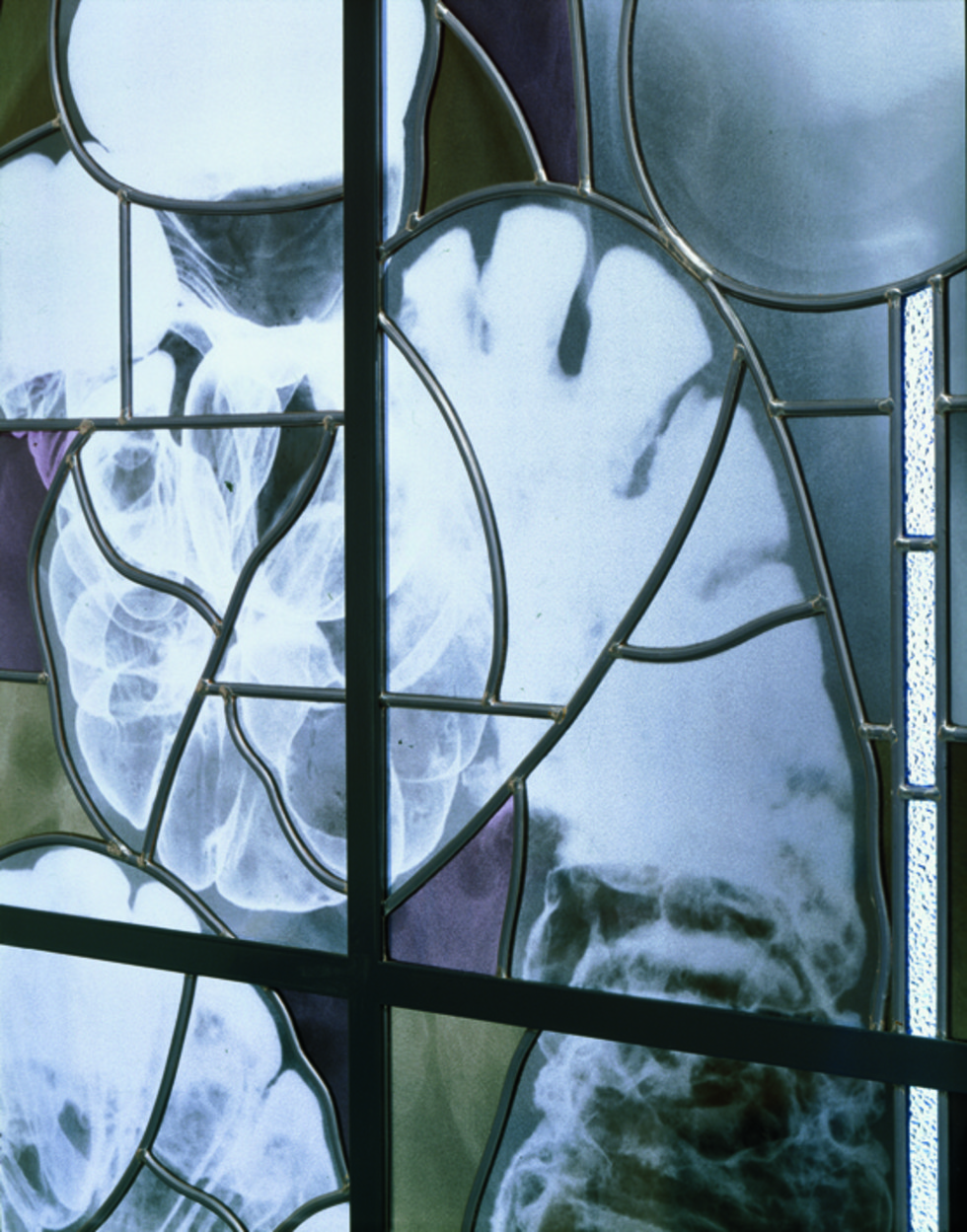
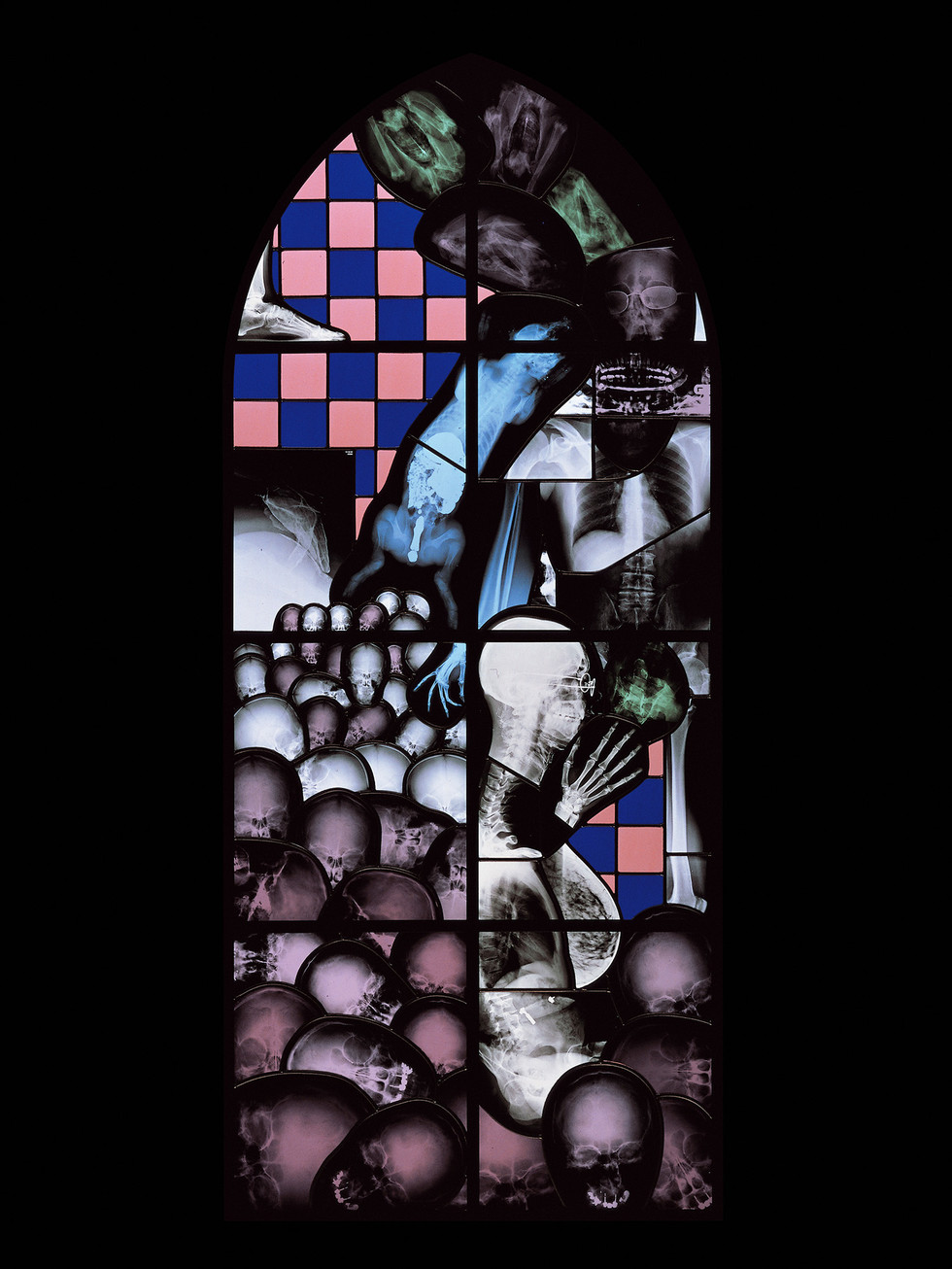
For his Chapel series, the artist took X-Rays of two friends during live sex, which he later combined with stained glass to fill the windows of a gothic-style sanctuary. From a distance, the windows appear as though they have been created from abstract artwork. However, upon closer inspection, one can easily make out the various anatomical features like skulls, teeth, intestines, and bones. Some X-rays are a lot more explicit, with subjects even kissing.
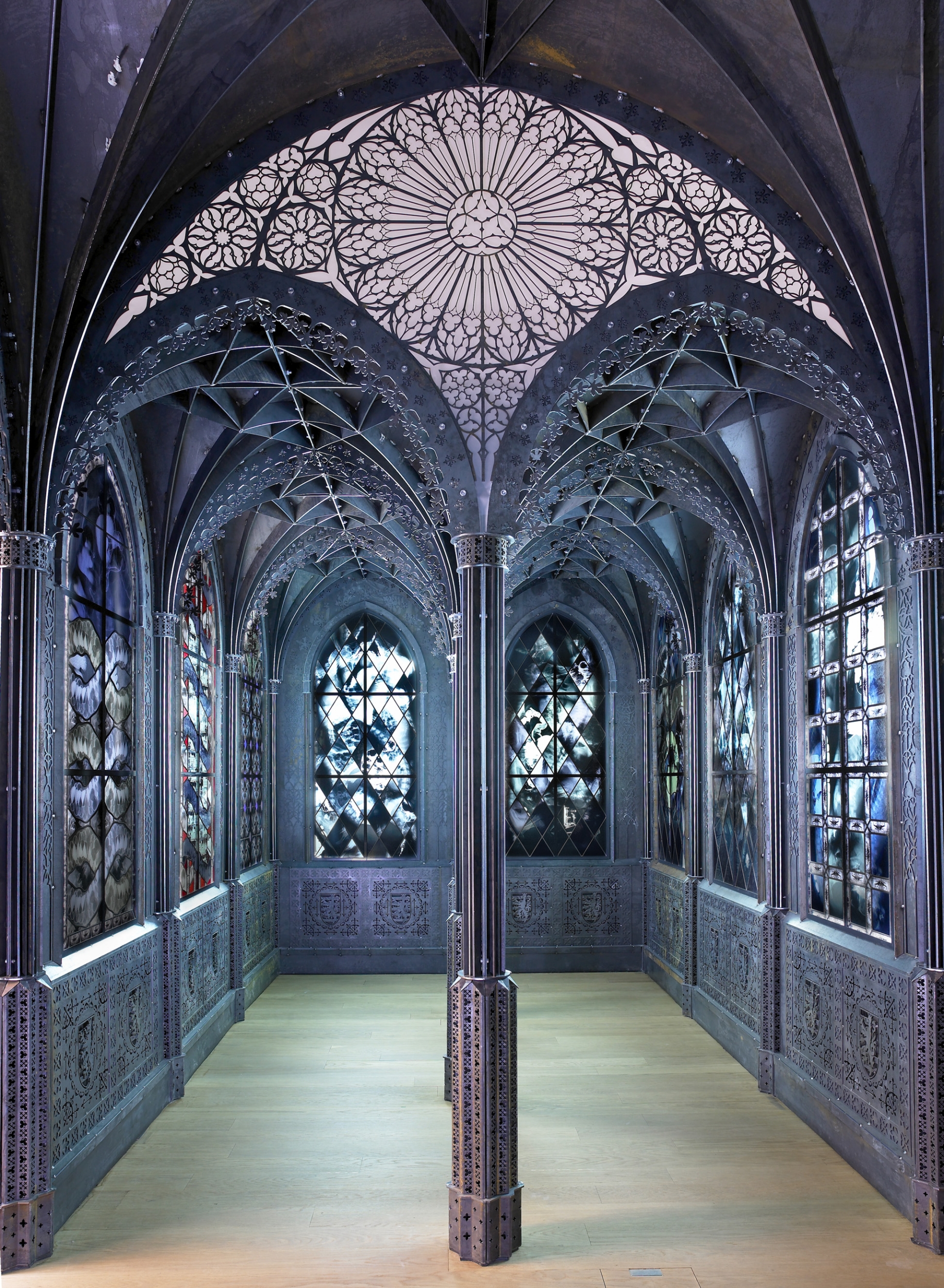
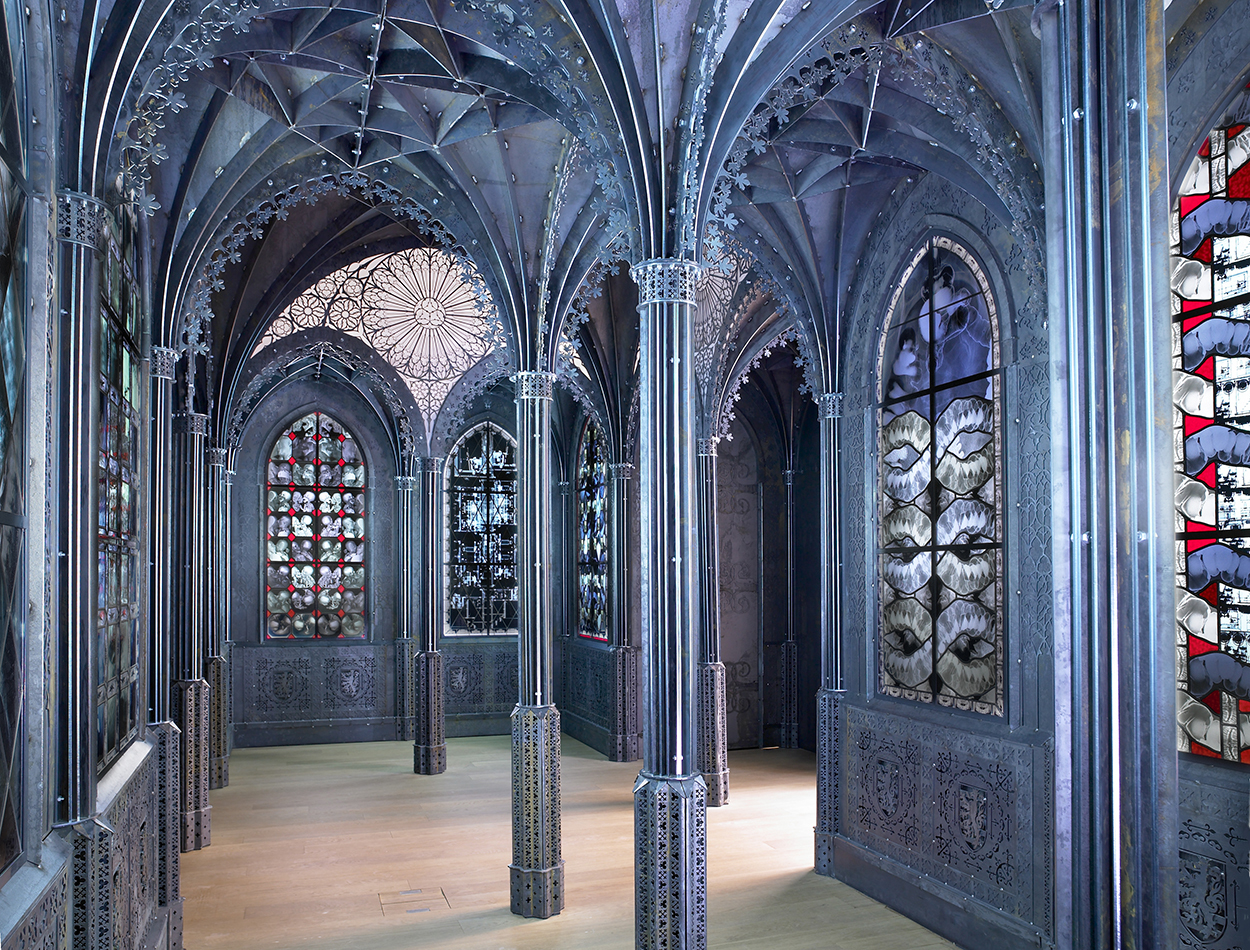
Wim Delvoye - Chapel MUDAM Luxembourg, 2006, laser-cut Corten steel and stained-glass windows, 900 x 400 x 600 cm
Wim Delvoye – Chapel MUDAM Luxembourg, 2006, laser-cut Corten steel and stained-glass windows, 900 x 400 x 600 cm, photo: Rémi Villaggi
Wim Delvoye - Chapel MUDAM Luxembourg, 2006, laser-cut Corten steel and stained-glass windows, 900 x 400 x 600 cm
Wim Delvoye – Chapel MUDAM Luxembourg, 2006, laser-cut Corten steel and stained-glass windows, 900 x 400 x 600 cm, photo: Rémi Villaggi
Wim Delvoye - Chapel MUDAM Luxembourg, 2006, laser-cut Corten steel and stained-glass windows, 900 x 400 x 600 cm
Wim Delvoye – Chapel MUDAM Luxembourg, 2006, laser-cut Corten steel and stained-glass windows, 900 x 400 x 600 cm, photo: Rémi Villaggi

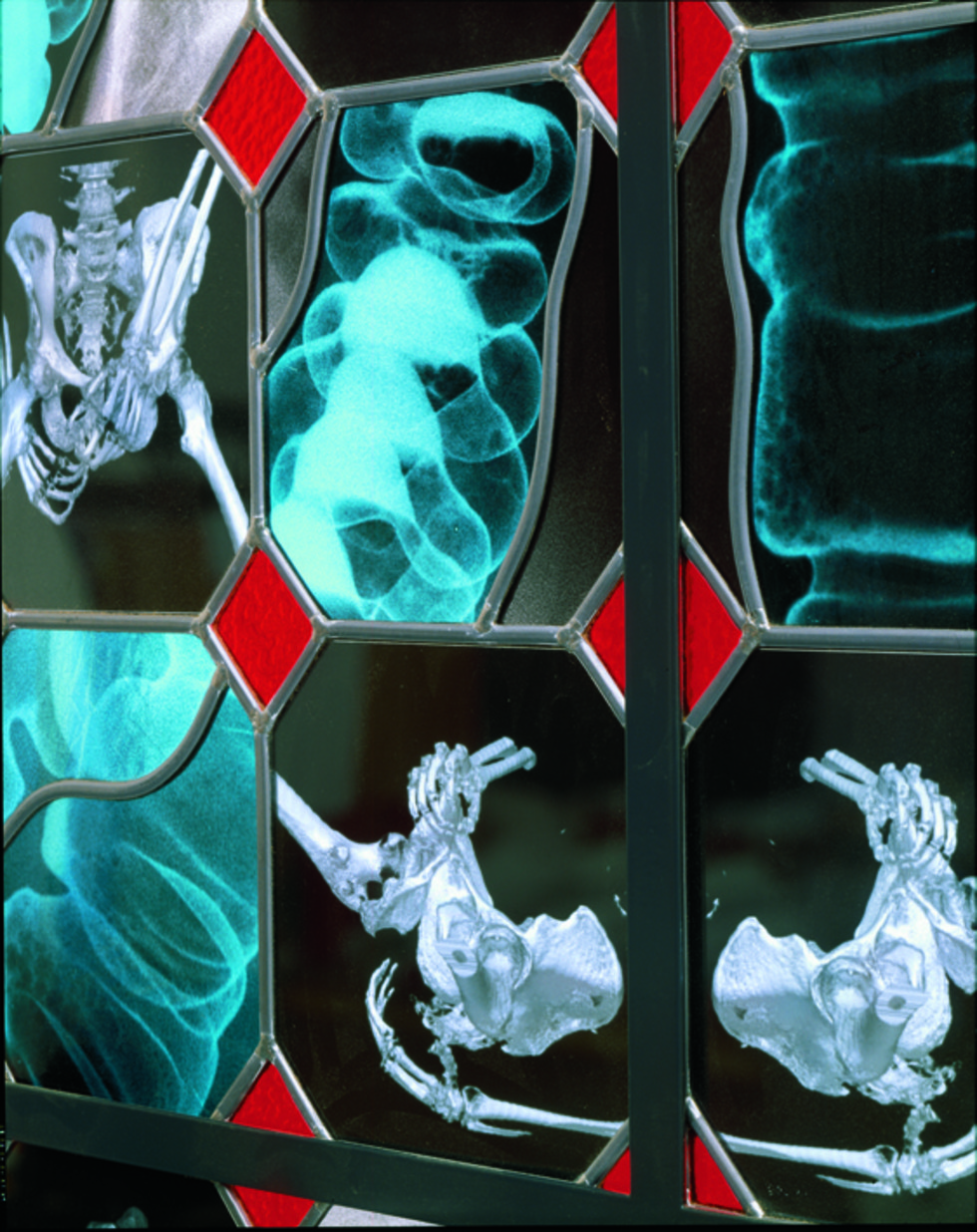
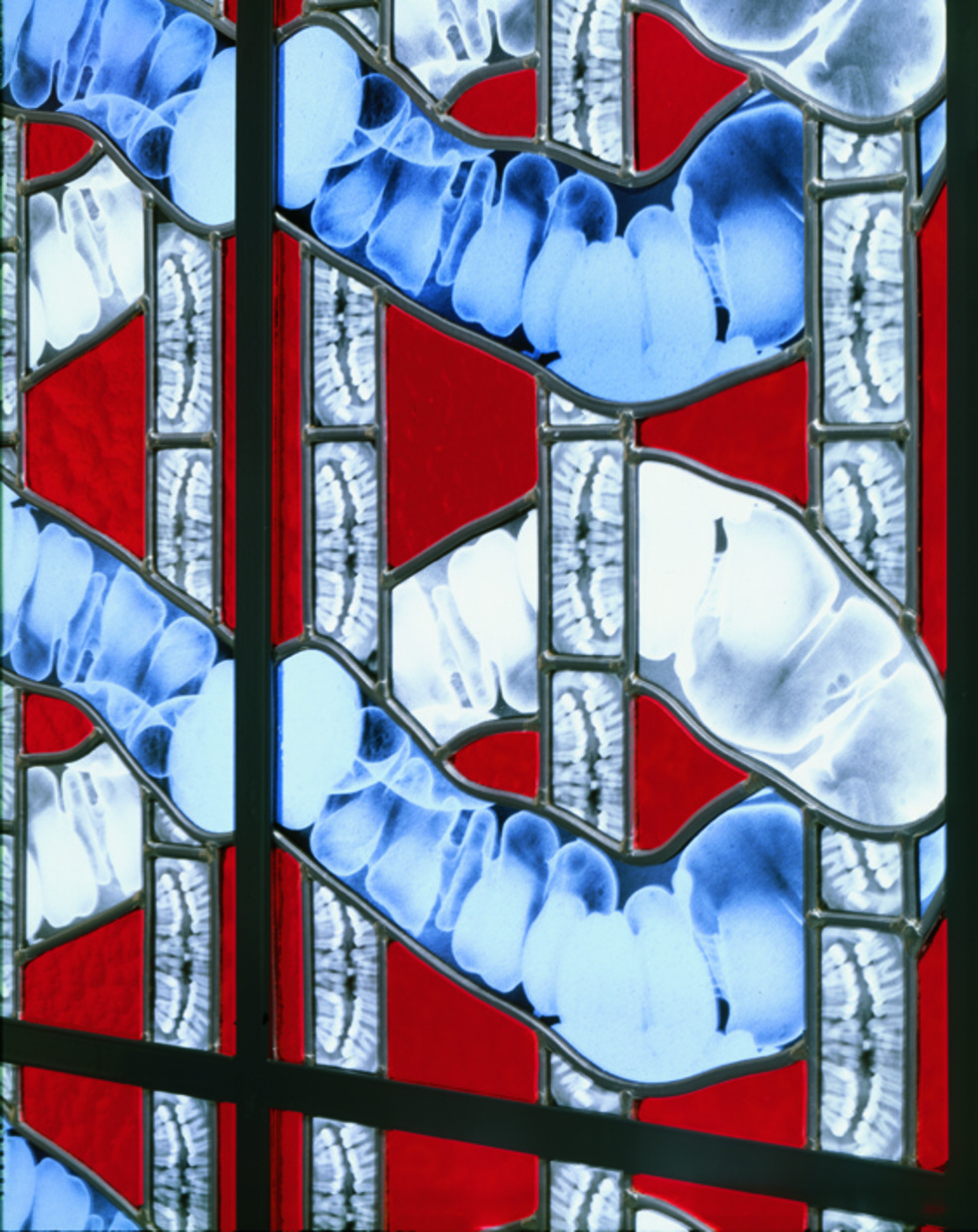
Most of the X-rays feature human subjects, while a few others also feature animals like pigs1 and snakes. The more abstract stained glass windows feature twirls of spinal columns, intersecting rows of X-rayed teeth that have been set against a background of red glass.
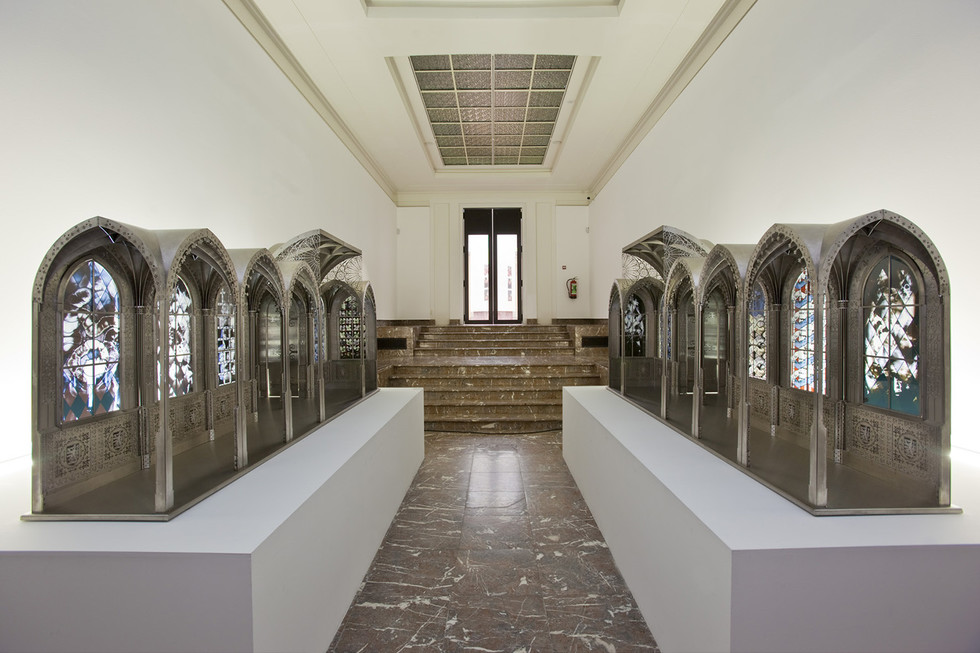
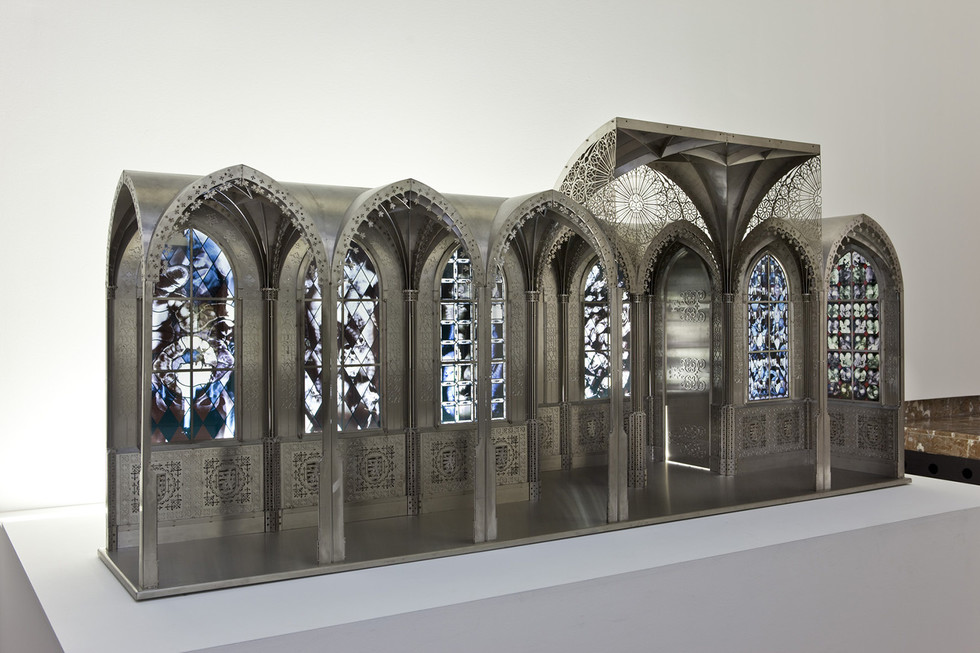
Wim Delvoye - Chapel MUDAM Luxembourg, 2006, laser-cut Corten steel and stained-glass windows, 900 x 400 x 600 cm, installation view, Knocking on Heaven's Door, 2011, Brussels
Wim Delvoye – Chapel MUDAM Luxembourg, 2006, laser-cut Corten steel and stained-glass windows, 900 x 400 x 600 cm, installation view, Knocking on Heaven’s Door, 2011, Brussels
Wim Delvoye - Chapel MUDAM Luxembourg, 2006, laser-cut Corten steel and stained-glass windows, 900 x 400 x 600 cm, installation view, Knocking on Heaven's Door, 2011, Brussels
Wim Delvoye – Chapel MUDAM Luxembourg, 2006, laser-cut Corten steel and stained-glass windows, 900 x 400 x 600 cm, installation view, Knocking on Heaven’s Door, 2011, Brussels
Wim Delvoye - Chapel MUDAM Luxembourg, 2006, laser-cut Corten steel and stained-glass windows, 900 x 400 x 600 cm, installation view, Knocking on Heaven's Door, 2011, Brussels
Wim Delvoye – Chapel MUDAM Luxembourg, 2006, laser-cut Corten steel and stained-glass windows, 900 x 400 x 600 cm, installation view, Knocking on Heaven’s Door, 2011, Brussels

The various features, including hips, skulls, and spines, all intermingle to produce bold images that make up the massive stained windows. The luminous X-rays are easily illuminated, just as easily as colored glass, thus creating a glittering yet morbid display that creates a general spooky ambiance.
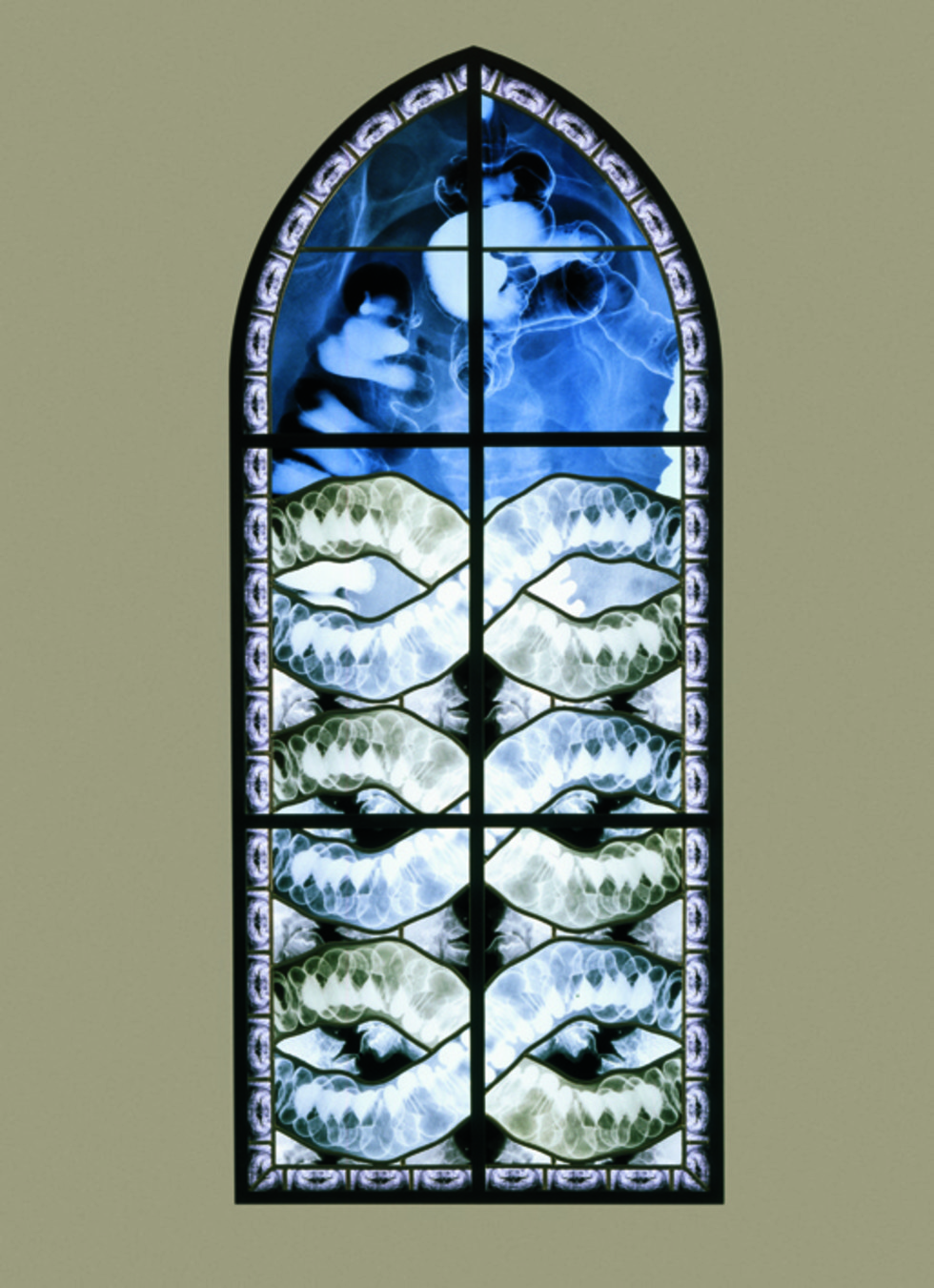
Wim Delvoye - Clio, 2001-2002, steel, x-ray photographs, lead, glass, 200 x 80 cm
Wim Delvoye – Clio, 2001-2002, steel, x-ray photographs, lead, glass, 200 x 80 cm
Wim Delvoye - Clio (detail), 2001-2002, steel, x-ray photographs, lead, glass, 200 x 80 cm
Wim Delvoye – Clio (detail), 2001-2002, steel, x-ray photographs, lead, glass, 200 x 80 cm

What makes these works stand out?

Delvoye thrives in creating works that challenge his audiences to be more open-minded by making them feel uncomfortable and disconcerted. His non-conformist panache and showmanship effortlessly set him apart from other contemporary artists as he often dares to challenge our perception of beauty.
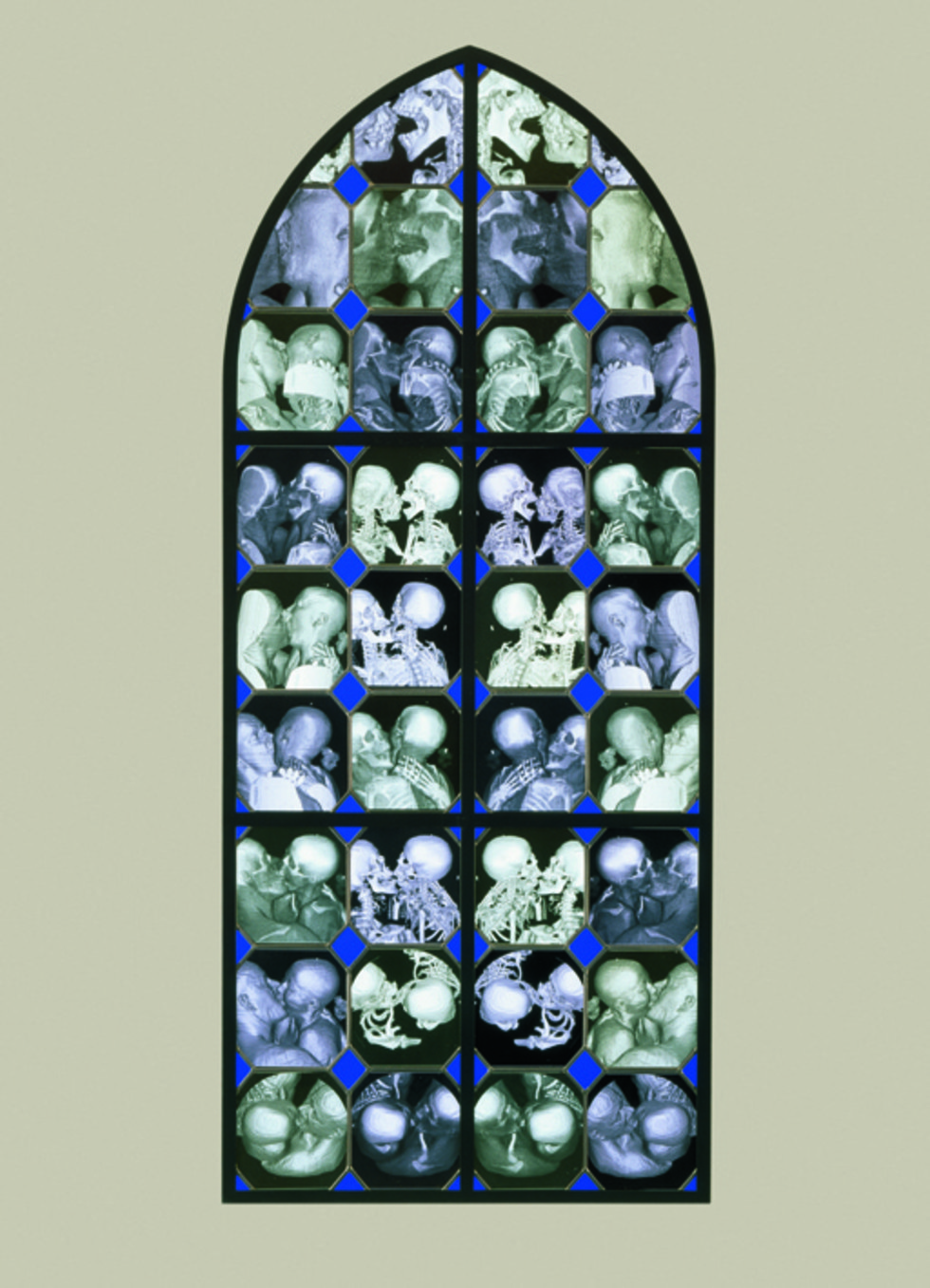
Wim Delvoye - Erato, 2001-2002, steel, x-ray photographs, lead, glass, 200 x 80 cm
Wim Delvoye – Erato, 2001-2002, steel, x-ray photographs, lead, glass, 200 x 80 cm
Wim Delvoye - Erato (detail), 2001-2002, steel, x-ray photographs, lead, glass, 200 x 80 cm
Wim Delvoye – Erato (detail), 2001-2002, steel, x-ray photographs, lead, glass, 200 x 80 cm

Even though his gothic works have stimulated many arguments, his daring style is what allows him to create masterful works of art. Additionally, to ensure that the large stained glass windows captured the attention of observers, Delvoye cut the windows from laser-cut steel in the style that was characteristic of 17th-century Flemish Baroque churches. Delvoye supervised the entire design and manufacturing process to ensure the integrity and proper pigmentation of the glass.
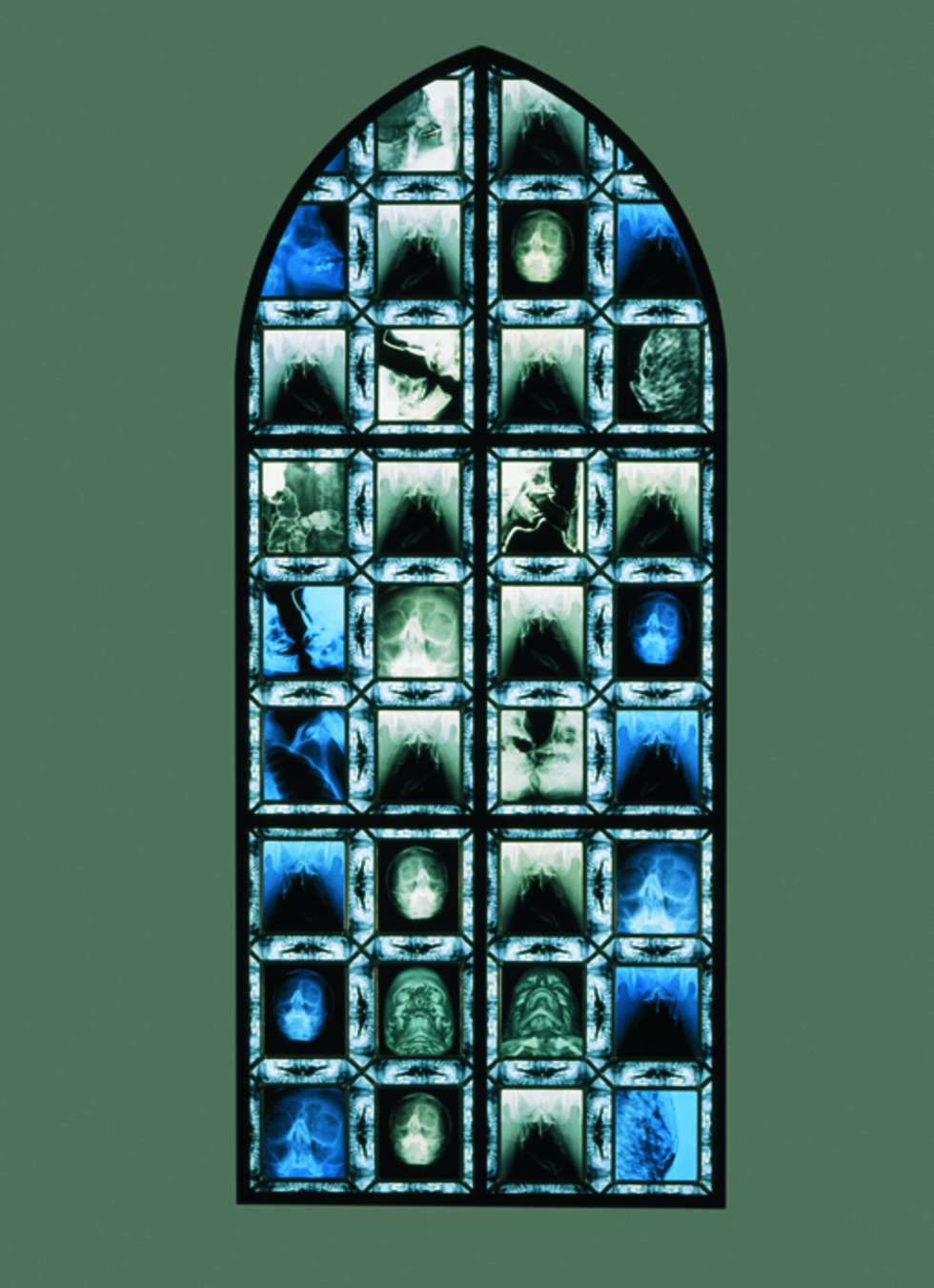
Wim Delvoye - Euterpe, 2001-2002, steel, x-ray photographs, lead, glass, 200 x 80 cm
Wim Delvoye – Euterpe, 2001-2002, steel, x-ray photographs, lead, glass, 200 x 80 cm
Wim Delvoye - Euterpe (detail), 2001-2002, steel, x-ray photographs, lead, glass, 200 x 80 cm
Wim Delvoye – Euterpe (detail), 2001-2002, steel, x-ray photographs, lead, glass, 200 x 80 cm

Other works that feature X-Rays

This is not the first time that Delvoye has worked with X-rays to produce art. In 2006, he worked on Sexrays, which consisted of X-rays that he created with the assistance of a radiologist. The artist had a few of his friends paint themselves with minimal amounts of barium before they performed sexual acts in a medical X-ray clinic.
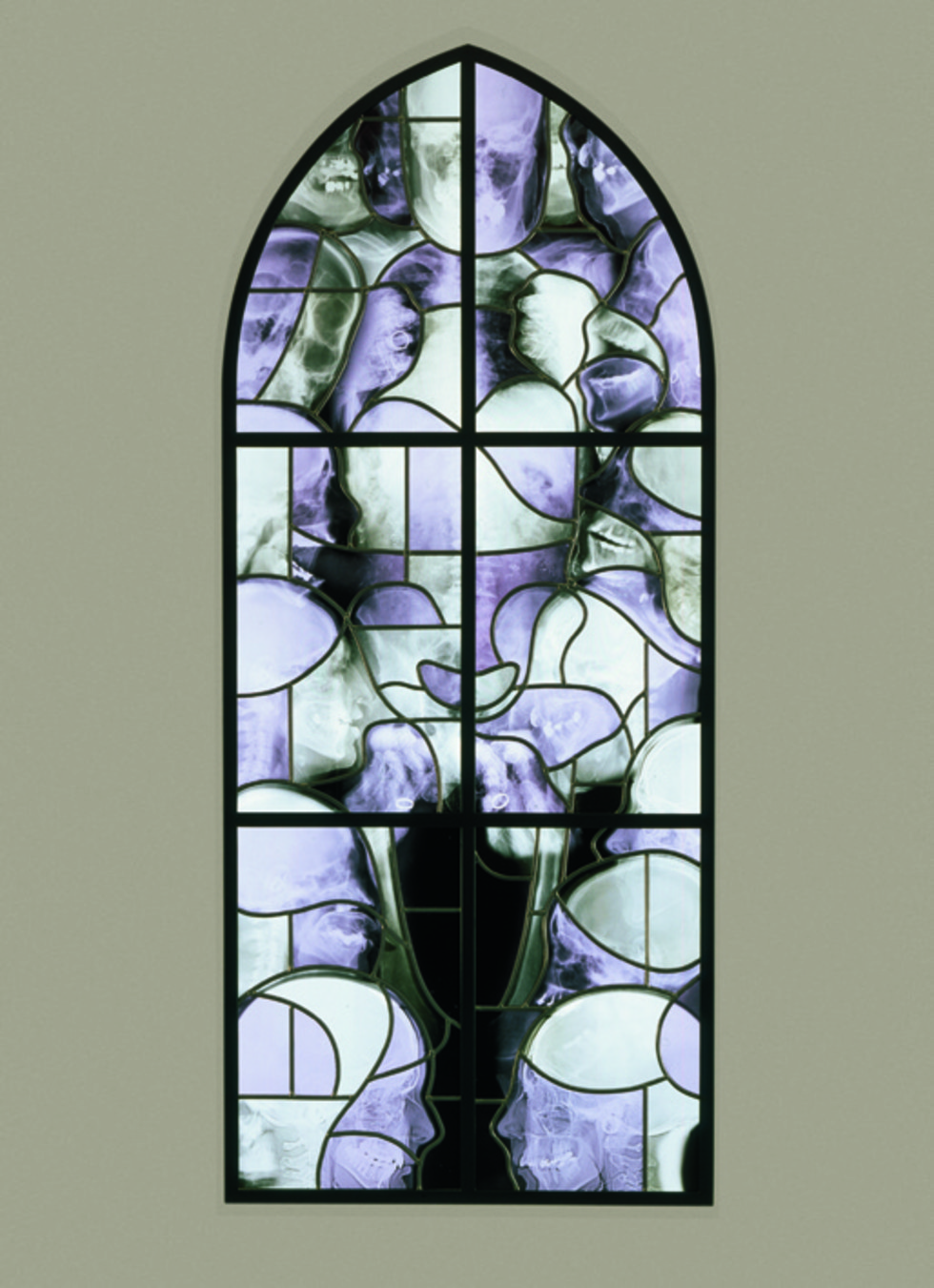
Wim Delvoye - Melpomene, 2001-2002, steel, x-ray photographs, lead, glass, 200 x 80 cm
Wim Delvoye – Melpomene, 2001-2002, steel, x-ray photographs, lead, glass, 200 x 80 cm
Wim Delvoye - Melpomene (detail), 2001-2002, steel, x-ray photographs, lead, glass, 200 x 80 cm
Wim Delvoye – Melpomene (detail), 2001-2002, steel, x-ray photographs, lead, glass, 200 x 80 cm

When he was not actively participating, the artist observed from a computer screen situated in a separate room, thus giving the participants the space and room to be fully themselves.
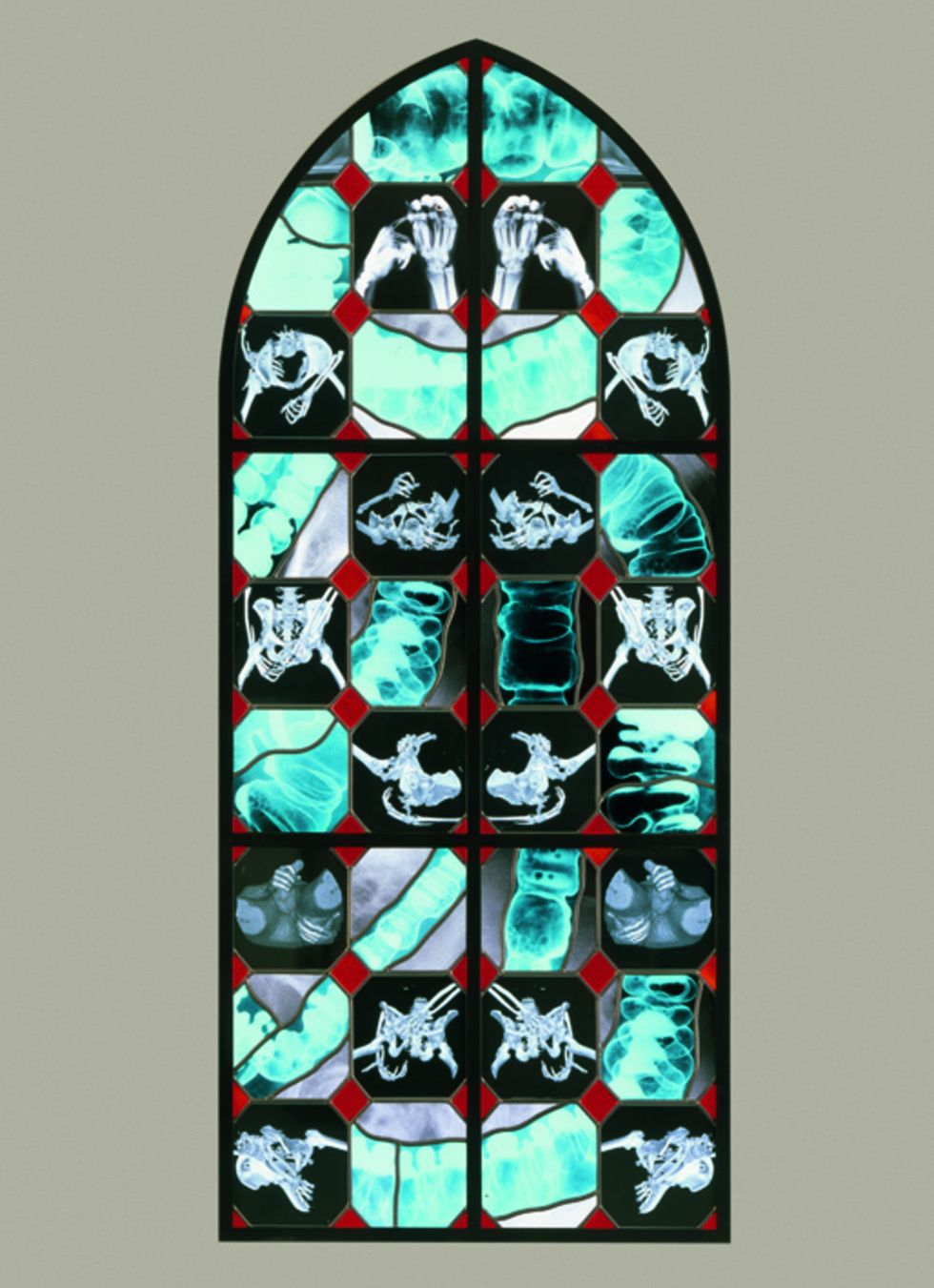
Wim Delvoye - Polyhymnia, 2001-2002, steel, x-ray photographs, lead, glass, 200 x 80 cm
Wim Delvoye – Polyhymnia, 2001-2002, steel, x-ray photographs, lead, glass, 200 x 80 cm
Wim Delvoye - Polyhymnia (detail), 2001-2002, steel, x-ray photographs, lead, glass, 200 x 80 cm
Wim Delvoye – Polyhymnia (detail), 2001-2002, steel, x-ray photographs, lead, glass, 200 x 80 cm

About Delvoye

Delvoye was born in Belgium in 1965. Delvoye’s work has always straddled the line between the consecrated and the secular worlds, with his masterpieces being characterized by gothic drama and the use of advanced technology.
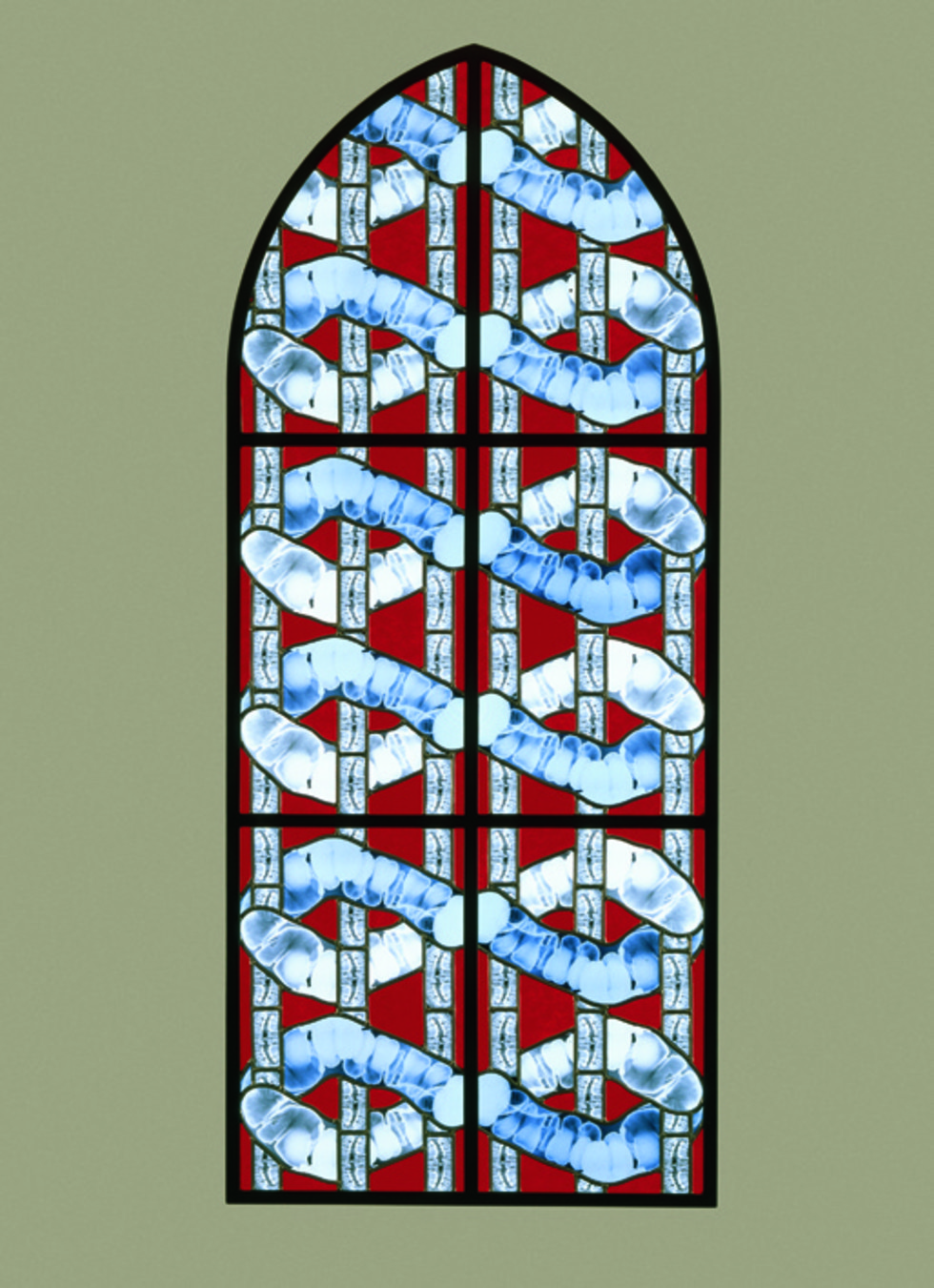
Wim Delvoye - Terpsichore, 2001-2002, steel, x-ray photographs, lead, glass, 200 x 80 cm
Wim Delvoye – Terpsichore, 2001-2002, steel, x-ray photographs, lead, glass, 200 x 80 cm
Wim Delvoye - Terpsichore (detail), 2001-2002, steel, x-ray photographs, lead, glass, 200 x 80 cm
Wim Delvoye – Terpsichore (detail), 2001-2002, steel, x-ray photographs, lead, glass, 200 x 80 cm

As such, Delvoye’s installations, drawings, murals, and sculptures are distinctive and easily identifiable. His utopian constructions demonstrate that Delvoye is an attentive observer and commentator of today’s contemporary works and questions the way we live through his artworks.
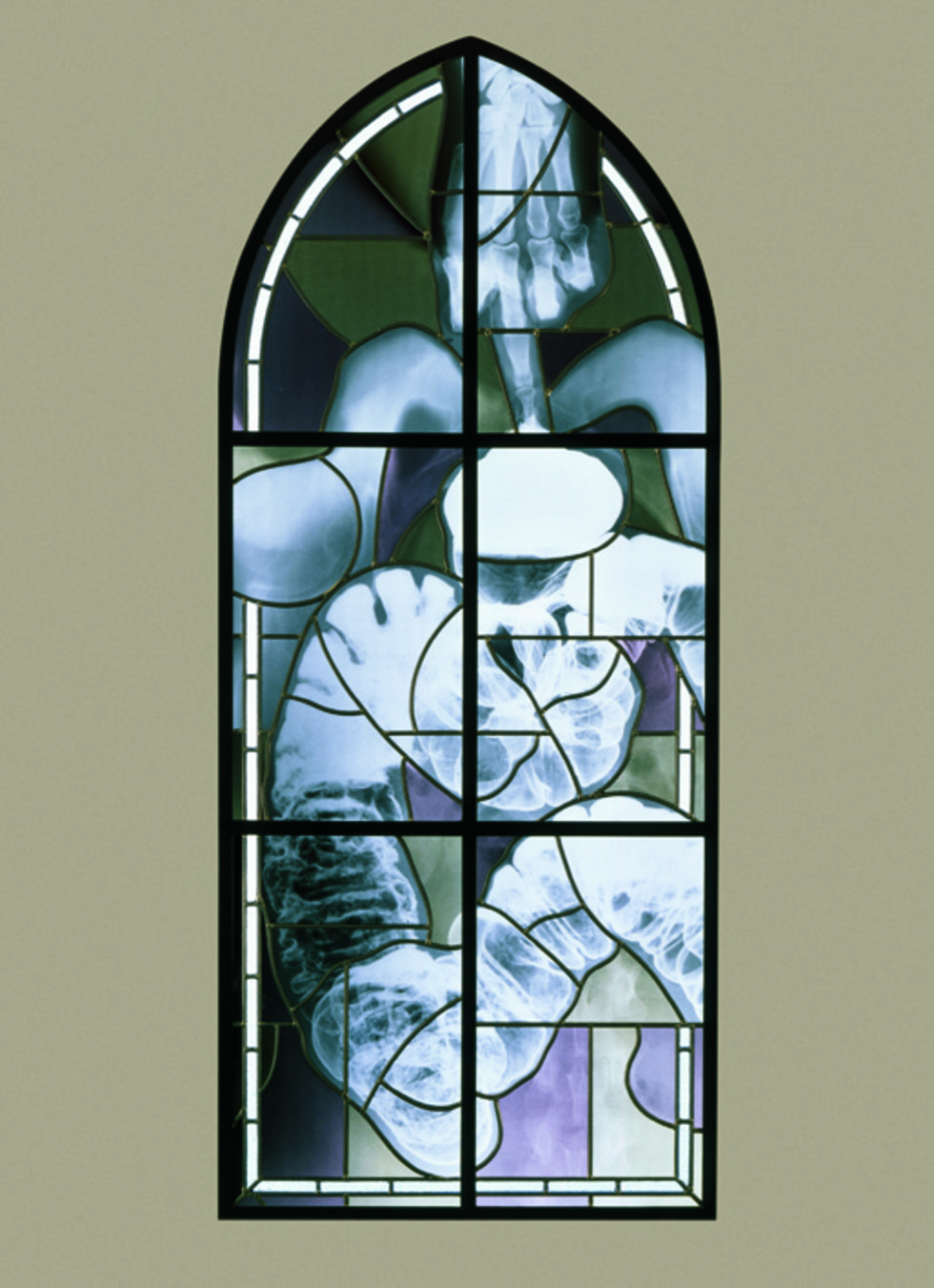
Wim Delvoye - Thalia, 2001-2002, steel, x-ray photographs, lead, glass, 200 x 80 cm
Wim Delvoye – Thalia, 2001-2002, steel, x-ray photographs, lead, glass, 200 x 80 cm
Wim Delvoye - Thalia (detail), 2001-2002, steel, x-ray photographs, lead, glass, 200 x 80 cm
Wim Delvoye – Thalia (detail), 2001-2002, steel, x-ray photographs, lead, glass, 200 x 80 cm
Though he is often inspired by technological advancements, he also works on more traditional techniques and styles such as stained glass and ironwork to express his perspective better. At the beginning of his career, Delvoye started with make-believe maps and wrought images.

Wim Delvoye - Urania, 2001-2002, steel, x-ray photographs, lead, glass, 200 x 80 cm
Wim Delvoye – Urania, 2001-2002, steel, x-ray photographs, lead, glass, 200 x 80 cm
Wim Delvoye - Urania (detail), 2001-2002, steel, x-ray photographs, lead, glass, 200 x 80 cm
Wim Delvoye – Urania (detail), 2001-2002, steel, x-ray photographs, lead, glass, 200 x 80 cm

However, through his long and illustrious career, the artist has managed to bring his work to new heights where a team of expert craftsmen and scientists are often needed to complete his monumental works. As you can expect, some of his works have elicited a lot of controversies.
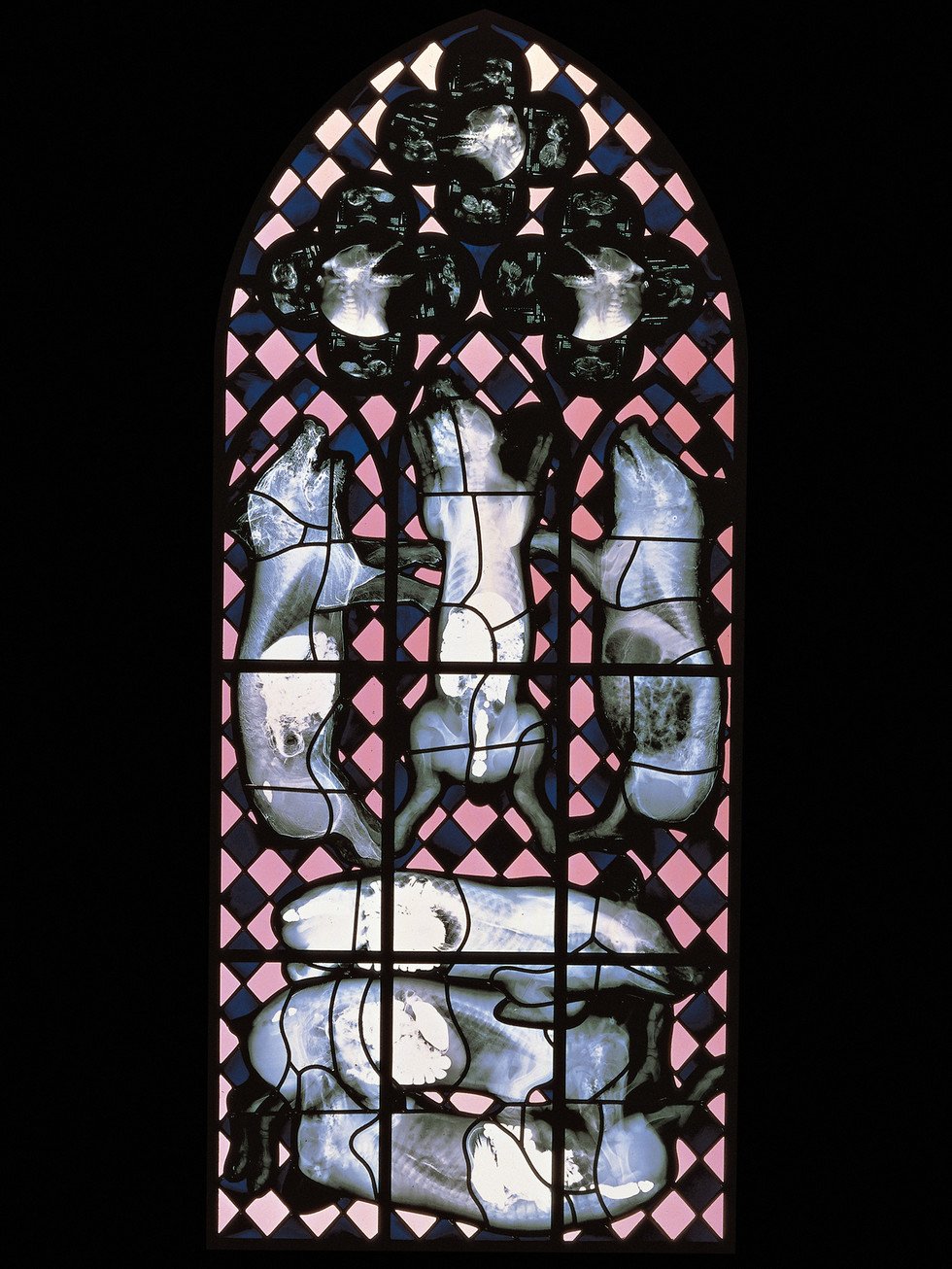
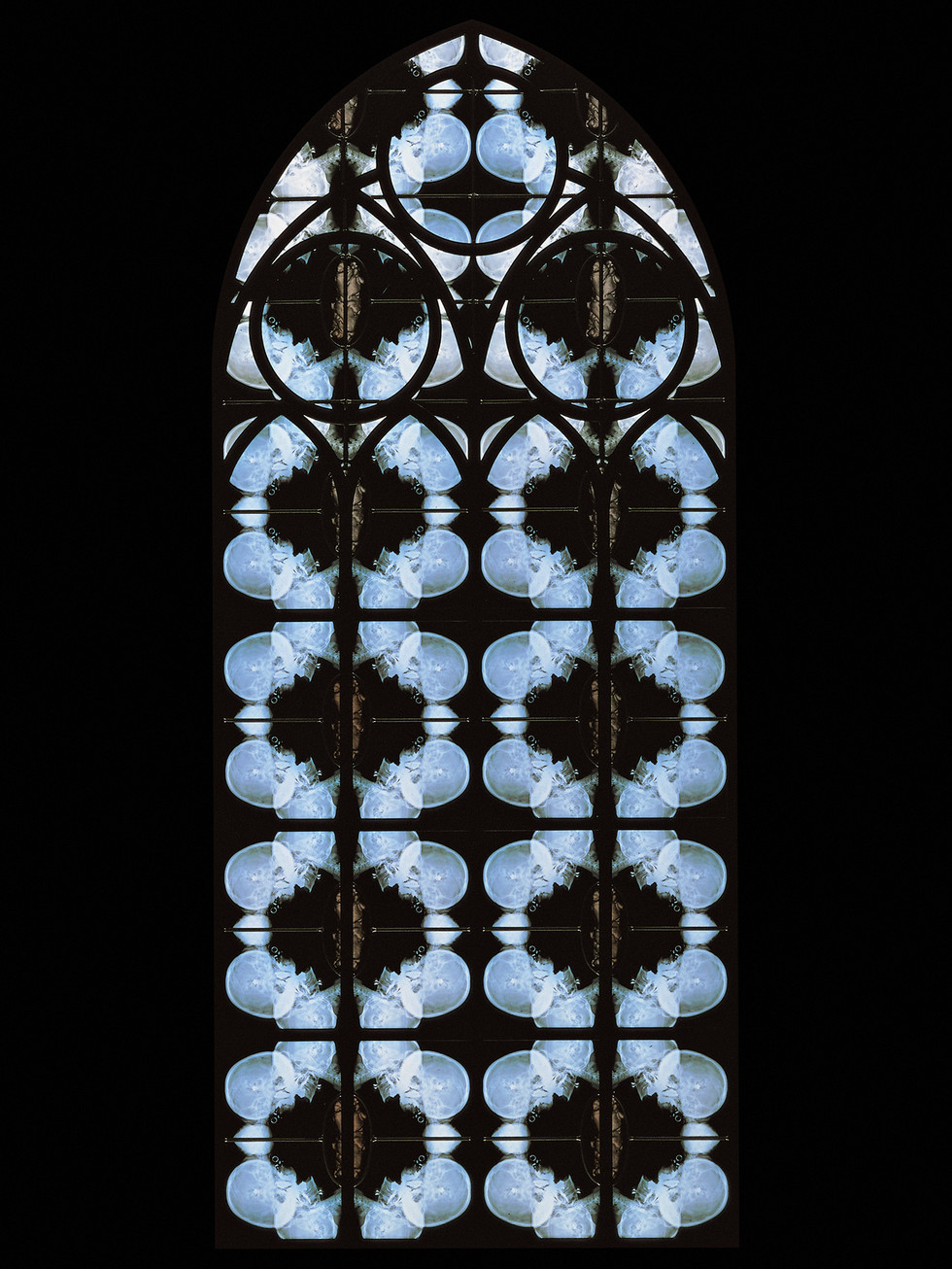
Wim Delvoye - January, 2001, steel, x-ray photographs, lead, glass, 244 x 104 cm
Wim Delvoye – January, 2001, steel, x-ray photographs, lead, glass, 244 x 104 cm
Wim Delvoye - February, 2001, steel, x-ray photographs, lead, glass, 244 x 104 cm
Wim Delvoye – February, 2001, steel, x-ray photographs, lead, glass, 244 x 104 cm

Because of his prowess, Delvoye has exhibited in many parts of the world, with one of his most recent exhibitions being held in Paris during the 2021 Quand la matière devient art in Maison Guerlain, Paris.
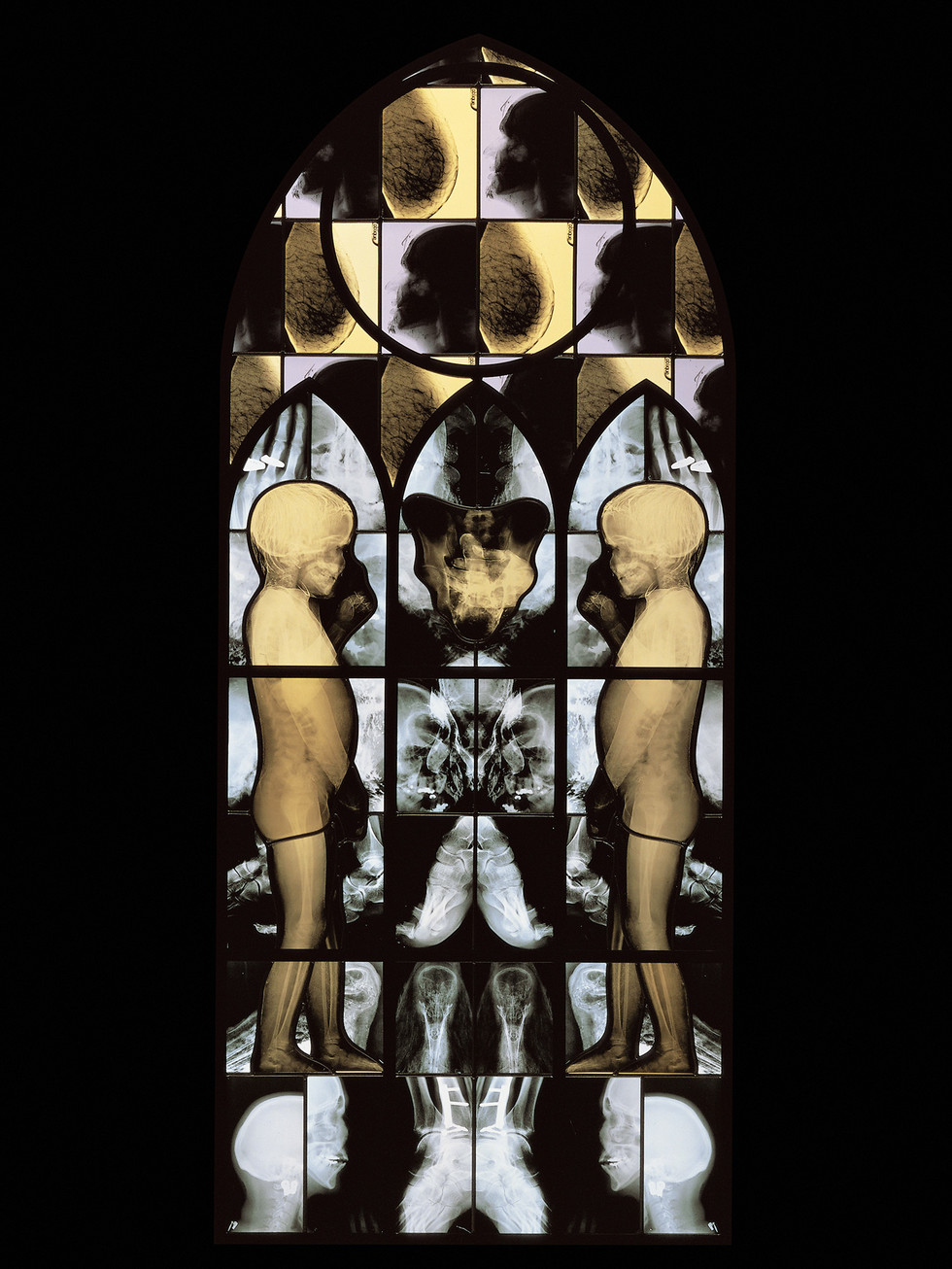
Wim Delvoye - March, 2001, steel, x-ray photographs, lead, glass, 244 x 104 cm
Wim Delvoye – March, 2001, steel, x-ray photographs, lead, glass, 244 x 104 cm
Wim Delvoye - April, 2001, steel, x-ray photographs, lead, glass, 244 x 104 cm
Wim Delvoye – April, 2001, steel, x-ray photographs, lead, glass, 244 x 104 cm

His artworks are primarily exhibited in Belgium and other parts of Europe, The USA, and elsewhere. Delvoye has gained international recognition thanks to his participation in many different exhibitions, including Documenta IX in 1992, the Venice Biennale in 1990 and 1999, and documenta IX in 1992.
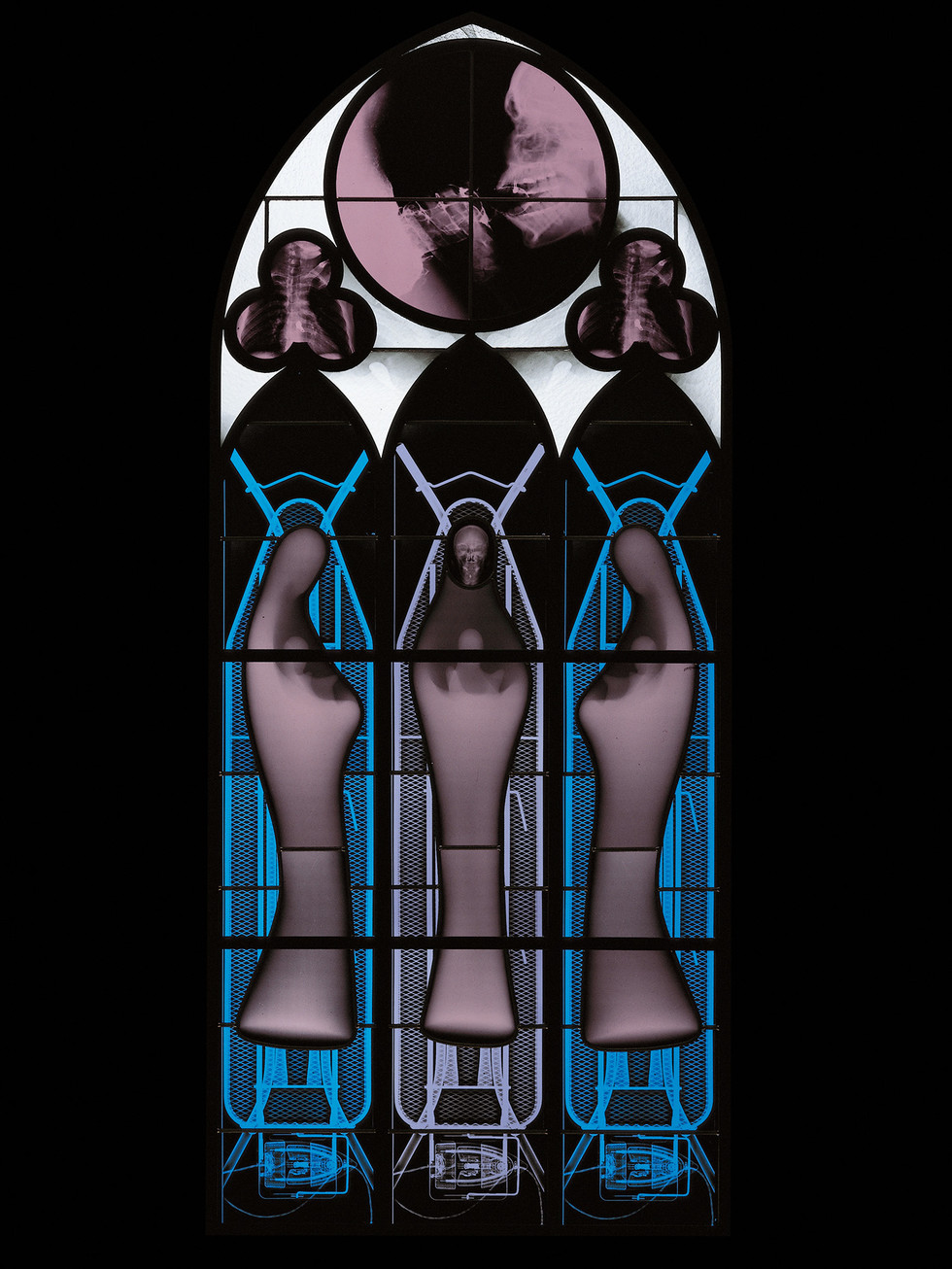
Wim Delvoye - May, 2001, steel, x-ray photographs, lead, glass, 244 x 104 cm
Wim Delvoye – May, 2001, steel, x-ray photographs, lead, glass, 244 x 104 cm
Wim Delvoye - June, 2001, steel, x-ray photographs, lead, glass, 244 x 104 cm
Wim Delvoye – June, 2001, steel, x-ray photographs, lead, glass, 244 x 104 cm

In 2016, he made history by becoming the first non-Iranian artist to have a retrospective of his works hosted at the Tehran Museum of Contemporary Art, the first since the Iranian revolution commenced. His artworks are in at least 31 museum collections, which explains why he is ranked among the top 1000 male artists in the world. Today, Delvoye continues to tour all over the world.
Wim Delvoye - July, 2001, steel, x-ray photographs, lead, glass, 244 x 104 cm
Wim Delvoye – July, 2001, steel, x-ray photographs, lead, glass, 244 x 104 cm
Wim Delvoye - August, 2001, steel, x-ray photographs, lead, glass, 244 x 104 cm
Wim Delvoye – August, 2001, steel, x-ray photographs, lead, glass, 244 x 104 cm

Final thoughts

Delvoye creates art to entertain and fascinate his audiences. A neo-conceptual artist, he is celebrated for works that ingeniously combine rational ideas, an innovative approach to materials, and a deep fascination for craftsmanship. Blurring the lines between the past and the digital worlds that we live in today, Delvoye makes flowing, mathematically seamless, intricate sculptures that take art and design to new heights of origination.
Wim Delvoye - September, 2001, steel, x-ray photographs, lead, glass, 244 x 104 cm
Wim Delvoye – September, 2001, steel, x-ray photographs, lead, glass, 244 x 104 cm
Wim Delvoye - October, 2001, steel, x-ray photographs, lead, glass, 244 x 104 cm
Wim Delvoye – October, 2001, steel, x-ray photographs, lead, glass, 244 x 104 cm

One of his most outrageous works is his complicated installation Cloaca, a machine that he designed in several duplications since 2000. The device was designed to replicate the human’s digestive process and is fed actual food to produce fecal matter, which is then dried and distributed to interested buyers and collectors.
Wim Delvoye - November, 2001, steel, x-ray photographs, lead, glass, 244 x 104 cm
Wim Delvoye – November, 2001, steel, x-ray photographs, lead, glass, 244 x 104 cm
Wim Delvoye - December, 2001, steel, x-ray photographs, lead, glass, 244 x 104 cm
Wim Delvoye – December, 2001, steel, x-ray photographs, lead, glass, 244 x 104 cm

All images by Studio Wim Delvoye unless otherwise noted.

A Situated Practice : Fields/Alignments/Energy : Durational Light Drawings


https://www.flickr.com/people/russellmoreton/

Structural Modalities/Making/Tensions : Spatial Form to gather/interact with discursive research.


5

Procedural Architecture


Start by thinking of architecture as a tentative constructing toward a holding in place. Architecture's holding in place occurs within and as part of a prevailing atmospheric condition that others routinely call biosphere but which we, feeling the need to stress its dynamic nature, have renamed bioscleave.

Architectural Body

Madeline Gins and Arakawa


Working Notes/Holding in Place

Entanglement of Matter and Meaning


Intertwining Metamorphoses

Germano Celant

Giuseppe Penone


Diffractions : Differences, Contingencies, and Entanglements That Matter

Meeting The Universe Halfway

Quantum physics and the entanglement of matter and meaning

Karen Barad


Art and Technics

Lewis Mumford


James Turrell

Aten Reign

Miwon Kwon


Under The Volcano

Carmen Gimenez


Kees Goudzwaard

Assemblage

Pinholes and Dust

Grisaille

Transparent Body


Robert Mangold

Column Structure Paintings


Frank Stella Architecture

Architecture as a means towards creating space


The Optical Unconscious

To throw its net over the whole of the external world in order to enter it into consciousness. To think it

Rosalind Krauss


Postproduction

Nicolas Bourriaud


Body

Personal Relations

Spatial Values

Yi-Fu Tuan


Wayfinding/Movements through accumulated research

Running scripts, enactments, instances, involvements

Collaborative texts, complexity, emergent, discursive 


From The Bookcase to The Field Table : Landing Sites of Inquiry


Camouflage

Neil Leach

For Benjamin, the twentieth century is an age of alienation. Human beings are no longer 'cocooned' within their dwelling spaces. Architectural spaces are no longer reflections of the human spirit. Something has been lost.

Mimesis, 19.


New Concepts of Architecture

Existence, Space and Architecture

Christian Norberg-Schulz

A child 'concretizes' its existential space.


A Philosophy of Emptiness

Gay Watson

Artistic Emptiness

Everything flows, nothing remains.

Heraclitus


Rethinking Architecture

Neil Leach

Figure 1, Sketch by Jacques Derrida for Choral Work project. 343

Foucault, Figure 2 Bentham's Panopticon (1791). 360

Page laid in, The Atrocity Exhibition by J. G. Ballard, new revised edition, annotations, commentary, illustrations and photos.


Tracing Eisaenman

Plenum, juxtaposed to form/haptic values/body absences

Robert Mangold

Between moments of 'meaning' lie spaces or blanks of immediate experience. Such blanks are actuality. Usually the blank, the actuality, goes unnoticed because it works so efficiently to differentiate one meaningful event from another. Kubler discussed this in The Shape of Time.

Interactions of the Abstract Body

Josiah McElheny

Object Lesson/Heuristic Device

The term 'heuristic' is understood here to denote a method of addressing and solving problems that draws not on logic but on experience, learning and testing. In this regard stories and fictional narratives can be heuristic devices in acting as ideal models that are not to be emulated but which help to situate characters, actions and objects.


Space Between People

Degrees of virtualization

Mario Gerosa


Adaptive Architectural Design

Device-Apparatus

Place

Function

Adaptation

The second phase of project activity acknowledges that the proposal involves two sites; the landscape of settlement and the artifice of the factory. The design is intended to be a reflection of the conditions of each, so there was a need to work directly with the manufacturing process, at full scale, as early as possible. This would provide an immediate counterpoint to the earlier representations and a necessary part of exploring the manufacturing medium in the context of architectural design. 69


Building The Drawing

The Illegal Architect

Immaterial Architecture

Mark Cousins suggests that the discipline of architecture is weak because it involves not just objects but relations between subjects and objects. And if the discipline of architecture is weak, then so, too, is the practice of architects. Architecture must be immaterial and spatially porous, as well as solid and stable where necessary, and so should be the practice of architects.

Jonathan Hill

Index of immaterial architectures


Herzog and De Meuron

Natural History

Exhibiting Herzog and De Meuron

We are not out to fill the exhibition space in the usual manner and to adorn it with records of our architectonic work. Exhibitions of that kind just bore us, since their didactic value would be conveying false information regarding our architecture. People imagine that they can follow the process, from the sketch to the final, photographed work, but in reality nothing has really been understood, all that has happened is that records of an architectural reality have been added together.


My studio is a piece of architecture that is silent. The things of which it is made say all and at the same time nothing. Its strength lies in its demanding silence. A stern silence in order to permit works to occur. I imagine that a painting by Newman could be hung there.


The arrival of Beuys in a world that was gradually falling asleep amidst minimalism generated a kind of confusion that was truly excellent for opening up the mind. Comfort vanished, driven away by subversive complexity.


Speculative architecture

On the aesthetics of Herzog and De Meuron


Without opposition nothing is revealed,

no image appears in a clear mirror

if one side is not darkened

Jacob Bohme, De tribus principii (1619)


Reflections on a photographic medium

Memorial to the Unknown Photographer

Thomas Ruff's Newspaper Photos

Valeria Liebermann


Working Collages

Karl Blossfeldt


Sensing Spaces/Architecture Reimagined

Royal Academy of Arts

Wednesday, 1 March 2023

Figuring it out : Display and Process : Conceptual Frameworks/Contexts

 Outpost 010323


https://www.flickr.com/people/russellmoreton/


The Parallel Visions of Artists and Archaeologists.

Figuring It Out.

Colin Renfrew.


Archaeologists/Artists, intuitively working with materials that are local and quotidian.

New insights into the way humans use things/people/the earth.


Encounters.

Art as archaeology, archaeology as art.


What is Art.

The tyranny of the renaissance.


Off the plinth.

Display and process.


The human condition.

Being and remembering.


The (al)lure of the artefact.


Baneful signs.

The archaeology of now.


Figuring it out.

The Indexical Body.

Corporeality/Aesthetics.

Contemporary Fine Art/Working from/with the body


Francis Bacon.

The figural body.


Manuel Neri.

The sculptural body in relief.


The Body/Spatial/Temporal

Rituals/Places/Vessels

Awareness/Repetition/Ritual can give meaning to existence.


What Are We?

Where Do We Come From?


The Anthropology of Art.

Constructed as a theory of agency or of the mediation of agency by indexes understood/conveyed through material entities which motivate/create inferences, responses and interpretations.


For Gell, art is not 'axiomatic' about a 'matter of meaning communication' but rather it is about doing that is theorized as agency in a process involving indexes and effects. Art, its actions and their effects are similarly not discrete expressions of individual will, but rather the outcomes of a mediated practice in which agents and recipients are all implicated in complex 'participations, ways of relations and their diffractions.


Artists/Prototypes/Things/Recipients/Affect/Generative Relations.

Practical Experience/Cognitive Knowledge/Analysis.


Art and its complex participation/phenomena is distributed by an agent with other agents, the artist attempts to distribute elements of their own efficacy amongst others. 


Artists are those who are considered to be immediately causally responsible for the existence and characteristics of indexes, artists/a person both distributed and implicated may also be vehicles of the agency of others.

Alfred Gell. 


Conceptual Frameworks/Context


Axes of Coherence/Indexes/Formal Analysis/Repetition/Improvisation. 


Resultants that incorporate the friction/asperity of their trajectories through a medium.

Tilt-up concrete construction, Chapel of St Ignatius, Seattle, Washington, USA.

Steven Holl.


Cathected, Aesthetic Phenomenon, Aesthetic Causality, Sensual Object, Allure,


The Projects.


Hungate.

Water, niche, Priscina, font, vessel, grounding body/spirit, apparatus, scaffold, un-doing of Place, Site, Reading the existential qualities of architectural spaces into the corporeal/haptic body, plaster, lime, canvas, whitewash, yellow ochre, water becomes a sacred conduit running through the architectural body.


Raveningham. 

Ground Marking, ceramic spheres, Fontana, clay/raku. Movements/Durations on grass to leave temporal traces. String line, shadow sticks, involuntary markers, found objects, collected phenomena,  


Undercroft Anglian Potters, Norwich.

Ferini Gallery, Lowestoft.

Monday, 27 February 2023

Pure Presence : Ethics/Aesthetics/Politics, Jane Bennett


Text Extract/Inclusion. "Pure Presence"


The enchantment of modern life: attachments, crossings, and ethics : Jane Bennett. 2001.


It is a commonplace that the modern world cannot be experienced as enchanted--that the very concept of enchantment belongs to past ages of superstition. Jane Bennett challenges that view. She seeks to rehabilitate enchantment, showing not only how it is still possible to experience genuine wonder, but how such experience is crucial to motivating ethical behavior. A creative blend of political theory, philosophy, and literary studies, this book is a powerful and innovative contribution to an emerging interdisciplinary conversation about the deep connections between ethics, aesthetics, and politics.


Sunday, 26 February 2023

Sensing Places : Dwelling/Making/Attention/Environments

Russell Moreton
Artist Statement 2023


Spatial practitioner employing a  speculative site based practice linking visual fine art, education, architecture and philosophy. Interested in duration and experience, repetition and improvisation, together with intuitive working methods that are local and quotidian. 

Architectural Body
Organism/Person/Environment.
Awareness that repetitions and rituals can give meaning to existence.


Dwelling.
Giving Sensation Place.
An Education Of Attention.
Creative Curriculum Making.

Developing a creative inquiry and its presentation through generative art based methodologies.
Re-imagining learning through site based education, art practices and philosophy.

The construction of working drawings/sites that are themselves habitable and that capture insist moments of mark making and subjectivity.

Installing a creative practice as a 'place driven site' for subjective experience, gathering things and personal inquiry from which to present 'findings' into the social environment.

As a contemporary practitioner operating within the Arts and Architecture, I am interested in social apparatuses and agents that explore the possibilities of place based relations. 


For Tim Ingold, life is the very process wherein forms are generated and held in place.
And dwelling means that the forms people build, whether in the imagination or on the ground arise within the current of their involved activity in the specific relational contexts of their practical engagement with their surroundings.
Tim Ingold, Lines. 2007
 

Key Words: Site Based Inquiry, Post Studio Practice, Education, Fine Art, Spatial Practice, Philosophy, Presentation, Exhibition, Workshops, Research Led, Exploratory Processes, Curriculum, Placemaking, Sensing, Architecture, Circulation, Subjectivity, Relationscapes, Dwelling, Inhabitation, Environment, Landscape, Person, Organism,


Friday, 24 February 2023

Making/Photography/Process and Aesthetics

Found Objects : Archaeological Photogram

When you make photograms, without the use of a camera, you can indeed call that abstract photography, as the lens and the corresponding registration medium are lacking. No longer do you have pictures of reality or objects; you only have their shadows. It is a bit like Plato’s cave, where one could only imagine reality; the objects themselves were not visible.
—Thomas Ruff

Frameworks with Enclosures 6

Of the mason's who built them, we can say that they both designed as they drew, and drew as they designed. But their designing, like their drawing, was a process of work, not a  project of the mind.
Tim Ingold 'Making'

The Mirrored Abbey :  The Photographic Aesthetics of Decay

Nothingness, Nostalgia and the Absence of Reason.
The Aesthetics of Decay, Dylan Trigg,

TRANSPARENT MEDIA : Form,structure, space, enchantment
Double Take
15 APR - 3 JUL 2016

A two-venue exhibition exploring the relationship between drawing and photography, taking place at Drawing Room and The Photographer’s Gallery, London.

Drawing and photography are each considered the most direct, ‘transparent’ media with which to engage with the world.  They share fascinating parallels:  the relationship to the indexical, the blank sheet of paper or surface, graphite and silver, pencil weight and aperture, the sense of an invisible ‘apparatus’ (the camera and pencil), the engagement with surface, light, negative and positive and the trace. Double Take seeks to explore the multifarious ways photography and drawing have been combined and mirrored to extend both practices into new arenas in modern and contemporary practices.

“… a freehand sketch diagram that was at the tangent between idea and imagination…if the parti – the first critical diagram – is not made well, it will be difficult for architecture to follow.  If there is no parti, there will be no architecture, only (at best) little more than the utility of construction.  Buried within their early sketches is the germ of a narrative or language.  The early diagrams are reflective conversations with the language of architecture.”

-  Alan Phillips, Brighton, UK


Tuesday, 21 February 2023

Drawing passages in the ecology of experience : Disappearances opposed by assemblages of evidence

Outpost21022

Drawing passages in the ecology of experience.

The Silent Room.

Silence/Intimacy/Reading.


Drawing is about following/keeping up with a form/becoming in life.


What shall I do next?

The entwining of ever extending trajectories.


I was asking you: where are we when we draw? The question seems to be expecting a spatial answer, but mightn't it be a temporal one? Isn't the act of drawing as well as the drawing itself, about becoming rather than being? 


Isn't a drawing the polar opposite of a photo? The latter stops time, arrests it; whereas a drawing flows with it. Could we think of drawings as eddies on the surface of the stream of time?


From each glance a drawing assembles a little evidence, but it consists of the evidence of many glances which can be seen together. On the one hand there is no sight in nature as unchanging as that of a drawing or a painting. On the other hand, what is unchanging  in a drawing consists of so many assembled moments that they constitute a totality rather than a fragment. The static image of a drawing or painting is the result of the opposition of two dynamic processes. Disappearances opposed by assemblage. If, for diagrammatic convenience, one accepts the metaphor of time as a flow, a river, then the drawing, by driving upstream, achieves the stationary.


John Berger 1926-2017.


Improvisation is to join with the world or to meld with it. One ventures from home on the thread of a tune.

Deleuze and Guattari.


Points are not joined so much as swept aside and rendered indiscernible by the current/energy as it sweeps through.


Life is open-ended, its impulse is not to reach a terminus, but to keep on going. The plant, the musician or the painter in keeping going, hazards an improvisation.

Tim Ingold.


Moments of shared physical and bodily intensities in the enactment of constructions, activities and inhabitatations.


Drawing/movements into transitions articulated with gaps and spaces for improvisation and the incorporation/corporeality of the quotidian and the unexpected. 


Francis Bacon, The Human Figure.


Figuring it out, Colin Renfrew.


The assemblage/collaged/choreographic object works to keep us attentive and entangled/engaged in the world.


LiAi:

Laboratory of immediate architectural intervention.

The workshops/laboratory demonstrated how architecture could be about encounters in space, sensitive material tectonics and social urban exploration, engagement and transformation.