Relationscapes
Erin Manning
Movement/Art/Philosophy
For Brian Massumi
The self is only a threshold, a door, a becoming between two multiplicities.
Gilles Deleuze and Felix Guattari, A Thousand Plateaus.

.jpg)


Outpost 140323
Wonders On The Periphery Of living.


.jpg)
https://www.flickr.com/photos/russellmoreton/
The Wonder Of Minor Experiences.
A Brief Phenomenology of Enchantment.
Enchantment entails a state of wonder, and one of the distinctions of this state is the temporary suspension of chronological time and bodily movement. To be enchanted, then, is to participate in a momentarily immobilizing encounter; it is to be transfixed, spellbound.
Jane Bennett.
The moment of pure presence within wonder lies in the object's difference and uniqueness being so striking to the mind that it does not remind us of anything and we find ourselves delaying its presence for a time in which the mind does not move on by association to something else.
Philip Fisher.
The dialectical principle of the intertwining of the world and the self.
My body is made of the same flesh as the world, this flesh of my body is shared by the world and the flesh of the world or my own is a texture that returns to itself and confirms to itself.
The Intertwining-The Chiasm.
The Visible and the Invisible.
Merleau-Ponty.
The Concept Of Sculpting Invisible Materials.
Intervals/Sequences/Iterations : Between Drawings/Templates/Prototypes.
The Eyes Of The Skin.
Critics of Ocularcentrism.
Juhani Pallasmaa.
Merleau-Ponty speaks of the ontology of the flesh as the ultimate conclusion of his initial phenomenology of perception. This ontology implies that meaning is both within and without, subjective and objective, spiritual and material.
Richard Kearney.
Sculptural Spacings/Bindings.
Creativity, materials/matters of concern caught around the creative act of a self amongst others.
Temporal Interrelations.
Adaptive Bridging Strategies.
Playing with materials, to bring forth the synergies of thinking/making/imagination.
Working so as to form or 'seed' gaps amongst the process of exploration.
The display of agency, of un-learning perspectives, discontents, alterity and literal landscapes.
Sites of sensual engagement through alternative forms of individual and social participation.
Energies, entropic to living things.
Natures/Intellectual Spaces.
Indexical Traces/Flows of Energy.
Artists/Makers on the process of material transformation, mobility, thought, body, through an embodied/subjective/multisensory experience.
Raveningham, allows the thinking of the existential qualities of natures materials in an intimacy/nowness with the natural world. An enmeshed world, working on natures terms, of movement, change, life, growth, and decay.
For Olafur Eliasson, the practice sets out to examine the way an embodied sense of a place can be restructured as a function/site of a sculptural spacing that questions ideas around embodiment, perception, architectural programming.
The landscape without objects/without hylomorphic thinking.
Tim Ingold.
The Periphery.
Frontiers and their Disappearance.
Borders and Limits.
Wim Nijenhuis.
Individuation, the process of 'becoming something' and the 'being there' of 'something.'
Modern information theory claims that both the clay and the mould are engaged with matter and form. The clay is in a metastable state that possesses potential energy, unevenly distributed, but capable of effecting a metamorphosis. This quality of the clay is the source of its form. The mould places a limit on the expanding form of the molecular organisation of the clay as it fills the mould. The mould does not form the clay passively, but communicates a resonating action throughout the clay that alters the clay's molecular organisation.
Paul Virilio, distinguishes two orders around the frontier, that of place, characterised by a stability of form, and that of speed, characterised by the fading of form.
Primarily the city is formed and informed by heterogeneous speeds, by the difference between inertia and traffic, the form of the city is thus finally an unstable effect. The city exists through traffic in all its forms.
Keywords : Vectorisation, Distinctive Oppositions, Hylomorphic Schema, Form-Matter-Model, Place, Speed, Inertia, Traffic,
New Figure/Grounds.
Geometric marks, vectors across a surface that might suggest some opaque system of musical notation, of points/notes connected forming a constellation of lines and angles. Workings on and between that are synonymous with the field/environ of the canvas, in such a way as it is no longer possible to speak of the classical figure ground relationship.
The Luminescence of Space.
Towards a more delimited spatial conception, a loss of centre.
Charles Maussion.
Rethinking, gestural, expressionistic, lyrical abstractions, atmospheric figuration.
Keywords : Colour Field Painting, Lucio Fontana, Mark Rothko, Orhon Mubin, Spatial Conception,
Reflexive Pavilion : Conversations through void~like subjectivities.
Structural Modalities/Making/Tensions : Spatial Formulations to gather/interact with discursive research.


.jpg)
.jpg)
Brian Massumi refers to all arts as 'occurrent' because any and every perception, artefactual or natural is just an experiential event.
It is an event both in the sense that it is happening, and in the sense that when it happens something new transpires
Semblance and Event, Activist Philosophy and the Occurrent Arts.
Brian Massumi 2011.
Drawing is a philosophical trigger.
Roni Horn.


Creating modalities with their own experiential qualities.
Outpost Studio 14/03/2022
Occurrent Assemblages : Knowledge Objects
Choreographing
Events and Demolition
Trace and Encounter
Data Captured/Visualizations


Speculative architectural volumes and surfaces around issues of ethics and aesthetics.

The theme of the human body as landscape and the biological link between humanity and nature.
Filmic Modalities


An Ecology of Mind
We are so accustomed to thinking of aesthetic phenomena as a discursive or representational construct, that we often forget that without arousal of perception, no aesthetic experience is possible.
Going beyond what it may represent into the important psychic information it contains
Bateson credits art with playing the role of confronting the quantitative limit built into consciousnesses
Art assists mind in recognizing that the potentiality of heightened consciousnesses exist and that it resides in you and in me

Perception of Environment/Relational Situations
Tim Ingold
Each thing framed dwells in the world differently.
The frame and framing, through its configuration, must never offer a gap or a bridge through which as it were, the world could get in, or from which the picture could get out.
The picture frame reminds us that the work of art, while it hangs in our room, does not disturb our day-to-day sentient and perceptual ecologies.
It is like an island in the world that waits until one approaches it and which one can as well pass by and overlook.
On The Picture Frame, Simmel
Art becomes art by virtue of literal and institutional framing
Aesthetic contemplation blurs reals and emotional space in a way that produces tangible affects in the world
The thinking hand that mediates a haptic bridge in which creating and holding, becoming and grasping are all practical everyday activities extending the thinking body
Objects that stand in two worlds at once and becoming drawn into the movement of practical life through the virtue of being held in the hand
The intermingling of persons and objects in pictorial space and the aesthetics of the intermingling of function and form in everyday things

The pictorial space is one in which persons and images intermingle and passions can be aroused.
Art and Agency, Alfred Gell
I would like to conclude this analysis of Tarkovsky’s unique use of nature as a ‘comfort zone’ by saying a few things about his two science-fiction films, Solaris and Stalker. Solaris is based on the great same-titled science-fiction novel by Stanislaw Lem. The many philosophical and ethical differences between the novel and film can be summarized by the fact that, whereas the novel begins in space on the Solaris space station orbiting the planet Solaris, the film begins with a 45 minute prologue on earth, which establishes the importance of home, family, and ‘mother’ earth to the psychologist Kris Kelvin (and by extension all humans), who is soon to leave for outer space. The theme of the human body as landscape and the biological link between humanity and nature is established right from the opening, a (second) slow motion close-up shot of plant life swaying under a crystal clear stream that slowly pans right to reveal the hand of a man wearing brown trousers and a dark leather coat standing amidst waist high reeds.
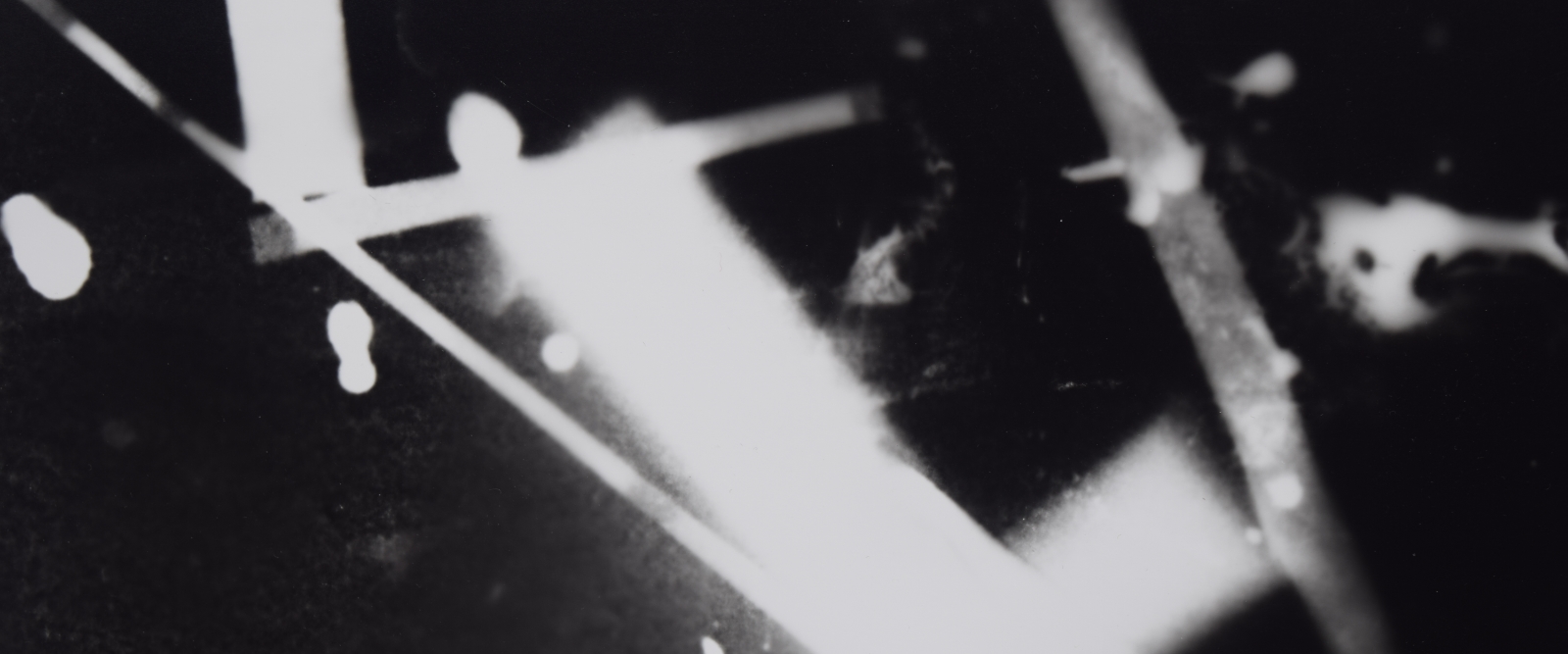


Aerial/Generative Drawing.
Social Mappings. Winchester Cathedral :
Space for Peace 2011.
Cyanotype from performative drawing.
.jpg)
