Showing posts with label figure. Show all posts

Wednesday, 5 November 2025

Enchantment and Sites of Sensual Engagement : Periphery/Boundaries and their limits.

Outpost 140323

Wonders On The Periphery Of living.


https://www.flickr.com/photos/russellmoreton/


The Wonder Of Minor Experiences.

A Brief Phenomenology of Enchantment.


Enchantment entails a state of wonder, and one of the distinctions of this state is the temporary suspension of chronological time and bodily movement. To be enchanted, then, is to participate in a momentarily immobilizing encounter; it is to be transfixed, spellbound.

Jane Bennett.


The moment of pure presence within wonder lies in the object's difference and uniqueness being so striking to the mind  that it does not remind us of anything and we find ourselves delaying its presence for a time in which the mind does not move on by association to something else.

Philip Fisher.


The dialectical principle of the intertwining of the world and the self.


My body is made of the same flesh as the world, this flesh of my body is shared by the world and the flesh of the world or my own is a texture that returns to itself and confirms to itself.


The Intertwining-The Chiasm.

The Visible and the Invisible.

Merleau-Ponty.


The Concept Of Sculpting Invisible Materials.

Intervals/Sequences/Iterations : Between Drawings/Templates/Prototypes.


The Eyes Of The Skin.

Critics of Ocularcentrism.

Juhani Pallasmaa.


Merleau-Ponty speaks of the ontology of the flesh as the ultimate conclusion of his initial phenomenology of perception. This ontology implies that meaning is both within and without, subjective and objective, spiritual and material.

Richard Kearney.


Sculptural Spacings/Bindings.

Creativity, materials/matters of concern caught around the creative act of a self amongst others.


Temporal Interrelations.

Adaptive Bridging Strategies.

Playing with materials, to bring forth the synergies of thinking/making/imagination.


Working so as to form or 'seed' gaps amongst the process of exploration.

The display of agency, of un-learning perspectives, discontents, alterity and literal landscapes.


Sites of sensual engagement through alternative forms of individual and social participation.


Energies, entropic to living things.

Natures/Intellectual Spaces.

Indexical Traces/Flows of Energy.

Artists/Makers on the process of material transformation, mobility, thought, body, through an embodied/subjective/multisensory experience. 


Raveningham, allows the thinking of the existential qualities of natures materials in an intimacy/nowness with the natural world. An enmeshed world, working on natures terms, of movement, change, life, growth, and decay.


For Olafur Eliasson, the practice sets out to examine the way an embodied sense of a place can be restructured as a function/site of a sculptural spacing that questions ideas around embodiment, perception, architectural programming. 


The landscape without objects/without hylomorphic thinking.

Tim Ingold.


The Periphery. 

Frontiers and their Disappearance.

Borders and Limits.

Wim Nijenhuis.


Individuation, the process of 'becoming something' and the 'being there' of 'something.'


Modern information theory claims that both the clay and the mould are engaged with matter and form. The clay is in a metastable state that possesses potential energy, unevenly distributed, but capable of effecting a metamorphosis. This quality of the clay is the source of its form. The mould places a limit on the expanding form of the molecular organisation of the clay as it fills the mould. The mould does not form the clay passively, but communicates a resonating action throughout the clay that alters the clay's molecular organisation.


Paul Virilio, distinguishes two orders around the frontier, that of place, characterised by a stability of form, and that of speed, characterised by the fading of form.


Primarily the city is formed and informed by heterogeneous speeds, by the difference between inertia and traffic, the form of the city is thus finally an unstable effect. The city exists through traffic in all its forms.


Keywords : Vectorisation, Distinctive Oppositions, Hylomorphic Schema, Form-Matter-Model,  Place, Speed, Inertia, Traffic, 


New Figure/Grounds.


Geometric marks, vectors across a surface that might suggest some opaque system of musical notation, of points/notes connected forming a constellation of lines and angles. Workings on and between that are synonymous with the field/environ of the canvas, in such a way as it is no longer possible to speak of the classical figure ground relationship.


The Luminescence of Space.

Towards a more delimited spatial conception, a loss of centre.

Charles Maussion.


Rethinking, gestural, expressionistic, lyrical abstractions, atmospheric figuration. 


Keywords : Colour Field Painting, Lucio Fontana, Mark Rothko, Orhon Mubin, Spatial Conception, 


Wednesday, 3 January 2024

Art as Experience : Interactions of Color, Josef Albers.

GLASS-COLOUR-LIGHT-INTERIOR-LANDSCAPE

ART AS EXPERIENCE
WHAT IS THE CAPACITY OF THE MATERIAL

Josef Albers


Life is change-day and night, cold and warm, sun and rain. It is more in-between the facts than the facts themselves.
I believe it is now time to make a change of method in our art teaching, that we now move from looking at art as a part of historical science to an understanding of art as part of life.
In art we can still experience revelation and wonder.

On Glass Pictures

Opaque Glass/Sandblasting
Colour Intensity
The flatness of the design elements offer an unusual and particular material and form effect.
Colour Intersection/Instant and a Spatial Flow

Colour Interaction
Square-on-square studies, of closely observed colour events staged within a controlled setting.

Oral History
Interview with Josef Albers, 1968 June 22-July 5
The role of art in society to reveal visually the attitude of our mentality

Working in Collage and Stained Glass under Itten
Collage to Montage
His belief that he teaches a philosophy (of how to see) not technique.  


Guggenheim Museum. 1994


Catalogue

32. Skyscaper 11
1929
Sandblasted flashed glass 36.2 x 36.2cm.

30. Skyscraper 1
1927/1929
Sandblasted opaque flashed glass 34.9 x 34.9cm.

28. City
1928
Sandblasted opaque flashed glass with black paint, 33 x 55.3cm.
Badley damaged with sections of glass missing.
Alber's numerical notations in white chalk or pencil are visible on the surface.

21. Frontal
1927
Sandblasted opaque flashed glass with black paint, 34.8 x 47.9cm.

https://ia800808.us.archive.org/9/items/glascoli00albe/glascoli00albe.pdf


A Spiritual Documentation of Life
Marco Pierini

Art is something that cannot be taught, what can be taught is craft
His program focused mainly on the study, analysis, manipulation, assembly and transformation of matter.
Albers structured his teaching method as a natural, consistent consequence of his unusual training.

He brought to life works of art that are never merely the result of a thorough process or of the correct application of norms and rules. Rather, they are works of art that discover their own rules in the very process of their making.

Art is not an object but experience

The Artist as Alchemist
Nicholas Fox Weber

He (Albers) saw his art as representing an ideal for the integration of the individual in society both in its tone and in the simultaneous independence and interdependence of its forms and colours. 


TEACHING FORM THROUGH PRACTICE 1928


Learning is better than teaching because it is more intensive : the more we teach/examine, the less the students can learn.
Learning and practicing techniques develops insight and dexterity, but not creative energies. Inventive construction and an attentiveness that leads to discoveries are developed, at least initially through experimentation that is undisturbed, independent, and thus without preconceptions. This experimentation is initially a playful tinkering with the material for its own sake. 
That is to say, through experimentation that is amateurish (ie not burdened by training).   

The Three Ecologies Institute
An Open Laboratory for Thinking in the Making

THOUGHT IN THE ACT
Passages in the ecology of experience
Erin Manning
Brian Massumi


Thursday, 1 December 2022

Thought In The Act : Learning through making.


Learning is better than teaching because it is more intensive : the more we teach/examine, the less the students can learn.
Learning and practicing techniques develops insight and dexterity, but not creative energies. Inventive construction and an attentiveness that leads to discoveries are developed, at least initially through experimentation that is undisturbed, independent, and thus without preconceptions. This experimentation is initially a playful tinkering with the material for its own sake. 
That is to say, through experimentation that is amateurish (ie not burdened by training).   

The Three Ecologies Institute
An Open Laboratory for Thinking in the Making

THOUGHT IN THE ACT
Passages in the ecology of experience
Erin Manning
Brian Massumi

Art as Experience : Interactions of Color/ Art as Experience, Josef Albers
GLASS-COLOUR-LIGHT-INTERIOR-LANDSCAPE

ART AS EXPERIENCE
WHAT IS THE CAPACITY OF THE MATERIAL

Josef Albers


https://www.flickr.com/photos/russellmoreton/

Tuesday, 28 September 2021

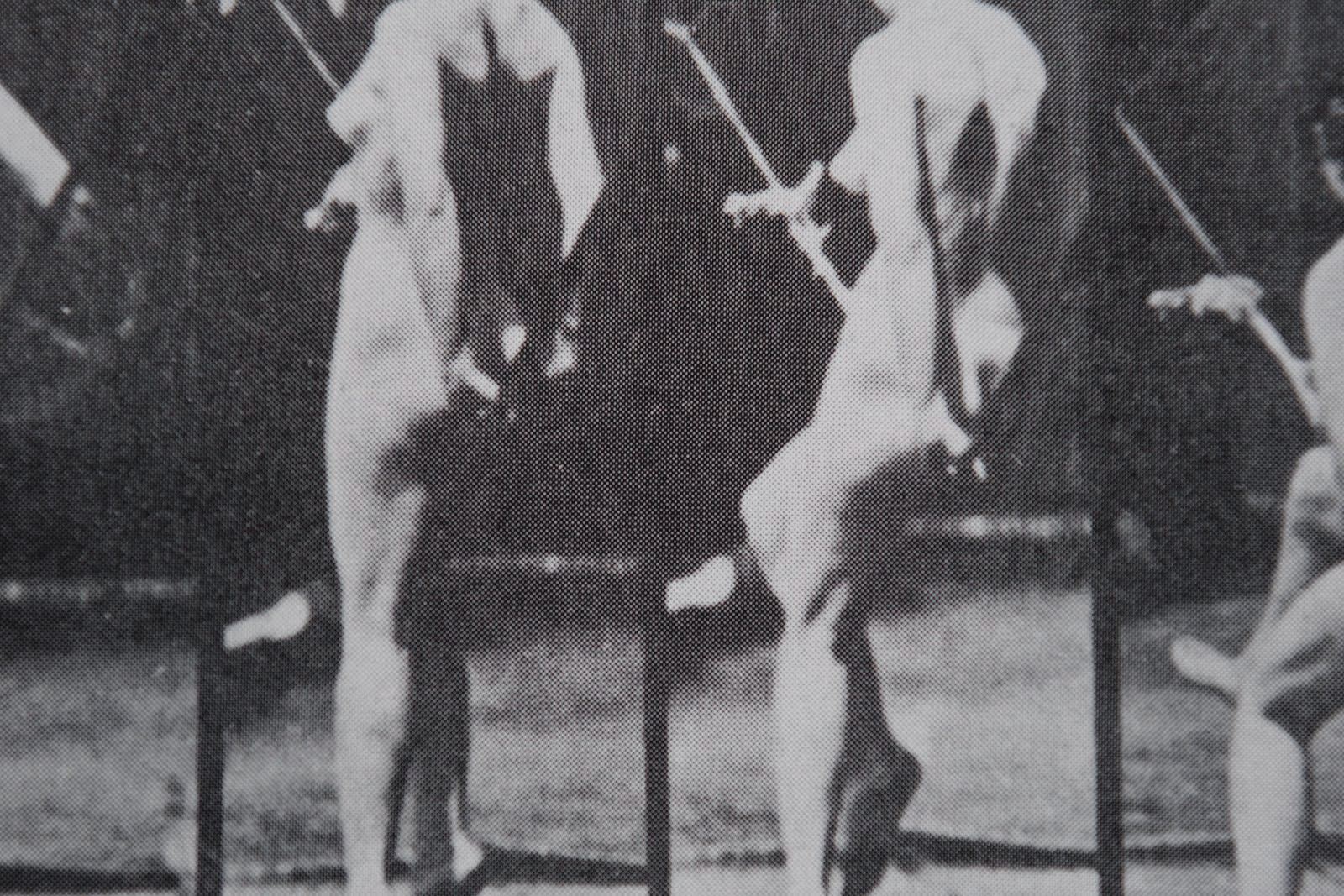
The Photographic Body/Working Documents : Bacon/Muybridge/Beuys/Butler/Piper

The Human Figure in Motion
Eadweard Muybridge

Francis Bacon
In Camera
The Human Body
The Violence of The Real

John Deakin
Heinrich Zille
Rodin
Beuys

Reg Butler
Woman 1949

John Piper
Eye and Camera, Blue to Ochre, 1976


Wednesday, 23 May 2012

Drawn map with twine and pebbles (detail)

Detail from life drawn trace of a human form. Exploration into creative practices and aesthetics of materials and mapping structures.