Showing posts with label Albert Camus. Show all posts

Thursday, 2 May 2024

Melancholy Landscapes : The Plague/Vermilion Sands


Film Collages, hybrid processes and temporal states
Liminality : Literature/Philosophy/Visual Art

Landscapes : entering/intruding/emerging (holga819)
Existential Gestures : Looking away from the sea
Ballard : Vermilion Sands  :  Speculative Fields/Spatial Practices

Albert Camus : The Plague, 1947. (Penguin Fiction)

The townspeople of Oran are in the grip of a virulent plague.

Cut off from the rest of the world, living in fear, they each respond in their own way to the grim challenge of the deadly bacillus. Among them is Dr Rieux, a humanitarian and healer, and it is through his eyes that that we witness the devastating course of the epidemic.

Written in 1947, just after the Nazi occupation of France, Camus's magnificent novel is also a story of courage and determination against the arbitrariness and seeming absurdity of human existence.

'Camus represents a particularly modern type of temperament, a mystic soul in a Godless universe, thirsty for the absolute, forever rebellious against the essential injustice of the human condition'
Shusha Guppy, Sunday Times


06/04/2020 

Saturday, 4 February 2023

Aesthetics and Subjectivity : Experiential Spaces/The feeling of what happens

Tides of Being/Becoming


Antonio Damasio
The Feeling of What Happens
Body, Emotion and the Making of Consciousness

Gaston Bachelard, The Poetics of Reverie.

Nick Cave, The Lyre of Orpheus.

Hildur Gudnadottir, Saman.


Sunday, 6 February 2022

Unbounded Outcomes : Iterations/Indexical/Repetition


Albert Camus : The Plague, 1947. (Penguin Fiction)

The townspeople of Oran are in the grip of a virulent plague.

Cut off from the rest of the world, living in fear, they each respond in their own way to the grim challenge of the deadly bacillus. Among them is Dr Rieux, a humanitarian and healer, and it is through his eyes that that we witness the devastating course of the epidemic.

Written in 1947, just after the Nazi occupation of France, Camus's magnificent novel is also a story of courage and determination against the arbitrariness and seeming absurdity of human existence.

'Camus represents a particularly modern type of temperament, a mystic soul in a Godless universe, thirsty for the absolute, forever rebellious against the essential injustice of the human condition'
Shusha Guppy, Sunday Times


Inside Phenomena/Catching The Light

fig222 Visual device, North Sea, Covehithe

Indexical Iterations , Post Studio Cyanotypes

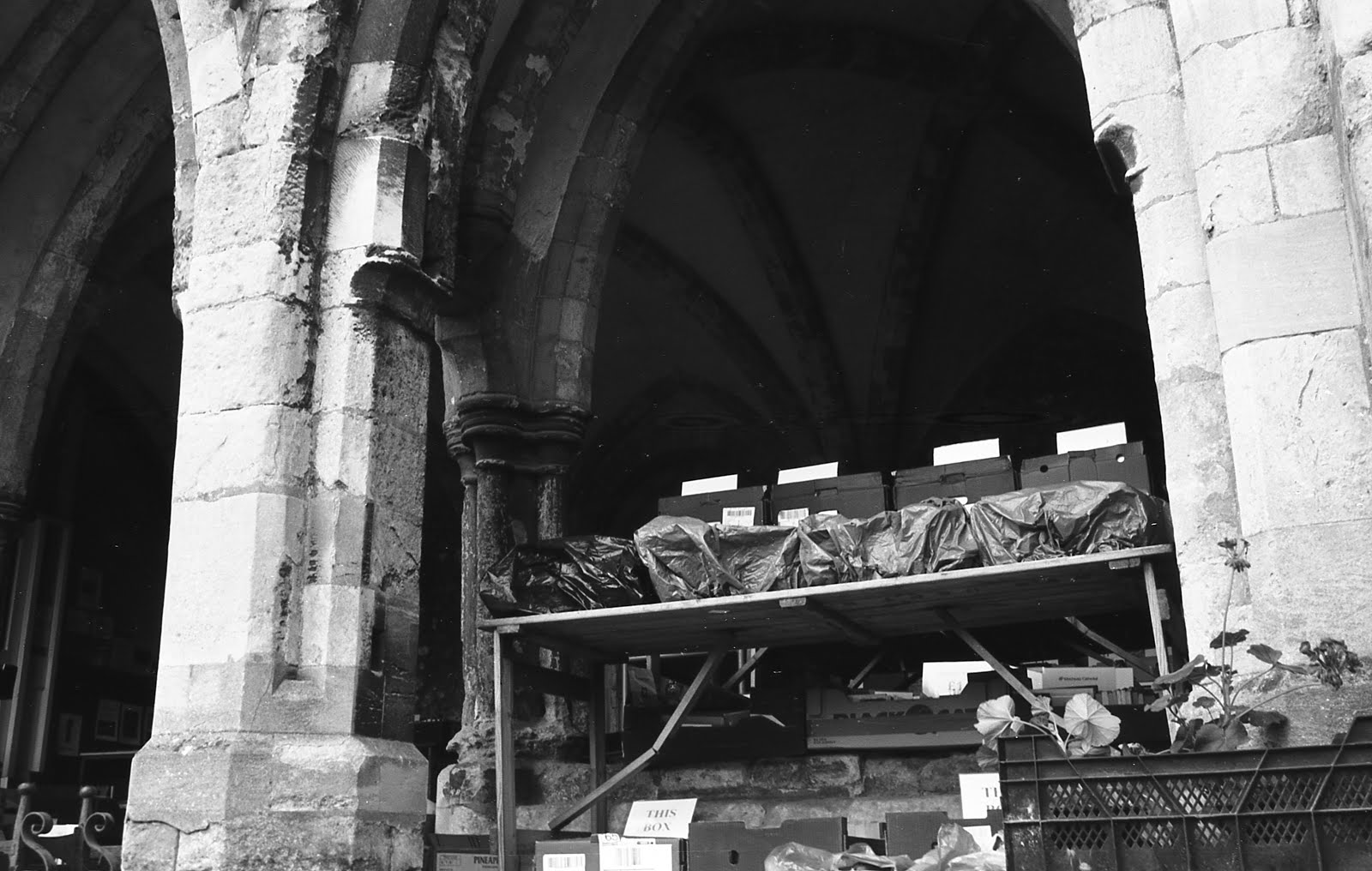
Cathedral Bookshop, Winchester


Sunday, 12 September 2021

On The Beach : Photographic Clouds of Potentialities/Boundary Based Agency

Inside Phenomena/Catching The Light
Wind Turbines : Coastal Geometries/Machines
North Sea Rim
Sea Palling
Visual Device : Textual Intervention

Albert Camus : The Plague, 1947. (Penguin Fiction)

The townspeople of Oran are in the grip of a virulent plague.

Cut off from the rest of the world, living in fear, they each respond in their own way to the grim challenge of the deadly bacillus. Among them is Dr Rieux, a humanitarian and healer, and it is through his eyes that that we witness the devastating course of the epidemic.

Written in 1947, just after the Nazi occupation of France, Camus's magnificent novel is also a story of courage and determination against the arbitrariness and seeming absurdity of human existence.

'Camus represents a particularly modern type of temperament, a mystic soul in a Godless universe, thirsty for the absolute, forever rebellious against the essential injustice of the human condition'
Shusha Guppy, Sunday Times

Existential Gestures : Looking away from the sea
Low Tide
Lightness
Quickness
Exactitude
Visibility
Multiplicity
CONSISTENCY/Guattari
The Three Ecologies

Italo Calvino
Six Memos for  the Next Millennium

Locality/Social Complexity- Notebooks
Flux : Consciousness
In and Out of Material
Beach


Wednesday, 20 September 2017

Albert Camus : The Plague, 1947. (Penguin Fiction)

The townspeople of Oran are in the grip of a virulent plague.

Cut off from the rest of the world, living in fear, they each respond in their own way to the grim challenge of the deadly bacillus. Among them is Dr Rieux, a humanitarian and healer, and it is through his eyes that that we witness the devastating course of the epidemic.

Written in 1947, just after the Nazi occupation of France, Camus's magnificent novel is also a story of courage and determination against the arbitrariness and seeming absurdity of human existence.

'Camus represents a particularly modern type of temperament, a mystic soul in a Godless universe, thirsty for the absolute, forever rebellious against the essential injustice of the human condition'
Shusha Guppy, Sunday Times


The Planet drowns in an ocean of photographic emulsion.
J G Ballard