A provisional research ecology: material absorbed in its own thoughts. A gathering place for things being made, read, sensed and thought. Images, texts, bodies, spaces and matter(s) move through correspondence, forming tentative rooms of inquiry. Research circulates between depth and surfacing, archive and anarchive, allowing propositions to return, migrate and become otherwise.
Monday, 20 October 2025
Material/Semiotic Flows/Subjectivity : Towards Disentanglement
Social behaviour is trapped in inescapable patterns of interaction coded by techno-linguistic machines, smartphones, screens of every size, and all of these sensory and emotional devices end up destroying our organism's sensibility by submitting it to the stress of competition and acceleration.
Franco "bifo" Berardi
And : Phenomenology of the End
Signs and Machines : Capitalism and The Production Of Subjectivity
Maurizio Lazzarato
Thursday, 9 October 2025
Thursday, 25 September 2025
Tarkovsky filming the Instant : Flux and Quality in Nature's Time
The theme of the human body as landscape and the biological link between humanity and nature.
Filmic Modalities
An Ecology of Mind
We are so accustomed to thinking of aesthetic phenomena as a discursive or representational construct, that we often forget that without arousal of perception, no aesthetic experience is possible.
Going beyond what it may represent into the important psychic information it contains
Bateson credits art with playing the role of confronting the quantitative limit built into consciousnesses
Art assists mind in recognizing that the potentiality of heightened consciousnesses exist and that it resides in you and in me
Perception of Environment/Relational Situations
Tim Ingold
Each thing framed dwells in the world differently.
The frame and framing, through its configuration, must never offer a gap or a bridge through which as it were, the world could get in, or from which the picture could get out.
The picture frame reminds us that the work of art, while it hangs in our room, does not disturb our day-to-day sentient and perceptual ecologies.
It is like an island in the world that waits until one approaches it and which one can as well pass by and overlook.
On The Picture Frame, Simmel
Art becomes art by virtue of literal and institutional framing
Aesthetic contemplation blurs reals and emotional space in a way that produces tangible affects in the world
The thinking hand that mediates a haptic bridge in which creating and holding, becoming and grasping are all practical everyday activities extending the thinking body
Objects that stand in two worlds at once and becoming drawn into the movement of practical life through the virtue of being held in the hand
The intermingling of persons and objects in pictorial space and the aesthetics of the intermingling of function and form in everyday things
The pictorial space is one in which persons and images intermingle and passions can be aroused.
Art and Agency, Alfred Gell
Nature as “Comfort Zone” in the Films of Andrei Tarkovsky by Donato Totaro
In this essay Totaro analyzes the unique thematic and aesthetic import of Tarkovsky’s use of nature.
Tarkovsky relies on nature and natural phenomena to underscore and often dictate the time-pressure (rhythm) of a shot. The movement of time, its flux and quality, flows from the life-process that is recorded in the shot. Even though the fires, downpours and gusts of wind are staged, re-shot or recreated there still remains the spontaneous element of “nature’s time” within the filmic time. Each of the natural events and elements (water, wind, fire, snow) have their own sustained rhythm. Tarkovsky uses these natural rhythms to express his own, that of his characters and the temporal shape of the film (23-24).
I would like to conclude this analysis of Tarkovsky’s unique use of nature as a ‘comfort zone’ by saying a few things about his two science-fiction films, Solaris and Stalker. Solaris is based on the great same-titled science-fiction novel by Stanislaw Lem. The many philosophical and ethical differences between the novel and film can be summarized by the fact that, whereas the novel begins in space on the Solaris space station orbiting the planet Solaris, the film begins with a 45 minute prologue on earth, which establishes the importance of home, family, and ‘mother’ earth to the psychologist Kris Kelvin (and by extension all humans), who is soon to leave for outer space. The theme of the human body as landscape and the biological link between humanity and nature is established right from the opening, a (second) slow motion close-up shot of plant life swaying under a crystal clear stream that slowly pans right to reveal the hand of a man wearing brown trousers and a dark leather coat standing amidst waist high reeds.
http://offscreen.com/view/nature_as_comfort_zone
Waverley Abbey
Reflected ruins in flooded interior
Saturday, 20 September 2025
Espace-Milieu : Painting as Environment/Sensual Engagements
Aerial/Generative Drawing.
Social Mappings. Winchester Cathedral :
Space for Peace 2011.
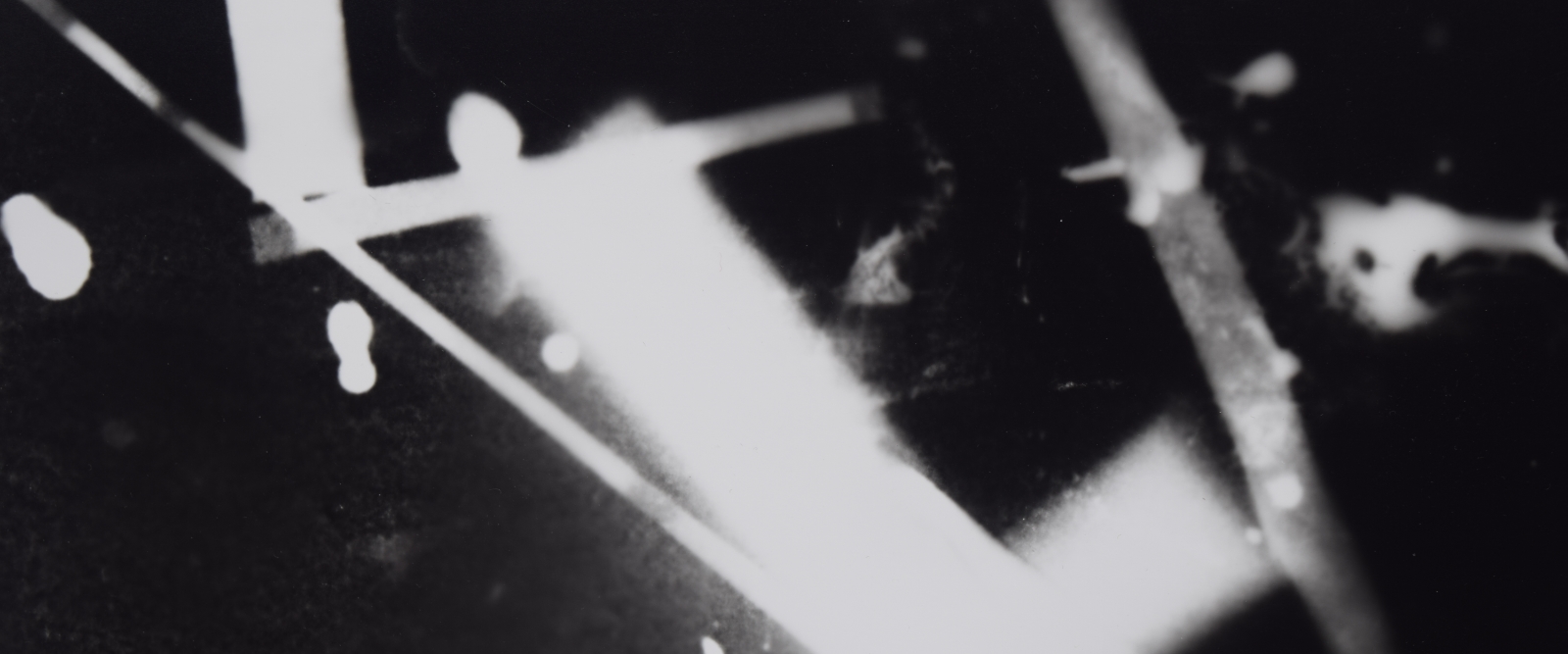
Cyanotype from performative drawing.
Saturday, 6 September 2025
Bricolage Processes : Creative Audit of Research Topics and Processes
Interiors/UCA Farnham. 2014
THE ARCHITECTURE OF NATURAL LIGHT, Henry Plummer. 2009 THE OTHER ARCHITECTURE, Constructing metaphysical space.
Catching The Light.
The Entwined History of Light And Mind. Arthur Zajonc
EVANESCENCE
Orchestration of light to mutate through time PROCESSION
Choreography of light for the moving eye VEILS OF GLASS
Refraction of light in a diaphanous film ATOMIZATION
Sifting of light through a porous screen CANALIZATION
Channelling of light through a hollow mass ATMOSPHERIC SILENCE
Suffusion of light with a unified mood LUMINESCENCE
Materialization of light in physical matter
ADVENTURES OF THE FIRE, VESSELS THROUGH TIME CERAMIC GATE
“The existing architectural environment is thought to be more or less official through the hierarchical arrangement, providing an rigidity to the public. The base for a creation is a freedom and I proposed an asymmetrical form for the gate to break the official space, bringing an atmosphere for freedom of creation. ”
Jung-mook Moon. CERAMIC PAVILION
“People make space, and space contains people. ” Seong-chil Park. (Exhibition Space Designer)
PALIMPSEST AS REMAINS OF A CREATIVE PRAXIS STUDIO SPACE AS A PHILOSOPHICAL WORKSHOP
PALIMPSEST IN ARCHITECTURE
“Architects, archaeologists and design historians sometimes use the word to describe the accumulated iterations of a design or a site, whether in literal layers of archaeological remains, or by the figurative accumulation and reinforcement of design ideas over time. Whenever spaces are rebuilt or remodelled, evidence of former uses remain. ”
Wikipedia
RODIN AND BEUYS
THE ALCHEMY OF BUILDING WORKING PRACTICES
RUINS, REDUCTIONS, and the LOSS of SUBSTANCE.
FRAGMENTS, ASSEMBLAGES and INTERIORS that re-enter the world of creativity.
The Theatre of Research is a working space that creates and crafts both theoretical and practical objects, things and documentation. Its reason for being is to explore the praxis for creative narratives between the Arts and The Humanities. It attempts through performance, fine art and architecture to collage qualitative and diffractive dialogues into new relational discourses, the results of which become exhibited or staged as open workshops engendering praxis, publication and production. In its fledgling state it is seen as being part of a University faculty that has interests in the Arts and The Humanities.
We have art so that we may not perish by the truth. Friedrich Nietzsche Can one achieve architecture without resorting to ‘design’? What if, instead of designing a new building, you keep the one skated for demolition? How do you insert an original program inside the old and new structures simultaneously? How do you reconcile coherence with multiplicity? Bernard Tschumi 2012
PROGRAM. Tschumi, Le Fresnoy: Architecture In/Between, 1999/2012 Architecture was no longer an autonomous and isolated discipline but participated in the movement and confrontation of ideas. Tschumi, Red Is Not A Color. 2012
Questions of Space
Abstract Mediation and Strategy
CREATIVE AUDIT of RESEARCH TOPICS The Craftsman, Richard Sennett. 2008
“Making is thinking, the good craftsman uses solutions to uncover new territory; problem solving and problem finding are intimately related in his or her mind. For this reason curiosity can ask, “Why" as well as “How " about any project. ”
Prologue: Man as His Own Maker CRAFTSMEN
The Troubled Craftsman The Workshop Machines
Material Consciousness CRAFT
The Hand
Expressive Instructions Arousing Tools Resistance and Ambiguity CRAFTSMANSHIP Quality-Driven Work Ability
Conclusion: The Philosophical Workshop BRICOLEUR BRICOLAGE, Barkow Leibinger. 2013
“Bricolage indicates an approach that is inclusive, ie open-ended, and can come either from within architecture itself or from external sources. ”
CASTING WEAVING
FOLDING BUNDLING PRINTING ANTICIPATING
FROM MODELS TO DRAWINGS, Marco Frascari. 2007 CRITICAL STUDIES IN ARCHITECTURAL HUMANITIES
THE WAVERLEY PROJECT
Imagination and Representation in Spatial Practices (Architecture, Fine Art and Performance).
Historical Perspectives Emergent Realities Critical Dimensions
CRISTINA IGLESIAS Guggenheim Museum 1998
“Concrete and iron, glass, yellow, terracotta and tapestry, aluminium and photo etching, leather and amher glass, wood, resin and bronze powder, blue glass and alabaster. ”
Introduction, Carmen Gimenez
Screen Memories, Nancy Princenthal Stained With a Pale Light, Adrian Searle Wanting Shelter, Barbara Maria Stafford
CHRIS WILMARTH. 1986 Delancey Backs (and Other Moments)
Etched float/polished plate glass, steel and bronze, blown glass.
BURNING ISSUES AND PRACTICAL CONCERNS
THE READING ROOM
The Neo-Romantic Vision from William Blake to the New Visionaries.
‘A new alchemy is being formed which encompasses traditional methods of art, the new technology, and the revolutionary new scientific discoveries.’
Re-Enchanting the Land. (Woodcock,2000:140)
‘When one lacks outer space one creates inner space. Invention becomes more complex, cup and circle markings on stones, intricate Celtic spirals and knots, illuminated manuscripts, gothic architecture with its inherent story telling.’ (Woodcock,2000:131)
Reading The Landscape.
What distinguishes Neo-Romanticism from traditional romanticism is the feeling of danger, the juxtaposition of the urban with the countryside, the element of darkness, dissolution, an almost pagan reverie breaking through the ruins of post-industrialism. (Woodcock,2000:55)
Radio On by Chris Petit.
The film has a hallucinogenic noir-like quality, a weird hybrid of Fifties Americana and a displaced Britain. It is a seismographic disruption of British culture in a limbo land of displaced dreams, elements of an almost mythical Britain fleetingly appear. (Woodcock,2000:115)
England Dreaming.
Throughout John Piper’s long and prolific life he remained fascinated not only with churches, country houses and landscapes but also ancient sites. He comments on the landscape of Snowdonia, ‘Each rock lying in the grass had a positive personality, for the first time I saw the bones and the structure and the lie of mountains, living with them and climbing them as I was, lying on them in the sun and getting soaked with rain in their cloud cover and enclosed in their improbable, private rock-world in fog.’ Piper never dismissed the archaic spirit of place.
(Woodcock,2000:31)
The small ‘Scriptorium’ conceived as a space as a refuge, an intimate minimal construction that features a doorway and an interior that contains a place for objects, perhaps books, as well as a small sitting area. This construction, an open cell perhaps is evocative to a state of contemplation between the fabric of the everyday.
WATER AND DREAMS
AN ESSAY ON THE IMAGINATION OF MATTER Gaston Bachelard
Viscosity/Water in Combination.
Tacit and intimate contact, relationships and encounters between water and the potter. Water is his/her first auxiliary.
WORKING NOTES for InDESIGN Document/Mood Board.
Old Buildings/New Designs: Architectural Transformations. Charles Bloszies. Knocktopher Friary is a quiet place of contemplation. The new residential cloister unifies the friary and the church. The composition of the architecture is a knitting together of two original forms with a ribbon of concrete, glass and wood. The new buildings are crafted from a minimalist vocabulary where the palette of materials was kept to a minimum. One of the interesting design features is that the new elevations never touch the old facades with a solid-to-solid intersection; the new is either set back from the old (Ashley Castle) or the joint is glazed. The existing church floor is used as both a datum for maintaining the new floor level in the new construction, and as a vein of closely controlled changes of materials and finishes. The resultant architecture is played between subtle material exchanges of concrete meeting wood, concrete meeting glass, and concrete meeting concrete with slightly different surface qualities. What results is a clear differentiation between the old and the new, both are remarkably quiet architecturally reflecting the concerns of the site as a Carmelite monastery in the southeast of Ireland.
Working Thoughts
The Phenomenology of Reading. GLAS, Derrida Literature and Language.
Barbed Nature, Pierced Flesh. Graham Sutherland 1903-80
He never worked in situ but collected information to be worked on in his studio. The detailed sketches and notes he had made when through a transition in his mind before the final painting, culminating therefore in an inner landscape rather than a factual rendition.
These landscapes were no idyllic reverie but evoked a sense of the mysterious and dangerous. In many ways they emitted a foretaste of the approaching Second World War. (Woodcock,2000:25)
Ruins, Shadows and Moonlight. Elizabeth Bowen
“It is a fact, that in Britain, and especially in London, in wartime many people had strange, deep. Intense dreams. We have never dreamed like this before; and I suppose we shall never dream like this again.” Elizabeth Bowen.
The awareness of the social changes which broke through wartime society is evident in her novels and short stories, the feeling of boundaries being broken, physically, psychologically and also on a spiritual level, where the sense of the living and the unaccounted dead, caused by the bombing, mingle. Her evocative descriptions of the quality of light, the particular smell of a room, of a garden after rain of walking over charred wood and broken glass following an air-raid, and even the effect atmospheres have on the individual all contribute to evoking a strong sense of place. She is a master at conjuring up the minutiae of the everyday world and the presence of another dimension. (Woodcock,2000:74-75)
Rogue Male. Geoffrey Household.
The novel evokes the solitude of the landscape as it was before the advent of the mechanisation of farming and the availability of the countryside created by the growth in transport of the following decades. (Woodcock,2000:77)
Tn the heart of this hedge, which I had been seeking all the way from London, the lane reappears. It is not marked on the map. It has not been used, I imagine, for a hundred years. The deep sandstone cutting, its hedges grown together across the top, is still there; anyone who wishes can dive under the sentinel horns at the entrance and push his way through and come out in a cross hedge that runs along the foot of the hills. But who would wish? Where there is light, the interior of the double hedge is of no conceivable use to the two farmers whose boundary fence it is, and nobody but an adventurous child would want to explore it.’
Geoffrey Household, Rogue Male 1939.
The Stride of The Mind
Reading Rooms. Figuring Space. Text/Fumiture/Dwelling Reading with Paths
Relativity through Walking and Thinking. Subjectivity. Space - Politics - Affect
Waverley Abbey. Cistercian Monastery
The peculiarity of the ruin is defined in that it demythologises the impression of seamlessness and linearity. In the ruin, we are at once removed from dichotomised and levelled down space by entering a place at the threshold of experience. At the threshold, we return to the pre- spatial, if primordial, landscape, yet to submit to the suppression of space and site. Instead the place of ruin creates protrusions, which desolates the category of clean space.
The Aesthetics of Decay, An Uncanny Place. Dylan Trigg
Scarpa, extensive use of concrete with different aggregates and finishes.
Ashley Castle, restoration of ruin into a domestic dwelling, sensitive use of materials and methods of joining or revealing the historical fabric (allowing the ruinous to remain visible) of the building.
The Dovecote Studio, a building made of CORTEN steel built within the interior of a ruined Victorian dovecote (see further notes).
Thursday, 4 September 2025
Drawing Surfaces : Situated Knowledges/Constructing Atmospheres
Outpost 120123
Constructing Atmospheres/Test Sites for an Aesthetics of Joy.
Margit Brunner. 2015
https://issuu.com/aadr_publishing/docs/constructing_atmospheres_s
Red Is Not A Colour
Architectural Concepts
Bernard Tschumi
What role does the audience play in the definition of a provocative project?
What are the ways in which I want to construct my world?
The in-between chapters that reveal his underlying beliefs and influences. From movies to built spaces or from art pieces to historical events, a melting pot of his imagination. This is where we understand what Tschumi means by his endless questioning of the world and what the architect's contribution could be.
Antoine Vaxelaire, AA 5th Year. 2013.
Marking The Line
Ceramics and Architecture.
Christie Brown, Carina Ciscato, Nicolas Rena and Clare Twomey in response to Sir John Sloane.
Cathected
Aesthetic Phenomenon
Aesthetic Causality
Sensual Object
Allure
Graham Harman reminds us that moments of allure, the fusion of always accessible sensual qualities onto a reified sensual object, are ontologically special experiences, but they are very common in human life.
Architecture articulates our experiences of being-in-the world.
The very essence of the lived experience is moulded by hapticity and peripheral unfocused vision.
Pallasmaa. 2005
The simple complexity of the sensibility found in textures and the drama of shadows.
Developing natural aptitudes through the sense of touch.
The senses considered as perceptual systems are defined as a haptic system in which the sensibility of the individual to the world adjacent to their body and by use of their body.
J Gibson. 1966
In some cultures, the senses of smell, touch and taste have collective importance for memories, behaviour and communication.
Indigenous clay and mud constructions, with their plastic properties, seem to be generated more from the haptic senses than the eye.
Hapticity and Alvar Aalto's Architecture.
Sam Barnham.
David Abram, The Spell of the Sensuous. 1996
Juhani Pallasmaa, The Eyes of the Skin. 2005
Juhani Pallasmaa, The Thinking Hand. 2009
Gaston Bachelard, The Poetics of Space. 1969
Tuesday, 2 September 2025
Anachronistic Grisaille/Space and Architecture : Cyanotype/Diaphanous And Indexical Negatives

Tracing Light : Petworth House, West Sussex 2000
David Alan Mellor, Garry Fabian Miller.
Light And The Genius Loci
For Derrida, the sun not only marks the beginning of metaphoricity but it is also an inescapable reminder of the solar system and oscillations, hidings and occultrations, inherent in 'a certain history of the relationships; earth/sun in the system of perception'.
Mutations Of Light
Petworth Window, 6 July 1999
Light's Windows And Rooms
Passing towards the Invisible.
The prospect of some metaphysical realm beyond the blue end of the spectrum and beyond material things illuminated to carnal sight, was a recurrent theme in William Henry Fox Talbot's early speculations.
BROUGHT TO LIGHT
PHOTOGRAPHY AND THE INVISIBLE 1840-1900
Picturing The Universe
Corey Keller
Invisible objects, penciled by nature's own hand.
In his introduction to the exhibition catalogue Iconoclash: Beyond the Image Wars in Science, Religion, and Art, the historian of science Bruno Latour argues that scientific pictures are powerfully affective because they more than mere images; they are, as he puts it, the 'world itself'.
The Social
Photographic Eye
Jennifer Tucker
Nineteenth century science was characterized by both the appeal to visual evidence and the need for confirmation by the testimony of eyewitnesses. The latter explains why scientists pursued public viewings of their photographs by means of illustrated slide lectures, exhibitions, and reproduction in newspapers and magazines.
An understanding of the social boundaries of nineteenth century science helps make sense of a certain paradox within contemporary attitudes towards photography of the invisible. The ideal of mechanical objectivity in documenting visual knowledge demanded the elimination of the artist-observer and all of the subjectivity implicit in drawing by hand.
Invisible Worlds
Visible Media
Tom Gunning
William Henry Fox Talbot, Slice of horse chestnut, seen through the solar microscope, 1840, salt print 18.6x22.5 cm.
Techniques Of The Observer
On Vision And Modernity In The Nineteenth Century
Jonathan Crary
The Camera Obscura and its Subject
Above all it indicates the appearance of a new model of subjectivity, the hegemony of a new subject-effect. First of all the camera obscura performs an operation of individuation; that is, it necessarily defines an observer as isolated, enclosed, and autonomous within its dark confines. It impels a kind of askesis, or withdrawal from the world, in order to regulate and purify one's relation to the manifold contents of the now 'exterior' world.
UNDER THE SUN
By The Light Of The Fertile Observer
Metaphors of illumination in the photography of Christopher Bucklow, Susan Derges, Garry Fabian Miller, and Adam Fuss.
An Epiphany Of Light
David Alan Mellor
Friday, 29 August 2025
Sensual Objects/Temporal Skin : Intersubjective Spaces/Aesthetics
Realist Magic
Objects, Ontology,
Causality
Timothy Morton
On Vicarious Causation
Graham Harman
http://www.faculty.virginia.edu/theorygroup/docs/harman=vicarious-causation.pdf

Saturday, 23 August 2025
EXPLORATORY CLAY/CERAMIC BASED INQUIRY : Ceramics and Architecture.
EXPLORATORY CLAY/CERAMIC BASED INQUIRY 2023 Russell Moreton.
Working Title/Creative entanglements in a world of materials.
Ceramics for a reflective solitude, an architecture of silence.
My intention is to develop further ceramic processes and forms that can be further articulated into specific site based objects. I am very interested in the spatial relationships and aesthetics of ceramics and their place in architectural settings. I wish to further develop my practical working knowledge, and a creative sensibility towards the haptic qualities of making with clay and the unifying element of fire.
Studio program.
Clay bodies, making facilities, ceramic tests, development of simple forms on which to present ceramic experimentation. Analysis of findings, further developments from exploratory findings into new processes and ways of making. Sketchbooks, drawings and photography, text and collage.
Thrown Vessels, innerness, Edmund de Waal.
Spaces between Ceramic Objects, Giorgio Morandi.
The Ceramic Surface, Richard Hirsch.
Supporting Notes. Current Interests.
Areas Of Presentation and Participation.
Historic and Social Sites, Art venues and Exhibitions. Making Theoretical Objects, Installation, Workshops.
Reading/research alongside residency. Intertwining Thinking and Making.
The Eyes Of The Skin. Clare Twomey
Tony Cragg
Julian Stair
Bryan Newman
Gordon Baldwin
Richard Hirsch
Edmund de Waal
Juhani Pallasmaa
Steven Holl
Objects for a Landscape.
Marking the Line : Ceramics and Architecture.
With Fire : A Life Between Chance and Design.
Paintings of nothing series, ceramic,raw material, dry pigment, wax.
Bridge/Boat based conceptual forms.
Urban Spaces, palimpsest,impressions, traces.
Ceramic Processes
Additions to clay bodies
Hybrid combinations and making processes
Plasterwork, pressmoulding, sledged forms, templates, slabwork, thrown, handbuilt.
Firing processes and new possibilities of scale and quantity.
Red Kiln, refurbished, Harleston.
Once fire Raku based clay bodies and engobes/slips/oxides and other surface treatments.


.jpg)
.jpg)


.jpg)
.jpg)


.jpg)

.jpg)


.jpg)

.jpg)