Showing posts with label chalk. Show all posts

Sunday, 18 January 2026

Making Matter(s)~Truth : The unison of experience and imagination in a world to which we are alive and that is alive to us. Tim Ingold

 Architectonic Space: Fifteen Lessons on the Disposition of the Human Habitat.

The purpose, dynamic and potential of Anthropology.

russellmoreton.com


The poetics of order:

Dom Hans van der Laan’s architectonic space

Caroline Voet


Already in his first writings in the 1930s, Dom van der Laan aims to define architectural principles that provide an intellectual expression of the act of dwelling (‘wonen’). To dwell is to enter into a relationship with one’s surroundings, meaning to understand them. For van der Laan, this is the primordial function of architecture: it makes space readable. From his Benedictine background, he draws concepts that enable him to understand this complex process of cognition. He studies the old church fathers such as St Thomas Aquinas, especially his comments on Plato and Aristotle. The Benedictine way of life builds upon the intertwined relation between mystery and matter, between intellect and senses, believing that this relation can be expressed through a Platonic order.5 Professor van Hooff, in describing the work of Dom van der Laan, defines cognition as a dual process of synthesis and analysis.6 On the one hand, there is the act of living, a synthesis of the concrete and singular reality. On the other hand, there is the process of analysis by the abstracting intellect. For us to know the concrete and singular reality, an intense interrelation between the two processes is needed.


http://www.vanderlaanstichting.nl/pics/pdf/130105-poetics_of_order-Caroline_Voet.pdf

Friday, 13 June 2025

Cyanotype Drawings : Landscapes/Maps and Performative Drawings

Mapping Relationships : Contexts and Locations #2
Collage and drawing with cyanotypes, photographs, negatives and painted surfaces.

Mesh/Material/Light, Cyanotype Process
Cyanotype is a photographic printing process that produces a cyan-blue print. Engineers used the process well into the 20th century as a simple and low-cost process to produce copies of drawings, referred to as blueprints. The process uses two chemicals: ammonium iron(III) citrate and potassium ferricyanide.


The English scientist and astronomer Sir John Herschel discovered the procedure in 1842.[1] Though the process was developed by Herschel, he considered it as mainly a means of reproducing notes and diagrams, as in blueprints.[2] It was Anna Atkins who brought this to photography. She created a limited series of cyanotype books that documented ferns and other plant life from her extensive seaweed collection.[3] Atkins placed specimens directly onto coated paper, allowing the action of light to create a silhouette effect. By using this photogram process, Anna Atkins is regarded as the first female photographer.[4]

From Wikipedia, the free encyclopedia


The Cathedral : Place Studies

Pastoral Space: Material, Inquiry and Craft.#5

Material Agency : Carl Knappett, Lambros Malafouris
Visualising Environmental Agency
 
"Agents are defined as persons or things, which have the ability and intention to "cause" something "in the vicinity" or "in the mileau" to happen ( Gell 1998)"
"These latter artefacts are described with the term "index", to remove the appellation "art" and to imply that they are indexes of agency."
Some Stimulating Solutions, Andrew Cochrane.
 
Template and Form 2010.The Yard, Winchester.

Omslagsfoto : 

Landscapes from the Metropolis of Death. Otto Dov Kulka.

Mapping Relationships : Contexts and Locations #3
Collage and drawing with cyanotypes, photographs, negatives and painted surfaces.


Blueprint : Kengo Kuma, Sensing Spaces.

Panspermia : Cyanotype Drawing
Drawing on paper,150x240 cms
Full size human form drawn through "performance" on paper with cyanotype and black ink. Astronomical data and traces of seed heads together with reference material/notes (directed panspermia) in pencil.

Anthropomorphic and Botanical Cyanotype Drawing (Detail)
Botanical traces with leper graves


We live our lives sunk in vast forgetting. Milan Kundera, IGNORANCE.

Human mapping of social groups from the occupancy of the Winchester Cathedral "Space for Peace" 2011.
Mono Print : Cyanotype process on paper, 52x42cm.


Tuesday, 28 March 2017

Blueprints : Anthropological Forms

We sense the reality of something precious and mysterious, which reaches out to us with a claim that is in some way not of this world.

This is no longer a person, but the 'mortal remains' of a person. And this thought fills us with a sense of the uncanny.


The body is being reclaimed for this world, by the rituals which acknowledge that it  also stands apart from it.

The human form is sacred for us because it bears the stamp of our embodiment.

Beauty, Roger Scruton

Botanical traces with leper graves
Cyanotype material on paper 1400x2400cm


Friday, 15 April 2016

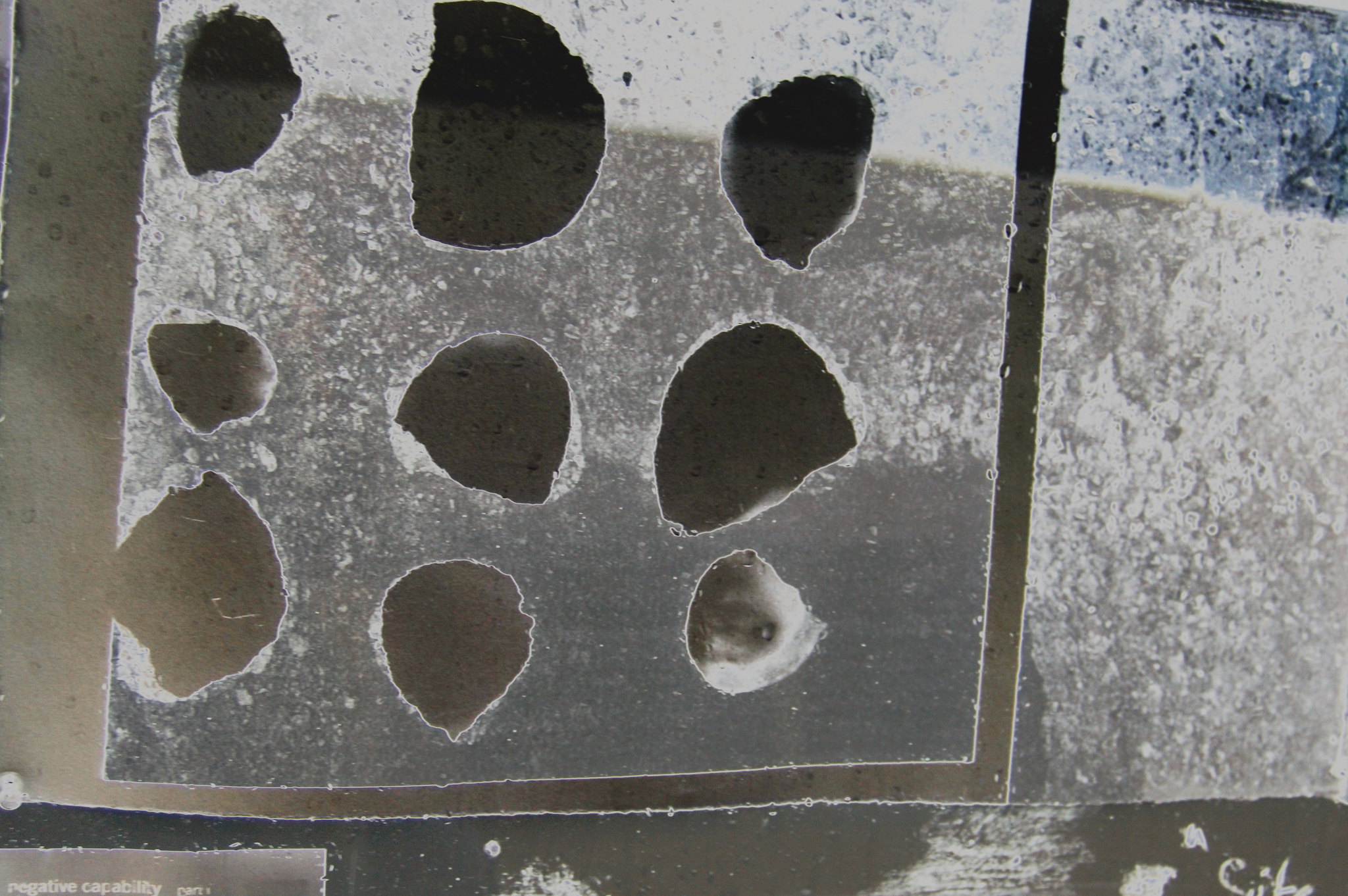
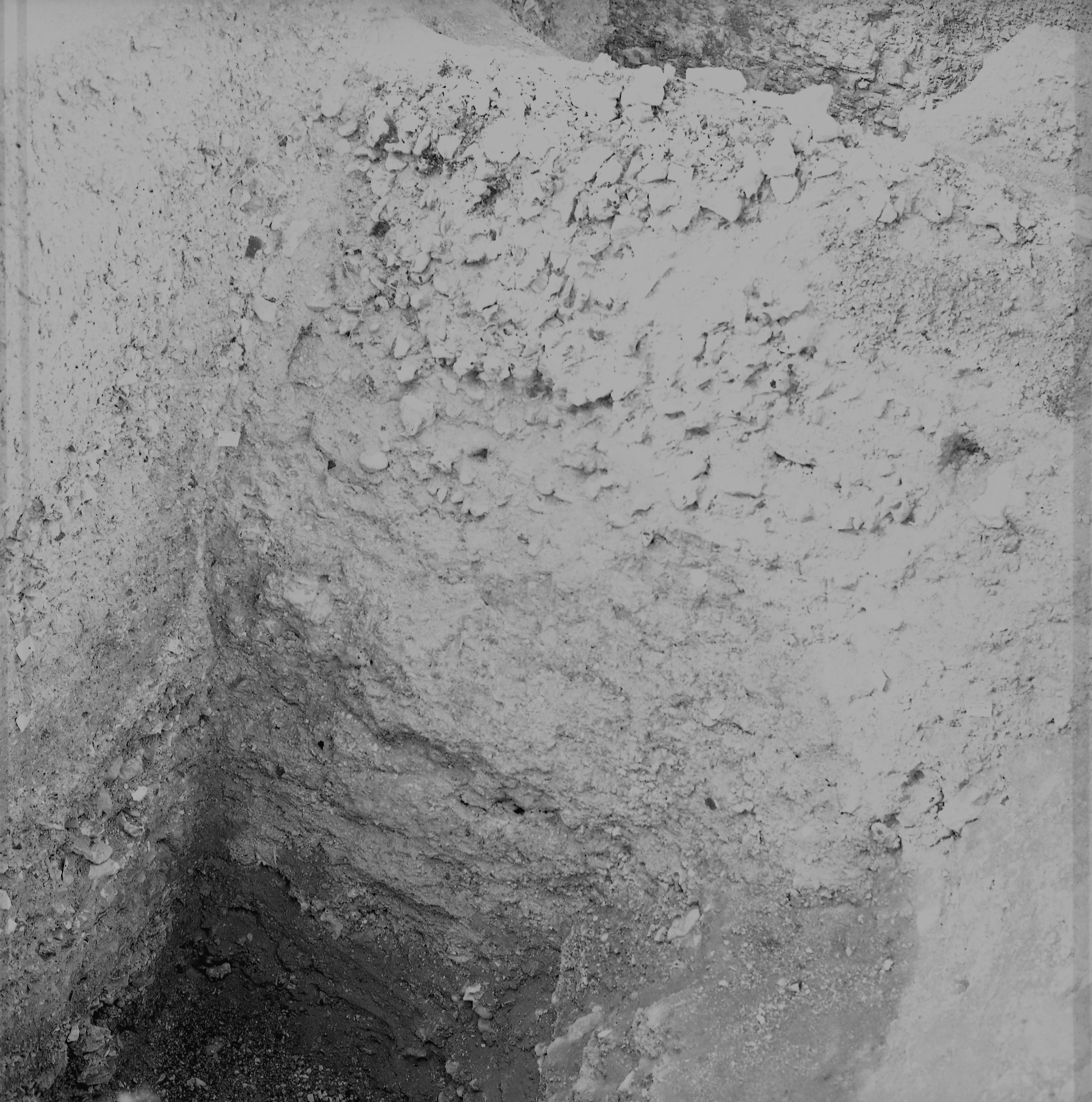
Russell Moreton Found Objects : Archaeological Photogram/Layered Landscapes


When you make photograms, without the use of a camera, you can indeed call that abstract photography, as the lens and the corresponding registration medium are lacking. No longer do you have pictures of reality or objects; you only have their shadows. It is a bit like Plato’s cave, where one could only imagine reality; the objects themselves were not visible.
—Thomas Ruff


Layered Landscape

"Thus we cover the universe with drawings we have lived. These need only to be tonalized on the mode of our inner space."

Gaston Bachelard.
The Poetics of Space.


Tuesday, 26 June 2012