Showing posts with label field. Show all posts

Friday, 27 March 2026

Littoral Environments : Arts and Subjectivity (the making of things)

Text Extract/Inclusion. "Pure Presence"

The enchantment of modern life: attachments, crossings, and ethics : Jane Bennett 2001.

It is a commonplace that the modern world cannot be experienced as enchanted--that the very concept of enchantment belongs to past ages of superstition. Jane Bennett challenges that view. She seeks to rehabilitate enchantment, showing not only how it is still possible to experience genuine wonder, but how such experience is crucial to motivating ethical behavior. A creative blend of political theory, philosophy, and literary studies, this book is a powerful and innovative contribution to an emerging interdisciplinary conversation about the deep connections between ethics, aesthetics, and politics.

As Bennett describes it, enchantment is a sense of openness to the unusual, the captivating, and the disturbing in everyday life. She guides us through a wide and often surprising range of sources of enchantment, showing that we can still find enchantment in nature, for example, but also in such unexpected places as modern technology, advertising, and even bureaucracy. She then explains how everyday moments of enchantment can be cultivated to build an ethics of generosity, stimulating the emotional energy and honing the perceptual refinement necessary to follow moral codes. Throughout, Bennett draws on thinkers and writers as diverse as Kant, Schiller, Thoreau, Kafka, Marx, Weber, Adorno, and Deleuze. With its range and daring, The Enchantment of Modern Life is a provocative challenge to the centuries-old ''narrative of disenchantment,'' one that presents a new ''alter-tale'' that discloses our profound attachment to the human and nonhuman world.


The making of things and discovering relationships.

Constructing site and situation based methodologies.

Playing out in the public realm, exploring through spatial engagements the "virtues" of courage, caution, confidence and risk.

Friday, 15 April 2016

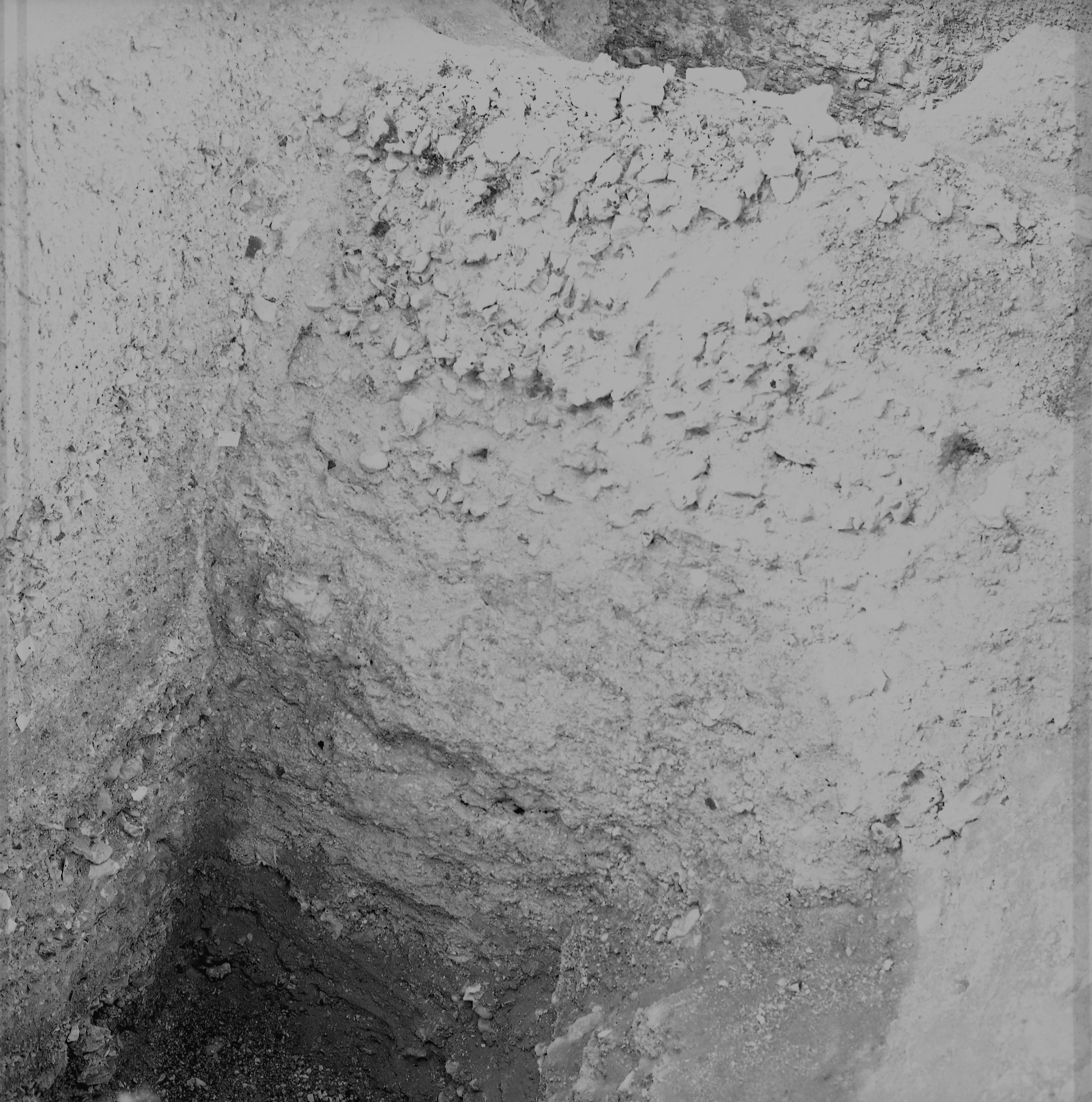
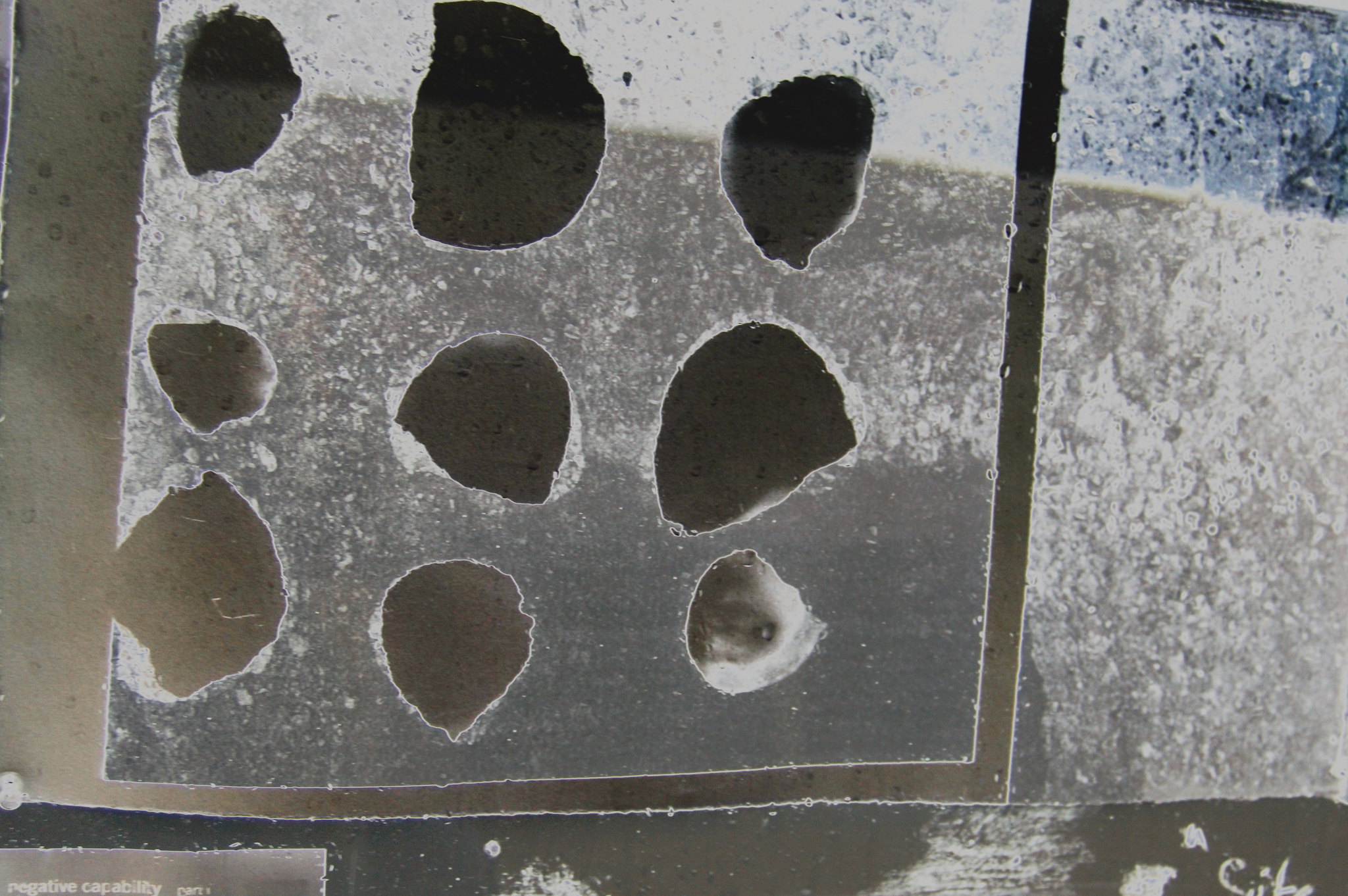
Russell Moreton Found Objects : Archaeological Photogram/Layered Landscapes


When you make photograms, without the use of a camera, you can indeed call that abstract photography, as the lens and the corresponding registration medium are lacking. No longer do you have pictures of reality or objects; you only have their shadows. It is a bit like Plato’s cave, where one could only imagine reality; the objects themselves were not visible.
—Thomas Ruff


Layered Landscape

"Thus we cover the universe with drawings we have lived. These need only to be tonalized on the mode of our inner space."

Gaston Bachelard.
The Poetics of Space.


Wednesday, 13 June 2012

Link Gallery Winchester 2009

Chalk figure,human body with local materials.

Artist Statement, re proposal for “Strong Voices”. Hyde 900 2010

It is my intension to utilise the ambiguous and strangely intimate nature of a continuous line around a human being to act as a site for the viewer to inhabit an engagement with the work. I am interested in utilizing the “open space” the territory within the traced outline as a sort of vessel for the temporary thoughts and reflections of others. This space hopes to set up a condition, a place that allows a dispassionate observer or thinker time to find and form their own thoughts. The use of material residues left from enactments seems to concur a metaphysical presence to that of the inner trace. The use of simple materiality (clay, chalk, rust) invokes a notion of a shared simple relation, to the human form; these sensibilities are reflected in artists like Giuseppe Penone and other Arte Povera artists. The use of light sensitive materials, liquid light and cyanotype brings the representation of worlds into proximity of a human absence. Photographic processes also bring with them a surface of compressed and superimposed time, an event through which time has left behind, like the trace we are left thinking and reflecting a loss that creates equilibrium in the present. To add a presence of temporality and nowness, water vapour has been sprayed onto the chalk creating moisture a breath around absences.

Russell Moreton

Tuesday, 5 June 2012

Cultivation Field 8th - 22nd June 2012 3rd Floor, 42 Market Place, Reading, RG1 2DE and The Keep, 571 Oxford Road, Reading, RG30 1HL Opening: 7th June 2012 17.00-19.00 at 42 Market Place and 19:00-21:00 at The Keep Open hours: 8th June 12:00-16:00; 9th to 22nd June 12:00-18:00 (42 Market Place is closed on Tuesdays) Third Thursday event on 21st June 18:00-21:30 at The Keep, presentations by Sarah Lewison, Alexandra MyGlynn and other to be announced Cultivation Field explores plant and land cultivation through diverse art practices. Plant life could be considered a low-tech material, because it is vegetation, but in the second decade of the twenty-first century plant life is in constant production as part of consumerist high tech industry. Cultivation Field looks at the cracks in land cultivation systems, collective engagement within local communities, plant based objects and methods of production. Included in this exhibition is a film work about Fritz Haeg’s Edible Estates project in New York. The film tells a historic story of land cultivation on Manhattan Island in relation to contemporary collective engagement with local communities. Brook & Black’s work Plot 16: the Fermenting Room; was developed for their Modern Art Oxford’s allotment residency at Rose Hill. Here brook & black grew hops on a frame that replicated MOA’s building, which was once a brewery. Adi Gelbart’s film Vermin is a vegetable sci-fi. Pil & Galia Kollectiv’s Asparagus: A Horticultural Ballet shows the moment when their dancers dressed as asparagus enter the park to contemplate 1950’s garden furniture. Sarah Lewison’s work with And, And, And on the Monsanto hearings is included in Documenta 13. Sarah Lewison will be talking presenting this work as part of Cultivation Field exhibition. A Rachael Champion installation will be in the grounds of The Keep’s garden. Caitlin Parker’s photographs are images taken at Chernobyl in 2007 where plant life has grown in formerly human occupied space. Julian Perry’s paintings of allotment sheds at Manor Gardens Allotments are reminders of the evictions that took place to make way for this year’s Olympic site. Reading as a town was once a site of much plant cultivation. The company Sutton Seeds was started there in 1806. One of the exhibition venues is close to the area in which Sutton Seeds was situated until the 1960’s. Participating artists: Robyn Appleton, Tom Baskeyfield, Shameela Beeloo, Rebecca Beinart, Camilla Berner, brook & black, Rob Carter, Rachael Champion, Andrew Dodds, Maria Deegan, Adi Gelbart, Fritz Haeg, Maria Hofstadler, Tom Ingate, Ulrika Jansson, Pil & Galia Kollectiv, Rosalie Kim, Gayle Chong Kwan, Sarah Lewison, Alexandra McGlynn, Stéphanie Nava, Raquel Estrada-Nora, Phil Newcombe, Francesca Owen, Caitlin Parker, Julian Perry, Minna Pöllänen, Janette Porter, Sneha Solanki, Stih & Schnock, Jo Thomas, Carly Troncale, Charlie Tweed, Jane Cradock-Watson, Elizabeth Wewiora Cultivation Field is curated by Kate Corder who is a practise based PhD candidate in the Art Department at University of Reading. The exhibition follows on from the Cultivation Field Postgraduate Symposium that took place in September 2011, also organised by Kate Corder. The Cultivation Field exhibition is support by Arts Council England and the Earley Charity, Reading. Additional support comes from the Art Department at the University of Reading, The Jelly, Open hand Open Space, Office for Contemporary Art Norway, Sutton Seeds and Laura’s Organics. Cultivation Field Kate Corder cultivationfield@gmail.com www.cultivationfield.org