Showing posts with label human form. Show all posts

Sunday, 21 June 2026

Biosphere/Archipelago : Sun Drawing/Cyanotype/Spheres of Activity

Bioscleave/Blue Particle Cloud/Diagram.

Biosphere/Archipelago : Sun Drawing/Cyanotype


The sun has gone mad and stripped the earth of its ionosphere. For decades blasting radiation has poured upon earth, melting the polar caps and turning permafrost into streams, rivers, oceans. Huge deltas have been built, lakes formed, seas have risen.

The Drowned World, JG Ballard.

blueprints, cyanotype, alternative printing processes, light drawings, 

precision and indeterminacy, human form, ecology, 

environments, contemporary art practice


ARCHITECTURAL Body

An ORGANISM that PERSONS

Gins and Arakawa 2002


Although the human condition is a crisis condition if ever there was one, few individuals and societies act with the dispatch a state of emergency requires. The fact that the human condition is a crises condition gets routinely covered up, with culture invariably functioning to obscure how dire the condition is and to float it as bearable


If organisms form themselves as persons by uptaking the environment, then they involve not only bodies but domains, spheres of activity and influence


Start by thinking of architecture as a tentative constructing toward a holding in place. Architecture's holding in place occurs within and as part of a prevailing atmospheric condition that others routinely call biosphere but which we, feeling the need to stress its dynamic nature, have renamed bioscleave

Procedural Architecture/Architectural Body

Gins and Arakawa


The role of architecture as a tool for researching the body-environment towards the implementation of these considerations is paramount

The goal of an experimental teaching and learning space based on architectural procedures would be that the process of design and construction would allow students/staff to rethink, re-imagine and enact the curriculum

An Arakawa and Gins Experimental Teaching Space/A Feasibility Study 2013

Jondi Keane


Contexts:

Practice-based research , Research , Studio practice

Artforms:

Painting , Mixed media , Drawing

Tags:

Bioscleave, Architectural Research, Arakawa and Gins, 

cyanotype, diagram, collage, texts, current concerns, contemporary practice


Cyanotype from a site drawing, Space for Peace, Winchester Cathedral


Shroud

Richard Stillman

Yard and Metre Event, Winchester


As the marks resonated, did they sound true?

Could we tolerate margins of error or latitude?

Is there strength in that built by blue ink?

It is hard to see without certainty.


Why have they flown, gathered, shrouded?

Is the date significant? A memorial?

Or is it white noise reverberating,

striking parallels, refusing focus, insisting?


The shape of the cross is still distinct

but opening out, refusing definition,

never quite caught as an intention,

pinned on dimensions it wants to refuse.


When objects or atmospheres collide energy is transferred, a new force may be created. And, as forensic scientists can attest, when objects touch they exchange traces, each leaves something of itself with the other.

This is why artists enjoy collaborating. Working with another artist can give a jolt of inspiration, a spark of creative thinking, a surge of new skill, the stimulus for a new work. And the experience will leave its mark in some way on each individual’s practice.

The specific ‘collision’ may also result in a work which has its own integrity, which does not belong’ to either party and where their particular contributions merge indistinguishably - in effect fusion takes place.

This is the thinking behind 10 days | Creative Collisions and for The Yard artists and Hyde Writers it was the ideal excuse to come together, to let the shockwaves flow and see what new possibilities emerged. As with all the best creative practice, in science or in art, this has been an experiment, it involved risk, trust and open minds. Whether or not the outcomes are fully resolved they will be filled with potential - and with potency.

Stephen Boyce


Contexts:

Arts in health , Community , Publication , Socially Engaged , Writing

Artforms:

Painting , Performance , Photography , Printmaking , Text

Tags:

Space for Peace, 10 Days, Creative Collisions, Winchester Yard Artists, 

Hyde Writers, collaborations. visual art, poetry

Saturday, 5 April 2025

Objects and Traces/Map Reading : Visual Archaeology/Anthropology in Social Space

The map fosters interpretation and exploration

Inseparable Attendant : Place and Process

Assemblage and blueprint : Site drawing/Leper Graves

Drawing figure/ground, documentation of work in progress.

Life "drawing" trace on paper with water and field chalk. Work submitted to Interfaith Group Show at the Link Gallery, Winchester 2010.

"This particular event invokes for me the notion of simple material relations and collaborative gestures that underpin human agency. Art space/practice can promote these working intimations."       Artist's Statement (archive)  07.12.2009.

Anthropological Landscape : Morn Hill, Winchester

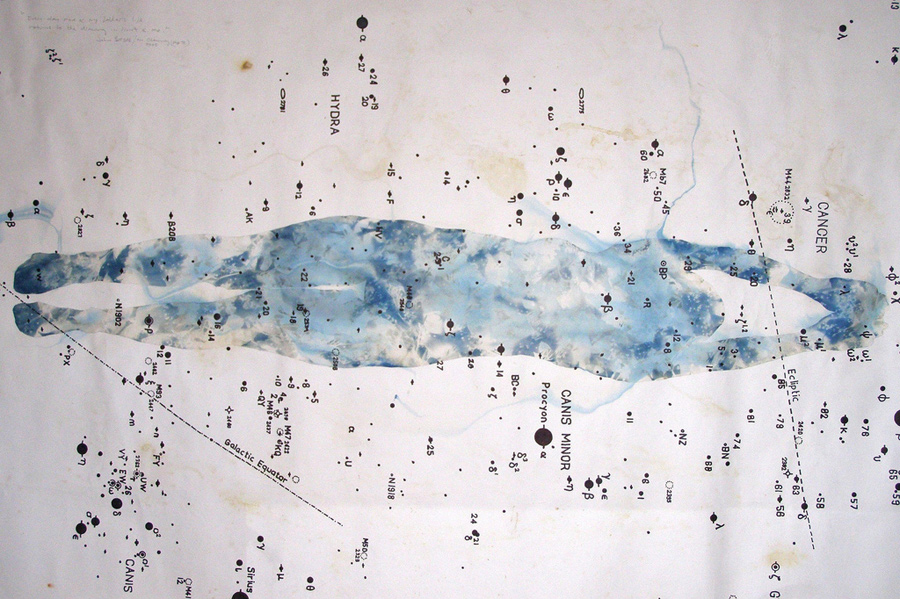
Panspermia : Cyanotype Drawing
150x240 cms
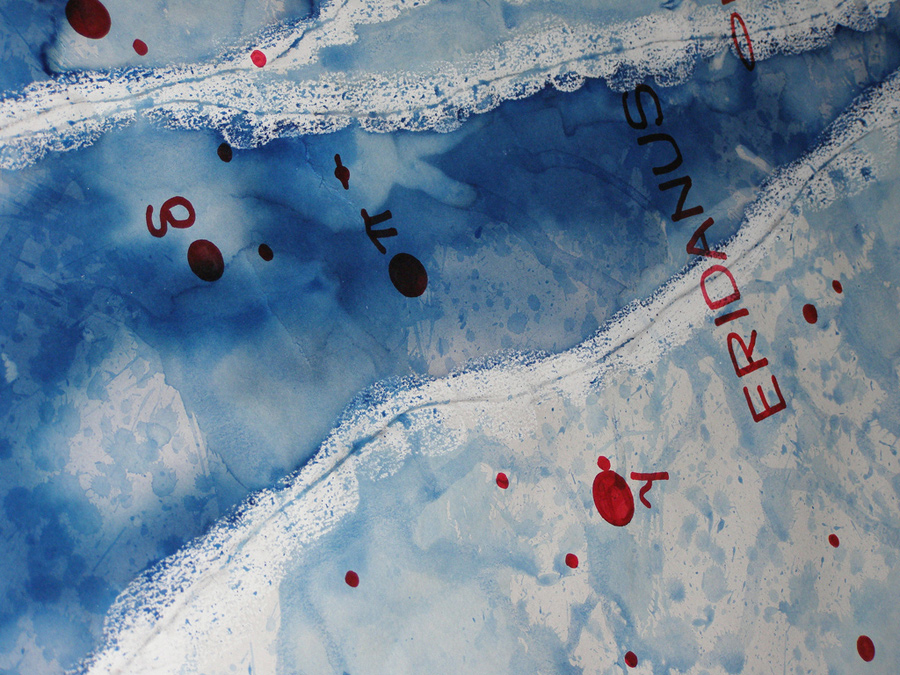
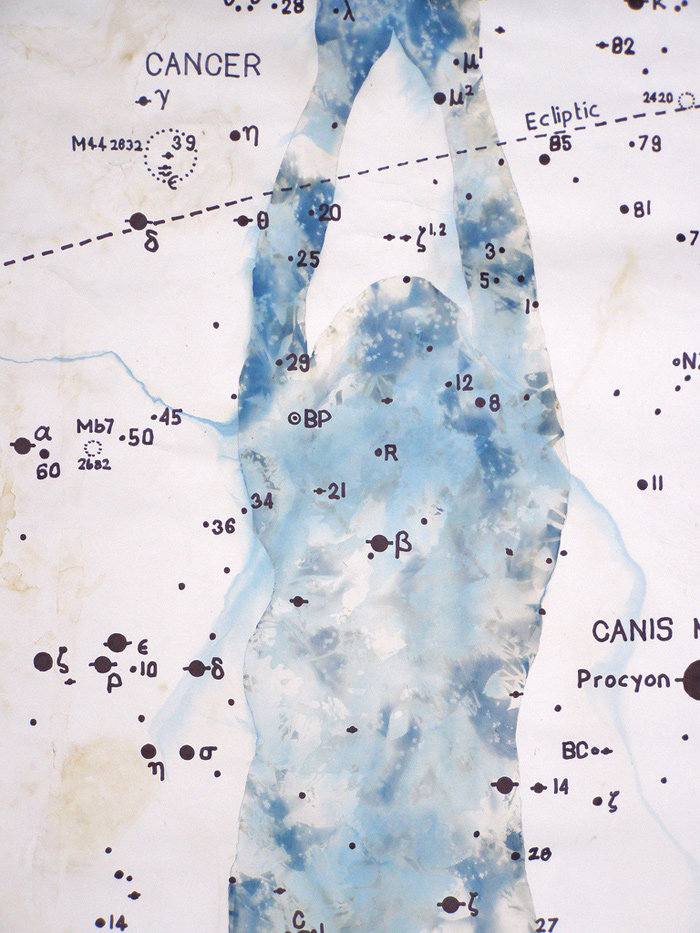
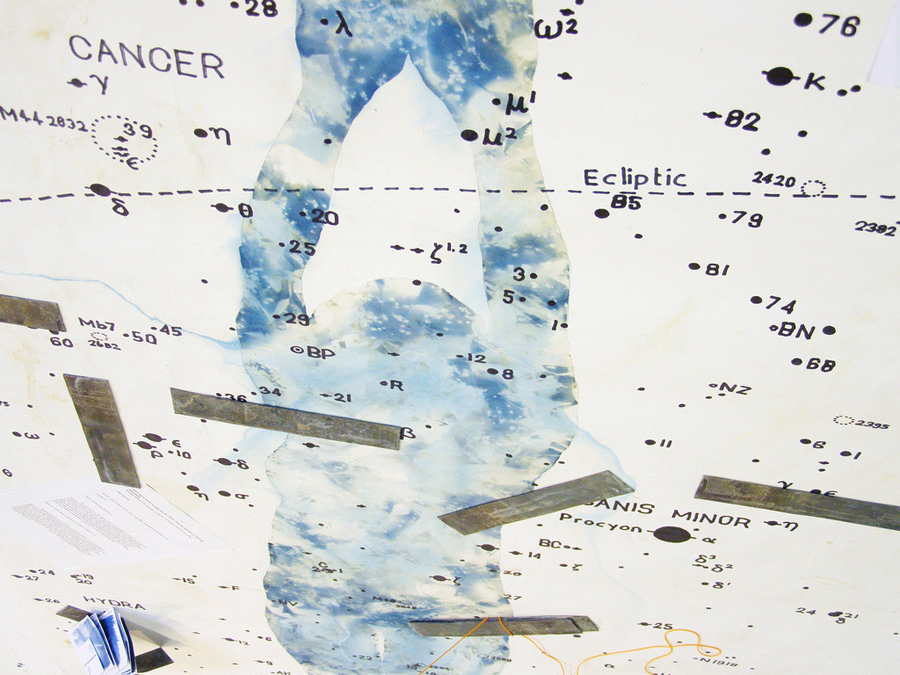
Human form drawn on paper with cyanotype and black ink. Astronomical data and traces of seed heads together with reference material/notes (directed panspermia) in pencil.


180621

Sunday, 23 June 2024

Interactions of Colour and Bodies : Rothko/Neri/Kundera/Schiele, subjects alone in a moment of utter immobility.

Manuel Neri

Milan Kundera

Josef Albers

Mark Rothko

Egon Schiele


The use of the word 'immobility' recalls an article that Rothko wrote in the 1947

"For me the great achievements of the centuries in which the artist accepted the probable and familiar as his subjects were the pictures of the single human figure - alone in a moment of utter immobility."

p84, Possibilities , 1, New York, 1947


The world is overloaded/the nature of things : Peter Zumthor, Jean Baudrillard


The world is overloaded of signs and information, representative of things that nobody completely understands, because they are in turn nothing but signs representative of other signs.

The real thing remains hidden. Nobody can ever see it.

Peter Zumthor


The nature of things cannot be discovered by analyzing them according to their functions, by labeling or categorizing them but by understanding their relationship to people, their behavior and emotions which caused creation of these objects.

Jean Baudrillard


Friday, 17 February 2023

Panspermia 2010/Banga, Patti Smith : Layered Drawings/Silent readings/diagrams/ceramics of imaginary space


Patti Smith - After The Gold Rush - Banga, 2012 (A Neil Young Song).


Reading : Slow Philosophy


With Fire, Richard Hirsch
A Life Between Chance and Design (invites the unknown)
Scott Meyer 2012
Hirsch takes us to the heart of the interface between ageless earth and the spare evidence of the rhythm of human utility 

Raku as an Ideology
Breath-Energy-Immanence

Raku, A Review of Contemporary Work
Tim Andrews 1994

The Poetry of The Vessel
A calm invitation to thought and imagination
Chris Tyler

The vessel (making, thinking, subject) as both a historically grounded form, and a vehicle to examine abstract aspects of the physical body and the natural world

Arte Povera/Germano Celant, an aesthetic-philosophical movement
An eclectic synthesis of knowledge fields, that emerges into a total space where disparate categories can meet; a art that asks only for the essential information, that refuses the dialogue with the social and cultural system, and aspires to present itself as something sudden and unforeseen

Materials are substances in becoming
Karen Barad

Towards an Ecology of Materials
Tim Ingold 2012

From the 'objectness' of things to the material flows and formative processes wherein they come into being. It means to think of making as a process of growth or ontogenesis


Materials-Centered Perspective

Making, almost defies precise definition
The composition and/or manipulation of materials that bring into being new or revised objects
Tim Ingold 2010

Cultures of thrift and scavenging, maintenance and repair
Making encompasses the ingenuity of fluid, locally situated and adapted technologies

Materials carry on overtaking the formal destinations that, at one time or another, have been assigned to them

Sensibilities and dispositions that are centred on a deep and considered relationship with materials
The Craftsman, Richard Sennett 2008

Crafting, often reconnects mind and body in the sites and processes of production, thereby potentially reconstituting labour processes in ways that ascribe agency to workers

Makers finding ways to resist norms of gender and neoliberal entrepreneurial subjectivities, finding ways and spaces for ethical practice to predominate


Contemporary conceptual ceramics operates at the permeable boundary between art and craft, partaking of aspects of both, and ultimately demonstrating (or performing) that permeability

Tuesday, 26 June 2012

Sunday, 24 June 2012

Human Filament 2010

Human Filament 2010 by Russell Moreton
Human Filament 2010, a photo by Russell Moreton on Flickr.

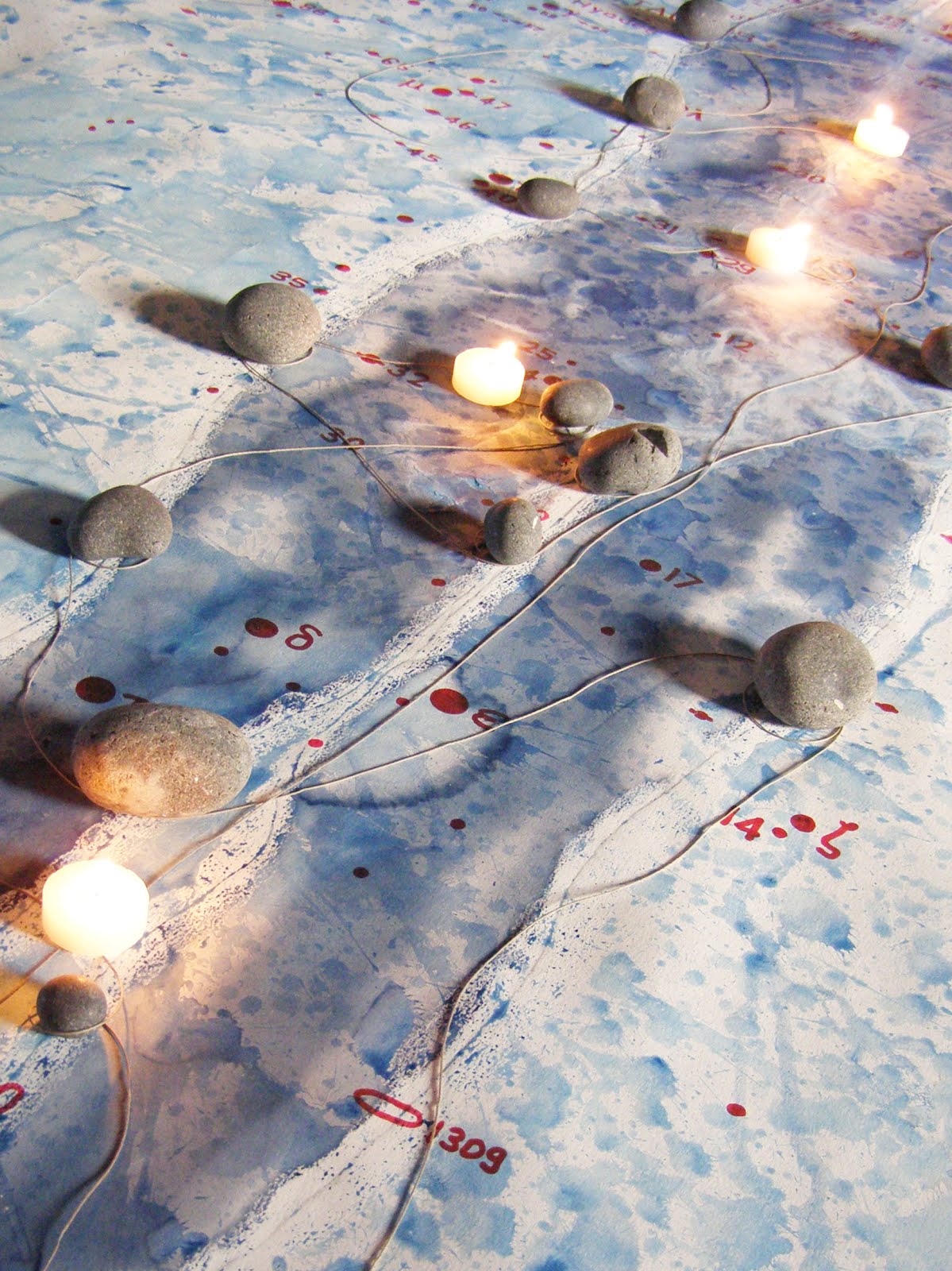
Human form on lightweight Chinese paper, cyanotype process with photograms of threads and stones. Outline and interior networks mapped in ink.

Thursday, 7 June 2012

Layered drawing (detail) 2010

Layered drawing by Russell Moreton
Layered drawing, a photo by Russell Moreton on Flickr.

Drawing on paper with fragile tissue paper layers and a human form with astronomical data from a star atlas, approximate size 150x240cms.