Friday, 12 November 2021


OUTPOST 111121

Spatial Practice/Spatial Representations
The Body and Space.
Lefebvre : The Production of Space.
A spatial theory/programme that seeks to reconcile the fractured definitions of space as perceived, conceived and lived, through deployment, occupation, immediate relationship.


The body is a medium that allows us to experience space.


Hortus Conclusus a walled garden. 
A Serious Place

The Garden of Forked Paths
Deviant, troubling and open-ended frames and features.
Boundaries, limits and transgressions.

Beyond privileging her body as subject and ruinous spaces for sites, Woodman made certain methodologies and technical approaches characteristic aspects of her practice in furthering the effects of the body/space encounters.
Cassandra Blair. 2015 

Some Disordered Interior Geometries. 1980-81 
The precision of mathematics meets up with the unruliness of bodies and selves.
Francesca Woodman's artist books.

The Contained Nature of Photographic Representation.
We respond to the experience in the photograph, the inner feeling generated by it.

Study For Space²
Hand drawn frames around the blurred presence of a body.

Francesca Woodman, Untitled, Providence, Rhode Island. 1975-78

The logic of the photograph and the logic of framing the self.
Contact sheet with annotations/spatial coordinates/lines and forms.


Every surface is sensitive to light, to pressure, to inscription.
Architectural surfaces heighten the relationships between the body and space.

Emotion, Space and Society.
Organism-Person-Environment

The flickering presence of Woodman suggests a less knowable form of subjectivity that remains porous to one's environment, a form of subjectivity produced in relation to to objects and buildings.
An intimate mode of looking : Francesca Woodman's photographs. 
Jane Simon. 2010

Ellipses as aposiopesis signals a certain trailing off, a sentence ending or not ending in the suspension of unresolved thought.

Francesca Woodman, Untitled, Providence, Rhode Island. 1976
Francesca Woodman, from Angel series Rome, Italy. 1977-78

She ponders the matter of things, the shape of herself that/what remains on the floor's emulsive surface. Skin, flesh, building materials, decay.

Photography sustains her inquiry into forms of subjectivity.


Intimate Viewing and The Play of Boundaries

The surfaces of representation through the articulation of a photographic process/practice.
Framing/Accommodating the Subject :Viewing apparatuses and mechanisms.
Photography and Architectural Voyeurism
The Split Wall : Domestic Voyeurism. Sexuality and Space, Beatriz Colomina. 1992


Negative and indexical shapes, corporeal and architectural playfully succumbed into an emulsive surface containing shadow and light.

The InHUMAN : Reflections on Time. Jean-Francois Lyotard. 1998


Thursday, 11 November 2021

Site Apparatus/Camera Obscura : Sarah Kofman


About Camera Obscura:


Marx, Freud, Nietzsche--in vastly different ways all three employed the metaphor of the camera obscura in their work. In this classic book--at last available in an English translation--the distinguished French philosopher Sarah Kofman offers an extended reflection on this metaphor. She contrasts the mechanical function of the camera obscura as a kind of copy machine, rendering a mirror-image of the work, with its use in the writings of master thinkers.
In her opening chapter on Marx, Kofman provides a reading of inversion as necessary to the ideological process. She then explores the metaphor of the camera obscura in Freud’s description of the unconscious. For Nietzsche the camera obscura is a "metaphor for forgetting." Kofman asks here whether the "magical apparatus" of the camera obscura, rather than bringing about clarity, serves some thinkers as fetish. Camera Obscura is a powerful discussion of a metaphor that dominates contemporary theory from philosophy to film.

www.amazon.co.uk/Camera-Obscura-Ideology-Sarah-Kofman/dp/...


Wednesday, 10 November 2021

The Mirrored Abbey : Anamorphic Photographic Process

The Custodians, Richard Cowper 1976.
russellmoreton.wordpress.com/

russellmoreton.tumblr.com/archive

Humanity : An Emotional History
Stuart Walton. 2004

Fear
Anger
Disgust
Sadness
Jealousy
Contempt
Shame
Embarrassment
Surprise
Happiness

Sunday, 7 November 2021

Working Practice 2010

Working Practice 2010 by Russell Moreton
Working Practice 2010, a photo by Russell Moreton on Flickr.

Drawing.
Installation and Working Sites
Architectural Glass and Ceramics
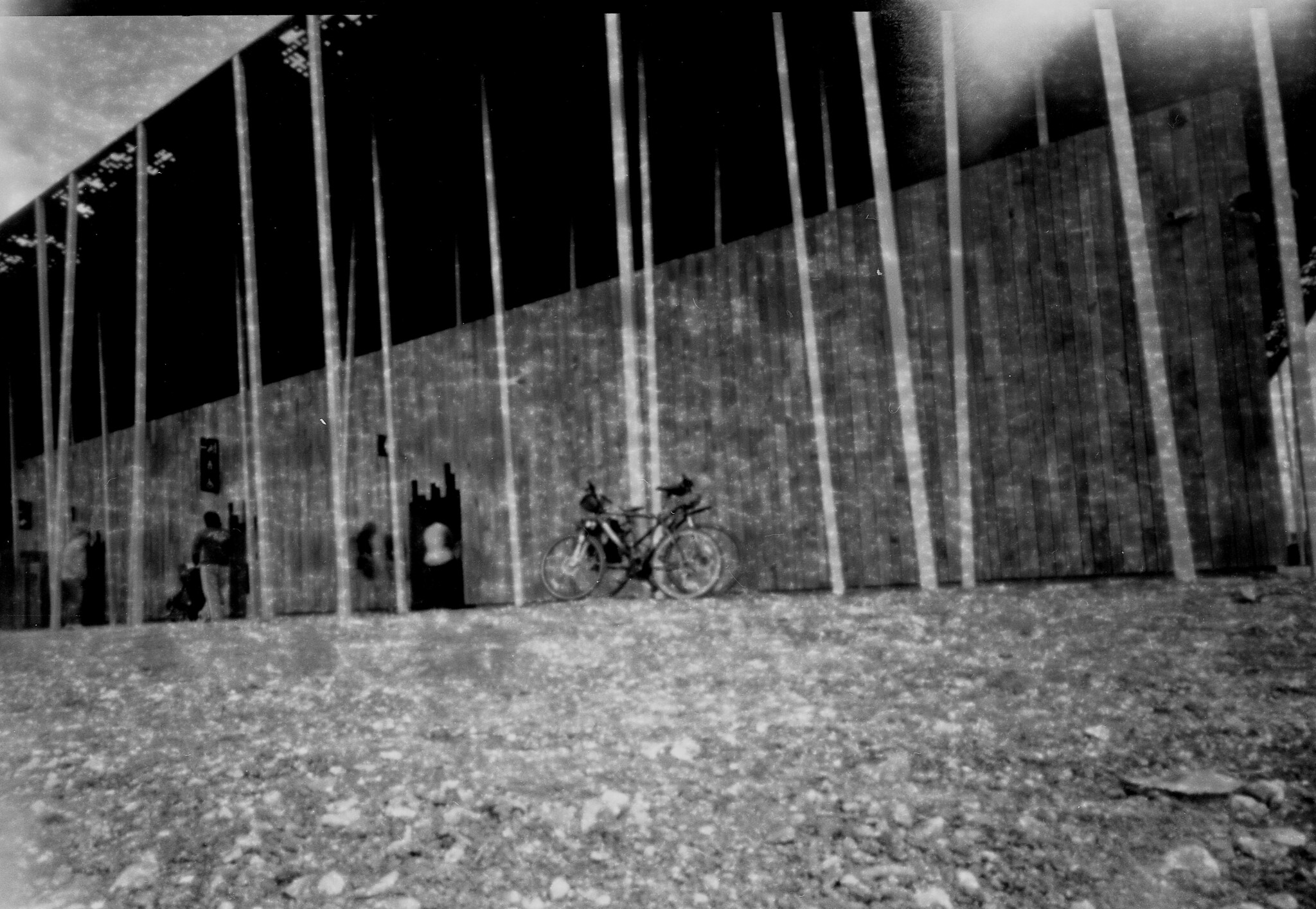
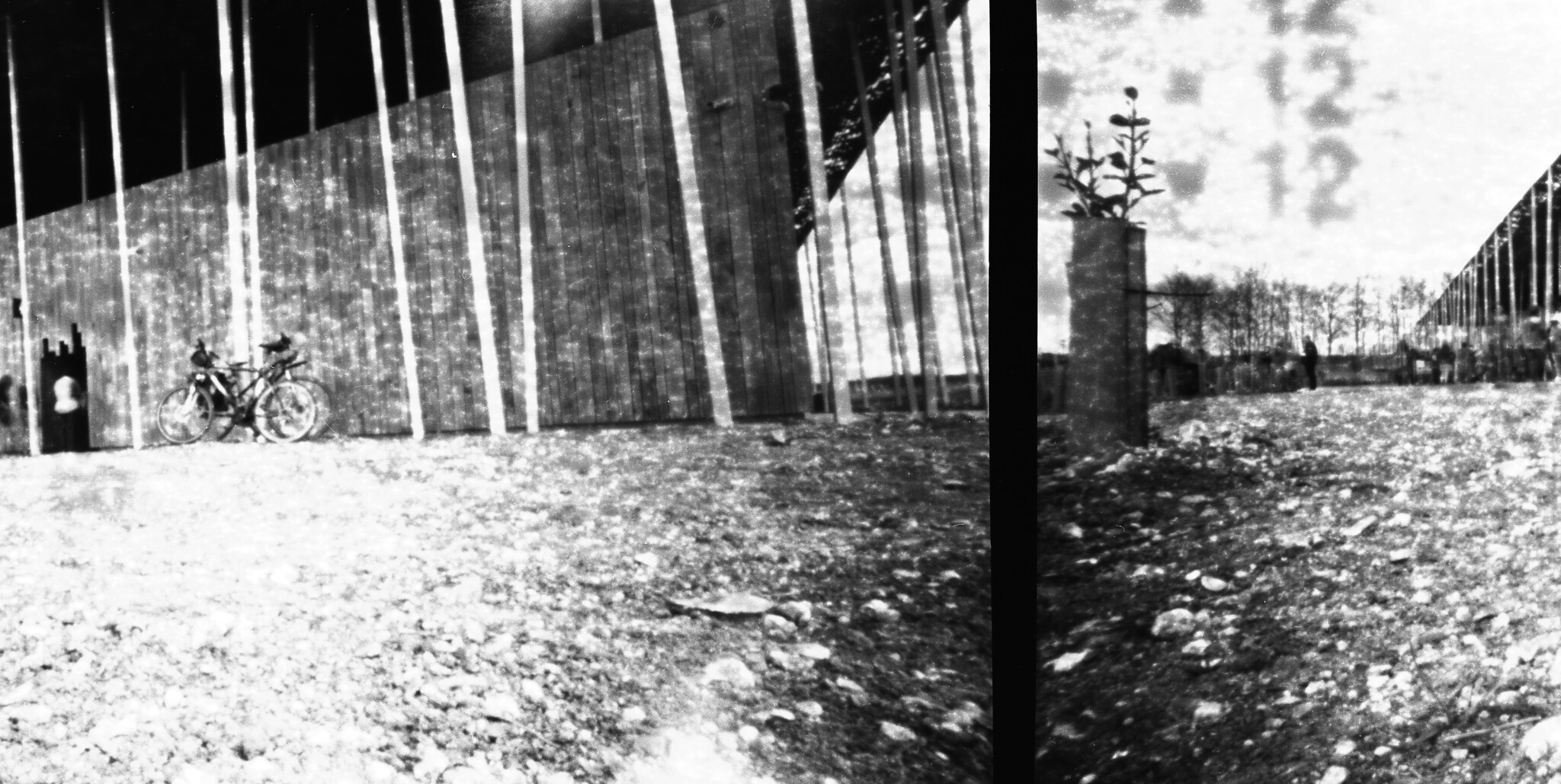
Liquid Light and Pinhole Photography

gohistoric.com/places/granary-farmyard-100m-e-brockwood-h...

Thursday, 4 November 2021

OUTPOST STUDIO 041121


Drawings : Work Comes Out Of Work.

Richard Serra


Resultants that incorporate the friction/asperities of their trajectories through medium.

Tilt-up concrete construction, Chapel of St. Ignatius. 1997.

Steven Holl, Parallax.


Braunkreux was a concept, it provided a metaphoric connection between drawing and sculpture. 

For Beuys, so-called Braunkreuz was not a colour, it was a generic substance, a sculptural expression. Braunkreuz, being brown, also became a metaphor for the earth as an enveloping cover, a protective medium, a fecund 'body' in which the spirit was reincarnated, as in a womb, a cave, or a grave.


Filtered Light/Coloured Glass Assemblages

Inquiry/Programs/Projects/Spatial agencies that move through speculative material thinking.

Mattering between the division of things.


Intermediaries, sprays, screens, templates, objects.

Drawings/Monoprints/Substance/Materials


Beuys and the language of drawing. 1974.

Beize probably an iron compound in solution, stain or corrosive.

Braunkreuz Oil on cut, folded, and pasted paper, mounted on paper. 65.5x50cm, irregular. 1962. 


Beuys spent close to a decade elaborating a personal idiom, doing so almost entirely in drawing.

Joseph Beuys : Life Drawing, Ann Temkin.


Cyanotype

Yellow Ochre

Manganese Dioxide

Red Iron Oxide/Paint

Monochite/White Gesso


Ceramic Forms/SlabWorks

Lead Sheet Constructions, folded and perforated with glass inclusions


Emotion, Space and Society

An Intimate Mode of Looking

Francesca Woodman's Photographs

Jane Simon. 2010


Woodman presents an intimacy between picturing herself and her experiments with the photographic medium. She saw time as persistently liminal.


Whirling space and haptic vision.

Irigaray.


Woodman's body seems to be moving just beyond visibility.


We respond to the experience in the photograph, the inner feeling generated by it.


Indexical Thresholds/Photograms/Wonder/Spaces in which we are drawn outside of ourselves.


The sudden impulse to click the shutter, is at once a work and the record of practice, encompassing both conscious and unconscious awareness.


What is it like to feel oneself disappear into what Foucault called, the space in which we are living, by which we are drawn outside ourselves?

A Swimmer Between Two Words, Michel Foucault. 1998.


Anamorphic perceptions, playing with both space and time, something glimpsed only peripherally and apprehended more than seen, a sense of the ghostly in the everyday and of the slippage between subject and object, and between what is alive and what is inanimate.


Playing with explorations into the gendered nature of the gaze, together with her sophisticated use of buildings and objects and her concern with the properties of photographic space ; place her practice well beyond mere figurations of the female form as always being about the 'woman's body as an icon of desire.


On Identity

Who is the “self” so deceived?


Intermediaries/Devices/Spatial Agency

She uses the mirror and her body as an apparatus, a means of reflecting/diffracting the space she inhabits.


Self-Deceit#6 presents an unusual relationship between woman and mirror. Taken in one of several derelict and abandoned buildings, sites Woodman commonly adopted not only as her studio, but in some cases as her home.

The mirror reflects only glare or darkness, and the figure is consistently blocked by its aggressive reflection of emptiness.

Kathryn Hixson, Essential Magic : The Photographs of Francesca Woodman. 1992. 


Francesca Woodman's photographic practice incorporates a variety of themes including gender and self, representation and isolation, the body and its relationship to space, explorations of femininity and the female body.


Throughout her work, Woodman acts as both subject and author, dissolving conventional boundaries of representation.


The textual influences that inspired Woodman are clearly evident in the artist's consequent adoption of certain objects and themes, including mirrors, fur, eels, nudity, all of which hold strong Surrealist associations.

The University of Edinburgh. Camilla Irvine-Fortescue. 


Maps of Inner Space, in a swimmer between two worlds.

Katherine Conley. 2008


A deeper reading of her connections to Surrealist practice- at once musical, textual, visual, notational, haptic, physical, and psychic-helps to make her processes clearer.


The haptic quality evoked by Krauss in her writings on surrealist photography is captured by Woodman through her use of black and white and the sensual plethora of greys rendering her textures almost three-dimensional.


Direct Physicality

Man Ray, Anatomies, 1929.


Foucault on automatic writing for Breton.


Woodman's photography went hand-in-hand with her everyday life, her art maintained a constant connection to reality.

Between Flesh and Film. Isabella Pedicini. 2012.

Mattering, Mind-Movement-Material

In and Out of Material. Tony Cragg.


You have to feel the contact of the surfaces and objects photographed with bare skin.

Sloane Rankin.


The suspended/collapsed present moment.

She is unravelling photography's structuring dimensions of space and time.


Un-Framing The Body.


What moves as a body.

Returns as a movement of thought.

Erin Manning.


Relationscapes uncovered/emergent between organism, person, environment.

Mappings and maps whose passage and destinations lie at the edge of perception.

Images and manifestations of the human body that are occurring in between compositional frames.