Saturday, 1 January 2022

Working Title : Creating Loops

 Behind Appearance
A Study of the relations between painting and the natural sciences in this century
C. H. Waddington

Adam Fuss
Home and the World

Strange Loops
Art, Science and Consciousness
An Exploration of Mind, Matter and Form through the Work of Susan Derges
Stephen Gaughan

The Music of Waves
The Poetry of Particles
Thoughts on Implicate Order for Susan Derges
Martin Kemp

Adam Fuss
Eugenia Perry


Studio Work : Outpost Norwich


Sunday, 19 December 2021

Architectural Interiors : Collage and Photography

(For architecture) to become highly human it must represent not only the beautiful action of the space, but above all that of time. For this matter the most refined art, the most difficult and dangerous, is that of patina.
Luis Barragan

Red Wall/Pace Gallery London 2014
Robert Mangold

Waverley Project/Research Collage
Design based photogram
Russell Moreton


Speculative Drawings : Becoming Spatial/Figural


Saturday, 18 December 2021

Tuesday, 14 December 2021

Making Entanglements : Spatial Collage, 2010

Spatial Collage, 2010 by Russell Moreton

Lead,photographic ( pinhole) and inkjet visual material from flickr stream, fixing tapes, cyanotype on tracing paper,pierced and repositioned elements on paper.


Making Entangled : An eclectic synthesis of knowledge fields

Confronting Spatial Intelligence-tracing the use of spatial intelligence. 

What are we learning about in the concrete particularity of this space?

Leon van Schaik : Spatial Intelligence


‘Architecture is the product of our spatial intelligence, of its workings in establishing the mental spaces of every individual, and of the spatial values shared by groups.’


The Retreat, Upper Lawn Pavilion. 1959


This country retreat presents itself as a glass box but is grounded by its relationship to the pre-existing masonry of a walled garden. 


Leon van Schaik comments that the little glass house retreat built by Peter and Alison Smithson around a walled garden evokes for him memories(mental spaces) of being a schoolboy working in a conservatory in a walled garden at Cliveden, such that the notion of a retreat is this ideal of being built into the walls of an existing walled garden.


You rise up into its glazed upper storey with views over the rolling hills beyond and perch atop the wall on the edge of a threshold space carved out of the woods, or remove yourself from view sink down to the ground and sit with your back to the wall.

Tuesday, 7 December 2021

Observatories : Boundaries/Mapping Spatial Representations

Entanglements of matter and meaning.


Karen Barad, Meeting The Universe Halfway, 2007.

Meeting the Universe Halfway is an ambitious book with far-reaching implications for numerous fields in the natural sciences, social sciences, and humanities. In this volume, Karen Barad, theoretical physicist and feminist theorist, elaborates her theory of agential realism. Offering an account of the world as a whole rather than as composed of separate natural and social realms, agential realism is at once a new epistemology, ontology, and ethics. The starting point for Barad's analysis is the philosophical framework of quantum physicist Niels Bohr. Barad extends and partially revises Bohr's philosophical views in light of current scholarship in physics, science studies, and the philosophy of science as well as feminist, poststructuralist, and other critical social theories. In the process, she significantly reworks understandings of space, time, matter, causality, agency, subjectivity, and objectivity. In an agential realist account, the world is made of entanglements of "social" and "natural" agencies, where the distinction between the two emerges out of specific intra-actions. Intra-activity is an inexhaustible dynamism that configures and reconfigures relations of space-time-matter. In explaining intra-activity, Barad reveals questions about how nature and culture interact and change over time to be fundamentally misguided. And she reframes understanding of the nature of scientific and political practices and their "interrelationship." Thus she pays particular attention to the responsible practice of science, and she emphasizes changes in the understanding of political practices, critically reworking Judith Butler's influential theory of performativity. Finally, Barad uses agential realism to produce a new interpretation of quantum physics, demonstrating that agential realism is more than a means of reflecting on science; it can be used to actually do science.


Norman Lockyer Observatory, Seaton.


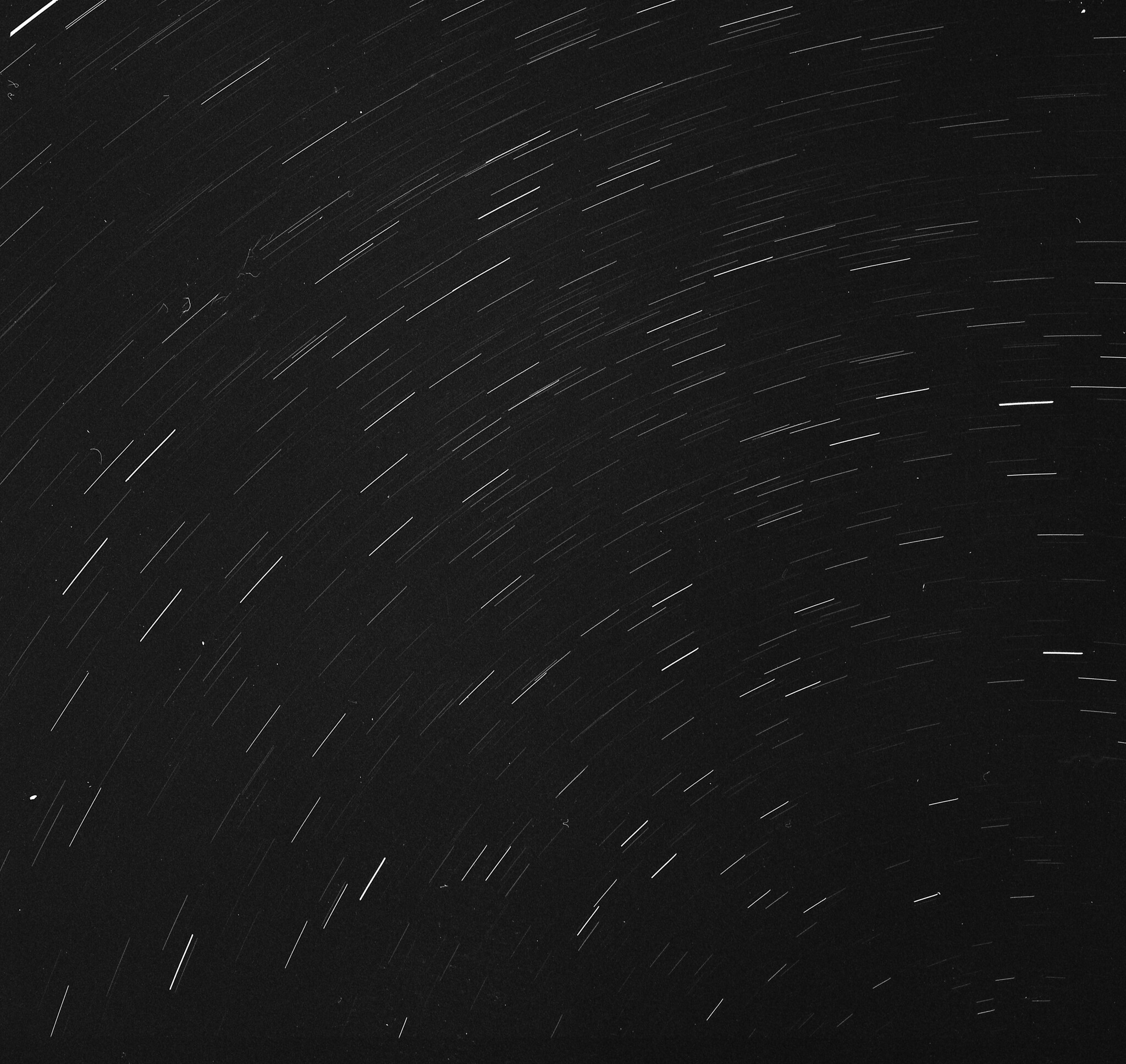
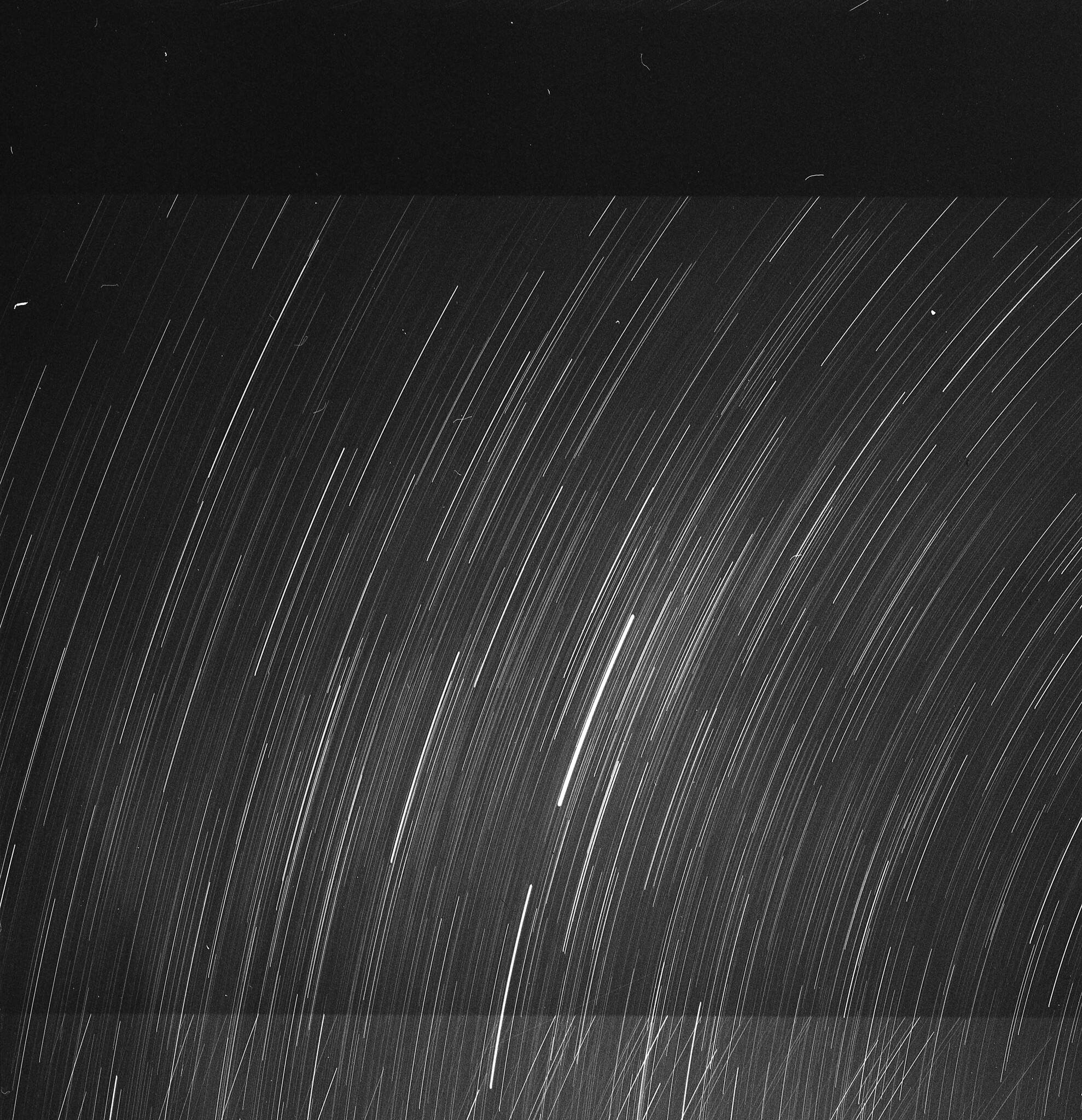
Celestial Sphere : Stars and Dust Particles. 


Astronomical archive

Hawking understood black holes because he could stare at them. Black holes mean oblivion. Mean death. And Hawking has been staring at death all his adult life. Hawking could see.
Martin Amis, Night Train, 1997.

For Baudrilland the actual photographs are beside the point. It is what precedes them that counts in his eyes- the mental event of taking a picture.
Sylvere Lotringer, The Piracy of Art, 2008.