Spatial Agency
Other Ways Of Doing Architecture
Nishat Awan, Tatjana Schneider, Jeremy Till.
As buildings become matters of concern, they enter into socially embedded networks, in which the consequences of architecture are of much more significance than the objects of architecture.
Beyond Discourse : Notes on Spatial Agency
Tatjana Schneider, Jeremy Till.
If we take 'agency' in its transformative sense as action that effects social change, the architect becomes not the agent of change, but one among many agents to empower people and spaces.
Becoming our own agents of progressive politics.
Spatial Agency, a transformative combination of the discursive and the practical.


.jpg)


.jpg)

.jpg)
A HUT WITHIN THE
INFLUENCE AND NATURE OF ARCHITECTURE
The discursive and the practical are by no means mutually exclusive as such, they allow the line between discursive and practical consciousness to become fluctuating and permeable.
Anthony Giddens
ASSEMBLAGES : THINKING WITH TEMPORAL CONTINUITY
The tendency of technological culture to
standardize environmental condition and make the environment entirely
predictable is causing a serious sensory impoverishment. Our
buildings have lost their opacity and depth, sensory invitation and
discovery, mystery and shadow.
Juhani Pallasmaa.
Hapticity and Time.
Notes on Fragile
Architecture. 2000
The Scriptorium
Mutual Knowledge and Discursive Consciousness
Description of Work
The ruined site of the
abbey at Waverley, near Farnham has been appropriated as a site and
as a place within which to position and develop architectural and
sociological inquires. The design processes of interiors have been
employed as a tool to both critique and to create how we might
further develop the contents of architecture. This Spatiality and its
diffractions of differences and similarities, narratives and
subjective experiences are what my interior spaces attempt to
initiate.
Design as a
interactive structure, an interlocutory interior in the making of
space and spatial relations.
Interior design
presented as an interactive and immersive spatial inquiry
The Scriptorium brings
together a varied and discursive set of objects, texts and interior
architectures. This work seeks to understand how the virtual changes
physical architecture and how this affects the space between people
and buildings. The “performativity of research” is presented
through specifically designed apparatuses and partitions. These
designed components, made objects together with annotated texts and
drawings conspire to create a complex design led inquiry a “Place
Study” staged in a niche-like space. This interior presents itself
as both distinct and relational to the other projects in the MA
Interiors Show. The interior presents the many manifestations of
creative research, structures and even symposia that have been
developed through engaging with the site. The visualization of the
research and the relational architectures rendered through montage
and collage explores digital and analogue technologies. This
hybridisation and the use of pinhole photography and film footage
further explore interests in the field of performance as an
immaterial architecture drawn in the presence of place.
The realisation of my
interiors project consists of two separate but relational elements
that are presented into a built environment. The small ‘Scriptorium’
conceived as a space as a refuge, an intimate minimal construction
that features a doorway and an interior that contains a place for
objects, perhaps books, as well as a small sitting area. This
construction, an open cell perhaps is evocative to a state of
contemplation between the fabric of the everyday. The rather hybrid
design appropriates a merging of minimalism, modernism and the
plastic architecture of a ruined Cistercian Abbey. The construction
comes into close contact with its occupant, it is a restricted
spatial apparatus that attempts to promote through its awkwardness
distinctive experiences. In particular the apparatus of the
Scriptorium and its materiality is attempting to promote a sensory
intensification that is further underpinned by the cognitive
processes of reading and perhaps other social dialogues. The sensory
intensification of a hut like space promotes a haptic sensibility,
allowing the nearness and intimacies of both the built space and the
imaginative, virtual realm to become entangled. Ultimately the
Scriptorium is trying to build on unique human subjectivities that
are manifested through a kinaesthetic repertoire or script that helps
to enact further spatial experiences. It might be useful to think of
this constructed space as itself still under construction, a site
that acts as its own vessel within the multiplicities of human
perception itself. The influence of the Cistercian Order, the site of
Waverly Abbey and its pastoral landscape, have all contributed to a
sense of the design process, The Scriptorium like the ruins
themselves is open to the elements. Waverley Abbey remains as a
sensory site between the remains of architecture and its society and
the effects of our own global culture in the information age.
In troubled times
they all sought to experience life away from social definitions of
success or failure. From there, these primitive huts marked personal,
original inquires into the ever-mysterious nature of human existence.
Anne Cline. A Hut of
One’s Own
Life Outside The
Circle Of Architecture.
The Scriptorium began
through a research of both architectural themed texts and
documentation of the site, and creative practice involving
photography (digital, analogue and film) art practices of collage and
drawing. The many visits promoted my own subjectivities to the site
and these were also frequently subjected to change by the
intervention of others in unexpected ways, these social intrusions by
other revealed the very boundaries that the historic site engenders,
some playful other malicious. These extremities within the social
order of the visitors became problematic in designing for the site
itself. An earlier proposal to host a Symposium centred on the Arts
and The Humanities, that would use the Abbey and its surrounding
ground appeared to be a project of vast diversities and logistics
better suited to a cultural project through arts management and
funding. As the project developed certain creative methodologies
around particularities of the site itself began to appear, the notion
of palimpsest being one of them. This promoted the idea of a reading
room, as an ephemeral interior space that gathers up the experiential
values of ‘ruins’ and re-enacts them as a site to explore the
architectures of images. It became apparent that ‘palimpsest’
could be both a visual surface of erasures, earlier markings
partially over written by newer ones ‘annotations’ and it could
be a scaffold of developing ideas clearly visible merging as
adaptations into the very usage of the site.
These re-imaginations
through the notion of palimpsest seemed filmic and as such they would
able to display a vast amount of diversities and subject matter, a
library of recourses that would require users or an audience or both.
The referencing of the reading room to the library, and the symposium
to the cinema or theatre allowed me to realise that I was dealing
with a number of spatial arrangements that needed to develop
together, but which could be employed separately.
In an era in which architecture is once more
learning its potential as a form of inquiry, rather than as a
service- as a producer of knowledge, and not merely of ‘projects’
Brett Steele.
Atlas-Tectonics in Barkow Leibininger.
Bricoleur Bricolage.
AA. 2013
Inquiry is essentially the way of learning
J Krishnamurti. The
Cultivation of a Good Mind
Brockwood. 1963
The theatre of
research became the vehicle in which to see if this collaboration
might be possible.
The use of the image
and text in my architectural collages allowed me to visualize
associations, to create the possibilities of interior spaces that
might be manifested into the built environment. The use of the
collage in Architecture is widely acknowledged, architects from the
likes of Mies van der Rohe, Daniel Libeskind and Rem Koolhaas.
The ability of the
collage process to juxtaposition fragments, images and texts from
irreconcilable origins into an experience, that is visual, tactile
and time-based makes it an interesting tool into the realms of
architectural design. Collage begins to visualise not only the
structure of spaces but also there content and circulation. The
theatre of research is interested in how to promote collage and its
use as a cognitive and perceptive tool in architecture.
Collage and montage are quintessentially
techniques in modern and contemporary art and filmmaking. Collage
combines pictorial motifs and fragments from disconnected origins
into a new synthetic entity, which casts new roles and meanings to
the parts. It suggests new narratives, dialogues, juxtapositions and
temporal durations. Its elements lead double-lives; the collaged
ingredients are suspended between their originary essences and the
new roles assigned to them by the poetic ensemble.
Juhani Pallasmaa. The
World is a Collage
Jennifer A. H.
Shields. Collage and Architecture
Reflective Analysis
Both the Scriptorium
and The Theatre Of Research exist only in the form of the exhibition
presentation. What they singularly of together propose can only be
imagined through their manifested form as static objects placed
within a built structure that loosely references architectural
concerns and materials. They appear diminished and assigned to the
voyeuristic gaze of the visitor that is equally curios and
dismissive. These objects and the interior spaces they promoted seem
stilled and stalled, as much they appear beyond reach as if the
authenticity of their materials and construction have some how been
subsumed by their stature and scale. The issues and qualities of
which they are attempting to speak of seem reduced by the hegemony of
vision, there is little hapicity and time to encounter, only it seems
by investing narratives can we begin to re-enact the spatial
encounter.
The question I ask is
do these objects and their interior spaces cause me to think beyond
mere representation and recognition, or rather do they create enough
of an encounter to force me to engage with them, even if I or the
viewer are un-certain as to their meaning or possible outcome.
Deleuze comments that something forces us to think. This something is
not an object of recognition, but a fundamental encounter. Something
that challenges us. Have these miniature architectures of objects
become relational, do we start to use them in perhaps a heuristic
manner, a hands-on approach to learning or inquiring, something that
we can discover for ourselves. This heuristic finding-out could be
made informative through collective collaborations and exhibition
through the theatre of research. Is design stripping us of our
qualitative spaces as the digital tooling removes the makers trace.
The model object has
served as a thinking place in the development of the idea of the
Scriptorium. The materials used and their proportions echo interests
in Minimalist Sculpture, the intervals between things in the work of
Donald Judd and the architectural languages of memory and tectonics
of the craftman turned architect Peter Zumthor. This open sided hut
seems cut away almost anatomical as if we were looking into the
internal workings of an environment and resident. The structure would
have to be made relational to its surroundings if it were to be
placed in the landscape. Adaptations to weather the structure, to
make it serviceable for use. The Scriptorium has analogues to the
notion of a fire-place and its chimney stack. It is a the heart of a
building the place of warmth, of dialogues and under the influence
through fire of the imagination. The incompleteness that surrounds
the scriptorium creatively asks for further design proposals that are
even more site specific. The Solar Pavilion built by the Smithsons
utilised the old fire place and chimney from the demolished cottage.
Around this central element they developed the beginnings of their
Modernist (Brutalism) pavilion, an architecture clad with glass, wood
and zinc and contained by a walled garden and situated in the
pastoral landscape of Wiltshire. Furthering the themes of being in
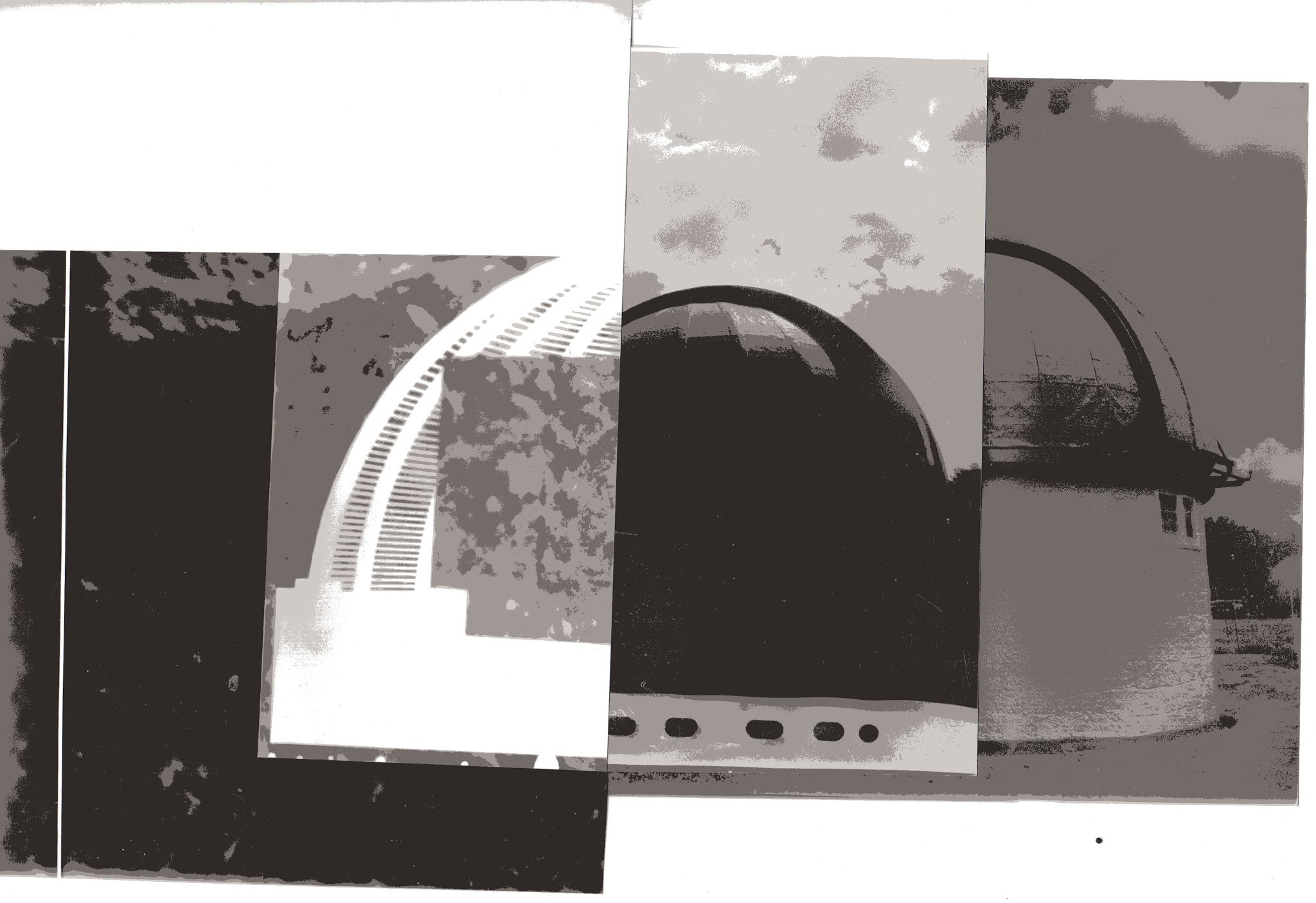
the landscape the Scriptorium could become an observatory, as place
from both to look out from and also to look in. The mobility or need
to be re-assembled from site to site could promote innovative design
solutions as well as interesting detailing or use of materials and
surfaces that would facilitate interactions between visitors.
The notion of the
Scriptorium becoming clad by an exterior skin, an ephemeral membrane
which would then render the differences between the interior and the
exterior into the realms of an almost immaterial architectural
experience; in as much as the usual distinction between the
unpredictable forces of nature outside and the predictable domestic
spaces inside. This prompt further investigation into an architecture
that blurs the boundaries of both architecture and nature, this could
be further explored through the notion of quixotic gestures, art and
performance that can capture the experience and the experiential
engagement with the natural elements. The Scriptorium becomes the
centred structure of remnant that is surrounded by an architecture
that can create imprecise boundaries through inconsistent materials.
This spatial arrangement will create its own qualitative responses,
dialogues and subsequent movements. Architecture in this context
becomes purely a sensorial response.
The body as the vector for active mediation with
the world of the spirit. The body is the instrument of a qualitative
evaluation, the measure of intensity, which alone is capable of
giving space extension and modifying it. Space is no objective
parameter; it must be ‘excavated’ related to the mobile living
parametrics of the body.
Frederic Migayrou.
Architectures of the Intensive Body.
Yves Klein.
Guggenheim. 2005
Mark Prizeman.
Intensity.
Ephemeral, Portable
Architecture.
Time, space and existence are amongst the greatest
of themes-so great that we could never be so presumptuous to think we
could do them justice, and too close that we could ever escape them,
whether with our thoughts or actions, in life or in art.
Peter Lodermeyer.
Personal Structures
Time. Space.
Existence. 2009
My design project has
attempted to produce spaces and their interiors together with the
apparatus of the Scriptorium that qualitatively seek to inquiry into
the world we inhabit. The Theatre of Research attempts to establish
some sense of a community that can do field work that invigorates the
perception of the environment. My own interests are centred through
experientially and mindfully exploring voids, cavities, and spaces
between things, together with use of clay, glass and other vernacular
materials. As an interior designer/artist I have become experiential
to the agency of spaces. The theatre of research becomes a meeting
place for furthering my programme initially proposed as a symposium
at Waverley Abbey.
Through experiencing familiar images, smells,
sounds, and textures, but also through making certain familiar
movements and gestures, we achieve a certain symbolic stability.
Disrupt that familiar world, and our psychic equilibrium is
disturbed. From this we can surmise that home, and the operations
performed at home, are linked intimately with human identity.
Architecture, it would seem, plays a vital role in the forging of
personal identities.
Neil Leach. Camouflage
Analysing the desire
to blend-in with our surroundings.
Reflective
Critique/Appraisal.
How might I start
again?
The Scriptorium would
need to collect up and question considerable more qualitative data.
Some sort of portable shelter, lightweight and offering some
protection from the elements; would have allowed longer periods of
stay and the possibility of experiencing different times of day. The
activity of walking to the site, of having to incorporate it into a
journey would help to create a stronger sense of place and routine. I
am interested in the ‘thingness’ of this place, its influence and
how its influence might be transposed into a methodology of reading,
theorising and making. I am reminded of the Peter Brook who
deliberately demolished his avant-garde theatre building Bouffes du
Nord in Paris so as he could create a more emotionally responsive
space for theatre. It is this under the influence of the Abbey, which
I wish to explore as a creative catalyst, a tool that picks up on its
differences as qualitative readings. The ruin by its very nature has
re-defined its own architecture from one of form into that of
experience, this sense of liminality or immateriality that
constitutes itself as the architectural experience.
A good space cannot be neutral, for an impersonal
sterility gives no food to the imagination. The Bouffes has the magic
and poetry of a ruin, and anyone who allowed themselves to be invaded
by the atmosphere of a ruin knows strongly how the imagination is let
loose.
Peter Brook. The Open
Circle
Andrew Todd. Peter
Brook’s Theatre Environments. 2003
How might the
performartivity of research be staged, and into what contexts might
it be appropriated?
As Hans Ulrich Gumbrecht notes, we live in a
culture of meaning, not in a culture of presence. We constantly
produce effects of meaning and multiply them with mass media. This
applies not only to the humanities but also to a large degree to our
wholly normal everyday lives. And in this respect, our experience of
presence is getting drastically lost.
Art works may never completely be explained by
theory or meaning. The sensual, material makeup of the work in its
presence is not the cinders, slag, and ashes, the undigested remains
of theory, but remains of an intensified moment.
Peter Lodermeyer.Time,
Symposium Amsterdam 2007.
Personal Structures,
Time, Space, Existence.
SENSORY THEATRE
EX MACHINA, Robert
Lepage
While Legage continues
to pioneer the use of technology, his work is imbued with an intimacy
and humanity that few can match. Edinburgh festival 2015
ABBATOIR FERME, Jan
Fabre (Troubleyn, Performing Arts)
A SOMATIC ARCHIVE,
of subjectivities whose perceptions and environments are going to
change forever; like the particularities of the analogue trace in
photography that is now becoming a distant experiential condition, an
orphan extinct from the subjectivities of its originating
culture/organism.
The Waverley Inquiry
A Theoretical and
Somantic search amongst Ruins and Archetypes
Historical
Perspectives
Dwelling/Poetics
Heidegger
Archetypes/Symbols
Jung
Flesh and Stone,
Richard Sennett
Flesh and The Logic of
Sensation, Deleuze/Bacon
Contemporary Spatial
Practices
Feminist Geographies
The Posthuman
Posthuman thought inscribes the contemporary
subject in the conditions of its own historicity.
Posthuman Subjectivity ,Rosi Braidotti
LIGHT into SOMANTIC
SPACES
Continuum and Chora
(light and the shadow of chora)
Life expresses itself
in a multiplicity of empirical act: there is nothing to say, but
everything to do. Life, simply by being life, expresses itself by
actualiizing flows of energies, through codes of vital information
across complex somatic, cultural and technologically networked
systems. (Braidotti, 2013:190)
De Architectura,
Vitruvius
Architecture consists
of order, arrangement, proportion or eurythmy, symmetry and décor,
and distribution.
Arrangement as an “Idea” refers to the
Aristotelian notion of “Image-representation” as phaantasia a
precondition to drawing, effectively occupying and revealing a space
between Being and becoming.
Contents List from a folder in the Theatre of Research
Chora Body and Building
Space as Membrane
Chora (Exhibition) 1999
Lessons of a dream. Karsten Harries
Concrete Blonde: Joanna Merwood
A probe into the negative spaces where
mysteries are created.
Surrealist Paris : Dagmar Motycka Watson
The non-perspectival space of the lived city
Body and Building : George Dodds
Essays on the changing relation of body and
architecture.
Sphere and Cross : Karsten Harries
Vitruvian refections on the Pantheon Type
Body and Building : Marcia f. Feuerstein
Inside the Bauhaus’s Darker Side
Desiring Landscapes/Landscapes of Desire.
George Dodds
A Tradition of Architectural Figures: Marco
Frascari
Interwining Metamorphoses : Germano Celant
On the work of Guiseppe Penone
Space as a Membrane : Siegried Ebeling
Unlike a Library the
Theatre of Research is a working space that creates and crafts both
theoretical and practical objects, things and documentation. Its
reason for being is to explore the praxis for creative narratives
between the Arts and The Humanities. It attempts through performance,
fine art and architecture to collage qualitative and diffractive
dialogues into new relational discourses, the results of which become
exhibited or staged as open workshops engendering praxis, publication
and production. In its fledgling state it is seen as being part of a
University faculty that has interests in the Arts and The Humanities.
The possible linking with other establishments could be investigated.
The working space becomes operational as a studio or laboratory that
is engaged with full-time research led activities . Separate yet
collaborative spaces and activities promote an environment for
inquiry and personal development. The Theatre for research becomes a
space that allows for the Post Production of ideas into new forms of
social interaction. The theoretical merging with the practical into a
relational narrative or methodology that enriches the practices of
others, forming both new creative environments that can contain
innovative ecologies that can question global perspectives.




.jpg)


