Friday, 20 August 2021

Indexical Agents/Diaphanous Shadows/Simulacral Surfaces : Photographic apparatuses of displacement and infinite deferral


Pattern and Chaos/Liminality/Tectonics

CELL COURT DOMAIN FIELDS

Architectural surface for a Library,  raw materials, light, silence and solitude. 


Anachronistic Durations : Recording infinite deferrals, documentations/framings/fictions of presence and absences.  

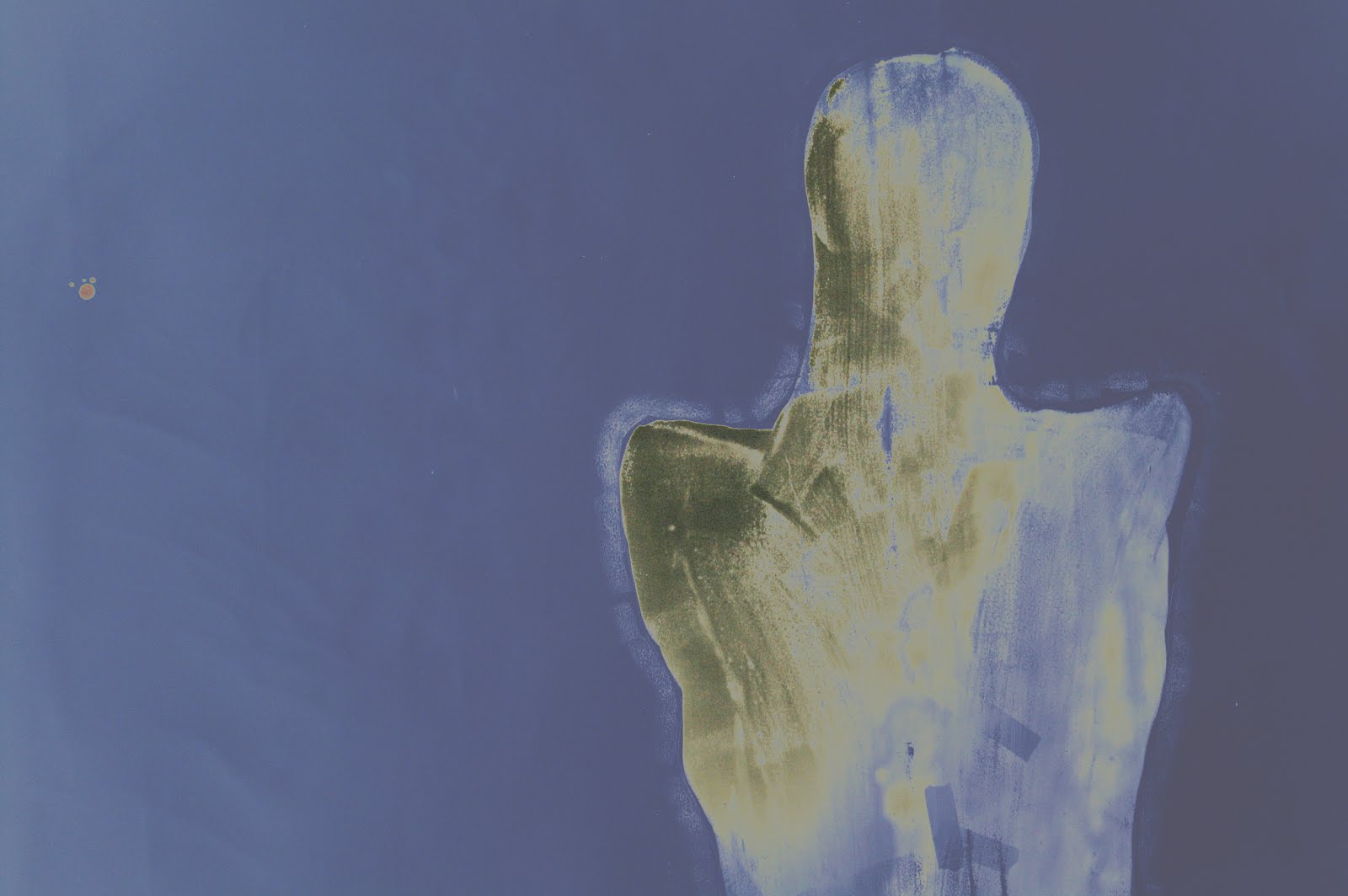
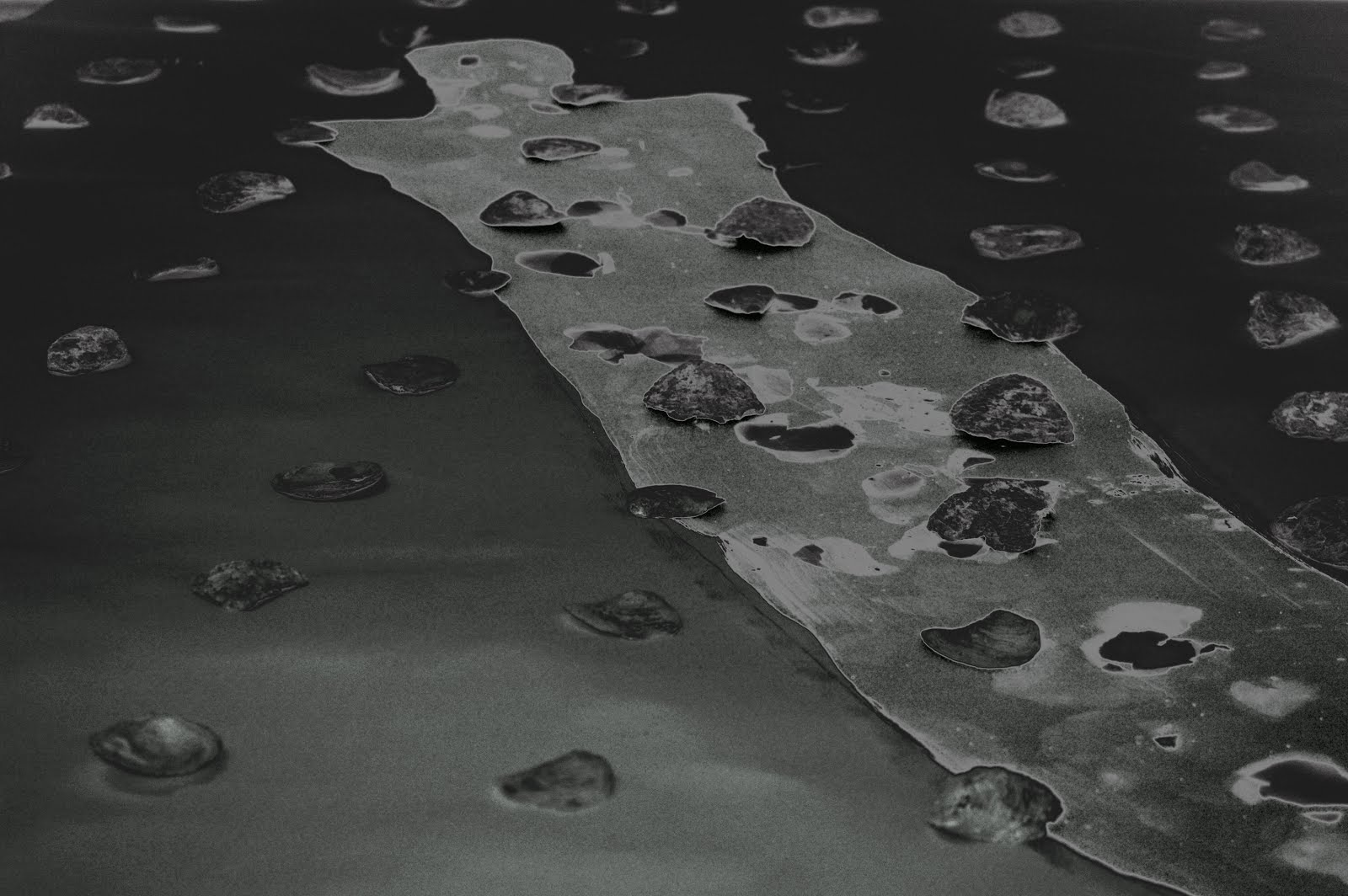
Postcard/Star Atlas :  Cyanotype (used as index for recorded disc)


Photography by dramatising the contingency of negative and positive states, draws attention to the instability of absence and presence


Cameraless and Photogenic Drawing : Indexical products of events, spatial agency.

Reinvention of the photographic diagram as the spatial record that articulates the continuum of  space and time as an event.

Privileging of the claims (new artistic languages) of the indexical sign (Krauss, uncoded immediacies/terminologies)

Anna Atkins, specimens (photographic subjects) not focused but touched, framed and flattened to create a legibility from their indexical presence.

The simple blueprint is an archaic survivor of a more primitive era (Child Bayley 1906)

Cyanotype, a historical method (1842 Herschel) registering a negative image in which the white lines of the resultant cyanotype print the materiality of the object against the darkened areas of Prussian blue that were exposed to light.


Verso


A for Andromeda, BBC4 27.03.06 90 minutes

1973 Romantic Poets

Disc Full 


Material Agency : Carl Knappett, Lambros Malafouris

Visualising Environmental Agency

Pastoral Space: Material, Inquiry and Craft.


"Agents are defined as persons or things, which have the ability and intention to "cause" something "in the vicinity" or "in the mileau" to happen ( Gell 1998)"

"These latter artefacts are described with the term "index", to remove the appellation "art" and to imply that they are indexes of agency."

Some Stimulating Solutions, Andrew Cochrane.


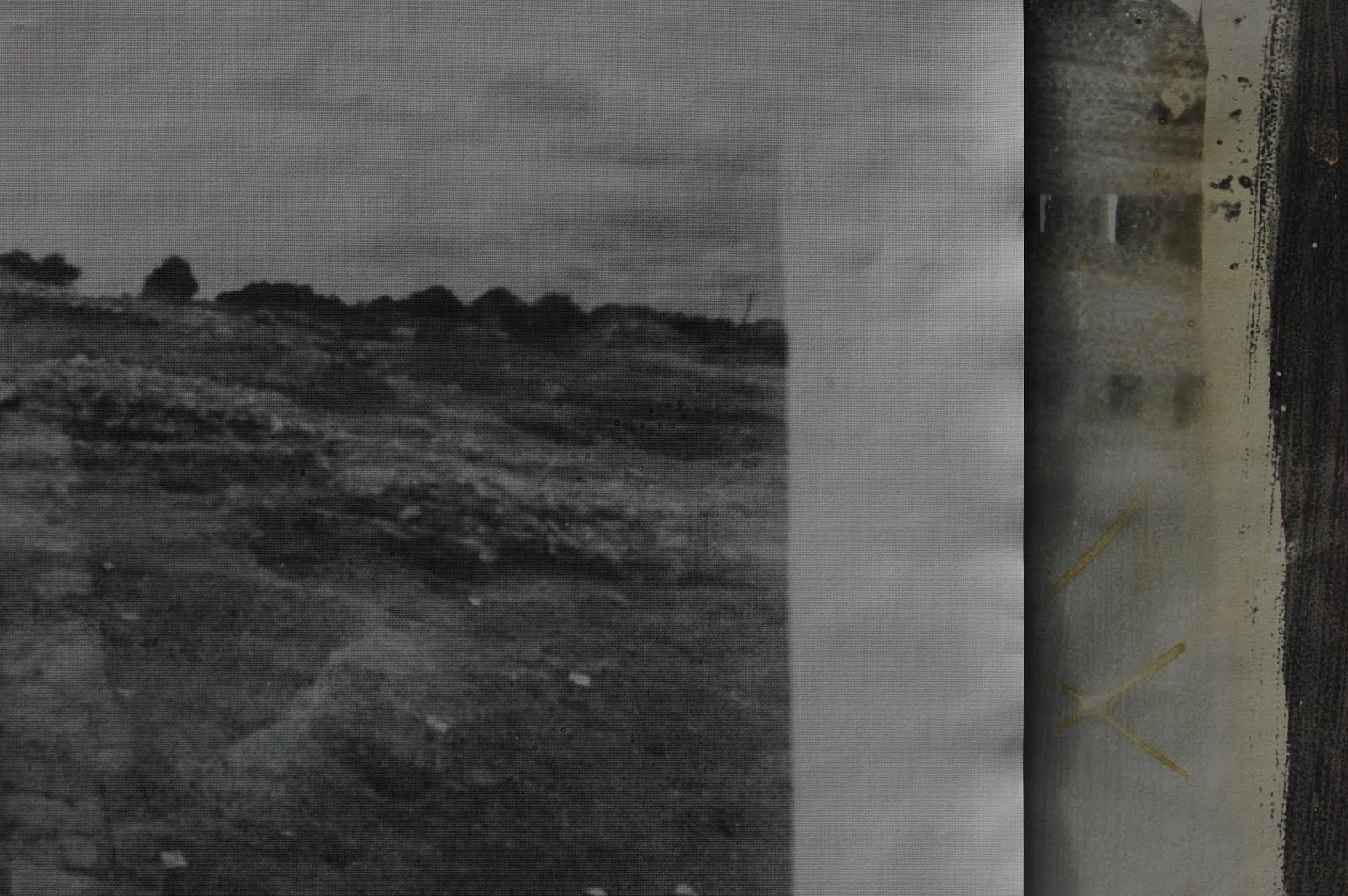
Filament, cyanotype drawing on lightweight paper 2010.

Chapel Arts Studios, Andover.

Thursday, 19 August 2021

Reading Rooms : Waverley Project


Interior Design presented as a sociological spatial practice.

Design as an interactive structure, an interlocutory interior in the making of space and spatial relations.

The Scriptorium brings together a varied and discursive set of ideas and objects, texts and interior architectures. The performativity of the research is presented through specifically designed apparatuses and staged in a niche like space. The gaps or relations between things become more interesting than the designed elements.


https://www.flickr.com/photos/russellmoreton/26625231676/in/dateposted-public/


Wednesday, 18 August 2021

Relationscapes : Research, Movement, Art Process


HERZOG &  DE MEURON
NATURAL HISTORY
My studio is a piece of architecture that is silent.
Speculative Architecture
On The Aesthetics of Herzog & De Meuron
Robert Kudieka

The Thinking Hand
Existential and Embodied Wisdom in Architecture
Juhani Pallasmaa

Collage and Architecture
Jennifer A. E. Shields

COLLAGE
Assembling Contemporary Art
Sally O'Reilly
Construction/Abstraction
Body/Identity
Environments/Geographies


Tuesday, 17 August 2021

Landscape/Sensorium : Journeys in Art, Architecture, and Film.


Sensorium : A Partial Taxonomy, Caroline A. Jones.

Contemporary artists aim to produce specific relations with the technologies they adopt and adapt;
This schematic offers a partial taxonomy.
Caroline A. Jones, Sensorium : Embodied Experience, Technology and Contemporary Art 2006

Immersive
the "cave" paradigm, the virtual helmet, the black-box video, the earphone set

Alienated
taking technology and "making it strange," exaggerating attributes to provoke shock, using technologies to switch senses or induce disorientation

Interrogative
work that repurposes  or remakes devices to enhance their insidious or wondrous properties; available data translated into sensible systems

Residual
work that holds on to an earlier technology, repurposes or even fetishizes an abandoned one

Resistant
work that refuses to use marketed technologies for their stated purpose; work that pushes viewers to reject technologies or subvert them

Adaptive
work that takes up technologies and extends or applies them for creative purposes, producing new subjects for the technologies in question


Atlas of Emotion : Journeys in Art, Architecture, and Film.
Giuliani Bruno.

The development of subjectivity as spatiality hinges on architectural construction and is written in the very articulation of architectural discourse.

The Mobile Home
Post Studio Practices, Daniel Buren.
Rem Koolhaas

A space is something that has been made room for . . . A boundary is not that at which something stops, but as the Greeks recognized, the boundary is that which something begins its presencing. That is why the concept is that of horizons, that is, the horizon, the boundary. Space is in essence that which room has been made, that which let into its bounds. That for which room is made is . . . joined, that is, gathered, by virtue of a location, that is by such a thing as a bridge.
Martin Heidegger. 'Building Dwelling Thinking'

Pattern and Chaos/Liminality/Tectonics

Architectural surface for a Library,  raw materials, light, silence and solitude. 
CELL, COURT, DOMAIN FIELDS : Experimental surfaces and actions on layered paper

House (Gendered House) is actually, both a private museum and a public library. It is a laboratory built on the threshold of diverse and interpretive and creative perimeters, binding architecture to the cinematic/everyday drama of statis and movement in the sensing of space.

The Voyage of Modernity, Guiliani Bruno.


Monday, 16 August 2021

Spore/Disc/Environment : Cyanotype/Drawing/Collage

Brought To Light
Photography And The Invisible
1840-1900

SHADOW CATCHERS
Camera less Photography

Techniques of the Observer
On Vision And Modernity In The Nineteenth Century
Jonathan Crary

EXPERIMENTAL
PHOTOGRAPHY
A Handbook of Techniques
Luca Bendandi

Another Photography
Jan Dibbets


https://www.flickr.com/photos/russellmoreton/31175745933


Sunday, 15 August 2021

EMULSION : Photographic Landscapes/Drawings/Constructed Spaces


Twilight Abstraction : Liminal Zone

Exploring spaces between poetics of photography and the experiential values of dwelling/making/thinking through material.

I do not start with the idea but with the experience
Peter Lanyon

The Experience of Landscape
Paintings, Drawings and Photographs
South Bank Centre

An Anthropology Of Landscape
Christopher Tilley, Kate Cameron-Daum

The Poetics of Space. Gaston Bachelard.
The classic look at how we experience intimate places.

The Eroded Steps. Giuseppe Penone.
Dean Clough Contour Lines.

Land Drawings, Installations, Excavations. Kate Whiteford.

Remote Sensing. Colin Renfrew.

ECOLOGY WITHOUT NATURE
Rethinking Environmental Aesthetics
Timothy Morton

Ordinary Lives
Studies in the Everyday
Ben Highmore

The Art of Survival?
Jacqueline Rose
Essay for 'Elsewhere' Therese Oulton

Hermeneutic Philosophy and The Sociology of Art
Janet Wolff

Hermeneutics
Jens Zimmermann


Mesh/Material/Light, Cyanotype Process

Cyanotype is a photographic printing process that produces a cyan-blue print. Engineers used the process well into the 20th century as a simple and low-cost process to produce copies of drawings, referred to as blueprints. The process uses two chemicals: ammonium iron(III) citrate and potassium ferricyanide.

The English scientist and astronomer Sir John Herschel discovered the procedure in 1842.[1] Though the process was developed by Herschel, he considered it as mainly a means of reproducing notes and diagrams, as in blueprints.[2] It was Anna Atkins who brought this to photography. She created a limited series of cyanotype books that documented ferns and other plant life from her extensive seaweed collection.[3] Atkins placed specimens directly onto coated paper, allowing the action of light to create a silhouette effect. By using this photogram process, Anna Atkins is regarded as the first female photographer.[4]

 Architectural Blueprint

Cell
Court
Domain

Drawing (performative) into the photographic process

Aerial, Social Mappings. Winchester Cathedral :  Space for Peace

Pinhole Photograph (1019) Analogue Processes / Material Memory


Saturday, 14 August 2021

The Phenomenology of Construction : Caruso St John


THE PRESENCE OF THE BUILT OBJECT IN THE WORLD THROUGH THE MANNER IN, WHICH IT IS BUILT.


Mark Fisher : a culture made and defined by repetitive cycles of retrospection and pastiche.

Architecting sensations and instances between concept, materials and experiential praxis. 

Texts composited from spaces and rooms into reading vectors for  illuminated thinking.


Caruso St John : The Phenomenology of Construction

 
At the end of the twentieth century, with late capitalism more widely accepted as the economic model than ever before, the ideology of newness has become transparently associated with the workings of the market. Recent interest in airports, shopping malls and infrastructure emerges from an idea that it is these places where the processes of the contemporary economy are most brutally apparent. For architects to engage in these programmes is for architecture to become a commodified product and to be subject to the tyranny of the new.
Adam Caruso, The Tyranny of the New.
 
History is the raw material of architecture.
Aldo Rossi
 
Originality does not consist in making up new words that do not have the fine character of experience, but in using existing words well. They can be sufficient for everything.
Auguste Rodin
 
A radical formal strategy is one that considers and represents the existing and the known. In this way artistic production can critically engage with an existing situation and contribute to an ongoing and progressive cultural discourse.
Adam Caruso, The Tyranny of the New. Pp70-73
 
RADICAL FORMAL STRATEGY
THEORY PRAXIS MAKING
 
DEEP ECOLOGIES OF CONSTRUCTION
 
RELATIONSHIPS BETWEEN:
VENACULAR STRUCTURES and HIGH STATUS ARCHITECTURE
 
SPATIAL CONTINUITY: MAKING, DWELLING
 
TRADITION
 
There is no compelling evidence as to why architecture should reject more than 400 years of working within a liberal arts context, nor is there compelling evidence that architecture is any more marginal than at other times over that period.
Adam Caruso, The Tyranny of the New.
 
Continuity involves the legacy of existing buildings produced by architects as well as the much larger legacy of existing, vernacular structures. In trying to connect these things, Caruso St John are part of a tradition that includes figures as diverse as Adolf Loos, Auguste Perret, Alison and Peter Smithson, Gunnar Asplund, Sigurd Lewerentz, Mies van der Rohe, Roger Diener, or Hans Kollhof. These architects have all questioned the abruptness of the radical break inherent in the formation of orthodox modern architecture.
Eric Lapierre, Caruso St John, The phenomenology of construction.
CONSTRUCTION
 
Adam Caruso on the medieval ruins of Fountains Abbey, Yorkshire.
 
Today the nuances of language that make up these architectures only exist as an intellectual discourse and do not operate at the emotional level that would have engaged the original inhabitants, or audiences of these buildings. And yet we are still emotionally affected by these structures. Denied access to the specific culture of their iconography. We respond, at a more visceral level, to the more general culture of their construction. When this formal language ceases to be novel, a building becomes part of a more normative condition, the condition of not ‘being new’ and its qualities increasingly emerge from the more long-standing and stable world of construction.
 
Adam Caruso, Towards an Ontology of Construction, KnittingWeaving Pressing 2002
 
 
By ceasing to be new, a building attains a more ‘normal’ condition, it becomes finally more banal, from a viewpoint that has much in common with Perret’s famous aphorism on ‘a work that would seem to have always existed’.
 
 
AFFECT SPACE POLITICS : NIGEL THRIFT
 
REVERBERATIONS : BACHELARD
 
RUINS : MARC AUGE
 
REFRAINS : AFFECT READER
 
SPACES OF ENCOUNTER : RE-DISCOVERY OF SPACE
CLAY : INNERNESS, CRAFTED FROM THE VALLEY/DWELLING/SITUATION
 
CONSTRUCTION AS THE APPLICATION OF MATTER
 
PHENOMENOLOGY vs. CONSTRUCTIONAL truth
 
 
THE QUESTION OF RUINS or the differences between the architectural ideologies of Auguste Perret and Caruso St John.
 
Beautiful architecture makes beautiful ruins, affirms Perret, since in ruins, only the structure remains visible.
 
When Adam Caruso observes the ruins of Fountains Abbey, he is concerned with physical matter.

Waverley Abbey Project : Reading Rooms.
Interior Design MA Farnham
Russell Moreton 
 
The ruined state of the buildings serves to exaggerate the presence of material. The feeling is that of an enormous weight drawn out of the ground into the volume of the valley and held in place by a matrix of structure whose schema is described by the pattern of stone joints.
Adam Caruso, Towards an Ontology of Construction, KnittingWeaving Pressing 2002
 
The essential change in perspective between Perret and Caruso St John is that of a construction as structure to a construction that is the application of matter. Perret observes the organic dimension of buildings from a distance that makes the structural framework’s overall logic intelligible.
Caruso regards buildings much more closely, at a distance/closeness that enables him to grasp their tactile dimension: he looks at them with his hands. In Fountains Abbey, it is the brickwork joints that are essential; on the rear façade of his Van Nelle factory building, it is the micro-topography of the façade.
 
Luis Moreno Mansilla remarks that buildings by Sigurd Lewerentz, one of Caruso St John’s main inspirations, can only be seen close up.
 
For Caruso St John, construction does not refer to a constructional technique, nor to the coherence of its application as a technique, but rather the presence of the built object through the manner in which it is built.
 
Interestingly Perret’s positivist and absolute approach belongs to a mindset that excludes all form of doubt or ambiguity. To this approach, Caruso St John propose a phenomenological approach in which construction frees itself from pure technological logic to find meaning, both inherent and more relativist, in the field of architecture itself.


INNERNESS/AFFECT : THE CHANGE OF PERSPECTIVES
 
SURFACES, Juxtaposed without articulation.
QUESTIONING STRUCTURAL LOGIC, by playfully obscuring it.
 
INCREASING THE BUILDINGS PHENOMENOLOGICAL AND PERSPECTIVE COMPLEXITY
 
CONSTRUCTIVE DIALOGUES/CLADDINGS Through CRAFT, PROXIMITY, INTIMACY and SITUATION.
 
 
The depth of the exposed beams in the exhibition areas is not proportional to their respective spans, but to the overall heights of the rooms in question. Walls with claddings of vertical timber boards alternate with bare concrete walls that seem to have been cast in shuttering identical to the timber cladding. These two surfaces are sometimes juxtaposed, without articulation, and question structural logic by obscuring it, thereby increasing the building’s phenomenological and perspective complexity.
New Art Gallery, Walsall. Caruso St John
 
The load bearing walls appear to be folded along the complex contours of the non-orthogonal site. At the corners, bricks are cut and bonded together with resin to adapt to the geometry, while maintaining the size of standard bricks. Although they are load bearing, these walls become surfaces that have tactile and phenomenological qualities as well as being constructed surfaces with real architectonic weight.
The Brick House, London, Caruso St John
ATMOSPHERE: CLADDINGS and ARCHITECTONICS.
 
 
CLADDINGS and their ability/capacity to create ATMOSPHERES
 
AESTHETICS AND SUBJECTIVITY: KANT to NIETZSCHE ( Andrew Bowie)
 
 
The artist, the real architect, has firstly the feeling of the effect that he wants to produce, and then he imagines the spaces that he has to create. The effect that he wants to create on the beholder, will come from the material and its form.
Adolf Loos
 
It is through the splendour of truth that the building attains beauty. The truth is in everything that has the honour and task to carry or to protect. He who hides a pole makes a mistake. He who makes a false pole makes a crime.
Auguste Perret
 
 
The originality of Caruso St John’s work lies the fact that this atmosphere is created by claddings that have a strong architectonic character. As opposed to Loos, they use paint very rarely, and prefer to use construction materials in the traditional sense of the term: brick, concrete and wood. They do so in order to continue to create architecture, not as a spectacle, but by merging two traditions –that of Perret’s structural rationalism and that of Loos’s claddings –to define an architecture that speaks to us of the contemporary world in a truly critical manner.
 
Eric Lapierre, Caruso St John, The phenomenology of construction.
Architecture, Nature and Subjectivity.

 
Atmospheric ecologies/architecting through situated learning.


PROXIMITY OF SPACE
INTIMACIES IN SOCIAL SPACES
SCRIPTORIUM
 
THREE STAGE METHODOLOGY (Kikutake) Mitsuo Taketani
KA ‘ESSENCE’
KATA ‘SUBSTANCE’
KATACHI ‘PHENOMENON’
 
Characteristics of an architect
CHI ‘BLOOD’
TACHI ‘TEMPERAMENT’
KATACHI ‘EMBODIMENT’

Friday, 13 August 2021

Drawing/Mapping : Speculative Fields/Spatial Practices

Speculative Fields/Spatial Practices

Lightness
Quickness
Exactitude
Visibility
Multiplicity
CONSISTENCY/Guattari
The Three Ecologies

Italo Calvino
Six Memos for  the Next Millennium

Reaserch Collage/Interior Design

Life Drawing/Fine Art

Stained Glass/Architectural Art

Life Drawing/Fine Art

Montage/Photography


Tuesday, 10 August 2021

Studio Practice : Social Sensing/Innerness

Studio Practice

Theory and Analysis

Craft and Design/Interior Design

Building, Dwelling, Thinking

Scripting Rooms/Spaces and Events

The pot promotes an architecture of the soul, of an intimate yet social interior illuminated through the imagination.
Building human presence, to dwell shaped by 'the vocational' (physical and human topography)
Everyday Aesthetics

The Arts/ : As A Form Of Experimental Psychology
The Play Of Affect/Space and Politics
Apparatuses and Architectures

Rethinking Materiality/At The Potters Wheel
How Things Shape The Mind
Colin Renfrew
Making
Tim Ingold

The Essential Vessel
Natasha Daintry
I think that part of our problem is that it is not easy to talk about sensing, doing and being? They're not concepts as such neat little fixed shiny packages of ideas, but more existential states which shift and move as you inhibit them more amorphous, like clay.

One can speak of this duality of inside and outside but the real experience is more kinetic, more fluid and interchangeable.

Heidegger, Coper, Baldwin, De Waal, Zumthor

The Potter/The Pot
Where Brain, Body and Culture Conflate
Lambros Malafouris