Showing posts with label translucency. Show all posts

Tuesday, 6 July 2021

What is philosophy/Deleuze, Guattari : The unfolded garment and other spatial concepts

 Intermezzo : Nomadic Photographic Assemblage

What is philosophy/Deleuze, Guattari 


a thousand plateaus

Deleuze, Guattari


Assemblage

Becoming

Body Without Organs

Nomad

Rhizome

Smooth Space

State

War Machine


The Uberficiation of the University

BY MARK CARRIGAN ON NOVEMBER 22, 2016


A fascinating short book by Gary Hall, available open access at the Coventry University repository: 


The Sharing Economy

Platform Capitalism

Uber.edu

The Reputation Economy

The Microentrepreneur of the Self

The Para-academic

The Artrepreneur

Affirmative Disruption


The unfolded garment and other spatial concepts


The Unfolded Garment

Embracing Subjectivity

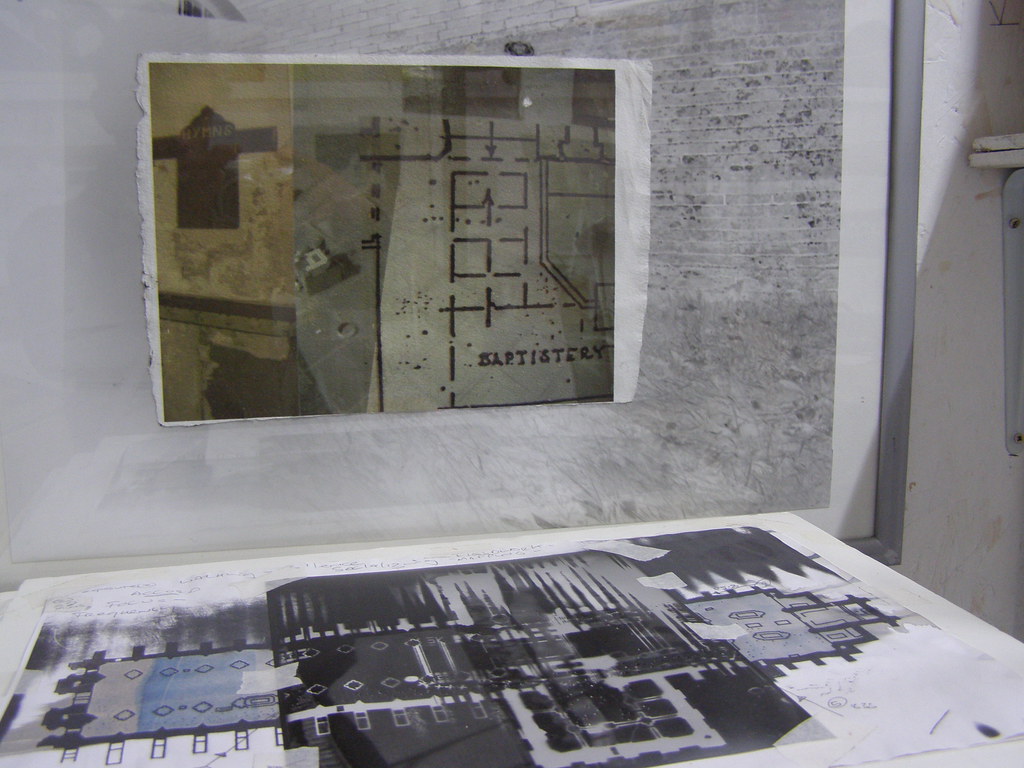
Pierced Assemblage on Photogram

Espace-Milieu, Winchester Cathedral.

Painting evolved from Space for Peace, Winchester Cathedral. Site drawing from architectural plan and documentation of people moving within the event.

aerial, cathedral, cyanotype, public gathering, 

spatial mapping, palimpsest, drawing, lightness


What is Philosophy?

Gilles Deleuze, Felix Guattari


Their book is a profound and careful interrogation of what it might mean to be a 'friend of wisdom', but it is also a devastating attack on the sterility of what has become, when 'the only events are exhibitions and the only concepts are products which can be sold'. Philosophy, they insist, is not contemplation, reflection or communication, but the creation of concepts


Saturday, 3 July 2021

Architecture and Experimental Photography : Glass Panels/Stevens Competition

Architecture and Experimental Photography/Stained Glass 

Winchester Science Centre, SPUD, experimental photography, architectural glass, Stevens Competition, glass walls, translucency, Russell Moreton, interior design, photogram, spatial practice, shelter design, UCA Farnham,


Posted 02/04/2014

Wednesday, 3 April 2019

Aesthetics and the Spatial : Sensual Things of Light and Gravity

Immaterial Architectures
Painting/Form for Reading Spaces/Intervals
Pattern and Chaos/Liminality/Tectonics
Architectural surface for a Library,  raw materials, light, silence and solitude.

Christopher Wilmarth ; Poetics/Duality of Light and gravity
Other Architecture
Constructing Metaphysical Space

Wilmarth's art reveals his essential concern with the mystical and physical properties of light, especially the ways in which light evokes reverie and generates sensations of space and containment.

The Architecture of Natural Light : Henry Plummer

EVANESCENCE
Orchestration of light to mutate through time

Intensity and integrity of Wilmarth's practice/vision.

PROCESSION
Choreography of light/moving eye

VEILS OF GLASS
Refraction of light/diaphanous film

Wilmarth made possibly his strongest, most beautiful works on paper, exploring a new level of expression while retaining continuity with past work.

ATOMIZATION
Sifting of light/through a porous screen

These drawings also contain allusions to the human presence. Their haunting, foreboding quality is prefigured in the grave, austere tones of some of the glass and steel structures.

CANALIZATION
Channelling of light/through a hollow mass

The duality of light and shadow and contrasts between abstraction and representation continue to be central concerns in his final drawings.

ATMOSPHERIC SILENCE
Suffusion of light with a unified mood

Wilmarth's sculptures from the early 1980's are influenced by the poetry of Stephane Mallarme.To affirm Mallarme's emphasis on the spiritual, the artist used a simple ovoid form, evoking a multitude of symbols, including the human head. These ovoids were made of blown glass, which Wilmarth viewed as "frozen breath". The artist pursued this figurative impulse into the mid 1980s, combining the anthropomorphic ovoid shapes with the larger abstract forms of his earlier sculpture.

LUMINESCENCE
Materialization of light in physical matter

Wilmarth composed with planes of delicate colour and light, placing plates of blackened steel behind translucent sheets of etched glass imbued with a luminous, greenish cast.

"He employed a painterly technique that emphasized the tactility and fichness of his materials, which like an alchemist he persistently sought to transform. He continually examined the concept of duality: contrasts between light and shadow, transparency and opacity, heaviness and weightlessness, materiality  and ethereality, form and spirit are repeatedly presented; the synthesis of geometric with organic forms, the range between abstraction and representation are constantly explored."
Laura Rosenstock, catalogue essay.


White Noise : Nocturnes of Silence