Material absorbed in its own thoughts :
Monday, 7 June 2021
Other ways, other than buildings of making : Reading Rooms/Performative Collages and Models
Sunday, 6 June 2021
Spatial Agency/The Arts and the dance of thinking : The body is open to the intensities of the present.
Categories and things may make it easier for us to grasp reality, but they also hide its underlying complexities.
The effect that space has on actions, interactions, entities, concepts, and theories. Physical spatiality can also be metaphorical. It is used to show social power—thrones are higher than the seats of commoners, and ‘high tables’ for university teachers in most Oxbridge colleges physically elevate the teachers over the taught. People use proximity to show how intimate they want to be with others (See personal space), or orientation; we may face someone or turn away from them. Institutions and governments have used large architectural spaces to invoke awe, while restaurateurs may create ‘cosiness’ in small spaces.
FILMIC COLLAGE : Veiled Melancholy/Book Narratives
"He rubbed his eyes. The riddle of his surroundings was confusing but his mind was quite clear - evidently his sleep had benefited him. He was not in a bed at all as he understood the word, but lying naked on a very soft and yielding mattress, in a trough of dark glass. The mattress was partly transparent, a fact he observed with a sense of insecurity, and below it was a mirror reflecting him greyly. Above his arm- and he saw with a shock that his skin was strangely dry and yellow - was bound a curious apparatus of rubber, bound so cunningly that it seemed to pass into his skin above and below. And this bed was placed in a case of greenish-coloured glass (as it seemed to him), a bar in the white framework of which had first arrested his attention. In the corner of the case was a stand of glittering and delicately made apparatus, for the most part quite strange appliances, though a maximum and minimum thermometer was recognizable."
H. G. Wells : The Sleeper Awakes. 1899/1910
"Spatial turn" The increased attention to matters of space, place and mapping in literary and cultural studies, as well as in social theory, philosophy, and other disciplinary fields.
Spatiality, Robert T. Tally Jr. Routledge 2013.
Immediate Architectural Interventions, Durations and Effects : Apparatuses, Things and People in the Making of the City and the World. Alberto Altes Arlandis, Oren Lieberman. 2013
Preface (1921) ” The great city of this story is no more than a nightmare of Capitalism triumphant, a nightmare that was dreamt a quarter of a century ago. It is a fantastic possibility no longer possible. Much evil may be in store for mankind, but to this immense, grim organization of servitude, our race will never come” H.G. Wells. Easton Glebe, Dunmow,1921.
EMULSION : Photographic Landscape
I do not start with the idea but with the experience
Peter Lanyon
The Experience of Landscape
Paintings, Drawings and Photographs
South Bank Centre
An Anthropology Of Landscape
Christopher Tilley, Kate Cameron-Daum
ECOLOGY WITHOUT NATURE
Rethinking Environmental Aesthetics
Timothy Morton
Ordinary Lives
Studies in the Everyday
Ben Highmore
The Art of Survival?
Jacqueline Rose
Essay for 'Elsewhere' Therese Oulton
Hermeneutic Philosophy and The Sociology of Art
Janet Wolff
Hermeneutics
Jens Zimmermann
Saturday, 5 June 2021
Teaching Drawing Concepts : Oskar Schlemmer/Calvin Albert
Lund Humphries/MIT, London,
Oskar Schlemmer's conception of man
Syllabuses/Teaching Schedules
Drawing from the nude
Measurement and proportion
Natural sciences
Figure drawing
Philosophy
Psychology
Question and answers to the preliminary course 'man'
Postscript
Figure Drawing Comes To Life, Albert Seckler. 1957
Reinhold Publishing Corporation, New York
A series of experiments in drawing the figure conducted by Calvin Albert
Interpreted in a text by Dorothy Gees Seckler
New concepts of architecture
Existence, Space and Architecture, Christian Norberg-Schulz. 1972
Anthropometrics for designers, John Croney. 1971
Tuesday, 18 May 2021
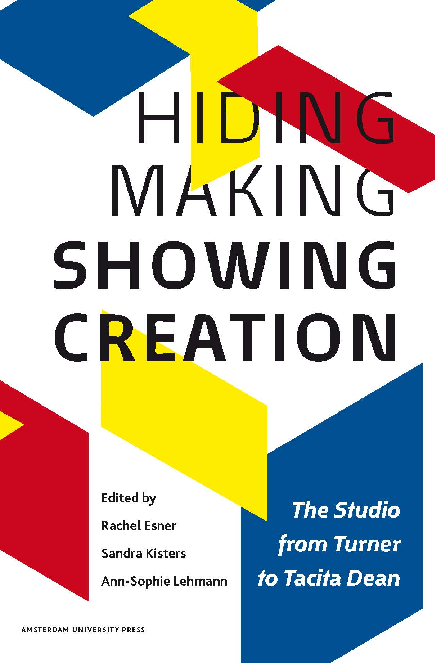
Hiding Making Showing Creation : The Studio from Turner to Tacita Dean 2013, Academia post
Making : Tim Ingold
The Materials Of Life
Re-Shaping Learning
|
Monday, 17 May 2021
Mechanisms of Seeing : 10 Days at the Laundry/Axisweb post migrations
MOLECULAR SIEVE, is a performative analysis of “this place” utilising the simple properties of the pinhole camera. This appropriated apparatus makes visible the extrusive nature of time as it is deposited on the photographic surface.
The extended durations required to register “place” impart a sense of dwelling as recorded by the apparatuses passive gaze. These surfaces record and register a relation constructed by the architecture of the chamber and what is beyond it. Movements when visible appear as simple abbreviated enactments caught like inclusions within this consolidated and timely consolation of place.
Cameras consist of small voids, the ‘camera’, a lens and photographic film. They are camerae obscurae that collect light and allow it to meet the surface of the film. But in fact the light comes from the larger void outside the camera. The moment the light has registered on the light-sensitive surface of the film, memories are constructed. The memory is literally conceived in this meeting and is added to life as an additional layer of being. The process through which void meets surface is therefore also about love—the love of ancestors and relatives, but also of life and its conception.
Daniel Libeskind’s building will, when finished, offer a path for the visitor, the path of history that crosses the void of commemoration.
Saturday, 15 May 2021
Working with/into experiential perspectives : CHOREUTICS : Principles of Dynamic Space and Movement
Instantaneity/depthlessness
Doreen Massey, for space
Movement, Art, Philosophy
Erin Manning
Prelude : What moves as a body returns as a movement of thought
Something in the world forces us to think. This something is not an object of recognition, but a fundamental encounter.
Gilles Deleuze, Difference and Repetition
Temporal Perspectives
Working Notes/Spaces
Space and Place
The Perspective of Experience
Yi-Fu Tuan
Experiential Perspective
Space, Place, and the Child
Body, Personal Relations, and Spatial Values
Spaciousness and Crowding
Spatial Ability, Knowledge, and Place
Architectural Space and Awareness
Time in Experiential Space
Intimate Experiences of Place
Attachment to Homeland
Visibility : the Creation of Place
Time and Place
for
space
Doreen Massey
A Relational Politics of The Spatial
Making and Contesting time-spaces
Contemporary artists aim to produce specific relations with the technologies they adopt and adapt;
This schematic offers a partial taxonomy.
Caroline A. Jones, Sensorium : Embodied Experience, Technology and Contemporary Art 2006


Immersive
the "cave" paradigm, the virtual helmet, the black-box video, the earphone set
Alienated
taking technology and "making it strange," exaggerating attributes to provoke shock, using technologies to switch senses or induce disorientation
Interrogative
work that repurposes or remakes devices to enhance their insidious or wondrous properties; available data translated into sensible systems
Residual
work that holds on to an earlier technology, repurposes or even fetishizes an abandoned one
Resistant
work that refuses to use marketed technologies for their stated purpose; work that pushes viewers to reject technologies or subvert them
Adaptive
work that takes up technologies and extends or applies them for creative purposes, producing new subjects for the technologies in question
Transactive Memory
Systems Virtual Teams
The Body
Minds and Metaphors
Laban-CHOREUTICS
The Mind In The Cave
David Lewis-Williams
The Matter of The World
Minds and metaphors
Cathedrals of Intelligence
The 'Looking mind'
Information Processing and Performance in Traditional and Virtual Teams
The Role of Transactive Memory
Terri Griffith, Margaret A. Neale
Acquisition/Sharing of Implicit and Explicit Information
Organisations increasingly rely on teams to do much of the work traditionally accomplished by individuals.
Successful groups are those who are able to create synergies in the form of information aggregation and innovation that is beyond the ability of any single member.
Nascent Knowledge
Information Diversity
Task Conflict
The knowledge and perspectives of group members from the same social networks may be more redundant than diversified. However a total diversity among work group members is not desirable; some 'redundancy' (agreement in perspective) among group members is necessary to ensure enough common ground to facilitate successful group interaction.
Transactive Memory : Knowing and Accessing What We Know
For teams to have synergy they must be able to access their information, it is important to know who does what.
Wegner 1987; 1995)
RELATIONAL DEVELOPMENT
TIME
Synchronous/ Asynchronous
COMMUNICATION
Transactive Memory : A Contemporary Analysis of the Group Mind
Daniel M. Wegner
The study of transactive memory is concerned with the prediction of group (and individual) behaviour through an understanding of the manner in which groups process and structure information.
Individual Memory
Information is entered into memory at the encoding stage, it resides in memory during a storage stage, and is bought back during the retrieval stage.
Organisation : differentiated/ integrated
Label
Location
THE LABAN SOURCEBOOK
Dick McCaw
Rudolf Laban (1879-1958) was a pioneer in dance and movement, who found a extraordinary range of application for his ideas; from industry to drama, education to therapy. Laban believed that you can understand about human beings by observing how they move, and devised two complimentary methods of notating the shape and quality of movements.
Diagram : Three Planes of Movement from Choreography
Inner and Outer Tension : Inner and Outer Form
CHOREUTICS : Principles of Dynamic Space and Movement
Choreutics presents the grammar and syntax of spatial form in movement and the nature of movement's harmonic content.
Effort
Exertion of Power, Physical or/and Mental
Force
Space
Time
Flight
Indulging/Contending
SPACE Flexible/Direct
WEIGHT Light/Strong
TIME Sustained/Quick
FLOW Free/Bound
Shadow Moves
An acute observer of Shadow Movement of a person in different situations and at different times will show the consistency of that individual's basic attitude and personality.
Effort and Recovery
Movement Psychology
Thinking
Intuiting
Sensing
Feeling
AN
ANTHROPOLOGY
OF
LANDSCAPE
Christoper Tilley, Kate Cameron-Daum
Materiality
From our perspective in this book representations of landscape, textual or pictorial, are of secondary significance and we should treat them as such; they are selective and partial, and often highly ideological, ways of seeing and knowing.
It forms a material medium in which we dwell and move and think.
Redirecting the study of landscape from representation to the materially grounded messiness of everyday life and the minutiae of material practices that constitute it.
Landscapes are contested, untidy and messy, tensioned, always in the making. Our landscapes of modernity are frequently on the move and peopled by diasporas and migrants of identity, people making homes in new places.
Field Observations
Spatial relations within the landscape are complex.
The manner in which persons and their bodies cannot be understood apart from the landscapes of which they are a part, reciprocally involved in forms of movement, action, awareness and social memory.
Embodied Identities
Art in and from the landscape
Fragile Environments : Nature and Culture
On Ways of Walking and Making Art
A personal reflection
M Collier
Making art is a practical application of phenomenology
Engaging with an embodied experience of space and depth (what Merleau-Ponty called the 'flesh of the world').
WATERLOG
Journeys Around An Exhibition
Landscape and Memory
AFTER SEBALD
Essays and Illuminations
Edited by Jon Cook
The Forum, Norwich : Research Outposts
Alternative Photography