Showing posts with label #experimental photography. Show all posts

Wednesday, 8 March 2023

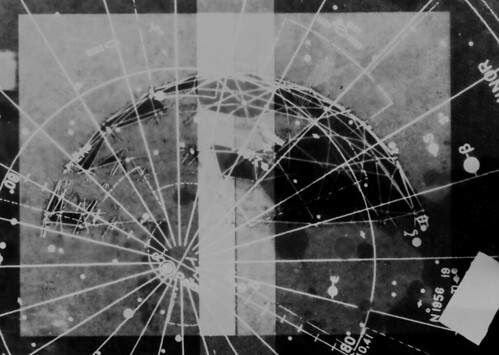
Collage/abstracts (Heuristic Fragments) Reflective Material #1

Is there still an aesthetic illusion? And if not, a path to an “aesthetic” illusion, the radical illusion of secret, seduction and magic? Is there still, on the edges of hypervisibility, of virtuality, room for an image?

— Jean Baudrillard, The Conspiracy of Art, 2005
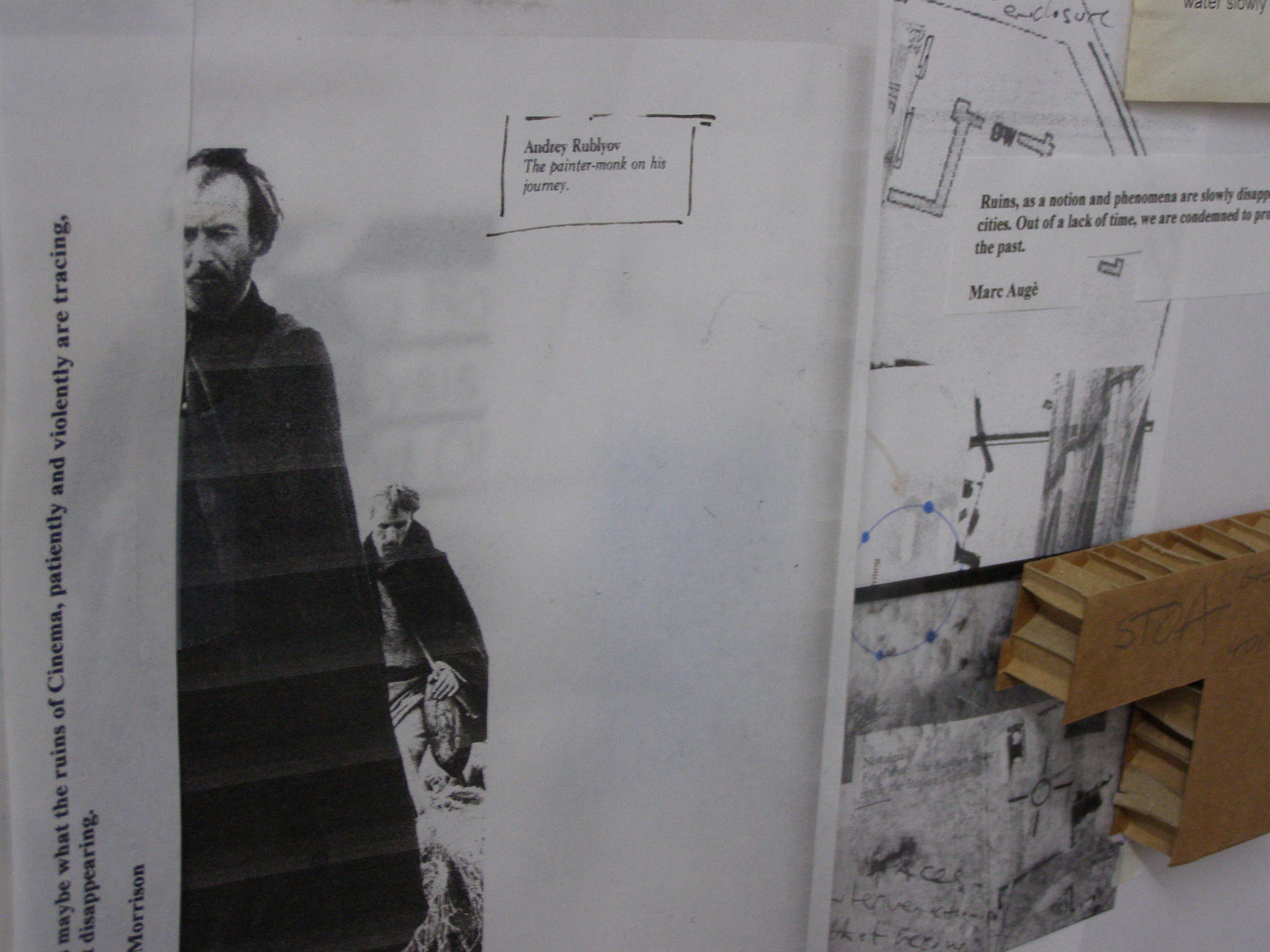


A heuristic technique (/hjᵿˈrɪstᵻk/; Ancient Greek: εὑρίσκω, "find" or "discover"), often called simply a heuristic, is any approach to problem solving, learning, or discovery that employs a practical method not guaranteed to be optimal or perfect, but sufficient for the immediate goals.

Heuristic Material : Collage 

1. encouraging a person to learn, discover, understand, or solve problems on his or her own, as by experimenting, evaluating possible answers or solutions, or by trial and error: a heuristic teaching method.
2. serving to indicate or point out; stimulating interest as a means of furthering investigation.

Reading Collage : Spatial Drawings/Documents/Analogue Photography

A Hut of One's Own, Ann Cline

Texts,Annotations, Foundations, Pathways, Corridors, Bookmarks, Walking, Thinking, Ramble, Cross Country, Disciplines, 

Herzog  and De Meuron
NATURAL HISTORY

Jana Sterbak
Remote Control 1989


Tuesday, 8 November 2022

The Re-Constituted Reality : Tacita Dean/Hamburger/Sebald


The Re-Constituted Reality of Photography
Spatiality : Space over Time


Space folds : Containing "Spatialities around historicality and sociality

All that is solid melts into air

Karl Marx, Friedrich Engels,
(Poetic observation concerning the constant revolutionizing of social conditions)

Perceptions now gathering at the end of the millennium. 
Spatiality, Robert T. Tally Jr. 2013


WATERLOG
After SEBALD : Essays and Illuminations

http://www.tate.org.uk/art/artworks/dean-michael-hamburger-t12880

The film Michael Hamburger was created as a result of a commission for an exhibition entitled Waterlog, held at the Norwich Castle Museum and Art Gallery and the nearby Sainsbury Centre for Visual Arts in early 2007, before it travelled to The Collection in Lincoln in autumn of the same year. Tacita Dean was one of seven British artists invited to respond to ‘the wider landscape of the east of England, with the idea of the literary journey as one its overarching themes’ (curator Steven Bode in Waterlog, p.6). This literary journey is embodied in the book The Rings of Saturn (Frankfurt am Main, 1995) by the German writer WG Sebald (1944–2001), who settled permanently in England in 1970, making Norwich his home. Part memoir, part fiction and part poetic and philosophical meditation, Sebald’s book describes a meandering circular walk that begins and ends in Norwich. Dean chose to make a portrait of the poet and translator Michael Hamburger (1924–2007), whom Sebald visits in the seventh chapter of the book. She has explained:
I had a personal connection to [Michael Hamburger] and I was told he had an orchard. When I filmed him I filmed quite a lot and I talked to him about Sebald and all sorts of other things but in the end I made my film just about apples. It was in cutting the film that I realized it was the most important thing and through apples he talked about everything else as a metaphor ... My work has become about traces and capturing things before they disappear. It’s all about the recording of an atmosphere and usually it’s transient in a sort of way.


Dean’s anamorphic film is a series of almost exclusively static shots filmed in the Suffolk garden and house of her subject. Utilising natural light and unusual points-of-view – often filming either against the light or looking through windows – the looped 28 minutes of widescreen imagery constitutes a portrait whose subject is barely visible, evoking an intensely private personality. Hamburger features in semi-darkness, as a silhouette, as a pair of hands, handling apples, or seated with his back turned to the audience; in one shot only slivers of him are visible intermittently through a chink in a curtain drawn across an internal glass-paned door. This subtle visual representation is echoed in the words he speaks – a discourse exclusively focused on his apples – the different types, their origins and characteristics. Between shots of him, the camera focuses on apples on trees in the garden, rows of apples on a wooden surface in the house, and many rows and piles of books. One shot lingers on a copy, in English, of poetry by the German writer Günter Grass (born 1927). The climax of the film is a reading of one of his own poems by Hamburger, written on the occasion of the death of his friend, the poet Ted Hughes (1930–98). For Hamburger, the link of their friendship is expressed through an apple – the Devonshire Quarenden apple growing in Hughes’s garden – from pips of one of which donated by Hughes, Hamburger grew two trees. He explains that he did this, partly because he was attracted to it by its dark colour, but also because Hughes ‘was a very good friend and it was a kind of link between us if I could have this apple in a Suffolk garden where it didn’t really belong’. His poem lingers on the apple as remembrance and the notion of the fruit’s continuity in contrast with human mortality, ending with the words: ‘hardened, mellowed the fruit to outlast our days’. Dean extends the theme of mortal transience by following Hamburger’s reading with a shot of him smoking in semi-darkness, succeeded by views of a rainbow in the sky above his house. This climax is rendered more poignant by the fact that Hamburger died in June 2007, only a few months after Dean completed her film.

Michael Hamburger is the most recent in a series of film portraits Dean has made that include Mario Merz 2003 (a portrait of the artist by chance also made shortly before his death), The Uncles 2004 (footage of two of the artist’s uncles talking about the family’s relation to Ealing Film Studios, set up by Basil Dean, her grandfather) and Presentation Sisters 2005 (featuring a group of five nuns living in Cork, Ireland). All share with Michael Hamburger an elliptical approach to portraiture which functions as a kind of poetical allegory. Dean’s work is based on networks of coincidental linkages that originate – usually invisibly – with the artist, and more visibly with a person, thing or event in the world, extending outwards into the larger macrocosm of time and space. She shares this preoccupation with Sebald; her essay on him, first printed as an artist’s book as part of a seven volume publication in 2003 (Göttingen and Paris) and reprinted in Waterlog (pp.92–109), describes her personal connection to him through a series of historical coincidences. In The Rings of Saturn, Sebald describes Hamburger’s emigration from Germany with his family to the United Kingdom in 1933, the fears and loss of emigration, his memories of his native Berlin and the ways in which they inform his dreams. He meditates on the question of why his identification with Hamburger, as a fellow German who has made his home in England, should run deeper than a question of national identity, writing, ‘how is that one perceives oneself in another human being or, if not oneself, then one’s own precursor? ... why it was that on my first visit to Michael’s house I instantly felt as if I lived or had once lived there, in every respect precisely as he does, I cannot explain.’ (The Rings of Saturn, London 2002, pp.182–3.)

In common with all Dean’s films created since 2001, Michael Hamburger contains no titles, credit sequences or additional sound, other than what is present during filming. It is projected from a booth onto a screen on the opposite wall in a darkened room, showing on a continuous loop. It was produced in an edition of four, of which Tate’s copy is the first.

Further reading:
Waterlog: Journeys Around an Exhibition, exhibition catalogue, Norwich Castle Museum and Art Gallery, 2007, pp.40–7, reproduced 42–4.

Elizabeth Manchester
July 2009


Art as Spatial Practice.
10 Days in the Laundry, Winchester.

Photograph (13) Illuminated Cathedral
Photograph (350) Anthropocene

Spliced Interior : Waverley Abbey
Pinhole Camera, exposure and movements within the ruined interior.
Russell Moreton


Sunday, 17 October 2021

Transactive Memory : INFORMATION/MOVEMENT differentiated/integrated

Research Outpost Norwich #1

Transactive Memory
Systems Virtual Teams
The Body
Minds and Metaphors
Laban-CHOREUTICS

The Mind In The Cave
David Lewis-Williams

The Matter of The World
Minds and metaphors
Cathedrals of Intelligence
The 'Looking mind'

Information Processing and Performance in Traditional and Virtual Teams
The Role of Transactive Memory
Terri Griffith, Margaret A. Neale

Acquisition/Sharing of Implicit and Explicit Information

Organisations increasingly rely on teams to do much of the work traditionally accomplished by individuals.
Successful groups are those who are able to create synergies in the form of information aggregation and innovation that is beyond the ability of any single member.

Nascent Knowledge
Information Diversity
Task Conflict

The knowledge and perspectives of group members from the same social networks may be more redundant than diversified. However a total diversity among work group members is not desirable; some 'redundancy' (agreement in perspective) among group members is necessary to ensure enough common ground to facilitate successful group interaction.

Transactive Memory : Knowing and Accessing What We Know

For teams to have synergy they must be able to access their information, it is important to know who does what.
Wegner 1987; 1995)

RELATIONAL DEVELOPMENT
TIME
Synchronous/ Asynchronous
COMMUNICATION

Transactive Memory : A Contemporary Analysis of the Group Mind
Daniel M. Wegner

The study of transactive memory is concerned with the prediction of group (and individual) behaviour through an understanding of the manner in which groups process and structure information.

Individual Memory
Information is entered into memory at the encoding  stage, it resides in memory during a storage stage, and is bought back during the retrieval stage.

Organisation : differentiated/integrated
Label
Location

THE LABAN SOURCEBOOK
Dick McCaw

Rudolf Laban (1879-1958) was a pioneer in dance and movement, who found a extraordinary range of application for his ideas; from industry to drama, education to therapy. Laban believed that you can understand about human beings by observing how they move, and devised two complimentary methods of notating the shape and quality of movements.

Diagram : Three Planes of Movement from Choreography
Inner and Outer Tension : Inner and Outer Form

CHOREUTICS : Principles of Dynamic Space and Movement

Choreutics presents the grammar and syntax of spatial form in movement and the nature of movement's harmonic content.

Effort
Exertion of Power, Physical or/and Mental

Force
Space
Time
Flight

Indulging/Contending
SPACE Flexible/Direct
WEIGHT Light/Strong
TIME Sustained/Quick
FLOW Free/Bound

Shadow Moves
An acute observer of Shadow Movement of a person in different situations and at different times will show the consistency of that individual's basic attitude and personality.

Effort and Recovery
Movement Psychology
Thinking
Intuiting
Sensing
Feeling


Flickr

Monday, 4 October 2021

Pandora's Box : Jan Dibbets on Another Photography


Jan Dibbets et Fabrice Hergott | La boite de... by paris_musees Jan Dibbets has addressed this project radically. For him the power of the photographic medium lies in its specific characteristics and technical possibilities, rather than in its content and subject matter. At odds with the ongoing institutionalisation of the documentary image, he quotes Duchamp's reply to a question from Stieglitz in 1922: "You know exactly what I think about photography. I would like to see it make people despise painting until something else will make photography unbearable." (“Can a Photograph Have the Significance of Art”, MSS, no. 4, December 1922, New York). Breaking with the standard museum codes while adhering to a more or less chronological framework, the exhibition investigates the nature of the photograph in the digital age and photography's relationships with the visual arts. Although the discipline quickly became a competitor for painterly realism – think Ingres – it is the scientifically oriented photographers of the 19th century who emerge here as the true visionaries, paving the way for entire output of the 20th century. Nicéphore Niépce, Gustave Le Gray, Etienne-Jules Marey and Eadweard Muybridge are on show here, alongside other photographers less well known – but for Dibbets just as crucial – including Wilson A. Bentley and Etienne Léopold Trouvelot. Their direct successors are Karl Blossfeldt, Man Ray, Alexander Rodchenko, Paul Strand and Berenice Abbot – in a line that continues on to Bruce Nauman. As an apologia for photography's reproducibility, the "Pandora's Box" the discipline represents for Dibbets is a recipe for total freedom: side by side he shows two similar images, or a positive and its negative, or a copy of a famous work made by a later photographer. The high point of the exhibition is a selection of photographs by contemporary artists – among them Thomas Ruff, James Welling, Wade Guyton, Seth Price … – whose recourse to digital technology compels an extension of the concept of what Markus Kramer calls the "photographic object".

Thursday, 8 July 2021

On the nature of photography : Alternative Photographic Processes


On the nature of photography

Alternative Photographic Processes


MOLECULAR SIEVE, is a performative analysis of “this place” utilising the simple properties of the pinhole camera. This appropriated apparatus makes visible the extrusive nature of time as it is deposited on the photographic surface. The extended durations required to register “place” impart a sense of dwelling as recorded by the apparatuses passive gaze. These surfaces record and register a relation constructed by the architecture of the chamber and what is beyond it. Movements when visible appear as simple abbreviated enactments caught like inclusions within this consolidated and timely consolation of place.

Contexts:

Community , Conference / Symposium , Socially Engaged

Artforms:

Performance , Architecture , Photography , Installation

Tags:

10 Days Winchester, pinhole photography, creative arts research, 

spatial practices, social apparatuses, event, fallow site


Film based inquiry into analogue based darkroom processes and timed intervals of exposures. 

Work staged within the initial developing spaces for 10 days in the laundry, Winchester.


Contexts:

Community , Public art

Artforms:

Performance , Installation , Photography

Tags:

10 Days in the Laundry, Winchester, fallow site, analogue, pinhole camera, daylight, interior, semblances, exploratory, documentation, agency


Camera obscura

Liquid Light Emulsion

Photograms

Analogue and Digital Hybrid Printing

Cyanotypes

Pinhole Cameras


alternative photographic processes, liquid light, photograms, 

textual, light writing, collage, experimental, analogue, filmic,


KONTAKTE : THESE MACHINES


Alternative photographic photograms and collages for the CD artwork 

to promote the ambient music of Kontakte.

Limited edition CD artwork, and booklet.


Contexts:

Commission , Design , Public art

Artforms:

Book works , Illustration , Photography

Tags:

KONTAKTE, ambient music, CD artwork, alternative photography, photograms, collage, These Machines, Nuclear Winter


Tuesday, 2 January 2018

Working Towards a Secular Retreat in the Landscape


The 'exigencies' of the situation at hand.
Tim Ingold, MAKING.
 
Spatial Intelligence
New Futures for Architecture
Leon van Schaik
Spatial intelligence builds our mental space.
 
Sensing Spaces
Architecture Reimagined
 
Oak-Framed Buildings
Rupert Newman
 
Heidegger for Architects
Adam Sharr
 
MAKING
ANTHROPOLOGY, ARCHAEOLOGY
ART AND ARCHITECTURE
Tim Ingold
Touching objects, feeling materials
The Cathedral and the Laboratory
 
A Hut of One's Own
Anne Cline
 
Solar Pavilion
Alison and Peter Smithson
Architecture is not made with the brain
The Parallel of Art and Life
Aesthetics about Perception
Poetics about Production
 
HERZOG & DE MEURON
NATURAL HISTORY
My studio is a piece of architecture that is silent.
Speculative Architecture
On The Aesthetics of Herzog & De Meuron
Robert Kudieka
 
The Thinking Hand
Existential and Embodied Wisdom in Architecture
Juhani Pallasmaa
 
The Architecture of Natural Light
Henry Plummer
 
Peter Zumthor
Hortus Conclusus
Serpentine Gallery Pavilion
 
The Potentials of Spaces
The Theory and Practice of Scenography and Performance
Alison Oddey, Christine White
 
See Yourself Sensing
Redefining Human Perception
Madeline Schwartzman
 
Collage and Architecture
Jennifer A. E. Shields
 
COLLAGE
Assembling Contemporary Art
Sally O'Reilly
Construction/Abstraction
Body/Identity
Environments/Geographies


Sunday, 5 March 2017

A Sense of Looking : A Vicarious Topography

Drawings : Speculative Constructions in Photography

fig478 Photographic Forms/Intervals
Art as Spatial Practice.
Space folds : Containing "Spatialities around historicality and sociality"

"All that is solid melts into air"

Karl Marx, Friedrich Engels,
(Poetic observation concerning the constant revolutionizing of social conditions)

Perceptions now gathering at the end of the millennium. Spatiality, Robert T. Tally Jr. 2013

Possible Worlds
 The Sensual Reciprocity of This Enchanted Isle

fig604 Light is doing things

Autonomous Project/Creative Anarchism
Psychogeography : The Skies over East Anglia (35mm film)

Corporal Trace/Movement
A Sense of Looking : A Vicarious Topography