Friday, 8 October 2021

Relational Movements : Temporal foldings and the experience of wonder

Francesca Woodman : Becoming-woman, becoming-imperceptible, becoming-a-subject-in-wonder.

Lone Bertelsen


For Irigaray, Air is the first element, wonder as the first of the passions.


We are not in the presence of a passively representative image, but of a vector of subjectivation.

Guattari


Woodman's work produces an intimate mode of looking, a questioning body on time and space

Intermediaries/Intervals remain after folding subject and object into one another.

Relationscapes : Erin Manning

The Elasticity of Sensation/The Experience of Wonder

Deleuze argues that Bacon is not fascinated by 'movement' as such, but by its effects on an immobile body and with 'interior' and 'invisible forces'.




Thursday, 7 October 2021

Intermediary States, Patina and Process/Sensation and Movement

 Intermediary States : Wonderous Mobility/New Individuations


The Abstract Field : Robert Cooper

Organism, Person, Environment : Processional Inquiry/Thinking/Becoming


Francis Bacon, Deleuze on the elasticity of  sensation and movement.


From its most vegetative to its most sublime functions, the living being has need of wonder to move. Irigaray, Ethics of Sexual Difference. 1993


Drawing from the body, creating a transformative force of both air and body


Methodologies for Spatial Agency, thinking in movement between potentialities 


On the Nature of Photography/Contingent Assemblages 


Spaces of wonder between process, material and becoming with the world


Monochromatic Paths of Patina and Process of What Remains Remembered


Anachronistic Makings : Thrown Ceramics and Pinhole Photography


Inscribed markings across the form and surface of a vessel, hollowed out to reflect its reflective void


Leaded window, a frottage as a working drawing


Raku Pot with sepia prints, landscape with pottery


Wrapped, wired and bandaged ceramic, gesso white and linen 


Luminescent veiled and painterley applied light captures an expression of being in the land


Tuesday, 5 October 2021

Spatial Drawings/Psychogeography #2 : Analogue Photography


Core, Periphery and Semiperiphery : Spatial Drawings #2

Autonomous Project/Creative Anarchism
Psychogeography : The Skies over East Anglia (35mm film)

Reflective Narratives

fig504 Photographic Forms/Intervals (10 Days in the Laundry)
Art as Spatial Practice.
Space folds : Containing "Spatialities around historicality and sociality"

"All that is solid melts into air"

Karl Marx, Friedrich Engels,
(Poetic observation concerning the constant revolutionizing of social conditions)


Perceptions now gathering at the end of the millennium. Spatiality, Robert T. Tally Jr. 2013


Monday, 4 October 2021

Pandora's Box : Jan Dibbets on Another Photography


Jan Dibbets et Fabrice Hergott | La boite de... by paris_musees Jan Dibbets has addressed this project radically. For him the power of the photographic medium lies in its specific characteristics and technical possibilities, rather than in its content and subject matter. At odds with the ongoing institutionalisation of the documentary image, he quotes Duchamp's reply to a question from Stieglitz in 1922: "You know exactly what I think about photography. I would like to see it make people despise painting until something else will make photography unbearable." (“Can a Photograph Have the Significance of Art”, MSS, no. 4, December 1922, New York). Breaking with the standard museum codes while adhering to a more or less chronological framework, the exhibition investigates the nature of the photograph in the digital age and photography's relationships with the visual arts. Although the discipline quickly became a competitor for painterly realism – think Ingres – it is the scientifically oriented photographers of the 19th century who emerge here as the true visionaries, paving the way for entire output of the 20th century. Nicéphore Niépce, Gustave Le Gray, Etienne-Jules Marey and Eadweard Muybridge are on show here, alongside other photographers less well known – but for Dibbets just as crucial – including Wilson A. Bentley and Etienne Léopold Trouvelot. Their direct successors are Karl Blossfeldt, Man Ray, Alexander Rodchenko, Paul Strand and Berenice Abbot – in a line that continues on to Bruce Nauman. As an apologia for photography's reproducibility, the "Pandora's Box" the discipline represents for Dibbets is a recipe for total freedom: side by side he shows two similar images, or a positive and its negative, or a copy of a famous work made by a later photographer. The high point of the exhibition is a selection of photographs by contemporary artists – among them Thomas Ruff, James Welling, Wade Guyton, Seth Price … – whose recourse to digital technology compels an extension of the concept of what Markus Kramer calls the "photographic object".

Thursday, 30 September 2021

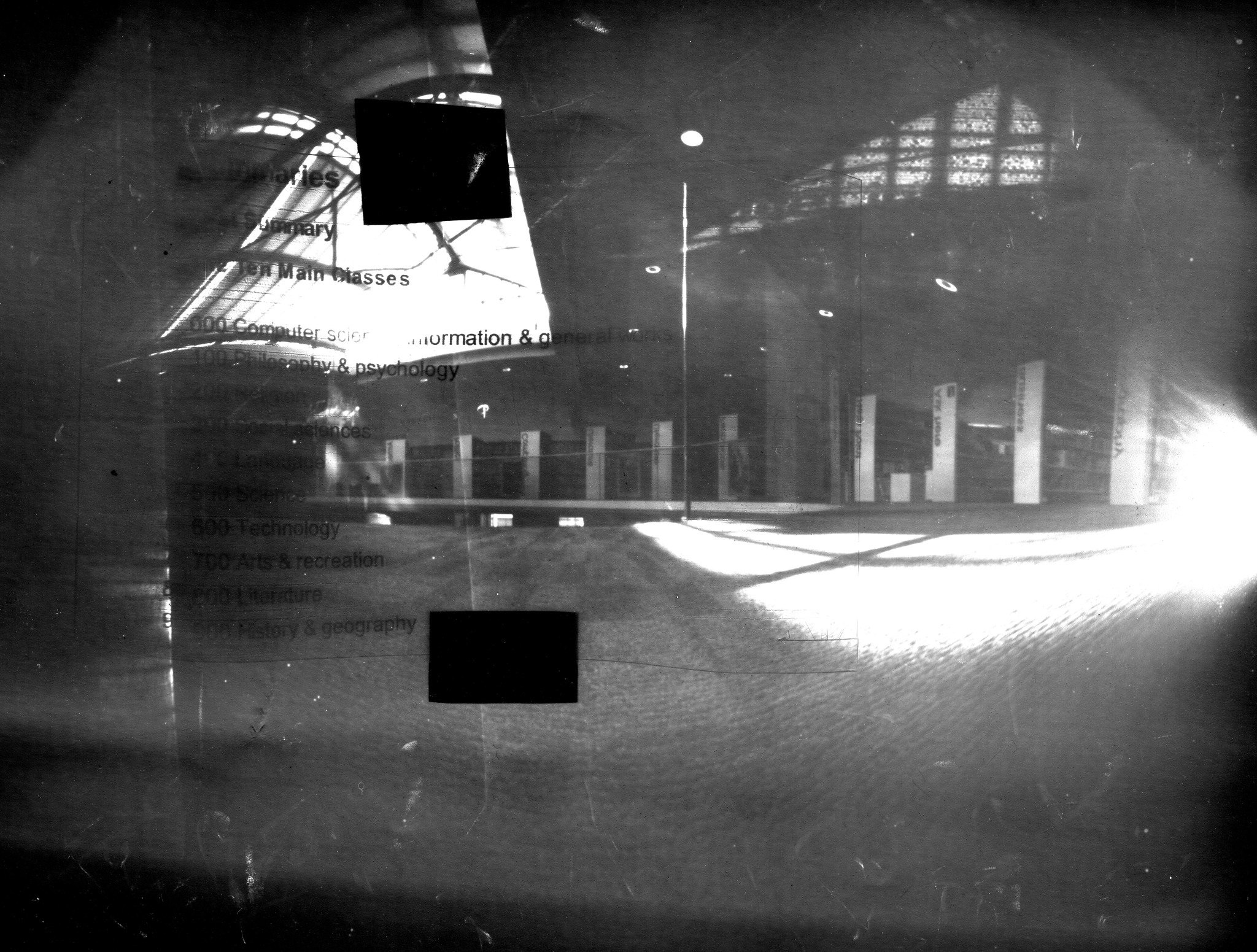
Library and Observatory/Abstract Fields of Inquiry : A Meditation on the Human Condition (Giacometti, artist-philosopher)

process,celestial sphere,observation,Karen Barad,zenith,analogue,trails,film,astronomy,night skies,dust particles,voids,Night Train,#russell moreton,#spatial practice,time cavity,The Seeing,naked eye universe,Martin Amis,


Books can step up to us- into us- in many ways.
Voices from Chernobyl by Svetlana Alexievich was for me that rare precipitate force which calls another book into being.

Mario Petrucci, Heavy Water, a poem for Chernobyl.


Norman Lockyer Observatory, Seaton.


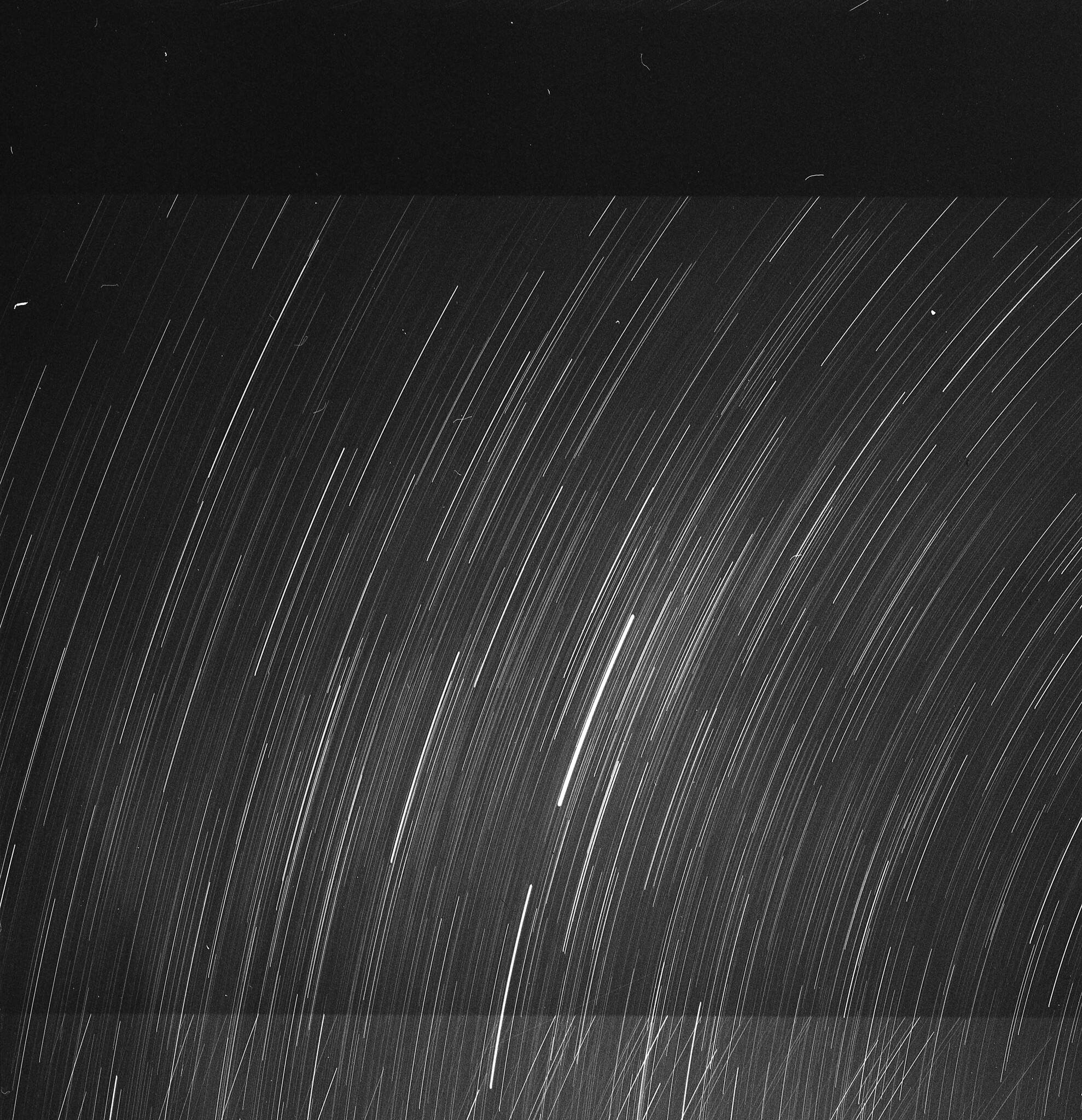
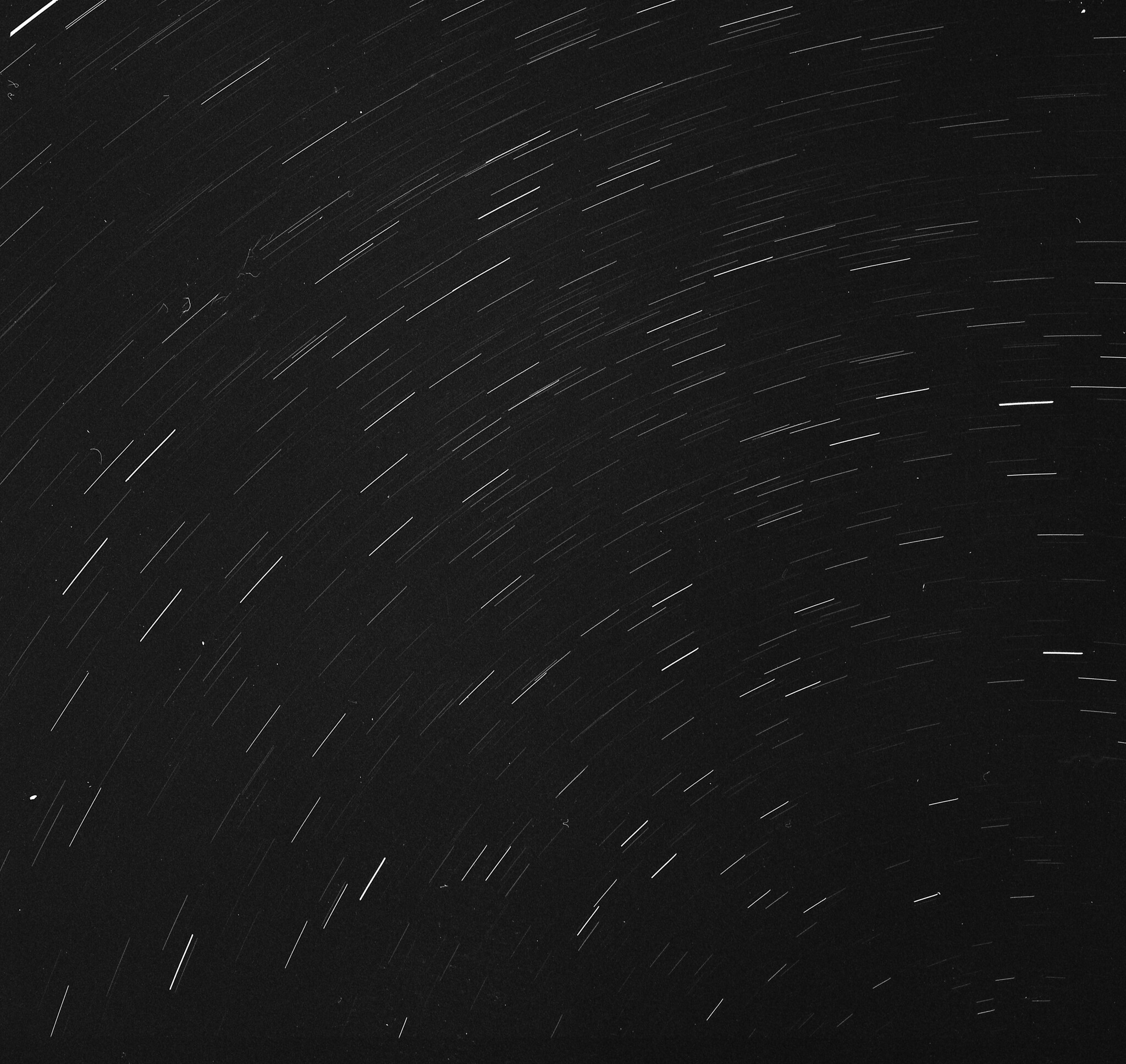
Celestial Sphere : Stars and Dust Particles. 


https://www.flickr.com/photos/russellmoreton/25942954484/in/dateposted-public/


Astronomical archive

Hawking understood black holes because he could stare at them. Black holes mean oblivion. Mean death. And Hawking has been staring at death all his adult life. Hawking could see.
Martin Amis, Night Train, 1997.

For Baudrilland the actual photographs are beside the point. It is what precedes them that counts in his eyes- the mental event of taking a picture.
Sylvere Lotringer, The Piracy of Art, 2008.


Entanglements of matter and meaning.

Karen Barad, Meeting The Universe Halfway, 2007.

Meeting the Universe Halfway is an ambitious book with far-reaching implications for numerous fields in the natural sciences, social sciences, and humanities. In this volume, Karen Barad, theoretical physicist and feminist theorist, elaborates her theory of agential realism. Offering an account of the world as a whole rather than as composed of separate natural and social realms, agential realism is at once a new epistemology, ontology, and ethics. The starting point for Barad's analysis is the philosophical framework of quantum physicist Niels Bohr. Barad extends and partially revises Bohr's philosophical views in light of current scholarship in physics, science studies, and the philosophy of science as well as feminist, poststructuralist, and other critical social theories. In the process, she significantly reworks understandings of space, time, matter, causality, agency, subjectivity, and objectivity. In an agential realist account, the world is made of entanglements of "social" and "natural" agencies, where the distinction between the two emerges out of specific intra-actions. Intra-activity is an inexhaustible dynamism that configures and reconfigures relations of space-time-matter. In explaining intra-activity, Barad reveals questions about how nature and culture interact and change over time to be fundamentally misguided. And she reframes understanding of the nature of scientific and political practices and their "interrelationship." Thus she pays particular attention to the responsible practice of science, and she emphasizes changes in the understanding of political practices, critically reworking Judith Butler's influential theory of performativity. Finally, Barad uses agential realism to produce a new interpretation of quantum physics, demonstrating that agential realism is more than a means of reflecting on science; it can be used to actually do science.


Tuesday, 28 September 2021

The Photographic Body/Working Documents : Bacon/Muybridge/Beuys/Butler/Piper

The Human Figure in Motion
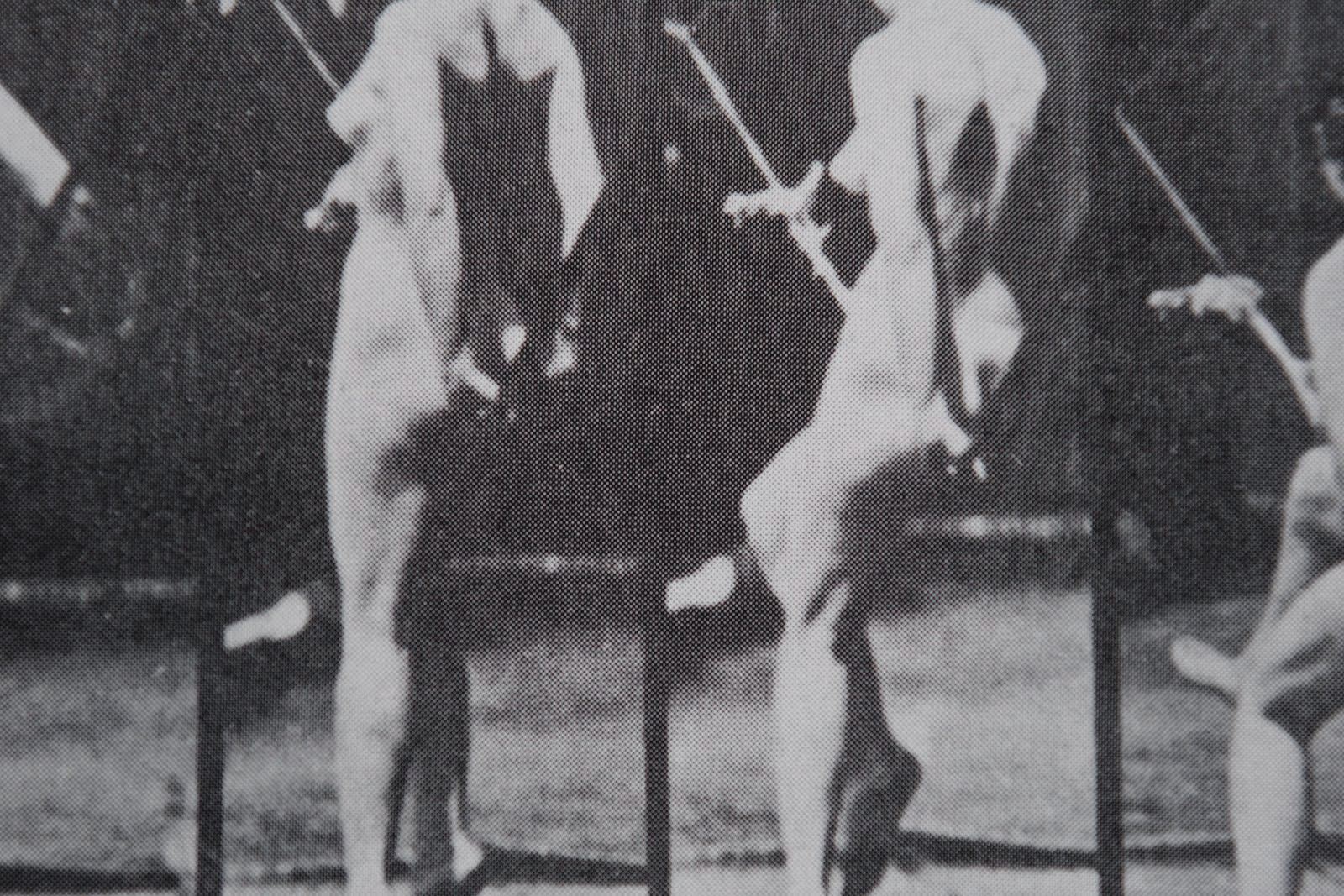
Eadweard Muybridge

Francis Bacon
In Camera
The Human Body
The Violence of The Real

John Deakin
Heinrich Zille
Rodin
Beuys

Reg Butler
Woman 1949

John Piper
Eye and Camera, Blue to Ochre, 1976


Monday, 27 September 2021

Working Drawings/Beyond Education : Atelier and Scriptorium/Anarchism around the Abbey.

Spatial device within the ruined abbey. 

They will be schools no longer, they will be popular academies, in which neither pupils nor masters will be known, where the people will come freely to get, if they need it, free instruction, and in which, rich in their own experience, they will teach in turn many things to the professors who shall bring them knowledge which they lack.

This then will be a mutual instruction, an act of intellectual fraternity.

Michael Bakunin, 1870.

Freedom in Education/Anarchism, Colin Ward 2004.