https://butdoesitfloat.com/If-you-want-to-understand-function-study-structure
https://twitter.com/butdoesitfloat
If you want to understand function, study structure
Photographs by Russell Moreton
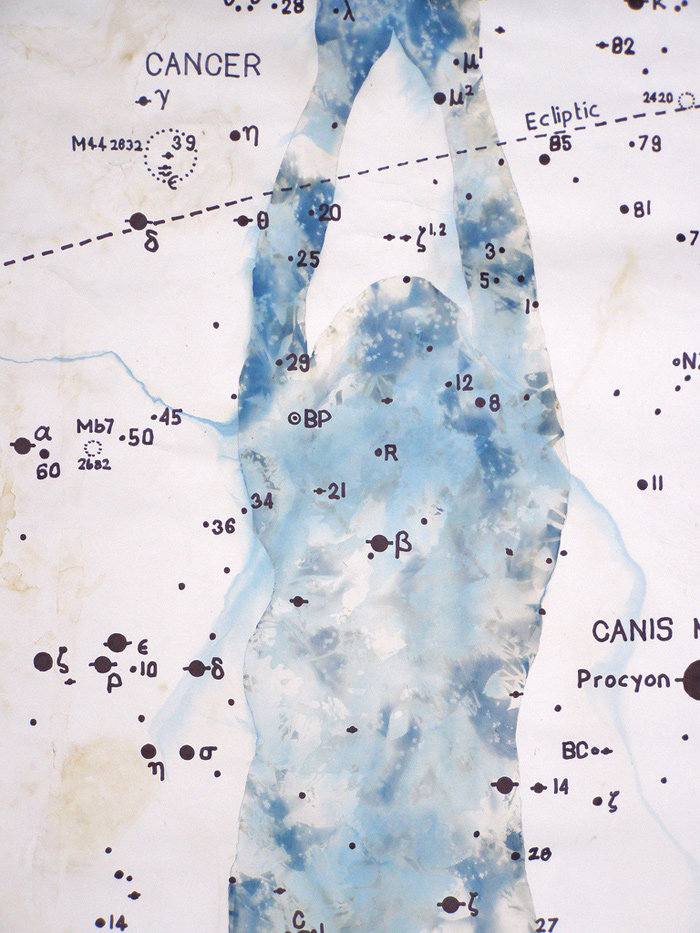
Title: Francis Crick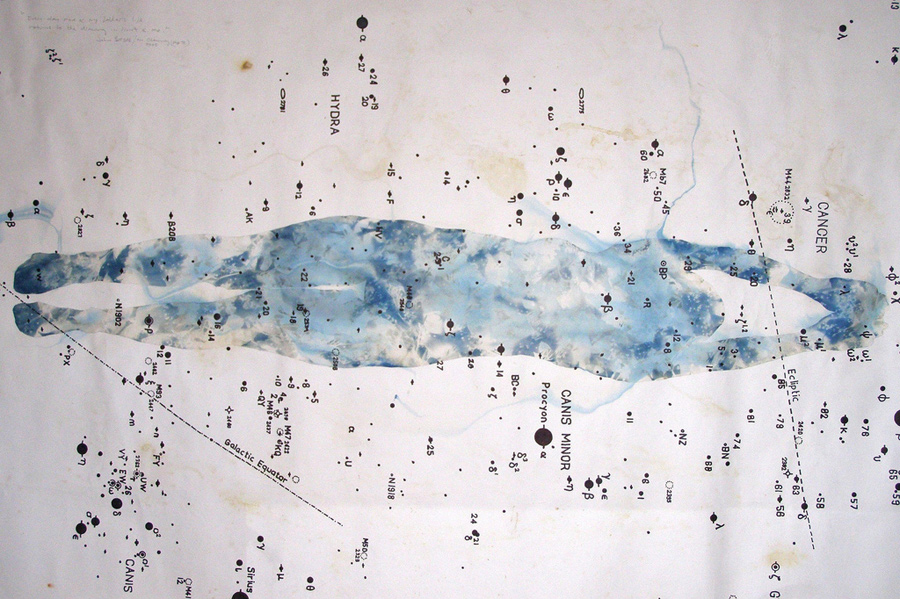
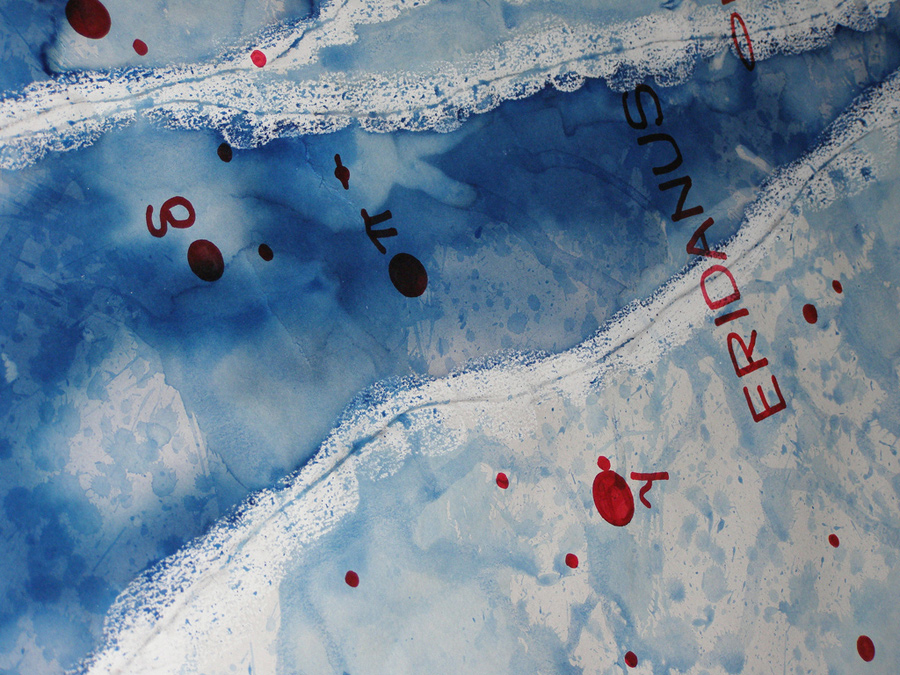
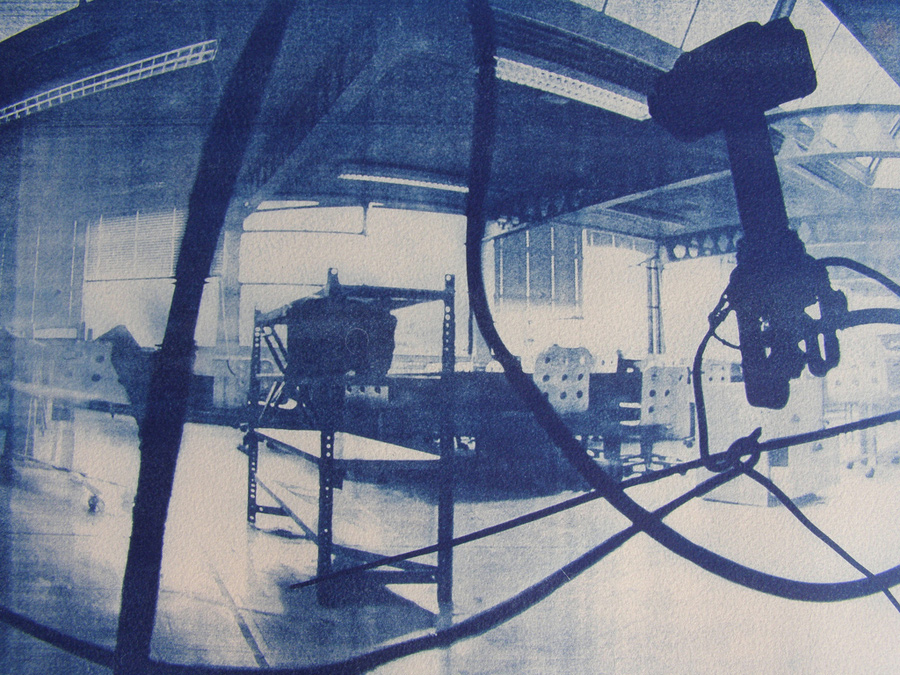
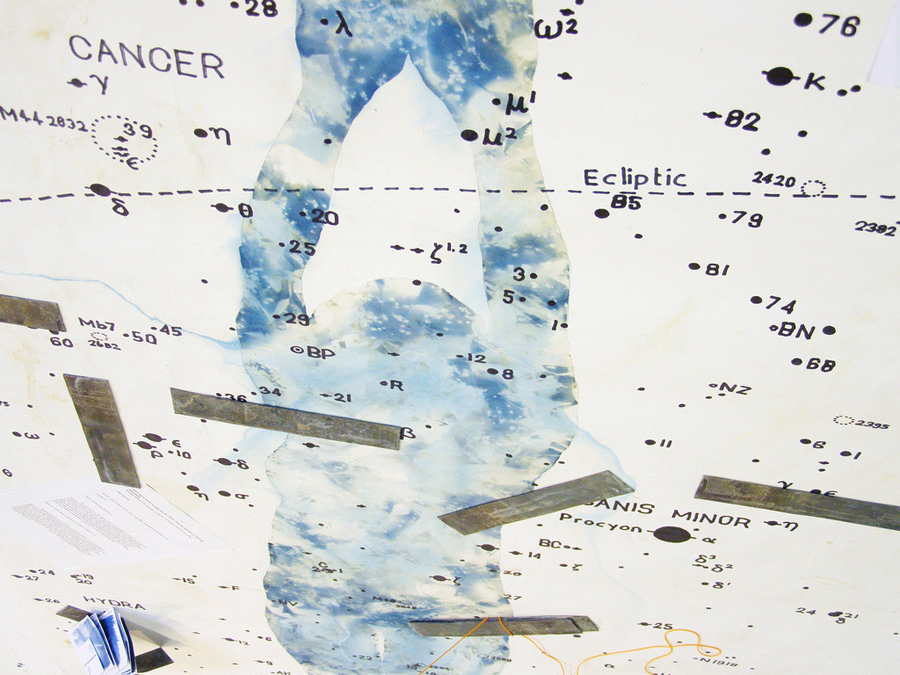
OUTPOST STUDIO 3.16


Sensations in Space and Time (the experience/entanglement of phenomena and idea)
Agency/Foraging/Making/Gathering
Subjectivity is relational (always in process)
A Species of Making Spaces
Tentativeness, attentive to situatedness
A diffractive methodology enables a critical rethinking of science and the social in their relationality, moving beyond separate entities, separate sets of concern.
Karen Barad
Organism
Person
Environment
For Merleau-Ponty, Experience can only be understood between the mind and the body or across them in their lived conjunction.
The mind is always embodied, always based on corporeal and sensory relations.
Elizabeth Grosz.
Richard Serra : Verb List Compilation
Actions to Relate to Oneself, 1967-1967
Drawing in its frameworks and dimensions/presence and absence/its here and elsewhere
Exploring the fragility of a painting in the landscape
Canvas as sheltering construction, Raveningham Sculpture Trail


Diagram-Map-Chart, is a symbolic depiction emphasizing (mapping) relationships
Diagrams For The Imagination : Arakawa
Semper Femina : Laura Marling
Apokatastasis : Jim Jarmusch, Jozef Van Wissem
Litany Of Echoes : James Blackshaw
New Music, for old instruments : Paul Metzger, Jozef Van Wissem
Brilliant Trees : David Sylvian
Body As Cultural Product
Both psychic and social dimensions must find their place in reconceptualizing the body, not in opposition to each other, but as necessarily interactive.
Volatile Bodies/Chaos-Territory-Art : Elizabeth Grosz
Spatial
Asperity/Mesh, Membrane and Gauze, Möbius Strip, Pattening,
Actuality
: Robert Mangold
Paintings around the particles/flows of things/boundaries/intervals of presence and absence
Induction/Capacitance/Encapsulated Layers
Drawing and its attempts to map out/make visible contingent things
Contingency, is what remains, as it comes up against causality/constantly passing through
Objects/Things conceptualized by the exploration of drawing (intervals of blindness)
Linking Surface to the Aesthetic Experience of Space.
Experiences incorporating interests with environmental textures into Art.
Points of Contact/Confluence of Circumstances
Materials bound by contact/canvas
Patina, absences, gesso, textile wrappings, field chalk, exhumed oyster shells, yellow ochre,
A philosophy of Reading/Matter/Rooms,
The Lake of The Mind
Stochastic Thinking, Steven Holl
Solitude/Libraries : Cell/Court/Domain
Capacitance, relationships between intensities and movements
Clay, Waxed Surface, Liquid Rust, Calico,
Sensate Bandages/Windings/Armatures : Corporeal Landscapes/Assemblages/Things
Flesh, elementary pre-communicative, subject and object develop.
Making as Growth : Tim Ingold
Social Architectures/Anthropologies/Imaginary Projects/Interfaces/Screens
Timothy Morton : Realist Magic
The elasticity of sensation, affective and wonderous
Sally Mann : Matter Lent/Collodion wetplate negatives
Corpus, liquid light, flesh, spirit, trace, outline, human body, performative,
Paintings/Enactments : Canvas as a spatial verb
Espace-Milieu, painting as environment/entanglements and situations
Ceramic/Process and its theoretical objects
As a series of practices, making reality by bringing things together or separating them into their singularities, or making machines/desiring machines
Desire can be seen as an Actualization
Gathering Notations : Bernard Tschumi
Both presence and absence are coupled in this framework
Deleuze/Guattari
Glass/GLAS : Resistivity/Inclusions, A Field in England.
Translucent aesthetics, beyond the opacities of the sensible the rational.
An image that adequately expresses both the efficacy and the temporariness of the phenomena ( joining a diffused/invisible flow of energy, a breadth that wends its way ceaselessly through the world). Animating it as it goes.
Vital Nourishment, Departing from happiness, Francois Jullian.
What is a body capable of -
Spinoza
Building/Making, into the theoretical performative object (that does theory)
Albers/Clarke : Interactions, Counterpoints, Intervals between colour/forms,
Membrane, Discursive, Diffractive, Sensory, Layered and Filtered Light,
Body, Movement, Mind, Assemblages, Exploratory, Speculative, Choreographic,
Deleuze/Guattari, understand the body more in terms of what AFFECTS it is capable of, instead of the consequences of having a body.
Peter Zumthor : Thermal Baths
Human Agency/Temporal transitions between matter and movement.
Immaterial/Concrete/Water : Bodies in contact/the corporeal social human body
Manifolds/Theory of Temporality/3 Synthesis of Time
Memory Past Preserved Condition
Present Habit Instants Agent
New Future, actual/virtual Creation of The New
Multiplicity, purality of contemplating souls.
Asymmetries between particular past and general future.
Temporality involves multiple interacting processes.
Architecture becomes Spatial Agency
We all make space : Jeremy Till
Paintings, space, volume, surface, passages, actualizations, claddings/camouflage


One conceives and reads a building in terms of sequences, both phenomenological and filmic, reading a space by its depth of field, its thickness.
Turbulence House, New Mexico, Steven Holl.
Aesthetics/Asperities : Resultants that incorporate the friction (asperity) of their trajectories through a medium. Tilt-up concrete construction, Chapel of St, Ignatius, Seattle. Steven Holl.
Navigations and Vectors/conduits/intervals and traces between discursive practices.
Wrapped Silences : Assembled Sectional Elements/Thresholds
Surfaces on Mourning/Samsara, a beauty fed on emptiness

.jpg)


The Poetics of Space : The house, from cellar to garret. The significance of the hut.

RODIN AND BEUYS
THE ALCHEMY OF BUILDING WORKING PRACTICES
RUINS, REDUCTIONS, and the LOSS of SUBSTANCE.
FRAGMENTS, ASSEMBLAGES and INTERIORS that re-enter the world of creativity.
The Theatre of Research is a working space that creates and crafts both theoretical and practical objects, things and documentation. Its reason for being is to explore the praxis for creative narratives between the Arts and The Humanities. It attempts through performance, fine art and architecture to collage qualitative and diffractive dialogues into new relational discourses, the results of which become exhibited or staged as open workshops engendering praxis, publication and production. In its fledgling state it is seen as being part of a University faculty that has interests in the Arts and The Humanities.
We have art so that we may not perish by the truth. Friedrich Nietzsche Can one achieve architecture without resorting to ‘design’? What if, instead of designing a new building, you keep the one skated for demolition? How do you insert an original program inside the old and new structures simultaneously? How do you reconcile coherence with multiplicity? Bernard Tschumi 2012


PROGRAM. Tschumi, Le Fresnoy: Architecture In/Between, 1999/2012 Architecture was no longer an autonomous and isolated discipline but participated in the movement and confrontation of ideas. Tschumi, Red Is Not A Color. 2012


Outpost 070922


Radical Perspectives.
Space-time Manifolds.
Intertwined cinemas within a bottle of light.
Fissure space reflection on underside of suspended cinemas.
Concept Studies/Diagrams.
Space was perceived by the body moving through time.
Parallax, Steven Holl.
Plastic Media
Performative Apparatuses.
The Observer and The Observed.
A return via the time exposures to the unexpected and a intricate order made up of patterns, movements and constellations.
New thrilling metaphorical structures.
Beyond the purely visual, to get a flat surface to interact with physical phenomena, which would be recorded without any intervention or involvement. Photographic events in which some images recorded very determined fixed forms, and in other time-exposures the images became more about traces and about movement.
Susan Derges.
Infra-ordinary
Dust Breeding.
Giacometti's Cell/Studio.
A Species of Spaces.
Intra-acting
Contemporary Architectural Practices.
Spatial Practices/Visual Fine Art.
Quantum Superposition.
At the moment a measurement is made in Beijing, everything remains in quantum superposition with respect to Vienna. The equipment making the measurements, the scientists reading them, the notebooks in which they are written down, the messages in which the results of the measurements are conveyed, are all quantum objects themselves.
Helgoland,Carlo Rovelli.
Quantum intra-acting
The concretization of colour as substance/matter/movement/agency.
Beuy's brown and Klein's blue form a pair of opposites, according to the hermetic-alchemical world view, such opposites contain the arcane power of polar dissimilarity that seeks to be augmented and joined together.
Beuys Brown and Klein Blue, Magdalena Broska.
Elective Affinities
Susan Derges/Garry Fabian Miller.
The direct use of physical materials, the interest in systematic experimentation and a preoccupation with the fluctuating perception of events depending on the position of the observer and the nature of the light.
Through the realm of perceptual experiences.
Both art and science alter our perceptions and knowledge, whether from philosophy, science or the arts it filters down into our general awareness to affect our world view.
Wondrous essences put back into existence, through re-achieving a direct and primitive contact with the world.
Plastic media, time based immateriality.
Surface interactions produced from physical phenomena made visible.
Metaphors for phenomena
Patterns as either/both particles and waves.
Unknowing Expectation.
Prints of a scientific exactness.
This reduction of process down to such a simple method.
He felt amazed by the clarity of the procedure, it seemed incredibly releasing and radical, and something to aspire to.
Working series that focusses on the immense through engagement with the specific.
Homeland, the body gains access to the world as a way of living and working.
Making a garden after the making of the mornings pictures, feels like the right way to fill the hours which remain in the day.
Field Studies/Kilquhanity.
Building template for positioning of circulatory pathways.
Garden drawings and sculptural mappings of the passage of sunlight.
Shifting relationships of the real world have been assimilated into her imagery.
In particular her world view was affected by the ideas of contemporary physicists.
New possibilities for plastic media has been that phenomena are no longer seen as static entities in space and time, but as dynamic and interrelated with specific structured laws and principles.
The Darkroom as cell and workroom, a room apart from the world.
Science, Order and Creativity.
David Bohm.
The Implied Observer
Towards an understanding of how matter comes to matter.
Performativity is precisely a contestation of the excessive power granted to language to determine what is real, performativity is actually a contestation of the unexamined habits of mind that grant language and other forms of representation more power in determining our ontologies than they deserve.
Thingification, the turning of relations into things, entities, relata, which infects much of the way we understand the world and our relationship to it.
In Posthumanist Performativity, Karen Barad advocates agential realism as an alternative to representationist ontologies that split semiotic from material reality.
Barad argues that matter is not a substance but an intra-activity, and that agency is not an exclusively human attribute, but rather the enactment of iterative changes across macro/microscopic levels of matter.
Matter is performative in that it reproduces itself through the effects of its own intra-active dynamic material relationships. Relata do not pre-exist these relationships, but emerge through them in the fluid, diffractive boundaries that crystalize phenomenon/matter into things/thingification that are positioned in a spatial-temporal affective relation.
The subject/object dichotomy is performatively enacted through the specific spatial temporal proximity between the two necessary for apprehension, in which the approximal relationship through which subject and object emerge. The cognitive split that constitues the I is a discursive practice called the agential cut which is a conception of separability between one thing and another that grants the illusion of agency.
For Barad, discursive practices are not only linguistic expressions of human language, but extend to other material specific practices of intra-action entangled with other intra-actions that produce material phenomena. The material apparati which constrain, but do not over determine these practices find within their own diffractive limits possible dynamic reconfigurations of the world.
Because being is not a static relationality but a doing, that always entails constituting exclusions, a posthumanist engagement with performative matter must not only account for the sites of human/non human cuts, but also challenge the ethical stakes of such cuts.
Summary Notes : Karen Barad, Posthuman Performativity, S.A. Colclough.
Intra-actions produce material phenomenon.


