Saturday, 4 June 2022

Architectures within the photographic process : Intermediary Surfaces of Information and Affect

 AWKWARDNESS. 

I work from awkwardness, by that I mean I don’t arrange things. 

If I stand in front of something instead of arranging it. 

I arrange myself.

Rem Koolhaas, S,M,L,XL.


Working Practice

Possible Strategies/Tools/Agents/Abstractions for "working sites" that occur within a site/field of practice. Interested in the abstraction of information, its collection/registering, its wrapping/framing, and un-wrapping/transmission to inform others, and its relation to embodied knowledge.

A spatial practice that unavoidably inserts the role of the observer into the language and function of "working situations" and to participate in the analysis of "the objective statement" and its subjectivity around "sites activities".


INFORMATION, THE NEW LANGUAGE OF SCIENCE. Baeyer.


Ockham's Razor,(economy of expression) Briefer is better. "The philosophical principle that values simpler, briefer explanations over more complex ones."1 Interesting notion that this could be used a device to "prune the proliferating set of primitive entities, and reduce the number of a priori assumptions that must be fed into a theory." 2


Fechner's law, on the magnitude of a sensation being proportional to the intensity of the stimulus. Today regarded as a historical curiosity after serious departures from it in the 1950s, but it is still emblematic of a profound relation. "If the intensity of the material world is plotted along the horizontal axis, and the response of the human mind is on the vertical, the relation between the two is represented by the logarithmic curve."3After this illustrative definition Hans Christian von Baeyer posits a speculation and retires with this rather enchanting question to his reader.

Could this rule provide a clue to the relationship between the objective measure of information, and our subjective perception of it?

Boltzmann interpretation of entropy. The term entropy invented by the German physicist Rudolf Clausius as a theoretical counterpoint to energy, defined mathematically, entropy is heat divided by temperature. It does however have a peculiar quality not shared with energy. When entropy (heat from a cup of tea) is left out in the ambient and open condition of the surrounding air, the two entropies combine to give an entropic state that will always remain constant or increases, what it cannot do is to become diminished. It displays a one-way set of relational coordinates.

Entropy can be used as a simple additive quantity as in "combining two identical volumes of gas , and you get twice the mass, twice the energy and twice the entropy of one vessel".4 What Boltzmanns interpretation of entropy was able to supply was firstly a mechanical model which supports the traditional values of entropy, with something that was entirely new to physics. Entropy now gained a strange subjective quality imparted by the number of ways in which a system or more "specifically the number of rearrangements consistent with the known properties of the system."5

Entropy by this interpretation is not an absolute property of a system, but rather it displays a relational component with is wholly subjective to the amount of "information" that is available.


Boltzmann goes further with these connections, he makes them specific. By "pointing out that since the value of entropy rises from zero , when we know all about a system, to its maximum value when we know least."6 Hans Christian von Baeyer interprets and theorises this as illustrating that entropy was actually measuring "our ignorance about the details of the motions of the molecules of a system,"7 Which can be interpreted and appropriated to mean that entropy can register our lack of information about a system through the possibility and probability of what occurs and what might not occur in that system.

This intersection of the "relational" both empirical and subjective is an interesting site in which to stage a per formative element with empirical phenomena. This offers up to the "work site" a duality and a paradoxical sense of resonance.

In much the same way in which Democritus understood that all empirical evidence found in science is "collected" through and "mediated" by the senses, “working sites” could help to usher-in this gesture of analysis. This gesture of "sense experiments" creates and affirms and gives insights into our relational reality.

“We are all observers, equipped with both senses and intellects and whilst trying to understand the universe we are trying to understand man. We work from a theoretical objective (not absolute) reality from which we proceed to an understanding of the human senses and its consciousness."7 The work is in-effect using the notion of the "logarithmic curve" of Fechners law as the route of experiences encountered by interlocutory aspects of the "guest" as they are registered by the "axis's" of the architectural installation and its laboratory like situation.


Strangely and with some irony as in all scientific theories and break-throughs we inevitable end up learning more and simultaneously knowing less. This duality which contains, a theoretical state of reflection with its exactitudes and phenomena's held captive on one hand; whilst reflecting our own "un-captiveness" (or perhaps we are captive through un-captiveness) our being constantly temporal and momentary with all relations having to be applied/registered through a human subjectivity. 


This interrogative compound of the theoretical and the temporal sensuality of being, of becoming relational to self/other/others and its/their placement in worlds forms the main-spring of my practice.

We live in worlds that are in effect part of a "participatory universe" according to John Wheeler(dean of American theoretical physicists).In worlds in which "the observer cannot be redacted out of the picture".8As such the observer must therefore set-up some sort of apparatus were the subjectivity of its information also quantifies the effect of the observers presence and perspective. Unfortunately the choice of apparatus, even if freely made will partially determine the possible answers to the question at hand. The apparatus fundamentally makes things "knowable" through its ability to formulate a measurement (in the world of things) in the context/inquiry of a particular question.

What if this apparatus which gives measurement was situated not to give evidence to a context of questioning criteria, but was allowed to record/register without relevance to any specific question or questions, but just to record a empirical condition or occurrences, perhaps a sensor more than an actual apparatus, something that doesn’t produce information, which is already already positing a value, a recognition of a question. If the abstractive data information from this sensor was "without determination" other mechanics could be "framed up" so as to allow a relational space frame to render-up a temporal subjective perspective and hence give a relational enactment of being. 

Being in the atomic perspective of the universe.


1 Hans Christian von Baeyer, Information, The New Language of Science (London: Weidenfeld &Nicolson, 2003) page 17.

2  Ibid., Page 40.

3  Ibid., Page 85

4  Ibid., page 96

5  Ibid., page 97

6  Ibid.

7  Ibid.

8  Ibid., page 13


Working Spaces/Sites of Inquiry and Dialogue. Canterbury 2010

Mechanisms Of  Seeing/Architectures and Images

Perception is in the “condition” of an interruption. 

Rehearsal is the creative part of any performance.

Interested in the speculative nature of work-sites that contain a narrative intervention via a device that registers and records the documentary and its rehearsal.

Work as revealed into a final sequence of superimposures on a surface created from the collective transparency of the text.

Thresholds that reveal the interspace between the Human and its condition/environment.


MAKING SPACES PARTIAL to the material flows and currents of sensory awareness in which IMAGES and OBJECTS reciprocally take shape/meaning.


The Poetics of Space : The house, from cellar to garret. 

The significance of the hut.


"He will revive the primitivity and the specificity of the fears. In our civilization, which has the same light everywhere, and puts electricity in its cellars, we no longer go to the cellar carrying a candle. 

But the unconscious cannot be civilized. It takes a candle when it goes to the cellar."

Gaston Bachelard.

TRANSPARENCY AND THE DIALECTICAL IMAGE AS AN ARCHITECTURAL SURFACE.

A “PLAY” CONSOLIDATED INTO BOTH SURFACE AND PROJECTED FORM. 

Temporal issues in and around activities of “SITE” and its Performativity/drama of encounter and residency.

Notes from introduction/Allegory, Montage, Dialectical Image. 

Between ART and ARCHITECTURE. Jane Rendell.

A way of thinking about temporal issues of SITE/Situation and event. 

VISUAL

MATERIAL 

SPATIAL REGISTERS

Allegories are, in the realm of thoughts what ruins are in the realm of things. Benjamin on the origin of German Tragic Drama.

DRAMAS- sadness at the transience of life, represented as nature petrified in the form of fragments of death, and as civilization disintegrating as ruins of classical monuments and buildings.

ALLEGORIES OF THE HUMAN CONDITION RUIN its relation to TIME

FRAGMENT as RUIN and on melancholia as an attitude of retrospective contemplation. 

DIALECTICS AT A STANDSTILL, a moment where the past is recognized in the present as a ruin that was once desired, allowing Allegory to be “understood” felt as a contemplative calm/equilibrium in the becoming and wrapping nowness of the  self/situation.

DIALECTICAL THINKING involves the clarification of ideas through DISCUSSION/CONTRADICTION.

WHAT REMAINS AFTER THE PROCESS OF DIALECTICAL THINKING? An initial THESIS IS OPPOSED by an antithesis then RESOLVED through a SYNTHESIS of the two terms, which can in turn become a NEW THESIS.

Proposal to use pinhole camera to capture/explore threshold space of image/architecture/environment

An architectural darkness is a silent solid, but light gives texture to its stillness

The camera obscura’s darken room becomes a stage and a cinema; a drawing black boarded room for making creative reciprocal social practices.


Draft Proposal/itinerary/Layout for “Forum Presentation UCA"

Move assembled group from lecture room to studio space to start presentation as a situation in which to arrange oneself, the group, the fieldwork and research.  

Work Experience/early art works and influences; note any traits that have remained faithful to ones formative years.

Closer analysis on the nature of SITE and its performative role in the Practice. Material Soundings, Drawing and Photography, Sculpture and installation in-situ work. 

Dialogues and Proximities in performative of making space recorded in-situ as a surface/membrane of the architectural structure.

Photographic surface of relational gestures becoming consolidated and simultaneously projected into what is now an altered reality. The architectural “text” remains as a collaborative custodian to the light entering the building.

Transparency as a “custodian value” and interface for the interaction of encounters and farewells.

Requiem of surface inscriptions that allows light to overwrite its projection in a visionary present.

Photographic surface of events, a visual entropy resolved as a history of consolidated exactitudes/enactments.

The photographic surface shows that which no longer exists, it concretizes contingences on offer into an image of irreversibility.

Double Occupancy , Dwelling with the critique and its realization of an uncovering event, criticism collides with and into the work. Deleuze, Baroque house (65).

DRAWING INTO THE READING ROOM

FLEDGLING ARCHITECTURE IN THE MAKING ISOTROPIC SPACE

SOCIALIZED SOCIABLE

INTERIOR ARCHITECTURE through a sensitive adaptation of place studies, and using materials and built spaces to form the container/scaffold/stage for an activity not its contents. Working spaces that can be given a multiplicity of tasks that can accommodate the humanities and the life sciences.

Architecture and landscape, together with the localised weather, and the sheltering buildings all contribute to finding the mental spaces for the retreat.

APPARATUSES DURATIONS EFFECTS

THINGS-MAKING-PEOPLE-IN THE WORLD

Heightening the experiential experiences of place. Ramps, stairs and passages as devices (movable) to examine and to create immediate architectural interventions. Notion of the observatory as being part built/part still under development through drawing, (monuments as instruments/astronomical, Japor, India).


Thursday, 2 June 2022

Between Art and Architecture : Studio Processes


https://www.flickr.com/photos/russellmoreton/

Outpost 310522


Painting is a visual experience. People can write about historical or philosophical points they want to get across using certain examples of painting, maybe work that they think might be similar.

They could make a point in so doing, but it usually has very little to do with the painting itself. 

I do something with the paint, but I'm not painting a picture of anything.

I'm not manipulating the paint into an illusion of something other than what the paint does.

I make a painting.


Robert Ryman on the Origins of His Art.

David Carrier,Robert Ryman. 1997


Ferini Gallery


Prussian Blue

Material Immediacy

Matter and Mutability 

Strange visual spatialities

A space of time and the capacitance between things

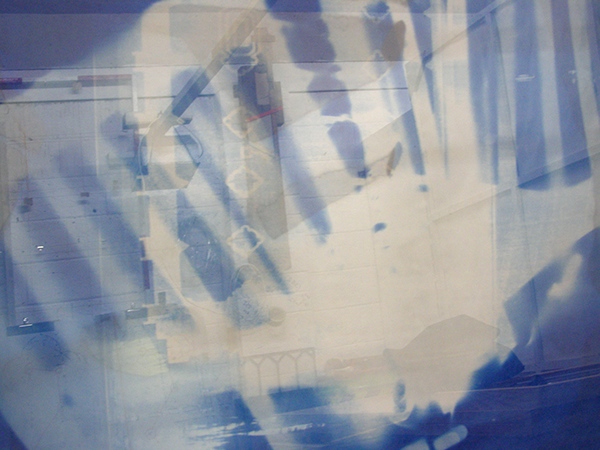
Cyanotype postcards of phenomena

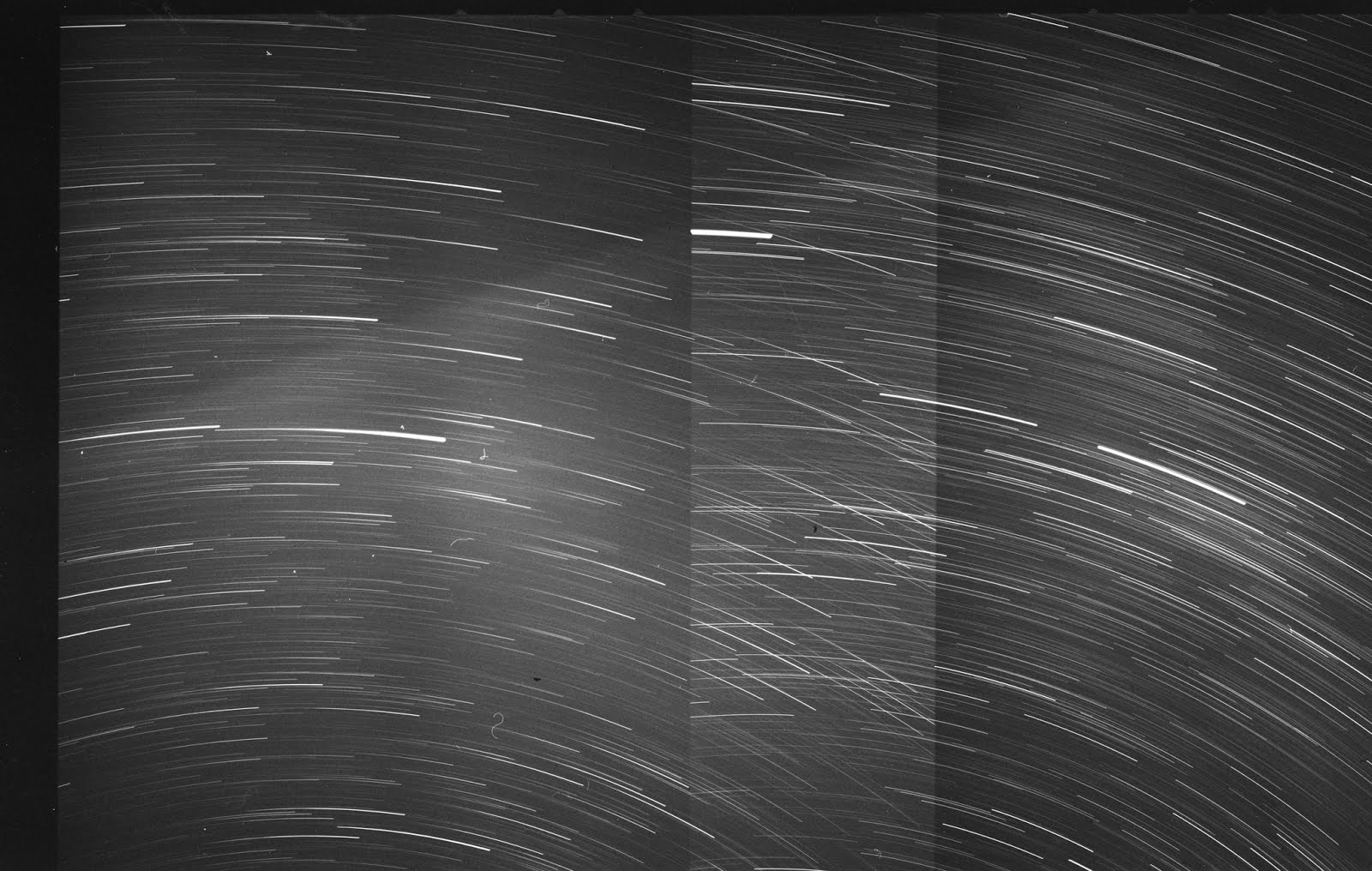
Botanical, Astronomical,


Flesh of the film

Subjectivity in forsaken spaces


Robert Ryman


USED paint, Suzanne P. Hudson. 2009


About the 'how' of the material.

Exploration on the nature of paint.


Primer

Painting

Support

Edge

Wall


Edward Thomas


Eno, vessel on a milk white sea

The clay produces an abstracted division of space, letting the material find ones boundary.


studioUS artwork submission

Listing for exhibition at PRIMEYARC, Market Gates, Great Yarmouth.


Studio 3.16 Spatial Apparatus


This large mobile pinhole camera has been used to inquire into the nature of photography and the intermingling of movements and things. The apparatus is used within my art practice which is centred around making, interior design and teaching.


Key Words, temporal agency, spatialities, environs, art practice, apparatus, photography,


Without the agency of time and light, there is no record.

Beginning as one always does in the middle, in mediis rebus, 
one experiences a sense of disorientation, a sort of cartographic anxiety
or spatial perplexity that appears to be part of our fundamental being-in-the-world.
It is an experience not unlike that of Dante, in the opening lines of his Commedia:

Midway along the journey of our life,

I woke to find myself in a dark wood,
for I had wandered off from the straight path.

( Dante 1984 : 67)

Introduction : Spatiality .
Robert T. Tally Jr.

the New Critical Idiom, Routledge 2013


Art as Spatial Practice.
Space folds : Containing "Spatialities around historicality and sociality"

"All that is solid melts into air"


Karl Marx, Friedrich Engels,

(Poetic observation concerning the constant revolutionizing of social conditions)

Perceptions now gathering at the end of the millennium.
Spatiality, Robert T. Tally Jr. 2013


Wednesday, 1 June 2022

Observatories/Astronomical Images/Libraries : Slow reading/seeing as a thing, not as a resource

Astronomical Images/Observatories/Libraries 

To read slowly, deeply, looking cautiously before and aft, with reservations, with doors left open, with delicate eyes and fingers. 
Friedrich Nietzsche

To read is to be attentive to the trace of the other, and this attention takes time. Additionally, and perhaps paradoxically, it calls for an emptying of the self to prepare for the other, abandon that allows the other to gleam.
Slow Philosophy : Why Slow Reading Today? Boulous Walker. 2017

https://www.bloomsburycollections.com/book/slow-philosophy-reading-against-the-institution/preface-why-slow-reading-today


Celestial Sphere : Stars and Dust Particles

Entanglements of matter and meaning.

Karen Barad, Meeting The Universe Halfway, 2007.

Hawking understood black holes because he could stare at them. Black holes mean oblivion. Mean death. And Hawking has been staring at death all his adult life. Hawking could see.
Martin Amis, Night Train, 1997.

For Baudrilland the actual photographs are beside the point. 
It is what precedes them that counts in his eyes- the mental event of taking a picture.
Sylvere Lotringer, The Piracy of Art, 2008.

The Library : A Meditation on the Human Condition (Giacometti, artist-philosopher)

Books can step up to us- into us- in many ways.
Voices from Chernobyl by Svetlana Alexievich was for me that rare precipitate force which calls another book into being.

Mario Petrucci, Heavy Water, a poem for Chernobyl.


Monday, 30 May 2022

Speculative Images : Weathering between art and architecture #2

 Art as a Spatial Practice.

Space folds : Containing "Spatialities around historicality and sociality"


"All that is solid melts into air"


Karl Marx, Friedrich Engels,

(Poetic observation concerning the constant revolutionizing of social conditions)


Perceptions now gathering at the end of the millennium. Spatiality, Robert T. Tally Jr. 2013


Saturday, 28 May 2022

Mesh/Material/Light : Cyanotype Process/Indexical Remains

Cyanotype is a photographic printing process that produces a cyan-blue print. Engineers used the process well into the 20th century as a simple and low-cost process to produce copies of drawings, referred to as blueprints. The process uses two chemicals: ammonium iron(III) citrate and potassium ferricyanide.

The English scientist and astronomer Sir John Herschel discovered the procedure in 1842.[1] Though the process was developed by Herschel, he considered it as mainly a means of reproducing notes and diagrams, as in blueprints.[2] It was Anna Atkins who brought this to photography. She created a limited series of cyanotype books that documented ferns and other plant life from her extensive seaweed collection.[3] Atkins placed specimens directly onto coated paper, allowing the action of light to create a silhouette effect. By using this photogram process, Anna Atkins is regarded as the first female photographer.[4]


Thursday, 26 May 2022

BOUNDARIES AND JUNCTION POINTS ARE IN THE NATURE OF THINGS POINTS OF FRICTION

 BOUNDARIES AND JUNCTION POINTS

Lefebvre, The Production of Space.

Lefebvre in his chapter on Spatial Architectonics makes reference to the relationships established by boundaries and the relationship between boundaries and named places. These relationships promote significant and specific conditions or features to a space. This in turn results in various kinds of space. Lefebvre states that “every social space, then, once duly demarcated and oriented, implies a superimposition of certain relations upon networks of named places.”1

It is this superimposition of space that can within it demarcate other thresholds of experiences, within an existing demarcated space that interests me.

The act of “blocking in“ the dimensions of another space onto the floor of another create a temporal junction between a host space and a site within this host, a guest. This sets-up the notion of a temporal double occupancy held by the demarcation of a boundary and a site of proposal. This basic and temporal site marking could be said to have affinity towards some sort of anthropological marking, a territory. (Lefebvre defines anthropological marking as being at the stage when demarcation and orientation begin to create place and its social reality in archaic cultures)2. This activity also has associations with nomadic and agricultural-pastoral societies as they use paths and routes as spatio­ temporal markers or determinants.

Lefebvre acknowledges that geographical space created through the body, through routes which were inscribed by means of simple linear markings. These first markings, paths and tracks drawn into the landscape would become the pores through “which without colliding would produce the establishment of places (localities made special for one reason or another).”3Within my practice drawing is used to form sites which contain visual information, evidence of temporal activities and traces of actual objects. These territories within other territories create fields from with boundaries form material relations, differences. My drawings are inside the temporality of site I have instigated and yet they propose a territory and a surface of light years which could accommodate the temporality of terrestrial space.

Interestingly Lefebvre comments “there is no stage at which ’’man” does not demarcate, beacon or sign his space, leaving traces that are both symbolic and practical.”4

1 Lefebvre, The Production of Space, (London: Blackwell, 1991) page 193.

2 Ibid.,page 192.

3 Ibid.,page 192.

4 Ibid.,page 192.


SENSORY THEATRE

EX MACHINA, Robert Lepage

While Legage continues to pioneer the use of technology, his work is imbued with an intimacy and humanity that few can match. Edinburgh festival 2015

ABBATOIR FERME, Jan Fabre (Troubleyn, Performing Arts)

A SOMATIC ARCHIVE, of subjectivities whose perceptions and environments are going to change forever; like the particularities of the analogue trace in photography that is now becoming a distant experiential condition, an orphan extinct from the subjectivities of its originating culture/organism.

The Waverley Inquiry

A Theoretical and Somantic search amongst Ruins and Archetypes Historical Perspectives

Dwelling/Poetics Heidegger Archetypes/Symbols Jung

Flesh and Stone, Richard Sennett

Flesh and The Logic of Sensation, Deleuze/Bacon Contemporary Spatial Practices

Feminist Geographies The Posthuman

Posthuman thought inscribes the contemporary subject in the conditions of its own historicity.

Posthuman Subjectivity ,Rosi Braidotti LIGHT into SOMANTIC SPACES

Continuum and Chora (light and the shadow of chora)

Life expresses itself in a multiplicity of empirical act: there is nothing to say, but everything to do. Life, simply by being life, expresses itself by actualiizing flows of energies, through codes of vital information across complex somatic, cultural and technologically networked systems. (Braidotti, 2013:190)

De Architectura, Vitruvius

Architecture consists of order, arrangement, proportion or eurythmy, symmetry and decor, and distribution.

Arrangement as an “Idea” refers to the Aristotelian notion of “Image­ representation” as phaantasia a precondition to drawing, effectively occupying and revealing a space between being and becoming.

Contents List from a folder in the Theatre of Research Chora Body and Building

Space as Membrane

Chora (Exhibition) 1999

Lessons of a dream. Karsten Harries Concrete Blonde: Joanna Merwood

A probe into the negative spaces where mysteries are created. Surrealist Paris : Dagmar Motycka Watson

The non-perspectival space of the lived city Body and Building : George Dodds

Essays on the changing relation of body and architecture. Sphere and Cross : Karsten Harries

Vitruvian refections on the Pantheon Type Body and Building : Marcia f. Feuerstein

Inside the Bauhaus’s Darker Side

Desiring Landscapes/Landscapes of Desire. George Dodds A Tradition of Architectural Figures: Marco Frascari Interwining Metamorphoses : Germano Celant

On the work of Guiseppe Penone Space as a Membrane : Siegried Ebeling

Unlike a Library the Theatre of Research is a working space that creates and crafts both theoretical and practical objects, things and documentation. Its reason for being is to explore the praxis for creative narratives between the Arts and The Humanities. It attempts through performance, fine art and architecture to collage qualitative and diffractive dialogues into new relational discourses, the results of which become exhibited or staged as open workshops engendering praxis, publication and production. In its fledgling state it is seen as being part of a University faculty that has interests in the Arts and The Humanities. The possible linking with other establishments could be investigated. The working space becomes operational as a studio or laboratory that is engaged with full-time research led activities . Separate yet collaborative spaces and activities promote an environment for inquiry and personal development. The Theatre for research becomes a space that allows for the Post Production of ideas into new forms of social interaction. The theoretical merging with the practical into a relational narrative or methodology that enriches the practices of others, forming both new creative environments that can contain innovative ecologies that can question global perspectives.

INDEX OF IMMATERIAL ARCHITECTURES Jonathan Hill 2006

The Psychoanalysis of Fire. Gaston Bachelard 1964 (1938)

AIR

NATURAL FORCES

The Architecture of the Air (blurs the boundaries of architecture and nature) Loose spatial orders suggesting a fluidity of space, matter and use.

The experience of space was not a passive activity, nor was it considered to be pre­ dominantly retinal. Klein defines his subject matter ‘space’ as sensual, spiritual and an immaterial expanse in which the body is active and immersed; he sought to engage all the senses and to liberate the mind, body and imagination.

Quixotic Gestures that capture the experience and the engagement with natural forces. Klein’s architectural focuses on imprecise boundaries and inconsistent materials in active dialogue with the user.


Space through dialogue/movement defines the user

Most buildings make a clear distinction between the unpredictable natural forces outside and the predictable domestic spaces inside.

The Fireplace is unusual, therefore in that it is a natural force contained within the building.

The fireplace is also paradoxical in that if uncontrolled it threatens destruction of the home.

Evolving Atmospheres, Not Models

Architecture is the affect and its phenomena gained from the experience of the constructed form.

Architecture is a sensorial response to definitions of spatial arrangements. Architectures and their interiors can be infinitely re-imagined through interventions that might not noticeably alter their external appearance.

Materials and Place. The Secular Retreat. Zumthor and Heidegger.

Peter Zumthor acknowledges his knowledge and affinity with Heidegger’s writings, see Peter Zumthor, Buildings and Projects 1998,( Sharr,2007:91) In particular his Vais Spa is of particular note for the way in which Zumthor has created ‘evocative sequences of spaces’ within ‘its exquisite construction details’. (Sharr,2009:92)

‘Zumthor mirror’s Heidegger’s celebration of experience and emotion as measuring tools; he also emphasises sensory aspects of architectural experience. He notes that the physicality of materials can involve an individual with the world, evoking experiences and texturing horizons of place through memory.’ (Sharr,2009:92)

The measurement of a house through things that have sensual qualities, creating a memory of place, and its evocative measurement that can be choreographed through selective materials.

‘Flamed and polished stone, chrome, brass, leather and velvet are all deployed with care to enhance the inhabitant’s sense of embodiment when clothed or naked. The touch, smell and perhaps even taste, of these materials were orchestrated obsessively. The theatricality of steaming and bubbling water was enhanced by natural and artificial lighting, with murky darkness composed as intensely as light. Materials were crafted and joined to enhance or suppress their apparent mass. Their sensory potential was relentlessly exploited. With these tactics, Zumthor aimed to celebrate the liturgy of bathing by evoking emotions.’ (Shan,2009:95)

Zumthor comments about his architecture for the Spa at Vais. 

‘In the bath there is a bit of a mythological sense of place, there are bits of theatricality, even the mahogany in the changing rooms looks a bit sexy, like on an ocean liner or a little bit like a brothel. They are where you change from your ordinary clothes to go into this other atmosphere. The sensual quality is the most important, of course, that this architecture has these sensual qualities. (Spier,2001:17)

He is trying to configure particular theatrical and phenomenal experiences in architectural form. It is only when the qualities of these prospective places emerge, can Zumthor begin to configure and design the particulars of the buildings construction.

‘The measuring of body and mind, the navigation by intuition and judgement which Heidegger makes sense in sparks of insight, these all become ways for designing, for imagining future places on the basis of remembered feelings. He feels that this process creates the contexts with which people will experience his architecture. (Sharr,2009:95)

The Spa at Vais was conceived to appeal to sensual instincts first, and then open itself up to interpretation and analysis, the spa should be tactile, colourful, even sexy to inhabit. (Sharr,2009:96)

‘Zumthor imagines experiences of the spa to be punctuated by things which evoke memories, which represent associations. He like Heidegger conceives of human endeavour in terms of traditions; Zumthor crafts spatial representations of those traditions by locating things in what he considers to be their proper place in time and history. Heidegger was also anxious to locate his farmhouse dwellers according to rites and routines longer than a life.’ (Sharr,2009:96)

Dwelling and livelihood, rites and routines, are all authenticated and located by design; the simple, sensual, primary and elemental associations that create traditions that both Heidegger and Zumthor can subscribe to. All help to root the spa in an agrarian view of the mountains that is associated with livestock and the necessities of shelter.

Zumthor shares with Heidegger ‘a sympathy for the mystical, claiming mythological qualities for moments in the spa’, and to champion’ the immediate evidence of experience and memory over that of mathematical and statistical data. ’(Sharr,2009:96)


‘ It seems that, for Zumthor, the Vais spa achieves his design intentions by locating rituals of dwelling in place with all the Heideggerian associations of those terms. By choreographing enclosure, mass, light, materials and surfaces, Zumthor sets up conditions from which he can propose a rich layering of place perceptions, by allow people to identify places through their bathing rituals and their associative memories.’ (Sharr,2009:96)

There is perhaps for Zumthor and other Heideggerian architects ‘the suggestion that design involves the choreography of experience’. He advocates a piety of building, of trying to develop a design in a away it wants to be, ‘of configuring physical fabric around real and imagined experiences’.

Heidegger notes of Western societies and their professional architectural regulations do much to ‘obstruct proper relations between building and dwelling by promoting buildings as products or as art objects’. (Sharr,2009:98)

Genius Loci: Towards a Phenomenology of Architecture. Norberg-Schulz. Presents an opportunity for people to achieve an existential foothold in the world. Norberg-Schulz notes that inhabitation as like a layer over the architecture. In effect the architect designs, the contractor builds, and only then do the inhabitants build and dwell.

Zumthor with particular reference to his Vais project likes to perceive his architecture and the things within it as becoming associated with traditions, perhaps these become re-enacted as rich, operative histories made in and for the present.

Steven Holl shares similar working methods with Zumthor, he to is influenced by phenomenology on his thinking. He makes watercolour sketches in perspective, as a means of choreographing experience, painting itself is an intuitive act, which opens up spontaneous and unintended design possibilities.

Drawing processes and mapping that can re-imagine the spatial possibilities of architectural experiences.

The Choreography of Experience. A Manifesto.

Being attentive to atmospheres, moods and sites.

Being concerned with the social and political geometries of human gatherings. 

Being participatory to architectural tactics that enable informal gatherings.

Phenomenology and Politics.

Zumthor downplays the activeness of his role in design. The architect is keen to emphasise that he works instinctively with circumstances given to him. He claims a similar modesty in forming a rapport with site and locality. He is able to give the architectural idea a piety to become what it wants to be.

Heidegger’s problematic authenticity claims and the potential consequences of his romantic provincialism became more prominent in architectural debates about the merits of his model of building and dwelling.

Therefore ‘it remains a common assumption among architects that these positions are more or less in opposition. To caricature, phenomenology (at least in its Heideggerian incarnations) champions the value of immediate human experience over scientific, measurement and professional expertise, and tends to mytholize timelessness and situatedness. Critical theory, meanwhile, prioritises the political dimensions implicit or explicit in all human activities, and is opposed to monolithic claims of authenticity. (Sharr,2009:112)

Heidegger’s thinking, including that on architecture, is easily challenged from the perspectives of critical theory. The philosopher perceived the ‘essence’ of building and dwelling in authentic attunement to being, unapologetic about the tendencies of essentialism and authenticity to exclude people. His writings display little fondness for what he saw as the human distraction of politics. (Sharr,2009:112)

Heidegger’s work on architecture and, arguably, the architectural phenomenology which claimed him as a hero, has become a zero-sum game. Whatever it gives, its associations can also take away. Many architects and commentators have turned their backs on Heidegger in consequence although a few, including Zumthor, remain unswayed. (Sharr,2009:113)

Edward Casey, The Fate of Place. 

Gaston Bachelard, Poetics of Space.

Maurice Merleau-Ponty, Phenomenology of Perception.


Sun Prints : Blue Works/Drawings into the Photographic Surface


The sun has gone mad and stripped the earth of its ionosphere. For decades blasting radiation has poured upon earth, melting the polar caps and turning permafrost into streams, rivers, oceans. Huge deltas have been built, lakes formed, seas have risen.

The Drowned World, JG Ballard.

Cell
Court
Domain

Botanical traces with leper graves

Drawing into the photographic process
Dynamic/Affective Cyanotypes

Biosphere (Ecology and Entropy)
Architectural Blueprint
Archipelagic Architectures
Blueprints : Anthropological Forms
Cyanotype : Architectural Drawing