




The Making/Production of Space
We All Make Space/The Social Production of Possibility
Space and the Social becomes Spatial Agency (a continuity of action and occupation)
Life Drawings : The nature of minor everyday movements/narratives. Becoming responsive and flexible with materials to the dynamics of social structures/contexts. Drawings become reshaped as they are enacted through their working conditions and beyond (a here and an elsewhere, John Berger)
Drawing into the everyday, calling upon an anthropology of the here and now, so as to reveal the spatial and temporal inscriptions of present-day social practices. Marc Auge, Non-Spaces.
Agency means being able to intervene in the world or to refrain from such intervention with the effect of influencing a specific process or state of affairs. Anthony Giddens/Jeremy Till.
The defining point of agency is namely its potential to transform the given.
‘Everyday life is lived in the medium of cultural form. Its phenomenological immediacy is the sedimented result of myriad repetitive practices, yet it is constantly open to the randomness of the chance occurrence, the unexpected encounter, the surprising event, as well as to the refiguration of its meanings by more explicit forms of social intervention.’ The everyday thus acknowledges the historical constitution of the now, but also its very incompleteness demands an active (political) response to what could happen, to the ‘social production of possibility’. It is through such temporalisation that one escapes a myopic entrapment in the present and moves into viewing the everyday as a site for transformative practice.
Peter Osborne, The Politics of Time. Jeremy Till, Architecture in Space,Time.


Ordinary things contain the deepest mysteries
On the horizon, then, at the furthest edge of the possible, it is a matter of producing the space of the human species-the collective (generic) work of the species-on the model of what used to be called "art" ; indeed, it is still so called, but art no longer has any meaning at the level of an "object" isolated by and for the individual.
Henri Lefebvre, Openings and Conclusions. from On Installation and Site Specificity (introduction) Erika Suderburg
Is there still an aesthetic illusion? And if not, a path to an “aesthetic” illusion, the radical illusion of secret, seduction and magic? Is there still, on the edges of hypervisibility, of virtuality, room for an image?
Jean Baudrillard : The Conspiracy of Art, 2005
The Social Condenser in Operation.
Five figures and a stature distributed evenly in its isotropic space; a picture of the socialized as opposed to the sociable.
Robin Evans : Figures, Doors and Passages.
A Hut of One's Own : Ann Cline
Texts, Annotations, Foundations, Pathways, Corridors, Bookmarks, Walking, Thinking, Ramble, Cross Country, Disciplines,
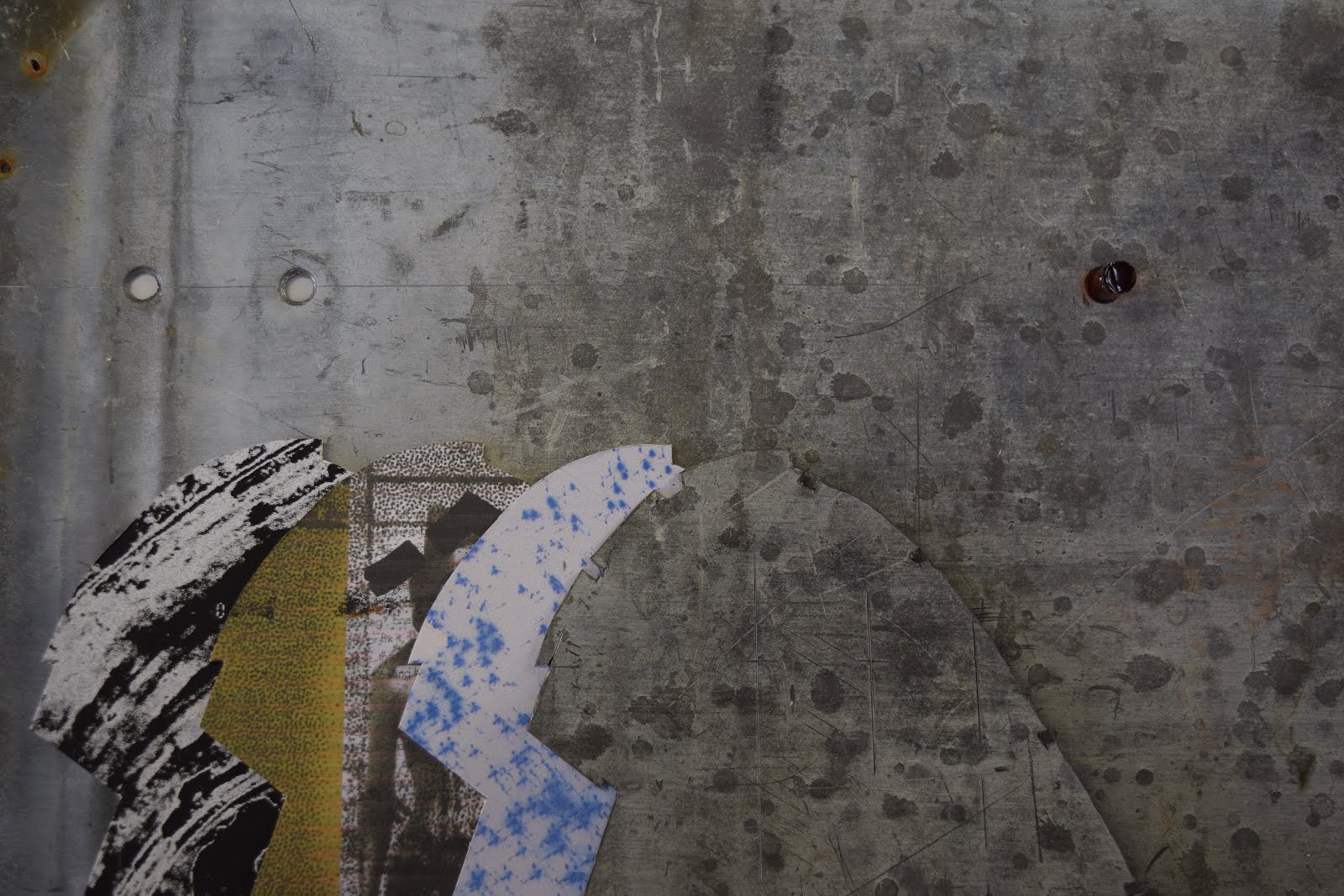
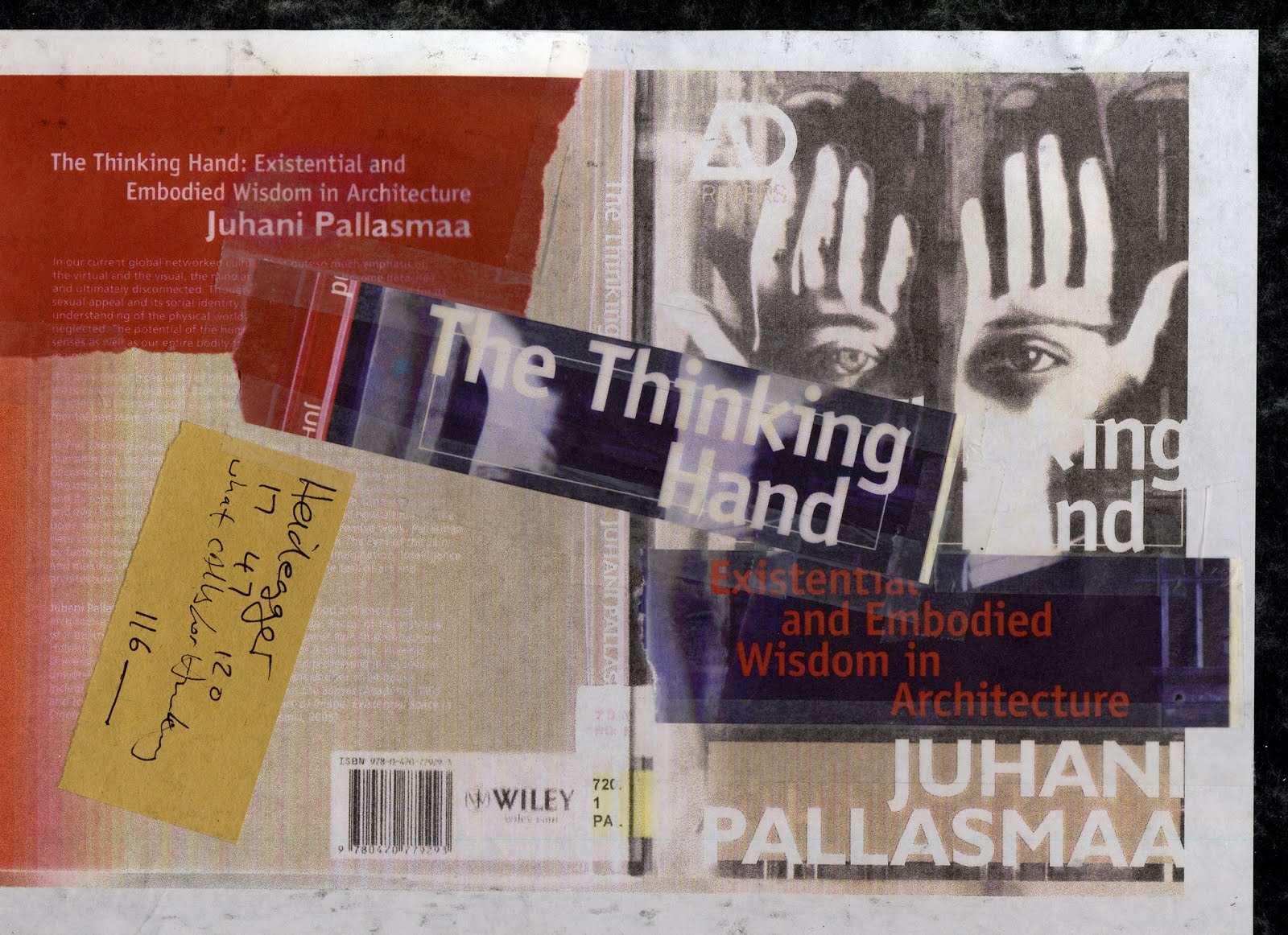
Collage on paper, written fragments and images from Peter Greenaway, Josef Albers and Robin Evans. Photo montage of The Physical Self (Greenaway) and Waverley Abbey UK.
Visual research as part of The Waverley Project/Obscura and Reading Room.
A heuristic technique (/hjᵿˈrɪstᵻk/; Ancient Greek: εὑρίσκω, "find" or "discover"), often called simply a heuristic, is any approach to problem solving, learning, or discovery that employs a practical method not guaranteed to be optimal or perfect, but sufficient for the immediate goals.


